

If you’ve been considering dental implants to replace missing teeth, you’re probably wondering about one crucial question: how long does the dental implant process take? The answer isn’t as straightforward as you might hope, but understanding the timeline can help you plan better and set realistic expectations for your journey to a restored smile.
The dental implant process typically takes 3 to 8 months from start to finish, though this can vary significantly based on individual factors like bone density, healing capacity, and whether additional procedures are needed. While this might seem like a long time, the result is a permanent, natural-looking tooth replacement that can last a lifetime with proper care.
Key Takeaways
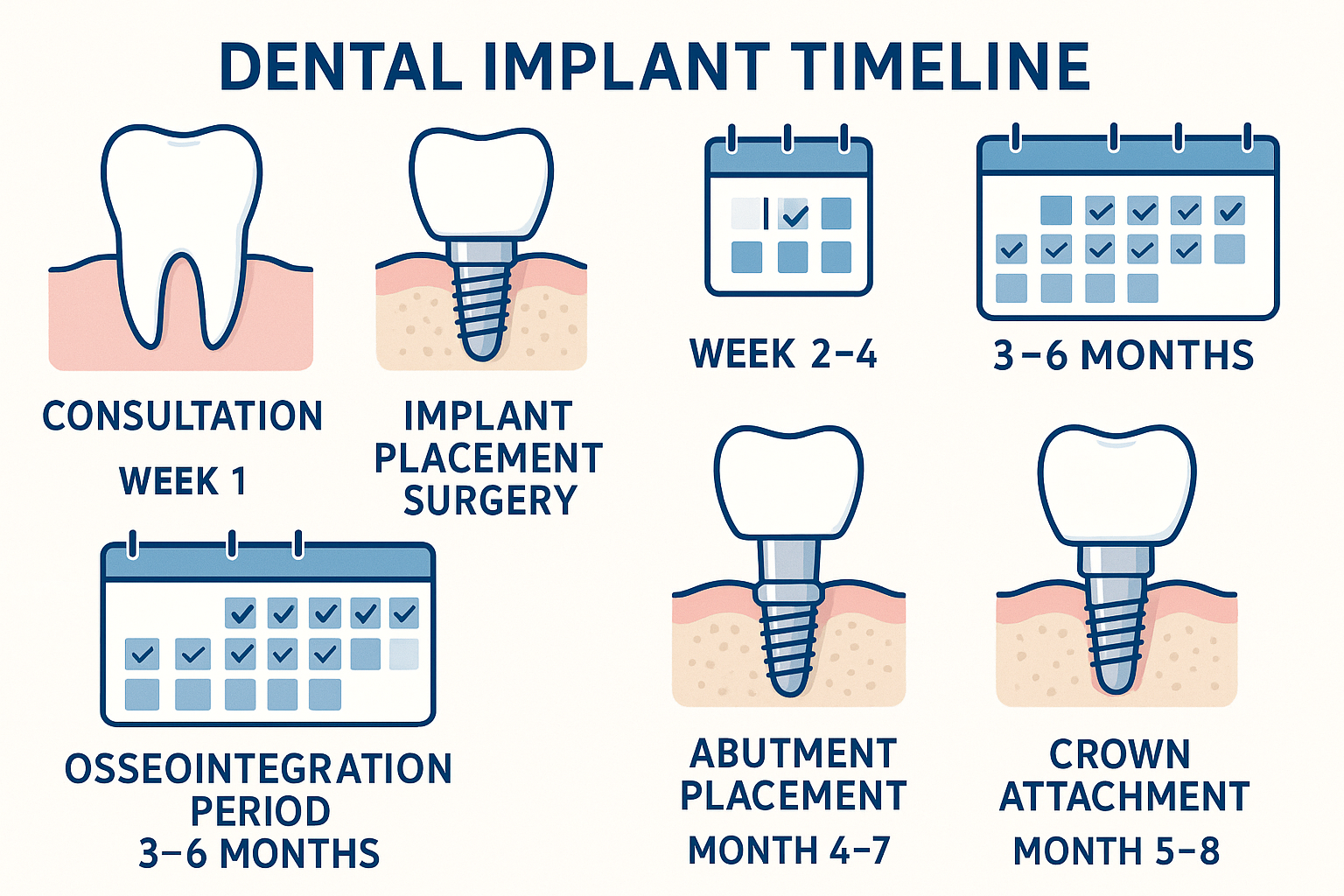
• Standard timeline: Most dental implant procedures take 3-8 months from consultation to final crown placement
• Healing is crucial: The osseointegration process (bone fusion) accounts for most of the waiting time and cannot be rushed
• Individual factors matter: Your age, health, bone density, and lifestyle habits significantly impact the timeline
• Multiple phases involved: The process includes consultation, surgery, healing, abutment placement, and crown attachment
• Worth the wait: Despite the lengthy timeline, dental implants offer the most durable and natural tooth replacement solution available
Understanding the Dental Implant Timeline: What to Expect
When patients ask me how long does the dental implant process take, I always emphasize that every case is unique. However, there are standard phases that most patients will experience, each with its own timeframe and importance.
The dental implant journey involves several distinct stages, and understanding each one helps you appreciate why the process takes time. Unlike other dental procedures that can be completed in a single visit, dental implants require your body to heal and integrate with the titanium post, which simply cannot be rushed.
Phase 1: Initial Consultation and Planning (1-2 weeks)
The first step in your dental implant journey begins with a comprehensive consultation. During this phase, your dentist will:
- Examine your oral health and take detailed X-rays or CT scans
- Assess bone density to determine if you’re a good candidate
- Review your medical history and current medications
- Create a personalized treatment plan with timeline expectations
- Discuss costs and financing options
This initial phase typically takes 1-2 weeks, depending on scheduling and whether additional imaging or specialists consultations are needed. If you’re interested in learning more about what makes a good candidate, our team at our practice can provide detailed assessments.
Phase 2: Preparatory Procedures (2-6 months, if needed)
Not all patients require preparatory work, but some may need additional procedures before implant placement:
Bone Grafting 🦴
If you have insufficient bone density, bone grafts for dental implants may be necessary. This process typically adds 3-6 months to your timeline as the graft must heal completely before implant placement.
Tooth Extraction
If the damaged tooth is still present, extraction is required. Simple extractions heal in 2-4 weeks, while surgical extractions may need 6-8 weeks of healing time.
Periodontal Treatment
Patients with gum disease must have it treated before implant surgery. This can add several weeks to months, depending on the severity.
The Core Phases: How Long Does Dental Implant Process Take for Surgery and Healing?
Phase 3: Implant Placement Surgery (1-2 hours, same day)
The actual implant surgery is typically completed in a single appointment lasting 1-2 hours. During this procedure:
- Local anesthesia is administered for comfort
- Small incision is made in the gum tissue
- Pilot hole is drilled into the jawbone
- Titanium implant is carefully placed
- Gum tissue is sutured closed
- Temporary crown may be placed (in some cases)
While the surgery itself is completed in one day, this is just the beginning of the healing process. Most patients can return to work within 1-2 days, though you’ll need to follow specific dental implant aftercare instructions during recovery.
Phase 4: Osseointegration – The Critical Healing Period (3-6 months)
This is the longest phase in the dental implant timeline and the most crucial for long-term success. Osseointegration is the process where your jawbone grows around and fuses with the titanium implant, creating a stable foundation for your new tooth.
Timeline Factors:
- Lower jaw: Typically 3-4 months (denser bone)
- Upper jaw: Usually 4-6 months (less dense bone)
- Individual healing: Age, health, and lifestyle affect speed
During this period, you cannot rush the process. Your body needs time to create a strong bond between the implant and bone. Attempting to place the final crown too early can result in implant failure.
What to Expect During Healing:
- Minimal discomfort after the first week
- Regular check-up appointments
- Temporary tooth replacement options available
- Specific dietary guidelines (consider our guide to 50 soft foods after dental implant)
Phase 5: Abutment Placement (2-4 weeks)
Once osseointegration is complete, the next step is abutment placement. This minor procedure involves:
- Reopening the gum tissue over the implant
- Attaching the abutment (connector piece)
- Taking impressions for your custom crown
- Allowing gums to heal around the abutment
This phase typically takes 2-4 weeks, during which your gums heal around the abutment and your custom crown is fabricated.
Phase 6: Crown Placement and Final Restoration (1-2 weeks)
The final phase involves placing your permanent crown. This includes:
- Final fitting and adjustments
- Color matching to surrounding teeth
- Bite adjustment for proper function
- Final polishing and finishing
Your abutment-supported porcelain ceramic crown will be custom-made to match your natural teeth perfectly.
Factors That Influence How Long Does Dental Implant Process Take
Several factors can significantly impact your implant timeline:
Individual Health Factors
Age and Overall Health 👥
- Younger patients typically heal faster
- Chronic conditions like diabetes can slow healing
- Smoking significantly extends recovery time
- Good nutrition supports faster healing
Bone Quality and Density
- Dense bone integrates faster with implants
- 90 percent bone loss in teeth requires additional procedures
- Previous tooth loss affects bone structure
Treatment Complexity
Single vs. Multiple Implants
- Single implants: 3-6 months
- Multiple implants: 4-8 months
- All-on-4 dental implants: 3-6 months with immediate function
Location in Mouth
- Front teeth: Often faster due to aesthetic needs
- Back teeth: May take longer due to higher bite forces
- Upper vs. lower jaw differences
Immediate vs. Traditional Loading
Traditional Approach: Wait for complete osseointegration before crown placement
Immediate Loading: Crown placed same day (only suitable for certain cases)
Special Considerations and Alternative Timelines
All-on-4 and Full Arch Solutions
For patients needing multiple tooth replacements, All-on-4 dental implants offer a faster solution:
- Same-day teeth: Temporary teeth placed immediately
- Final restoration: 3-6 months after initial surgery
- Reduced healing time: Fewer implants needed
Patients often wonder about their experience 2 months after All-on-4 implants – this is typically when significant healing has occurred and patients are adapting well to their new teeth.
Immediate Implant Placement
In some cases, implants can be placed immediately after tooth extraction:
Advantages:
- Reduced overall treatment time
- Fewer surgical procedures
- Better preservation of bone and gum tissue
Requirements:
- Adequate bone support
- No active infection
- Good oral hygiene
Tips to Optimize Your Dental Implant Timeline
Before Surgery
- Quit smoking at least 2 weeks before surgery
- Optimize nutrition with protein and vitamin C
- Follow pre-surgical instructions carefully
- Arrange time off work for recovery
During Healing
- Follow all aftercare instructions meticulously
- Attend all follow-up appointments
- Maintain excellent oral hygiene
- Avoid hard foods and excessive force on the implant site
- Take prescribed medications as directed
Lifestyle Factors That Help
- Adequate sleep promotes healing
- Stress management supports immune function
- Regular exercise (after initial healing period)
- Proper nutrition throughout the process
🦷 Dental Implant Timeline Calculator
Your Personalized Timeline
Managing Expectations: Why the Wait is Worth It
Understanding how long does the dental implant process take helps you appreciate why dental implants are considered the gold standard for tooth replacement. While the timeline may seem lengthy, consider these benefits:
Long-term Value
- Lifetime solution: Properly maintained implants can last 25+ years
- Bone preservation: Prevents further bone loss in the jaw
- Natural function: Chew, speak, and smile with confidence
- No impact on adjacent teeth: Unlike bridges, implants don’t require altering healthy teeth
Quality of Life Improvements
- Immediate improvements: Even temporary solutions provide better function than missing teeth
- Progressive enhancement: Each phase brings you closer to optimal oral health
- Confidence boost: Knowing you’re investing in a permanent solution
Conclusion: Planning Your Dental Implant Journey
The question of how long does the dental implant process take doesn’t have a one-size-fits-all answer, but understanding the typical 3-8 month timeline helps you plan appropriately. While the process requires patience, the result is a permanent, natural-looking tooth replacement that can transform your quality of life.
Remember that every phase of the implant process serves a crucial purpose. The consultation ensures you’re a good candidate, the healing period allows for proper integration, and the final restoration provides optimal function and aesthetics. Rushing any part of this process can compromise the long-term success of your implant.
Your Next Steps:
- Schedule a consultation to assess your specific situation and timeline
- Discuss your goals and any concerns with your dental team
- Plan your schedule around the anticipated timeline
- Prepare for success by optimizing your health before surgery
- Stay committed to the aftercare process for the best results
If you’re ready to begin your dental implant journey, contact our experienced team to schedule your consultation. We’ll provide a personalized timeline based on your unique needs and help you achieve the smile you’ve always wanted.
The investment in time for your dental implant process pays dividends in improved oral health, function, and confidence for years to come. While the timeline may seem long, most patients agree that the life-changing results make every week of the process worthwhile.
Leave a Reply
Share your thoughts or ask a question about dental implants. Your email address will not be published.