

When facing a tooth extraction, one of the first questions many patients in Dallas, TX, ask is, “How long after tooth extraction can I get a dental implant?” The answer isn’t always straightforward, as the ideal timing for dental implant placement varies significantly based on individual oral health, the specific tooth extracted, and whether additional procedures like bone grafting are necessary. Understanding these factors is crucial for successful long-term oral health and optimal dental implant procedure outcomes.
Key Takeaways
- Timing Varies: The wait time after tooth extraction for a dental implant can range from immediate to 6+ months, depending on several factors.
- Immediate Placement: Possible within 24-72 hours if bone is healthy, no infection, and excellent primary stability can be achieved.
- Early Placement: Typically 4-8 weeks after extraction, allowing soft tissue healing while preserving bone volume.
- Standard Placement: The most common approach is 3-6 months after extraction, ensuring complete bone healing, especially after routine extractions or minor bone grafts.
- Late Placement: Required for 6+ months if extensive bone grafting is needed, active infection is present, or medical conditions complicate healing.
- Bone Health is Key: Sufficient healthy bone is critical for implant success. Bone grafting often extends the waiting period.
- Consultation is Essential: A thorough examination by a qualified dental professional is necessary to determine the personalized timeline and the best tooth replacement options for you.
- Dallas Dental Implant Education: We are committed to providing clear, factual information to help you make informed decisions about your oral health.
Quick Answer
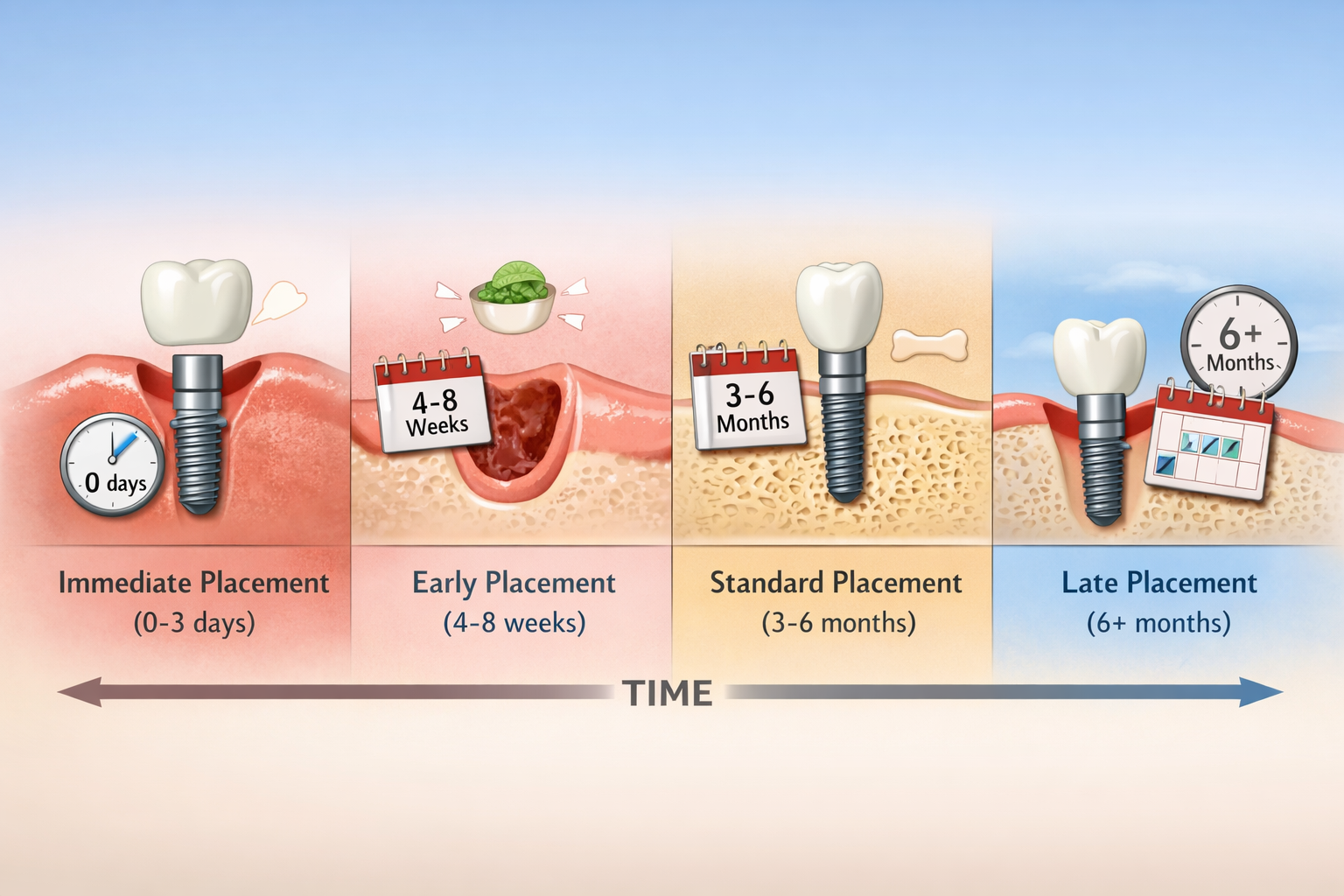
The time you’ll need to wait after a tooth extraction before getting a dental implant can range from immediately (within 24-72 hours) to six months or more. For most standard cases, a waiting period of 3-6 months allows for complete healing of the extraction site and ensures adequate bone volume for successful implant integration, though your specific timeline will depend on your unique oral health situation and any additional procedures required.
What are the Different Timelines for Dental Implant Placement After Extraction?
The timeline for getting a dental implant after a tooth extraction can be categorized into four main approaches: immediate, early, standard (delayed), and late placement. Each approach is suited to different clinical situations, significantly impacting how long after tooth extraction you can get a dental implant.
- Immediate Implant Placement (0-3 Days Post-Extraction): This option involves placing the dental implant directly into the tooth socket immediately after extraction, often within 24 to 72 hours.
- Ideal Candidates: Patients with healthy bone density, no signs of infection at the extraction site, and excellent primary stability (the implant’s initial grip in the bone) can be candidates.
- Benefits: Can reduce the total treatment time and potentially minimize bone loss that naturally occurs after an extraction.
- Considerations: Requires precise surgical planning and is not suitable for all cases, particularly if there’s significant infection or bone damage.
- Early Implant Placement (4-8 Weeks Post-Extraction): This approach allows for initial soft tissue healing while the bone is still intact.
- Ideal Candidates: Often recommended for cases where there was mild soft tissue trauma or a minor infection, giving the gums a chance to heal before implant placement.
- Benefits: Helps maintain bone volume and reduces the risk of infection spreading to the implant site.
- Considerations: Still relies on adequate bone structure being present after initial healing.
- Standard (Delayed) Implant Placement (3-6 Months Post-Extraction): This is the most common and often recommended approach, allowing the extraction site to fully heal and the bone to regenerate.
- Ideal Candidates: Suitable for most patients, especially those who underwent routine extractions, experienced some bone loss, or required a minor bone graft.
- Benefits: Provides the best conditions for predictable osseointegration (the fusion of the implant with the jawbone) and reduces potential complications. This waiting period allows for thorough healing and assessment of the jawbone.
- Considerations: The overall treatment time is longer, but it often leads to a more stable and successful long-term outcome. For a comprehensive overview of the entire process, see our 2026 Guide: How Long Does Dental Implant Process Take?
- Late Implant Placement (6+ Months Post-Extraction): This extended waiting period is necessary for more complex cases.
- Ideal Candidates: Patients requiring extensive bone grafting (e.g., sinus lift or ridge augmentation), those with significant infection or abscess at the extraction site, or individuals with certain medical conditions affecting bone healing.
- Benefits: Ensures maximum bone regeneration and stability before implant placement, crucial for complex reconstructions.
- Considerations: Involves the longest overall treatment timeline, but it’s vital for patient safety and implant success in challenging situations. Understanding what happens if you wait too long for dental implants can help patients appreciate the importance of professional guidance here.
What Factors Influence How Long After Tooth Extraction You Can Get a Dental Implant?
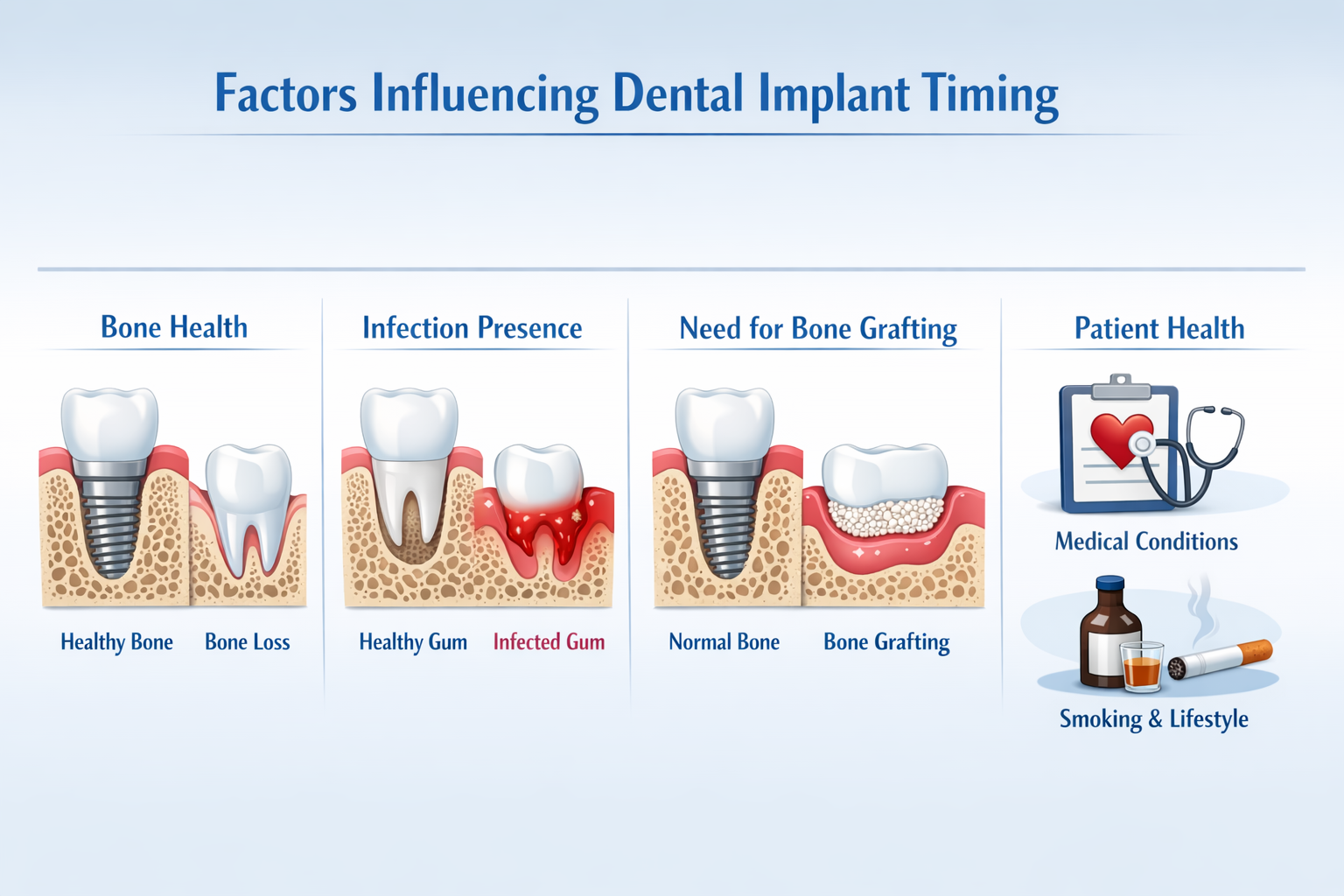
Several critical factors determine how long after tooth extraction you can get a dental implant. These elements are carefully evaluated by your Dallas dental implant specialist to create a personalized treatment plan that prioritizes your safety and the long-term success of your implant.
- Bone Quality and Quantity: The most significant factor is the health and volume of your jawbone.
- Good Bone: If there is sufficient healthy bone, immediate or early placement might be an option.
- Bone Loss: If bone has been lost due to infection, trauma, or prolonged absence of a tooth, a bone graft may be necessary. This requires additional healing time, typically 3-6 months, before implant placement. For more information, read about Bone Graft Healing for Dental Implants: Your 2026 Timeline.
- Presence of Infection: An active infection or abscess at the extraction site will always delay implant placement.
- Infection Control: The infection must be completely resolved before an implant can be placed, usually requiring antibiotics and a healing period of 3-6 months or more to ensure a sterile environment. Placing an implant into an infected site significantly increases the risk of implant failure.
- Number of Teeth Extracted and Location:
- Single Tooth: A single extraction without complications might allow for a shorter waiting period.
- Multiple Teeth/Complex Cases: More extensive extractions or those in critical aesthetic zones might require a more conservative, delayed approach to ensure optimal healing and cosmetic results.
- Overall Health and Healing Capacity: Your general health plays a role in how quickly you heal.
- Medical Conditions: Conditions like diabetes can affect healing rates. Smokers also tend to have delayed healing and higher risks of complications. Special considerations are often made for patients with specific health profiles, such as those discussed in our guide on Diabetic Dental Implant Recovery: Guide & Timeline (2026).
- Socket Preservation: If a socket preservation graft was placed at the time of extraction, it helps maintain bone volume.
- Graft Healing: Implants can typically be placed around 4 months after socket preservation, once the graft has integrated and the ridge is stable.
- Decision Rule: Choose immediate or early placement only if bone volume is excellent and there’s no infection. Otherwise, a standard 3-6 month wait is generally safer and more predictable for long-term success.
The Role of Bone Grafting in Determining Implant Timing
Bone grafting is a common procedure that significantly impacts how long after tooth extraction you can get a dental implant. When a tooth is extracted, the jawbone in that area naturally begins to resorb, or shrink, over time. A bone graft helps to rebuild and preserve the necessary bone structure, providing a stable foundation for the dental implant.
- Why Bone Grafts are Needed:
- Insufficient Bone: If there isn’t enough natural bone to securely hold an implant, a bone graft adds volume and density. This can be due to natural bone loss after extraction, periodontal disease, or trauma.
- Socket Preservation: A minor bone graft placed immediately after extraction (socket preservation) can prevent significant bone loss, reducing the need for more extensive grafting later.
- Healing Timeline for Bone Grafts:
- General Rule: After a bone graft, the area typically needs 3 to 6 months to heal and integrate with your natural bone before an implant can be placed.
- Factors Affecting Healing: The healing time varies based on the type of graft material used, the size of the grafted area, and the individual’s healing capabilities.
- Example: A small socket preservation graft might require 3-4 months, while a larger graft for significant bone regeneration could need 6 months or more.
- Impact on Overall Treatment: While bone grafting adds to the overall treatment timeline, it is often a crucial step to ensure the long-term success and stability of your dental implant. Without adequate bone, an implant cannot properly integrate, increasing the risk of failure. Patients in Dallas considering this procedure can learn more about associated expenses by visiting our page on Bone Graft Costs for Dental Implants in Dallas.
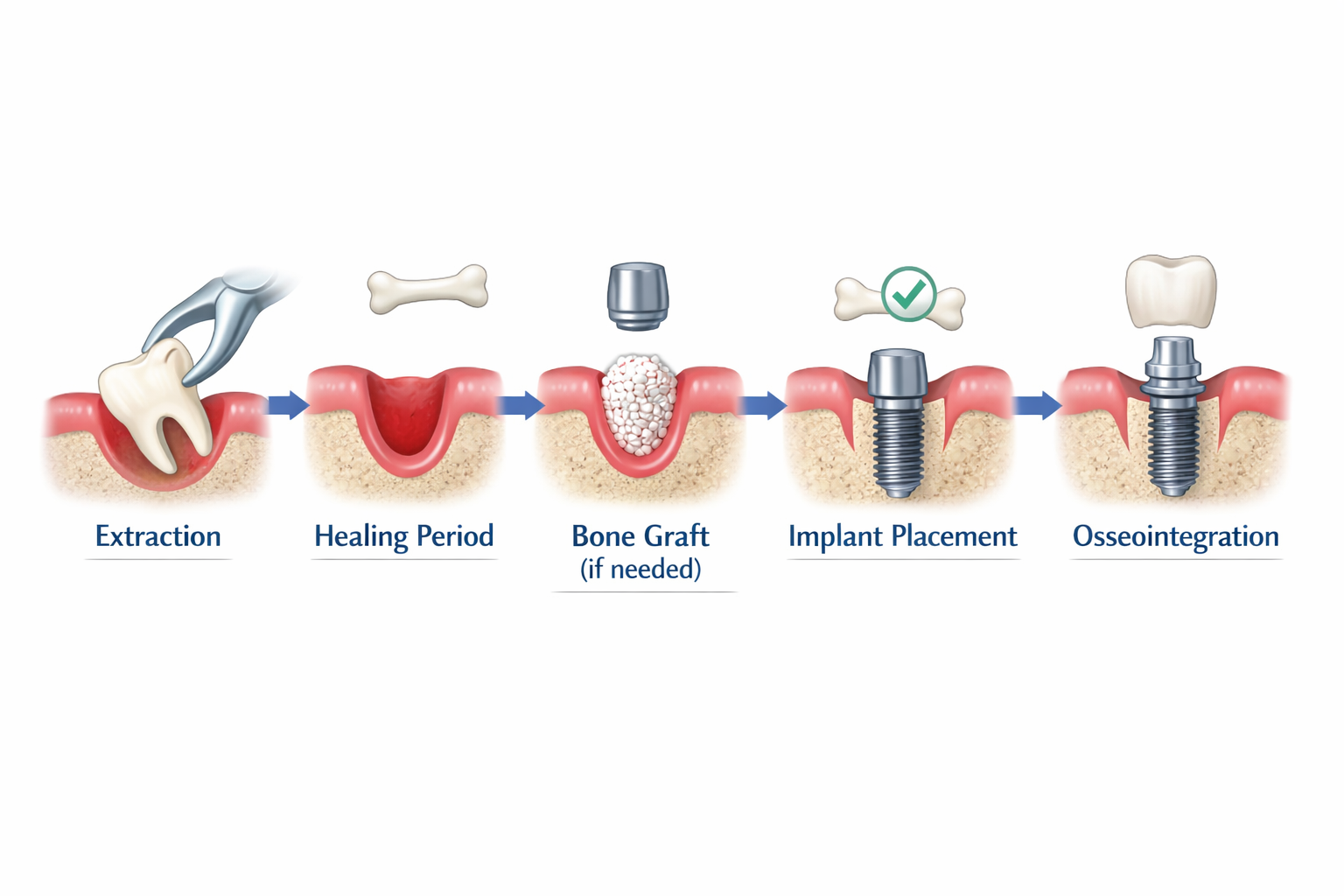
The Overall Dental Implant Procedure Timeline: From Extraction to Final Crown
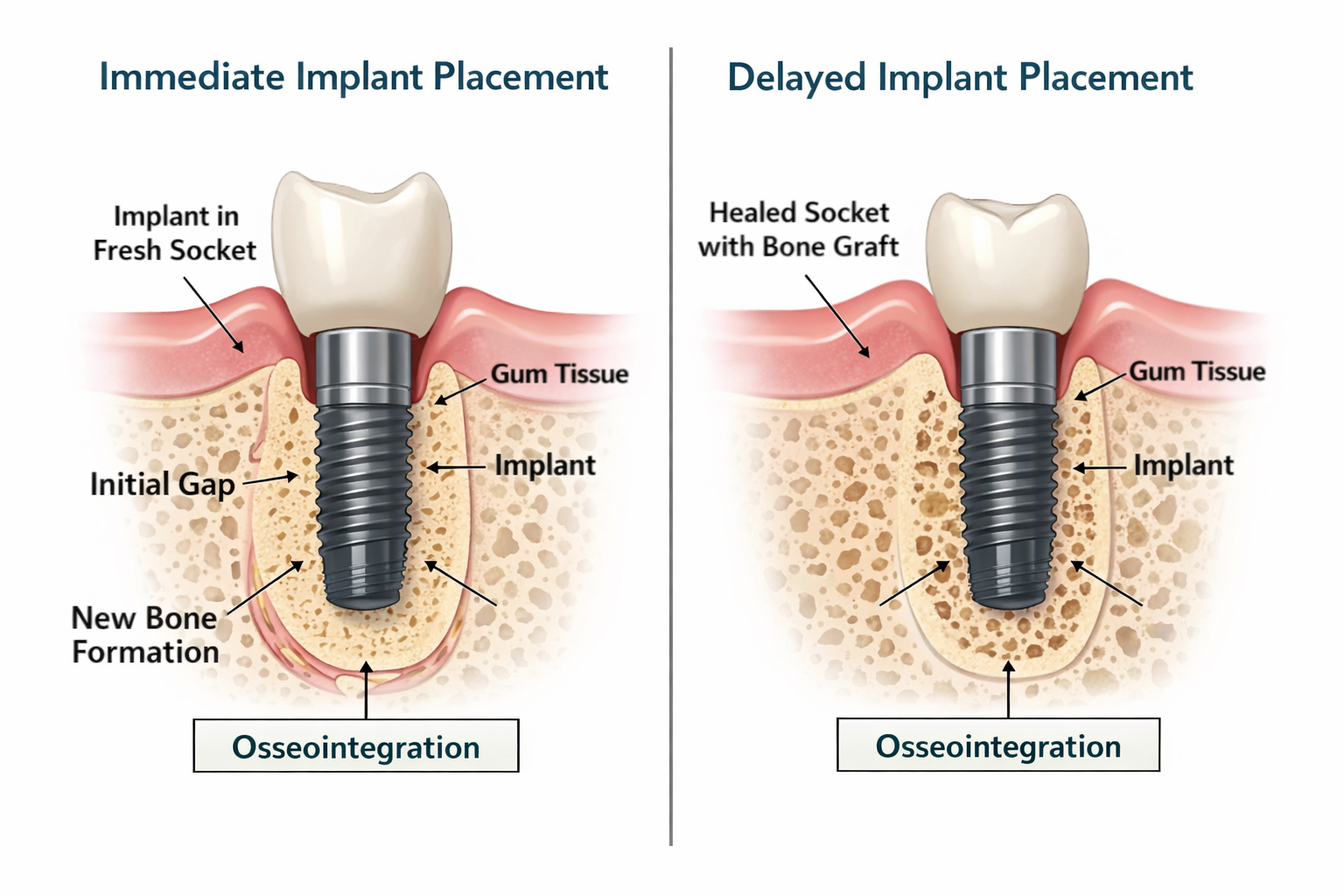
Understanding the full scope of the dental implant procedure timeline can help manage expectations and provide clarity on how long after tooth extraction you can get a dental implant, including the subsequent stages. The complete journey from tooth extraction to receiving your final dental implant crown typically spans several months.
Typical Dental Implant Journey Stages
- Tooth Extraction: The initial step, removing the damaged or decayed tooth.
- Duration: A single appointment.
- Initial Healing Period (if immediate implant not placed): This phase allows the extraction site to heal and, if necessary, for bone graft material to integrate.
- Duration: 2 weeks to 6 months, depending on individual healing and whether a bone graft was performed.
- Bone Grafting (if needed): If there isn’t enough bone, a grafting procedure is performed to build up the jawbone.
- Duration: 3-6 months of healing after the graft before implant placement.
- Dental Implant Placement Surgery: The titanium implant post is surgically placed into the jawbone.
- Duration: A single appointment, typically followed by a long healing period.
- Osseointegration (Healing and Fusion): The implant post fuses with the surrounding jawbone. This is a critical biological process that ensures the implant’s stability.
- Duration: 3-6 months. Lower jaw implants often integrate faster (around 3 months) than upper jaw implants (around 4 months), though individual variations apply.
- Abutment Placement: Once osseointegration is complete, a small connector piece called an abutment is attached to the implant. This serves as the connection for the final crown.
- Duration: A short procedure, sometimes done during implant placement, or a few weeks of healing if placed separately.
- Final Crown Placement: An impression is taken, and a custom-made crown (the visible tooth) is fabricated and then attached to the abutment.
- Duration: 1-2 weeks for fabrication, then a final appointment for placement.
- Total Timeframe: The entire process, from extraction to final crown, can take anywhere from 3 to 9 months, or even longer in complex cases requiring extensive bone regeneration. Planning your dental implant cost in Dallas should account for these various stages and potential additional procedures.
What Happens If You Delay Implant Placement Too Long After Extraction?
Delaying dental implant placement too long after a tooth extraction can lead to several complications that may impact the success and complexity of future treatment. While sometimes a delay is medically necessary, unnecessary postponement can make the eventual implant procedure more challenging and costly.
- Bone Resorption: This is the most significant concern. Without a tooth root to stimulate the jawbone, the bone in the extraction area will begin to shrink or resorb.
- Consequence: Reduced bone volume and density can make it difficult to place an implant directly, often necessitating extensive bone grafting. This adds to the cost and extends the overall treatment timeline. Learn more about What Happens If You Wait Too Long for Dental Implants?
- Shifting of Adjacent Teeth: When a gap is left by a missing tooth, the neighboring teeth can gradually drift into the empty space.
- Consequence: This shifting can cause misalignment of your bite, create new gaps, and make it harder to place an implant in the correct position without orthodontic treatment.
- Supra-Eruption of Opposing Teeth: The tooth directly opposite the extraction site (in the other jaw) may begin to erupt further out of its socket, seeking contact with a missing opposing tooth.
- Consequence: This can lead to an uneven bite, chewing difficulties, and may require further dental work to correct before an implant can be placed.
- Changes in Facial Structure: Over time, significant bone loss in the jaw can lead to changes in facial appearance, such as a sunken look around the mouth or a prematurely aged appearance.
- Consequence: While more common with multiple missing teeth, even a single prolonged gap can contribute to these changes.
Recommendation: It’s important to consult with a dental professional in Dallas shortly after an extraction to discuss tooth replacement options and prevent these potential complications. An early consultation helps establish the optimal timeline for your dental implant procedure.
Choosing the Right Dentist for Your Dental Implant in Dallas
Selecting the right dental professional for your dental implant procedure in Dallas, TX, is a crucial step towards ensuring a successful outcome. The expertise of your dentist significantly influences the timing, execution, and long-term success of your implant.
- Look for Specialization and Experience:
- Oral Surgeons and Periodontists: These specialists often have extensive training and experience in dental implant surgery.
- General Dentists with Implant Training: Some general dentists have pursued advanced training in implantology. Ask about their specific qualifications and how many implant procedures they perform annually.
- Experience in Complex Cases: If your situation involves bone grafting or other complexities, ensure your chosen professional has a proven track record in these areas.
- Technology and Facilities:
- Advanced Imaging: A practice utilizing 3D imaging (CBCT scans) can provide precise diagnostics for planning implant placement, which is vital for determining how long after tooth extraction you can get a dental implant.
- Sterilization and Safety Protocols: Ensure the clinic adheres to the highest standards of sterilization and patient safety.
- Patient-Focused Approach:
- Clear Communication: A good dentist will explain all aspects of the procedure, including timelines, costs, and potential risks, in easy-to-understand language.
- Personalized Treatment Plan: Your plan should be tailored to your unique needs, not a one-size-fits-all approach. They should be able to clearly articulate why a particular implant timing is recommended for you.
- Reassurance and Support: For those who might be anxious about the procedure, a warm and approachable team can make a significant difference. If you’re terrified of dental implants, learn how to conquer your fears.
- Local Authority and Reputation:
- Reviews and Testimonials: Check online reviews and ask for patient testimonials to gauge other patients’ experiences.
- Local Presence: A reputable practice in Dallas, TX, will be invested in the community and easily accessible for follow-up care. For guidance, see our article on How to Choose a Dental Implant Dentist Near You.
Choosing a dentist who prioritizes patient education and medically responsible treatment will lead to the best possible outcome for your dental implants in Dallas.
Frequently Asked Questions
Is it possible to get a dental implant immediately after tooth extraction?
Yes, immediate dental implant placement is possible, typically within 24-72 hours, but only if there is sufficient healthy bone, no active infection, and the implant can achieve excellent initial stability.
What is the average waiting period for a dental implant after a routine extraction?
For a routine extraction without complications, the average waiting period is typically 3-6 months to allow the socket to fully heal and the bone to regenerate adequately for implant placement.
Does bone grafting affect how long I have to wait for an implant?
Yes, if a bone graft is needed, it will extend the waiting period. The graft usually requires 3-6 months to heal and integrate with your natural bone before the dental implant can be placed.
What if there was an infection at the extraction site?
If there was an active infection or abscess at the extraction site, dental implant placement will be delayed. The infection must fully resolve, which typically requires a healing period of 3-6 months or more, often with antibiotics.
Can I get a temporary tooth while waiting for my dental implant?
Yes, in many cases, a temporary tooth replacement (like a temporary bridge or flipper) can be provided to maintain aesthetics and function while you wait for your implant to heal.
What happens if I wait too long after tooth extraction to get a dental implant?
Waiting too long can lead to bone loss (resorption) in the jaw, making future implant placement more complex and potentially requiring bone grafting. Adjacent teeth may also shift, affecting your bite.
How long does the entire dental implant process take from extraction to final crown?
The complete process, from tooth extraction to the placement of the final dental implant crown, can take anywhere from 3 to 9 months, or even longer if extensive bone grafting is required.
Is the healing time different for upper jaw vs. lower jaw implants?
Yes, the lower jaw (mandible) typically has denser bone, so implants often integrate faster (around 3 months). Upper jaw (maxilla) implants, which are often in less dense bone, may take approximately 4 months or more to fully integrate.
What is osseointegration?
Osseointegration is the biological process where the dental implant post, made of titanium, fuses directly with the surrounding jawbone, creating a strong and stable foundation for the replacement tooth. This process typically takes 3-6 months.
How do I know the best timing for my dental implant?
The best timing is determined by a thorough evaluation from a qualified dental professional, who will assess your oral health, bone density, and overall medical history to create a personalized treatment plan. A consultation with a dentist is always recommended.
Conclusion
Understanding how long after tooth extraction you can get a dental implant involves a nuanced assessment of various factors, including your individual oral health, the presence of infection, and the need for procedures like bone grafting. While immediate placement is an option for select candidates, the most common and often recommended approach involves a healing period of 3-6 months to ensure optimal bone regeneration and successful implant integration.
Here in Dallas, TX, our priority at Dental Implant Education is to equip you with clear, accurate information to empower your decisions about tooth replacement options. We encourage you to schedule a consultation with a qualified dental professional to discuss your unique situation. They can provide a tailored assessment, outline the personalized dental implant procedure timeline, and ensure you receive the safest and most effective care for your long-term oral health. Making an informed decision is the first step toward a healthy, confident smile.
Leave a Reply
Share your thoughts or ask a question about dental implants. Your email address will not be published.