

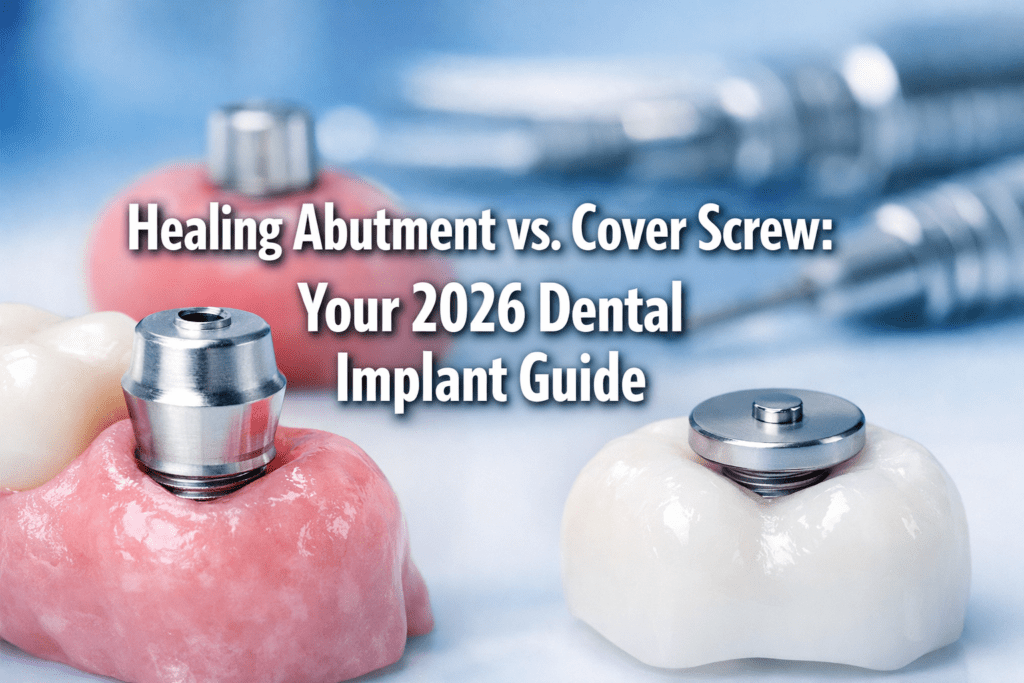
Embarking on the path to replacing missing teeth with dental implants is a significant step towards restoring your oral health and confidence. As you explore this advanced tooth replacement option, you’ll encounter various terms and components crucial to the success of the dental implant procedure. Among the most important are the healing abutment and the cover screw, two distinct yet equally vital parts of the implant healing process. Understanding the differences between a healing abutment vs cover screw is key to appreciating the stages of your dental implant journey.
Key Takeaways
- Purpose: Cover screws seal the implant for submerged healing, while healing abutments shape gum tissue for the final crown.
- Visibility: Cover screws are hidden under the gums; healing abutments protrude above.
- Procedure Stages: Cover screws are used in two-stage surgeries (requiring a second procedure for exposure); healing abutments can be used in one-stage or two-stage approaches.
- Healing Time: Both methods lead to stable peri-implant tissues, but healing abutments can accelerate soft tissue maturation.
- Patient Experience: Cover screws may offer more initial comfort due to being submerged, while healing abutments require careful oral hygiene around the protruding part.
Quick Answer: Understanding Healing Abutment vs Cover Screw
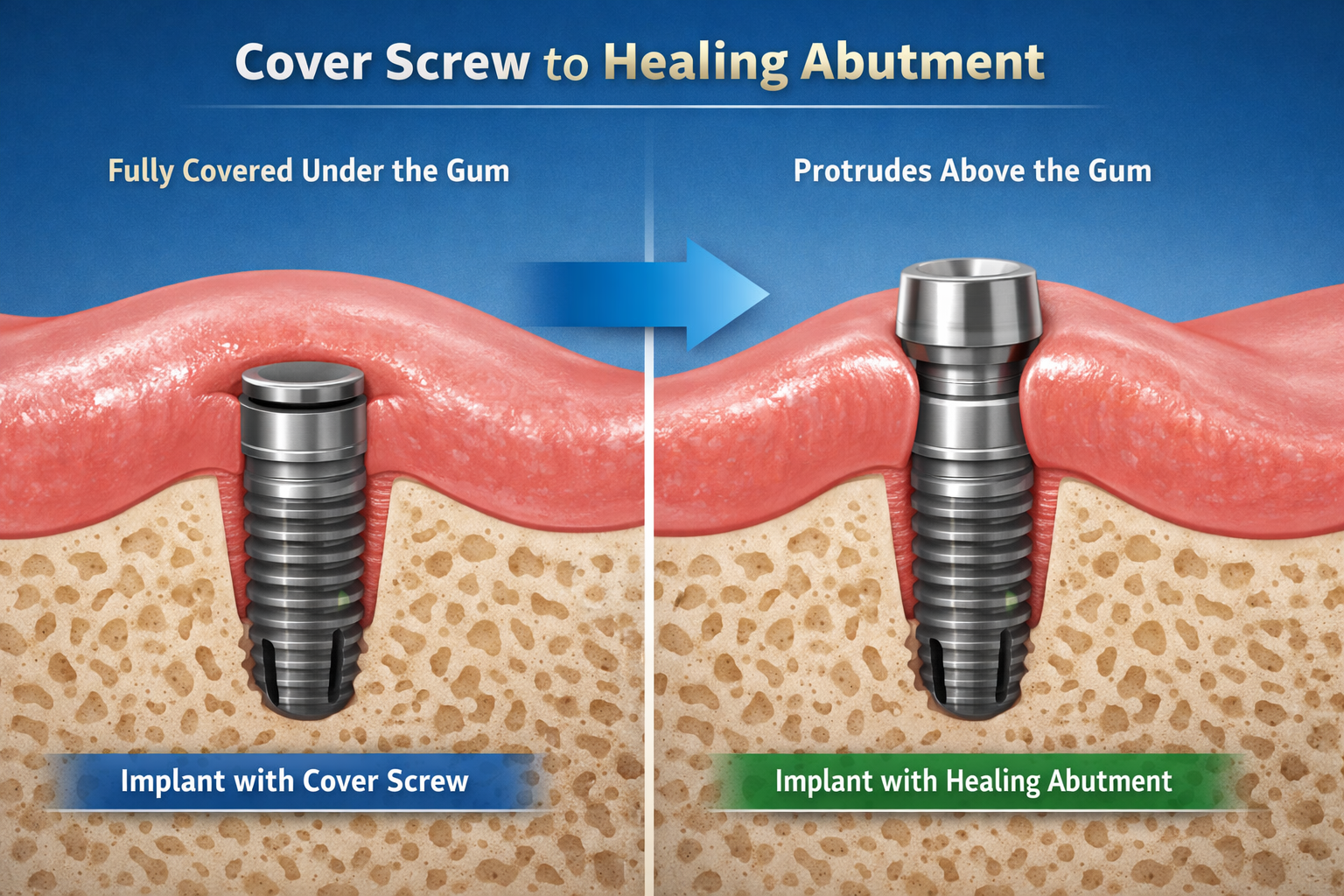
The primary distinction between a healing abutment and a cover screw lies in their function and placement during dental implant recovery. A cover screw is a small, flat component placed directly on top of the dental implant, completely sealing it off and allowing it to heal undisturbed beneath the gum tissue. In contrast, a healing abutment (also known as a healing cap or gingival former) connects to the implant and extends through the gum line, shaping the surrounding soft tissue to prepare it for the final prosthetic crown. Both are critical for proper healing, but they facilitate different stages and methods of soft tissue management [1].
What is a Healing Abutment?
A healing abutment is a temporary component attached to a newly placed dental implant that extends through the gum tissue, serving to shape and guide the surrounding gum tissue during the initial healing phase [1]. This shaping creates a natural-looking emergence profile for the future crown or restoration, ensuring a seamless transition from the implant to the visible tooth replacement [2].
Think of it as a sculptor for your gums. Once the dental implant itself has been surgically placed into the jawbone, if the stability (torque) is sufficient, a healing abutment can be attached immediately in a “one-stage” surgical approach [5]. This means the abutment is visible above the gum line from the start, allowing the gum tissue to heal and conform around it [3]. Healing abutments are typically made of titanium or other biocompatible materials like zirconia, ensuring compatibility with the body [1].
Key Characteristics of Healing Abutments:
- Visibility: Protrudes above the gum line, making it visible and palpable to the patient [3].
- Function: Shapes the gum tissue, creating a natural contour for the future prosthetic tooth [1].
- Placement Timing: Can be placed immediately after implant insertion if the implant achieves at least 25 Ncm of torque (one-stage surgery) or after initial submerged healing in a two-stage approach [5].
- Soft Tissue Maturation: Accelerates the maturation of soft tissue, potentially reducing overall treatment time compared to cover screws [2].
- Reduced Interventions: When used in a one-stage protocol, it can eliminate the need for a second surgical procedure to expose the implant, as is often required with cover screws [4].
What is a Cover Screw?
A cover screw is a small, flat, dome-shaped component that is threaded into the top of a newly placed dental implant, completely sealing the implant and allowing it to heal undisturbed beneath the gum tissue [1]. Its primary purpose is to protect the internal connection of the implant from bacteria, food debris, and external forces, facilitating an optimal environment for osseointegration – the process where the implant fuses with the surrounding bone [1].
Unlike a healing abutment, a cover screw is entirely submerged below the gum line and is not visible or palpable to the patient [3, 5]. This “two-stage” surgical approach means that after the implant and cover screw are placed, the gum tissue is sutured closed over the implant [1]. After a period of healing (typically two to three months for the bone to integrate), a second, minor surgical procedure is performed to uncover the implant and replace the cover screw with a healing abutment [1].
Key Characteristics of Cover Screws:
- Visibility: Completely submerged under the gum tissue and undetectable to the patient [3, 5].
- Function: Seals and protects the implant during the critical osseointegration phase, preventing contamination [1].
- Placement Timing: Placed immediately after implant insertion (first-stage surgery), typically used for one to two weeks before the gum is closed over it [1].
- Patient Comfort: The buried design can reduce initial patient discomfort and avoid oral hygiene issues around a protruding component [2].
- Surgical Stages: Necessitates a second surgical procedure (flap re-entry) to expose the implant and attach a healing abutment or final abutment [4].
- Material: Typically made of titanium or other biocompatible materials [1].
Healing Abutment vs Cover Screw: A Detailed Comparison
When considering tooth replacement options like dental implants in Dallas, it’s helpful to understand the nuances of each step. The choice between a healing abutment vs cover screw impacts the surgical timeline, the number of procedures, and the initial post-operative experience. Both ultimately lead to successful implant integration, but they achieve this through different pathways.
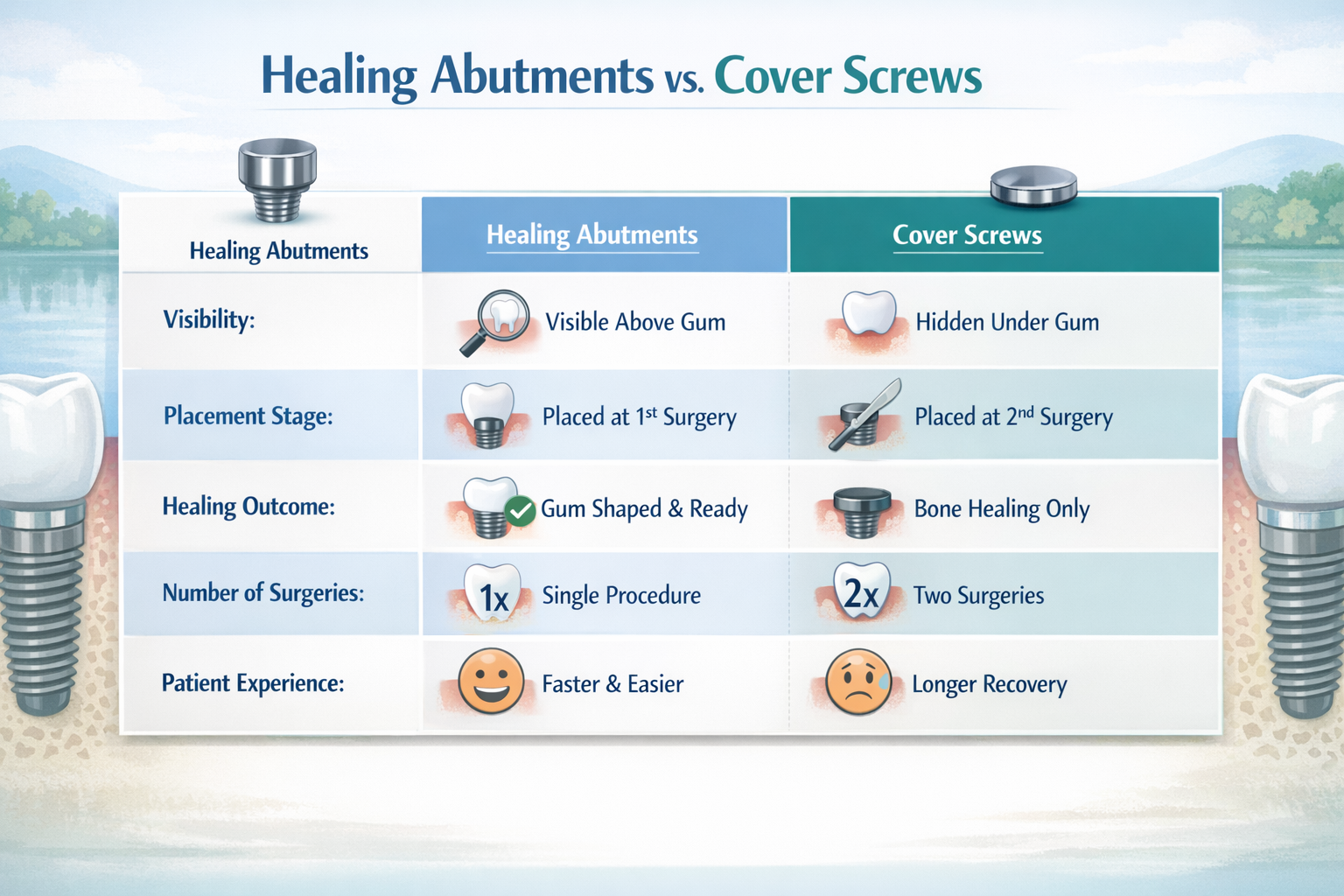
| Feature | Healing Abutment | Cover Screw |
|---|---|---|
| Primary Function | Shapes and guides gingival tissue for prosthesis [1] | Seals and protects implant during osseointegration [1] |
| Visibility | Protrudes above the gum line, visible and palpable [3] | Completely submerged under gum tissue, not visible [3, 5] |
| Placement Stage | Can be immediate (one-stage) or after submerged healing (two-stage) [5] | Immediately after implant insertion (first-stage) [1] |
| Number of Surgeries | Can reduce to one surgical stage for implant placement and tissue shaping [4] | Requires a second minor surgery to expose the implant [1] |
| Healing Duration | Accelerates soft tissue maturation [2] | Requires gum tissue to heal over, then be reopened [2] |
| Patient Experience | Requires careful oral hygiene around the protruding part | Reduced initial discomfort, avoids hygiene issues around a protruding part [2] |
| Risk of Contamination | Potentially higher risk if exposed during early healing | Lower risk of external contamination as it’s sealed [1] |
| Clinical Advantage | Avoids flap re-entry, simpler prosthetic procedures [4] | Promotes better soft tissue quality during submerged healing [2] |
This comparison highlights that while both components are crucial for successful dental implant integration, the healing abutment streamlines the soft tissue management, potentially reducing the overall number of surgical interventions. Conversely, the cover screw prioritizes a completely undisturbed healing environment for the implant itself.
When is a Healing Abutment Preferred?
A healing abutment is often preferred in situations where immediate soft tissue contouring is desired, or when the implant achieves sufficient primary stability (torque) to support immediate exposure [5]. This approach, known as a one-stage protocol, can simplify the implant surgery process and reduce the overall treatment timeline for patients.
Specifically, a healing abutment is typically chosen under these conditions:
- Adequate Primary Stability: If the dental implant achieves a torque of at least 25 Ncm upon placement, indicating strong initial stability, a healing abutment can be placed immediately [5]. This allows the soft tissue to begin shaping around the abutment right away.
- Good Soft Tissue Volume: When there’s enough healthy gum tissue present around the implant site to allow for proper contouring and sealing around the healing abutment, it’s a favorable choice.
- Patient Preference for Fewer Surgeries: Many patients prefer to avoid a second surgical procedure. The one-stage approach, utilizing a healing abutment from the outset, eliminates the need for flap re-entry to expose the implant later [4]. This can significantly improve the patient experience.
- Aesthetics: In areas of high aesthetic concern, such as front teeth, a healing abutment can immediately begin shaping the gum tissue to create a natural and harmonious emergence profile for the final crown. This is particularly important for achieving optimal long-term oral health and cosmetic outcomes.
Using a healing abutment can simplify the prosthetic phase by providing an already-formed gum profile, potentially reducing bleeding during later procedures for the final crown [4]. For individuals seeking efficient missing teeth solutions in Dallas, understanding this preference can guide discussions with their dentist.
When is a Cover Screw Preferred?
A cover screw is typically preferred when the dental implant needs to heal undisturbed beneath the gum tissue, particularly in cases where achieving optimal initial stability might be challenging or when a more conservative, two-stage approach is deemed safer for the implant’s long-term integration [1].
Consider a cover screw in these scenarios:
- Compromised Primary Stability: If the dental implant’s initial stability is less than ideal, or if there’s any concern about micromovement that could disrupt osseointegration, submerging the implant with a cover screw provides the most protected healing environment.
- Bone Grafting Procedures: Following complex procedures like a bone graft for dental implants, the area needs maximum protection to allow both the graft and the implant to heal thoroughly without disturbance. A cover screw ensures this submerged, undisturbed healing [1].
- Systemic Health Considerations: For patients with certain systemic health conditions, such as some forms of diabetes, where healing might be slower or more complicated, a two-stage approach with a cover screw can offer a more predictable and protected healing period [1]. For more information, explore our guide on Diabetic Dental Implant Recovery: Guide & Timeline (2026).
- Risk of Infection or Trauma: If the implant site is in an area prone to chewing forces, trauma, or where maintaining perfect oral hygiene around an exposed component might be difficult, a submerged cover screw minimizes these risks during the critical early healing phase.
- Patient Habits: For patients who might struggle with diligent oral hygiene immediately post-surgery or those prone to clenching or grinding (bruxism), protecting the implant with a cover screw can be a safer option. This promotes better soft tissue quality around the implant as it heals [2].
The use of a cover screw promotes undisturbed osseointegration, which is paramount for the long-term success and stability of the dental implant. It ensures that the implant is completely isolated from the oral environment during the crucial bone integration phase.
The Two-Stage vs. One-Stage Surgical Approach
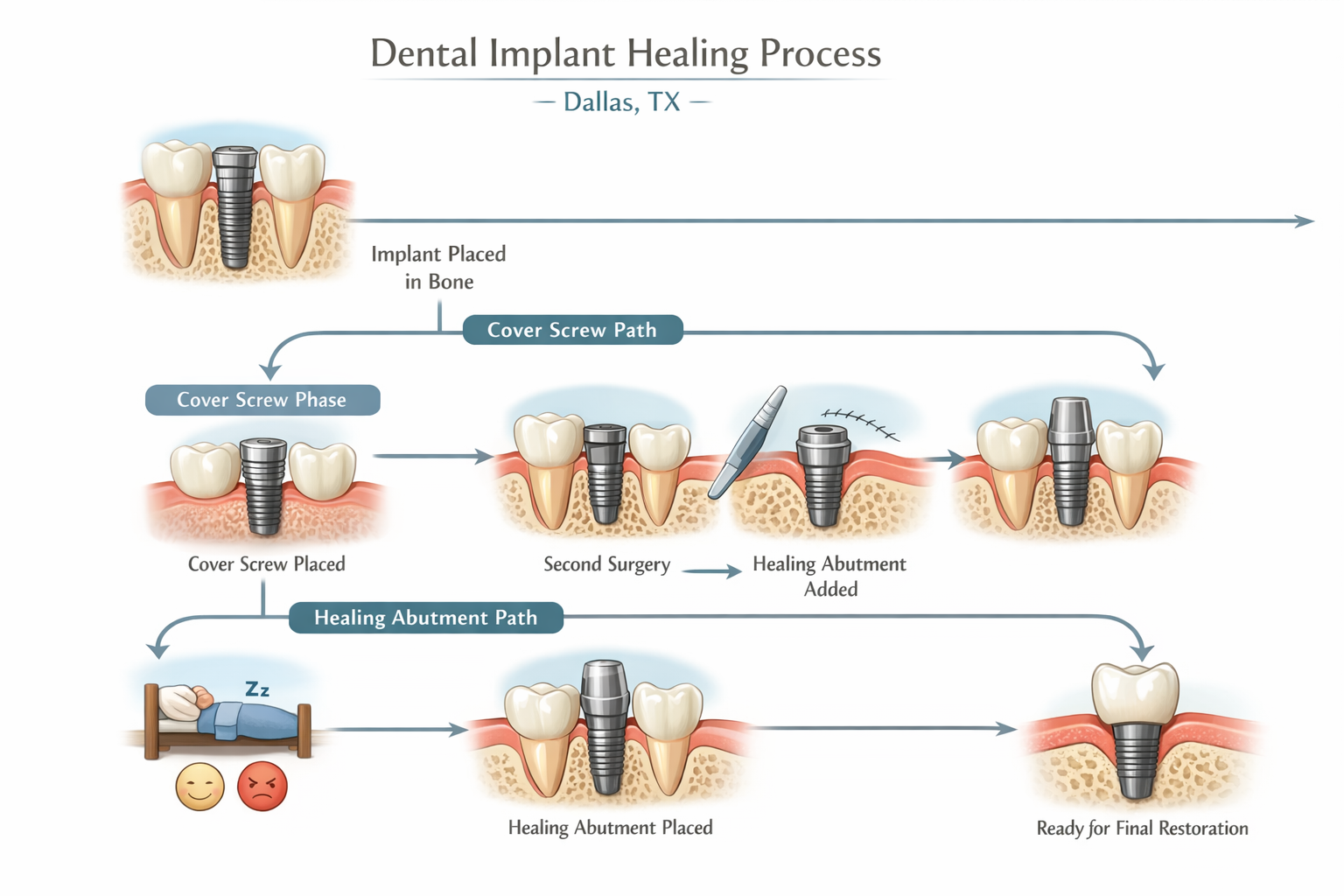
The distinction between a healing abutment vs cover screw is fundamentally tied to whether a one-stage or two-stage surgical approach is used for your dental implant procedure. Each method has specific protocols and healing considerations, impacting the patient’s journey and recovery.
One-Stage Surgical Approach
In a one-stage approach, the dental implant is placed into the jawbone, and a healing abutment is immediately attached and left exposed above the gum line [5]. This means that the gum tissue is sutured around the healing abutment, rather than completely covering the implant.
- Process: After the implant is seated, the healing abutment is screwed directly into the implant. The surrounding soft tissue is then carefully manipulated and sutured to allow the healing abutment to protrude.
- Benefits: This method often reduces the total number of surgical appointments, as there’s no need for a second procedure to expose the implant [4]. It also allows for immediate soft tissue shaping, potentially leading to faster aesthetic results.
- Considerations: Requires excellent primary stability of the implant and careful oral hygiene by the patient around the exposed healing abutment during recovery.
Two-Stage Surgical Approach
The two-stage approach involves placing the dental implant into the jawbone and then covering it completely with a cover screw, allowing the gum tissue to heal over the implant [1]. The implant remains submerged and protected during the osseointegration period.
- Process:
- First Stage: The implant is placed, and a cover screw is attached. The gum tissue is then closed over the implant and sutured, completely burying it [1].
- Healing Period: The implant undergoes osseointegration, typically for two to three months or longer, without any exposure to the oral environment [1].
- Second Stage: A minor surgical procedure (often a simple incision or “tissue punch”) is performed to re-expose the implant. The cover screw is removed, and a healing abutment is then placed [4]. The soft tissue then heals around this healing abutment for a few weeks before the final restoration.
- Benefits: This approach provides maximum protection for the implant during osseointegration, which can be beneficial in cases of compromised bone quality, immediate implant placement following an extraction, or when bone grafting is performed [1]. The undisturbed healing environment can lead to very predictable implant integration.
- Considerations: Involves two surgical procedures, which might extend the overall treatment timeline and require additional recovery from a minor surgery for implant exposure.
Both approaches have proven successful in achieving stable peri-implant tissues, with comparable marginal bone loss changes at 6 months, according to a 2026 randomized clinical trial [4]. Your dental implant specialist in Dallas will determine the best approach based on your individual case, bone quality, and overall oral health.
Healing and Recovery: What to Expect
Regardless of whether a healing abutment or cover screw is used, the recovery process for dental implants involves several stages focused on osseointegration and tissue healing. Understanding these phases is crucial for managing expectations and ensuring the long-term success of your dental implants in Dallas.
Initial Post-Operative Period (First 1-2 Weeks)
- Pain and Swelling: It’s normal to experience some pain, swelling, and possibly minor bruising after dental implant surgery. This is typically managed with prescribed pain medication and anti-inflammatory drugs.
- Diet: A soft diet is recommended for the first few days to weeks, gradually reintroducing solid foods as comfort allows. Avoiding very hot, cold, spicy, or crunchy foods is important.
- Oral Hygiene: Gentle oral hygiene is paramount. Your dentist will provide specific post-op dental implant instructions, which usually include saline rinses and careful brushing around the surgical site [15]. Avoiding the surgical area directly is key to prevent disturbing the healing tissue.
- Activity: Strenuous activity should be avoided for several days to prevent increased bleeding or swelling.
Osseointegration Phase (2-6 Months)
- Cover Screw Healing: If a cover screw was used, the implant will be completely submerged beneath the gum tissue during this phase. You won’t see or feel the implant, allowing it to fuse with the bone undisturbed [1].
- Healing Abutment Healing: If a healing abutment was placed, it will remain visible above the gum line. The gum tissue will gradually heal and conform around it, shaping the ideal emergence profile for your future crown [1]. You’ll need to maintain meticulous oral hygiene around this abutment.
- Follow-Up Appointments: Regular check-ups with your dental implant specialist in Dallas are essential to monitor the healing process and ensure successful osseointegration.
Post-Healing and Restoration
- Cover Screw Uncovering: If a cover screw was initially used, a second, minor procedure will be performed to uncover the implant and replace the cover screw with a healing abutment or the final abutment [1].
- Abutment Placement: Once osseointegration is complete and the soft tissue is properly shaped (whether by an initial healing abutment or one placed after uncovering), the final abutment is attached to the implant. This abutment will support the prosthetic tooth.
- Final Crown Placement: Impressions are taken to custom-fabricate your crown, bridge, or denture, which is then securely attached to the abutment.
The overall healing time can vary based on individual factors, bone quality, and the complexity of the procedure. For specific guidance on your recovery, please consult our detailed guide on Post-Op Dental Implant Instructions: 2026 Recovery Guide. Patients with conditions like diabetes may have different recovery timelines, which are addressed in our Diabetic Dental Implant Recovery: Guide for 2026 article.
Factors Influencing the Choice
The decision between using a healing abutment or a cover screw is a critical one made by your dental implant specialist, often in consultation with you. This choice is based on a comprehensive evaluation of several factors to ensure the best possible outcome for your long-term oral health.
Key factors that influence this decision include:
- Primary Stability of the Implant: The most crucial factor. If the implant is very stable when placed (high insertion torque), a one-stage approach with a healing abutment is often feasible [5]. If stability is compromised, a cover screw for submerged healing is usually preferred to protect the implant during osseointegration.
- Bone Quality and Quantity: Patients with softer bone or insufficient bone might benefit from the protected healing environment offered by a cover screw, allowing for undisturbed osseointegration before any load is placed on the implant. Procedures involving bone grafting also often necessitate a cover screw [1].
- Patient’s Systemic Health: Certain medical conditions (e.g., uncontrolled diabetes, compromised immune system) can affect healing. In such cases, a more conservative two-stage approach with a cover screw might be recommended to minimize risks during the early healing phase [1].
- Oral Hygiene and Habits: A patient’s ability to maintain excellent oral hygiene around an exposed healing abutment is vital. If hygiene is a concern, or if the patient grinds their teeth (bruxism), a submerged cover screw may be safer [2].
- Location of the Implant: Implants in areas of high chewing forces (e.g., molars) or in highly aesthetic zones (e.g., front teeth) might have specific requirements for soft tissue contouring (favoring a healing abutment) or maximum protection (favoring a cover screw).
- Aesthetic Requirements: If precise gum contouring for aesthetics is a high priority, a healing abutment can be invaluable for shaping the soft tissue from the outset.
- Patient Preference and Compliance: While the clinician makes the final decision, patient preferences regarding the number of surgeries and managing a visible healing component are also considered.
- Operator Experience: The dentist’s experience and comfort with one-stage vs. two-stage protocols can also play a role in the recommendation.
A thorough consultation with a dentist specializing in dental implants in Dallas will involve a detailed discussion of these factors to determine the most appropriate and predictable treatment plan for your specific missing teeth solutions.
FAQ: Healing Abutment vs Cover Screw
What is the main difference between a healing abutment and a cover screw?
A healing abutment protrudes above the gum line to shape soft tissue, while a cover screw is placed beneath the gum line to seal and protect the implant during healing [1].
Do I always need a second surgery if I have a cover screw?
Yes, if a cover screw is used, a second minor surgery is typically required to uncover the implant and replace the cover screw with a healing abutment or final abutment [1].
Is one method (healing abutment or cover screw) better than the other?
Neither method is inherently “better”; the choice depends on clinical factors like implant stability, bone quality, and patient health, as both yield stable results [4].
Will I feel pain with a healing abutment or cover screw?
Initial post-surgical discomfort is common with both. A cover screw is submerged, reducing external irritation, while a healing abutment is exposed, requiring careful oral hygiene [2].
How long does a healing abutment stay in place?
A healing abutment typically stays in place for a few weeks to several months, allowing the gum tissue to fully mature around it before the final restoration is placed [1].
Can I eat normally with a healing abutment?
While you can gradually return to normal eating, it’s advisable to avoid hard, sticky, or very chewy foods directly on the healing abutment to prevent dislodgement or irritation [15].
Is it possible for a healing abutment to come loose?
Yes, a healing abutment can occasionally come loose. If this happens, you should contact your dental implant specialist in Dallas immediately to have it re-tightened or replaced.
Conclusion
Understanding the differences between a healing abutment vs cover screw is an important part of comprehending the intricacies of the dental implant procedure. Both components play a vital role in the success of your new dental implants, guiding the healing process towards a strong foundation for your permanent restoration. While a cover screw prioritizes a completely undisturbed environment for the implant to fuse with the bone (submerged healing), a healing abutment actively shapes the gum tissue, often streamlining the process and reducing the need for an additional surgical step.
Your dental implant specialist in Dallas will carefully evaluate your specific oral health needs, bone quality, and overall health to determine which approach is best suited for your individual case. The ultimate goal is to achieve optimal osseointegration and healthy soft tissue contours, ensuring the long-term success, function, and aesthetics of your dental implants. By making an informed decision in consultation with your dentist, you can confidently move forward with this excellent tooth replacement option, restoring your smile and enhancing your quality of life in 2026.
Actionable Next Steps:
- Consult a Specialist: Schedule a consultation with an experienced dental implant specialist in Dallas, Texas, to discuss your missing teeth solutions and determine the best implant healing strategy for you.
- Ask Questions: Don’t hesitate to ask your dentist about the specific components they plan to use (healing abutment vs cover screw) and why, ensuring you understand each step of your dental implant procedure.
- Follow Post-Op Instructions: Adhere strictly to all post-operative dental implant instructions to promote proper healing, regardless of the component used.
- Prioritize Oral Hygiene: Maintain diligent oral hygiene throughout the healing process to prevent complications and support the longevity of your implant.
References
[1] Healing Abutment And Cover Screw Whats The Difference – https://www.dentalmastermed.com/healing-abutment-and-cover-screw-whats-the-difference/
[2] Healing Abutment Implant Abutment – https://tttdental.com.hk/healing-abutment-implant-abutment/
[3] Healing Abutment Vs Cover Screw – https://www.meetdandy.com/learning-center/articles/healing-abutment-vs-cover-screw/
[4] pubmed.ncbi.nlm.nih.gov – https://pubmed.ncbi.nlm.nih.gov/41559425/
[5] Healing Caps Vs Cover Screws Whats The Difference – https://oemdent.com/blogs/blog/healing-caps-vs-cover-screws-whats-the-difference
[6] Blog 120633 2025.2.15 Healing Abutment Vs Cover Screw What Is The Difference P – https://cooleysmiles.com/p/BLOG-120633-2025.2.15-Healing-Abutment-vs-Cover-Screw-What-is-the-Difference-p.asp?fc=1
[7] Blog 123270 2025.6.16 Healing Abutment Vs Cover Screw What Is The Difference P – https://brianroundsdds.com/p/BLOG-123270-2025.6.16-Healing-Abutment-vs-Cover-Screw-What-is-the-Difference-p.asp
[8] Types Of Abutments – https://vitrinclinic.com/types-of-abutments/
[9] Blog 104365 2023.5.8 Healing Abutment Vs Cover Screw: What Is The Difference P – https://cooleysmileskenmore.com/p/BLOG-104365-2023.5.8-Healing-Abutment-vs-Cover-Screw:-What-is-the-Difference-p.asp?fc=1
Leave a Reply
Share your thoughts or ask a question about dental implants. Your email address will not be published.