

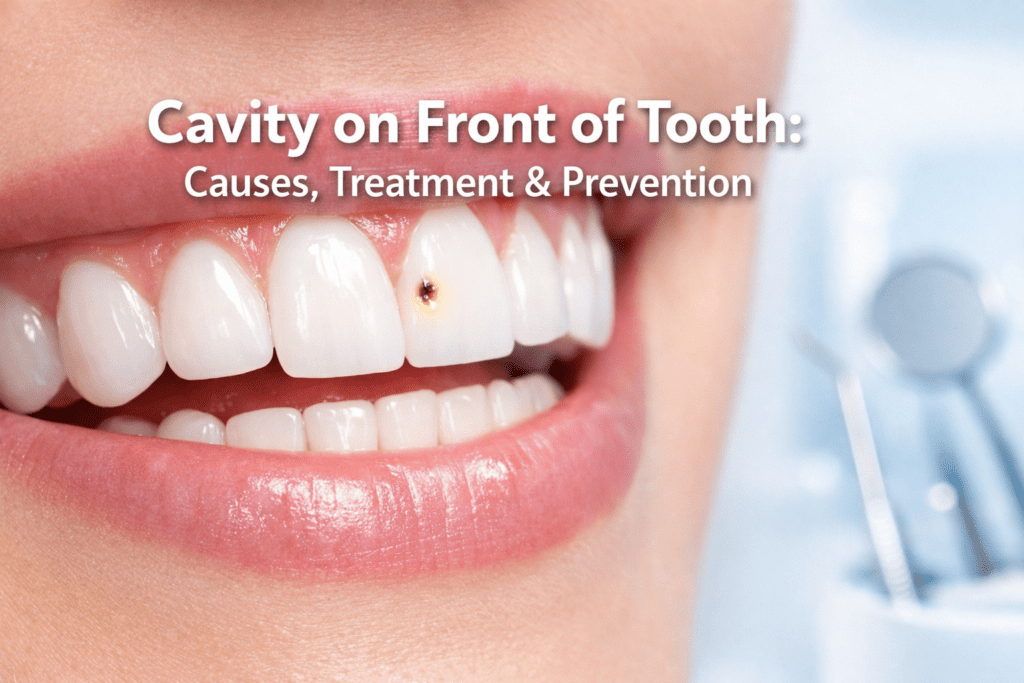
A cavity on the front of a tooth is a common dental issue that can significantly impact both your oral health and the aesthetics of your smile. Early detection and treatment are crucial to prevent further decay, alleviate discomfort, and avoid more complex restorative procedures. This article will provide comprehensive information on what causes cavities on front teeth, how they are treated, and essential prevention strategies.
Key Takeaways
- A cavity on the front of a tooth is visible decay affecting the enamel, often appearing as white spots, brown discoloration, or small holes.
- Poor oral hygiene, frequent sugar consumption, and acidic foods/drinks are primary causes.
- Symptoms include sensitivity, visible spots or holes, and mild pain when biting.
- Treatment options range from fluoride treatments for early decay to fillings, veneers, or crowns for more advanced cavities.
- Prevention relies on consistent brushing, flossing, a balanced diet, and regular dental check-ups.
- Ignoring a front tooth cavity can lead to severe pain, infection, and potential tooth loss, necessitating advanced solutions like dental implants in Dallas.
- Early intervention by a dentist in Dallas is key to preserving your smile and long-term oral health.
What Causes a Cavity on the Front of a Tooth?
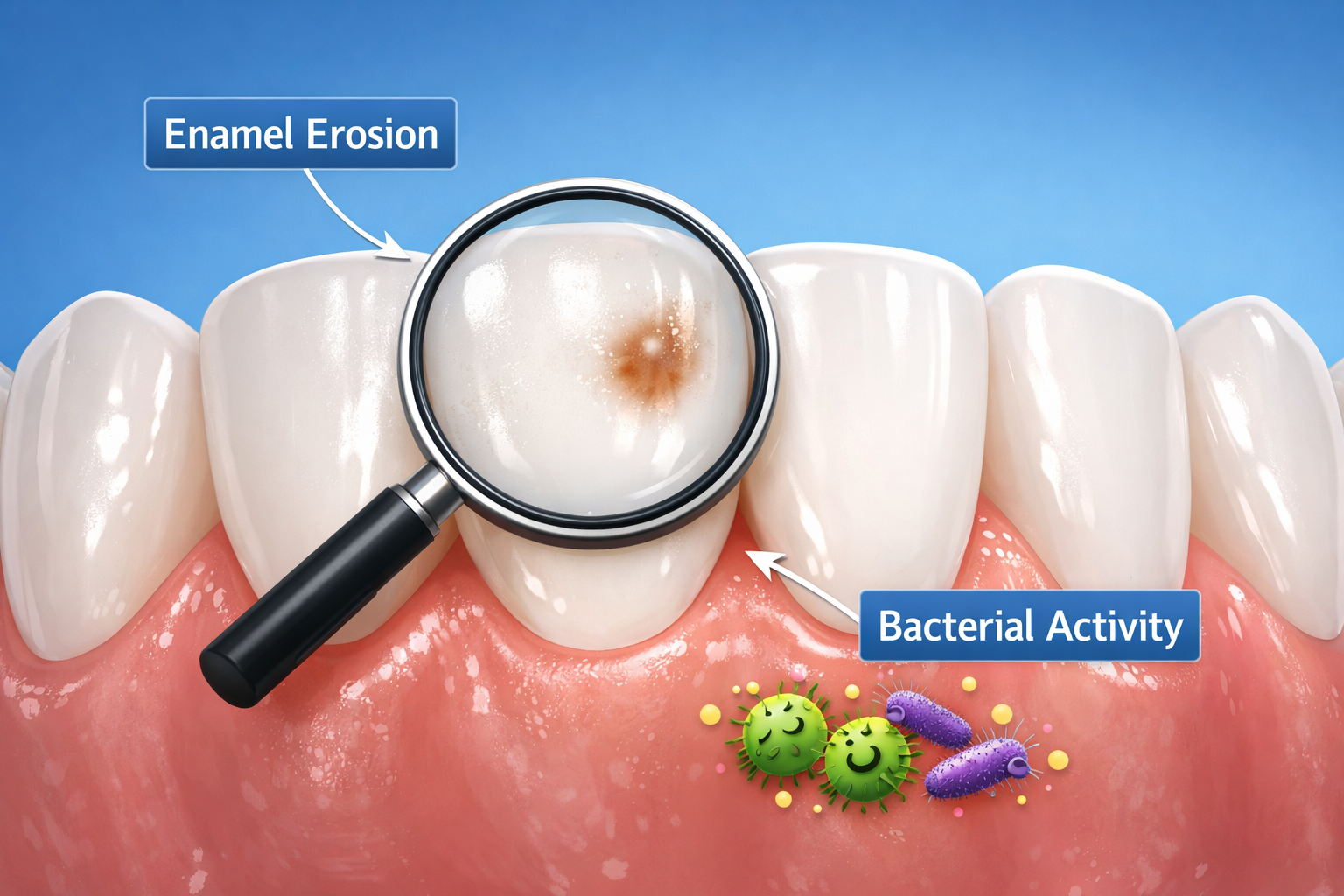
A cavity on the front of a tooth, much like cavities on molars, is primarily caused by tooth decay resulting from plaque buildup, which creates acids that erode the enamel. The front teeth are particularly vulnerable to visible decay due to their prominent position in the mouth and their role in biting and tearing food.
Causes of Front Tooth Cavities:
- Poor Oral Hygiene: Inadequate brushing and flossing allow plaque—a sticky film of bacteria—to accumulate on the tooth surfaces, especially between teeth and along the gumline. These bacteria metabolize sugars from food and produce acids that demineralize enamel.
- Frequent Sugar and Acidic Food/Drink Consumption: Regular intake of sugary snacks, sodas, fruit juices, and acidic foods (like citrus fruits or vinegars) provides fuel for decay-causing bacteria and directly erodes enamel, making teeth more susceptible to cavities.
- Dry Mouth (Xerostomia): Saliva plays a vital role in washing away food particles and neutralizing acids. Reduced saliva flow, often due to medications, certain health conditions, or radiation therapy, increases the risk of cavity formation.
- Enamel Defects: Some individuals may have naturally weaker enamel due to genetic factors or developmental issues, making their front teeth more prone to decay.
- Acid Reflux: Frequent acid reflux can expose front teeth to stomach acids, leading to significant enamel erosion and increased cavity risk.
- Improper Brushing Technique: Aggressive brushing can wear down enamel, while ineffective brushing misses plaque, creating vulnerable spots.
- Bruxism (Teeth Grinding): Chronic grinding can weaken enamel and create microscopic cracks, making teeth more susceptible to decay.
Understanding these contributing factors is the first step in preventing a cavity on the front of your tooth. If you notice any changes in your front teeth, it’s essential to consult with a dental professional promptly.
How Do You Identify a Cavity on the Front of a Tooth?
Identifying a cavity on the front of a tooth can be straightforward because these teeth are easily visible, but early signs can be subtle. It’s crucial to be aware of the indicators to seek prompt dental attention.
Signs and Symptoms of a Front Tooth Cavity:
- Visible Spots or Discoloration: One of the most common early signs is the appearance of white, chalky spots on the enamel, indicating demineralization. As the decay progresses, these spots may turn light brown, dark brown, or even black.
- Sensitivity: You might experience sensitivity or mild pain when consuming hot, cold, sweet, or acidic foods and drinks. This indicates that the decay has reached the dentin layer of the tooth.
- Pain When Biting or Chewing: If the cavity has advanced, you might feel pain or discomfort when pressure is applied to the tooth.
- Visible Holes or Pits: In more advanced stages, a small pit or hole might become visible on the tooth surface. These can sometimes be felt with the tongue.
- Roughness or Chipping: The enamel around the cavity might feel rough to the tongue or appear chipped in certain areas.
- Food Trapping: Food particles may frequently get lodged in a visible hole or groove on the tooth.
Even if you don’t experience pain, a visible spot or discoloration warrants a dental visit. A dentist can use visual inspection, dental instruments, and X-rays to accurately diagnose a cavity on the front of a tooth. If left untreated, a small cavity can quickly grow, potentially leading to infection, severe pain, and the need for more extensive treatments, including the possibility of dental implants after tooth extraction in Dallas if the tooth is lost.
What Are the Treatment Options for a Cavity on the Front of a Tooth?
Treatment for a cavity on the front of a tooth depends heavily on the size and depth of the decay, as well as aesthetic considerations due to its visible location. The primary goal is to remove the decayed portion and restore the tooth’s structure and appearance.
Common Treatment Options:
- Fluoride Treatments: For very early-stage cavities, often appearing as white spots indicating demineralization, a dentist may apply professional fluoride treatments. These treatments can help remineralize the enamel and potentially reverse the decay process before a full cavity forms. This is a non-invasive option suitable only for the earliest signs of decay.
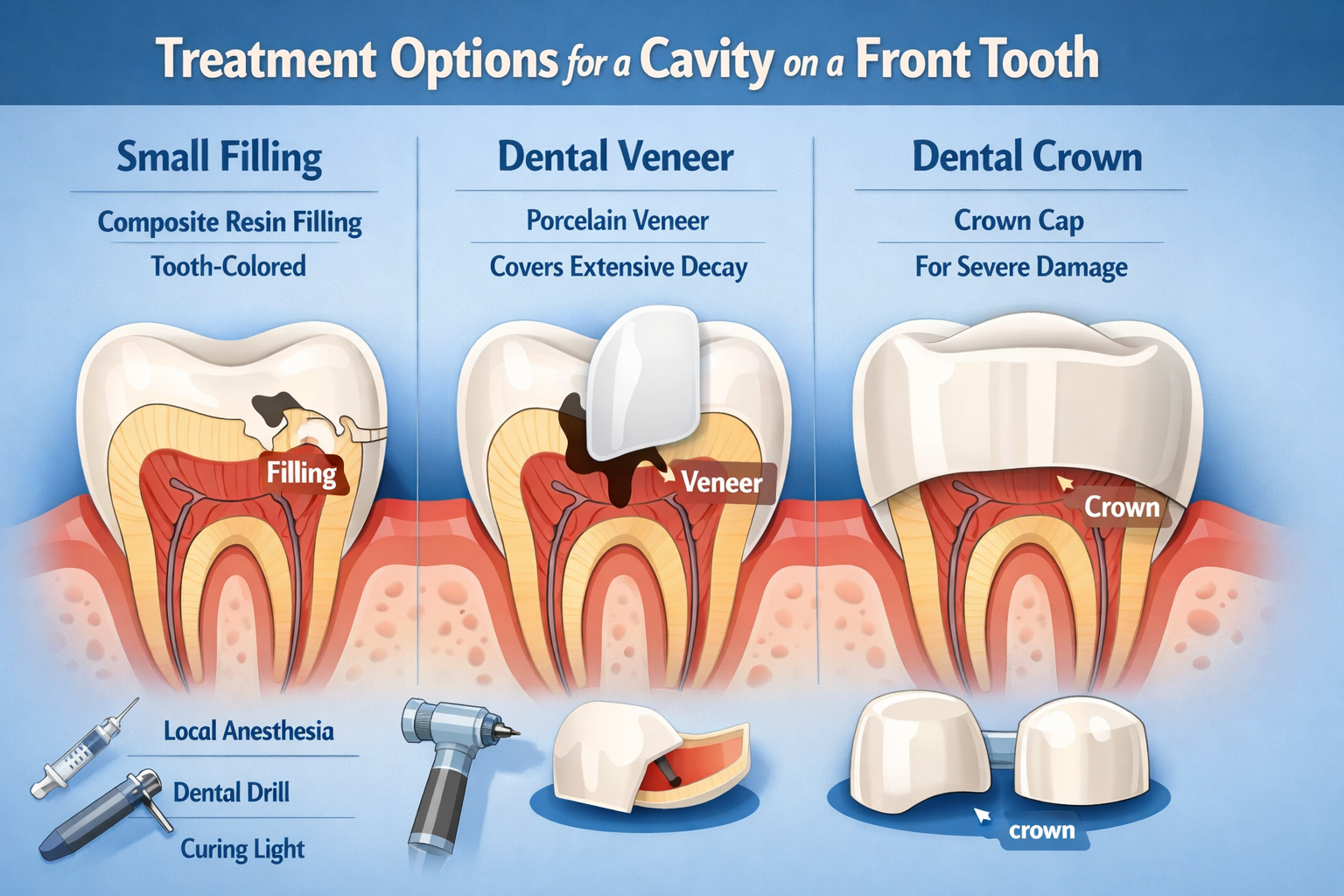
- Dental Fillings: This is the most common treatment for a cavity on the front of a tooth. After removing the decayed portion, the dentist fills the hole with a tooth-colored composite resin material. This material is chosen for its ability to blend seamlessly with the natural tooth color, making the filling virtually invisible.
- Decision Rule: Choose a composite filling if the cavity is small to moderate in size and does not compromise the structural integrity of a large part of the tooth.
- Dental Veneers: If the cavity is moderate to large but does not involve extensive structural damage, and the tooth still has sufficient healthy structure, a dental veneer might be an aesthetic option. A veneer is a thin, custom-made shell of porcelain or composite material that covers the front surface of the tooth. The decayed part is removed, and the veneer is bonded to the tooth, improving both appearance and strength.
- Edge Case: Veneers are often chosen when the cavity significantly affects the tooth’s appearance or when other aesthetic concerns (like discoloration or minor chips) are also present. Read more about dental implants for missing front teeth in Dallas and aesthetic comparisons.
- Dental Crowns: For a cavity on the front of a tooth that is very large, has significantly weakened the tooth structure, or has led to a fracture, a dental crown may be necessary. A crown is a tooth-shaped cap that fully covers the entire visible portion of the tooth, restoring its shape, size, strength, and appearance. Front tooth crowns are typically made of porcelain or zirconia for optimal aesthetics.
- When to Choose a Crown: If the cavity has compromised over 50% of the tooth structure, if the tooth has undergone root canal therapy, or if there’s a risk of fracture, a crown provides the best long-term protection.
- Root Canal Therapy (with Crown): If the decay has penetrated deep into the tooth, reaching the pulp (the innermost layer containing nerves and blood vessels), a root canal may be required. This procedure removes the infected pulp, cleans and disinfects the root canals, and then seals them. A crown is almost always placed on top of a tooth after root canal therapy to protect it from fracture and restore its function.
- Common Mistake: Delaying treatment can allow decay to reach the pulp, turning a simple filling into a root canal and crown.
- Extraction and Replacement: In rare, severe cases where the tooth is extensively decayed, infected beyond repair, or severely fractured, extraction might be the only option. Following extraction, the missing tooth can be replaced with a dental implant, a dental bridge, or a removable partial denture. For comprehensive tooth replacement options in Dallas, consulting with a local dentist is advised.
Your dentist in Dallas will assess the extent of the cavity and discuss the most appropriate treatment plan to ensure both the health and aesthetic outcome of your front tooth.
Preventing a Cavity on the Front of a Tooth: Best Practices for 2026
Preventing a cavity on the front of a tooth involves consistent oral hygiene and mindful dietary choices, focusing on practices that safeguard enamel. Proactive measures are the most effective way to maintain a healthy and attractive smile.
Key Prevention Strategies:
- Brush Twice Daily with Fluoride Toothpaste: Brushing for two minutes, twice a day, effectively removes plaque and food debris. Fluoride toothpaste strengthens enamel and makes it more resistant to acid attacks. Use a soft-bristled toothbrush to avoid abrading enamel.
- Floss Daily: Flossing removes plaque and food particles from between teeth and under the gumline where toothbrushes can’t reach. This is especially important for front teeth, where decay can easily start in tight spaces.
- Limit Sugary and Acidic Foods/Drinks: Reduce your consumption of items that feed decay-causing bacteria or directly erode enamel. If you do consume them, rinse your mouth with water afterward to help neutralize acids and wash away sugars.
- Regular Dental Check-ups and Cleanings: Visiting your dentist in Dallas at least twice a year for professional cleanings and examinations allows for early detection of potential problems, including initial demineralization before it becomes a full-blown cavity. Your dentist can also apply professional fluoride treatments or sealants if necessary.
- Stay Hydrated with Water: Drinking plenty of water throughout the day helps wash away food particles, keeps your mouth moist, and promotes saliva production, which is a natural defense against cavities.
- Consider Dental Sealants: For children and sometimes adults, dental sealants can be applied to the chewing surfaces of back teeth, but sometimes also to the grooves of front teeth if they are particularly deep, creating a protective barrier against decay.
- Maintain a Balanced Diet: A diet rich in fruits, vegetables, lean proteins, and dairy products supports overall oral health. Calcium and phosphorus, found in dairy and leafy greens, help remineralize enamel.
- Avoid Smoking and Tobacco Products: Tobacco use can impair saliva flow and increase the risk of gum disease and cavities. For more information, see our guide on Dallas TX dental implants for smokers.
By adopting these practices, you can significantly reduce your risk of developing a cavity on the front of your tooth and maintain excellent long-term oral health.
What Happens if a Front Tooth Cavity is Left Untreated?
Leaving a cavity on the front of a tooth untreated can lead to a cascade of worsening problems, affecting not only your oral health but also your overall well-being and confidence. Early intervention is paramount to avoid these complications.
Consequences of Untreated Front Tooth Cavities:
- Increased Pain and Sensitivity: What might start as mild sensitivity can escalate to severe, constant pain as the decay progresses deeper into the tooth, eventually reaching the nerve.
- Infection and Abscess Formation: Once decay reaches the pulp (the innermost layer of the tooth), bacteria can cause a severe infection. This can lead to a painful dental abscess, a pocket of pus that forms at the tooth’s root or in the gums, potentially spreading to other parts of the body if not treated.
- Tooth Loss: If the decay is too extensive or the infection is too severe, the tooth may become unsalvageable and require extraction. This results in a missing front tooth, which can significantly impact eating, speaking, and self-esteem.
- Difficulty Eating and Speaking: Pain from an untreated cavity can make it difficult to chew food properly, leading to nutritional deficiencies. A missing front tooth can also impede clear speech.
- Impact on Adjacent Teeth: An untreated cavity can create an environment conducive to decay in neighboring teeth, especially if food traps are present or oral hygiene is generally poor.
- Aesthetic Concerns: Front tooth cavities are highly visible and can cause significant embarrassment, affecting your confidence and social interactions. Discoloration, visible holes, or eventually a missing tooth can dramatically alter your smile.
- More Complex and Costly Treatments: What could have been fixed with a simple filling if caught early might progress to require a root canal, a crown, or even dental implant surgery if the tooth is lost. These advanced treatments are typically more invasive and expensive. Understanding implant cost in Dallas is important for planning.
Ignoring a cavity on the front of your tooth is never advisable. If you suspect you have one, schedule a consultation with a dentist in Dallas as soon as possible to prevent these serious outcomes and maintain your smile.
When to See a Dentist in Dallas for a Cavity on the Front of Your Tooth
You should see a dentist in Dallas immediately if you suspect you have a cavity on the front of your tooth, especially if you notice any visible changes or experience discomfort. Early detection is key to preserving the tooth and opting for less invasive, more affordable treatments.
Specific situations warranting an immediate dental visit:
- Visible Discoloration or Spots: Any new white, brown, or black spots on your front teeth.
- Sensitivity: Persistent sensitivity to hot, cold, sweet, or acidic foods and drinks.
- Pain: Any pain, whether mild, sharp, or constant, particularly when biting or chewing.
- Visible Pits or Holes: If you can see or feel a small hole or rough spot on the tooth surface.
- Chipping or Cracking: If the tooth appears to be chipping or has developed small cracks.
- Food Trapping: If food consistently gets stuck in a specific spot on a front tooth.
Waiting to see if the symptoms go away on their own is a common mistake that allows decay to progress, potentially leading to a more complex and costly treatment, such as a root canal or even tooth replacement options. A prompt consultation with a dentist will ensure proper diagnosis and timely treatment, protecting your oral health and smile.
Conclusion

A cavity on the front of a tooth is more than just a cosmetic concern; it’s a significant indicator of ongoing decay that requires professional attention. Understanding its causes, recognizing the symptoms, and knowing the available treatment options are crucial steps toward maintaining optimal oral health. From early fluoride treatments to fillings, veneers, or even dental crowns for more extensive damage, modern dentistry offers effective solutions to restore your smile.
The best approach, however, remains prevention. Consistent oral hygiene, a balanced diet, and regular dental check-ups are your strongest defenses against developing a cavity on the front of your tooth. Ignoring a cavity can lead to severe pain, infection, and potential tooth loss, which might necessitate advanced procedures like dental implants in Dallas. Don’t hesitate to consult with a qualified dental professional in Dallas if you suspect you have a front tooth cavity, ensuring prompt and effective care for your long-term oral health.
FAQ
Can a front tooth cavity heal itself?
No, a true cavity (where the enamel has broken down) cannot heal itself. While very early demineralization (white spots) can sometimes be reversed with fluoride, once a hole forms, professional dental treatment is necessary.
How much does it cost to fix a cavity on the front tooth in Dallas?
The cost to fix a cavity on a front tooth in Dallas varies based on the size of the cavity and the chosen treatment. A composite filling might range from $150 to $400, while a veneer or crown could be significantly more, ranging from $800 to $2,500 or more per tooth.
Does a front tooth cavity always require a filling?
Not always. Very small, early-stage demineralization spots might be treated with fluoride applications to help remineralize the enamel, avoiding the need for a filling. However, most visible cavities will require a filling or other restorative treatment.
Is it painful to get a cavity on the front of a tooth filled?
Modern dental techniques, including local anesthesia, make the filling procedure for a cavity on the front of a tooth largely pain-free. You may feel some pressure or vibration, but significant pain is uncommon.
Can I whiten a front tooth with a cavity?
It’s not recommended to whiten a tooth with a cavity. Whitening can increase sensitivity, and the cavity itself needs to be treated first. Furthermore, any existing fillings will not whiten, leading to uneven tooth color.
How long does a front tooth filling last?
A composite filling on a front tooth can typically last 5 to 10 years or more with good oral hygiene and proper care. The lifespan can vary based on factors like biting forces and consumption of staining foods/drinks.
What are alternatives if a front tooth cavity is too large for a filling?
If a cavity on the front of a tooth is too large for a filling, alternatives include dental veneers (for aesthetic coverage and minor structural support), dental crowns (for significant structural restoration), or in severe cases, extraction and replacement with a dental implant or bridge.
Sources
- American Dental Association (ADA) – Oral Health Topics. (2026).
- Academy of General Dentistry (AGD) – Patient Resources. (2026).
Leave a Reply
Share your thoughts or ask a question about dental implants. Your email address will not be published.