


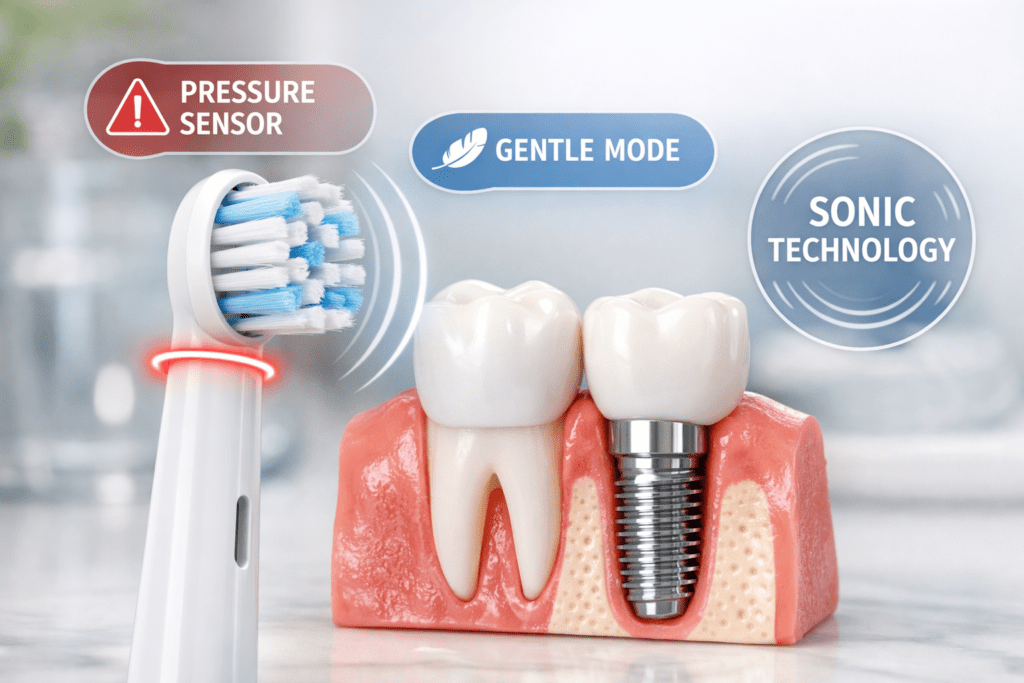
The best electric toothbrush for dental implants is one with a reliable pressure sensor, a gentle cleaning mode, and consistent plaque removal — without aggressive force that could damage the implant-abutment connection or irritate healing tissue. After comparing six popular models across price, features, and implant-specific safety, the Oral-B iO Series 7 offers the strongest overall balance of gentle precision and smart protection for most implant patients. But the right pick depends on your budget, how many implants you have, and whether you want adaptive technology or just solid basics.
Best electric toothbrush for dental implants (quick picks)
Best overall: Oral-B iO Series 7
Best value: Philips Sonicare 4100
Best premium: Sonicare DiamondClean 9900
Best budget: Oral-B Pro 1000
Best quiet toothbrush: Oral-B iO3
Key Takeaways
- Pressure sensors matter most. Excessive brushing force is the single biggest risk an electric toothbrush poses to dental implants. Every toothbrush on this list includes one, but they vary widely in sensitivity and feedback.
- Sonic and oscillating-rotating both work. Neither technology is inherently better for implants. What matters is gentle, consistent contact and proper technique.
- A “sensitive” or “gentle” mode is non-negotiable. Implant patients should avoid high-power modes during the first 3–6 months post-surgery and should use reduced intensity around implant sites long-term.
- You don’t need to spend $150+. The Oral-B Pro 1000 (under $30) cleans effectively around implants. Premium models add convenience and safety features, not fundamentally better cleaning.
- Brush head selection is as important as the toothbrush itself. Soft or extra-soft bristles are recommended for implant sites regardless of which brand you choose.
- Avoid hard-bristle manual brushing. Electric toothbrushes with pressure sensors are generally safer for implants than manual brushing, because they reduce the risk of user-applied over-force.
- Talk to your implant dentist first. Some surgeons recommend waiting 2–4 weeks post-surgery before using any electric toothbrush near the surgical site.
Quick Answer
For most dental implant patients, the Oral-B iO Series 7 ($70–$150) is the best overall choice — it combines a smart pressure sensor with visual feedback, a dedicated sensitive mode, and smooth magnetic-drive operation that won’t jar implant sites. If budget is a concern, the Philips Sonicare 4100 ($30–$70) delivers nearly identical cleaning performance at a fraction of the cost. And if you want the most advanced implant protection available, the Philips Sonicare DiamondClean 9900 Prestige ($150+) automatically adjusts pressure and intensity in real time using sensor feedback.
Quick Comparison Table
| Product | Price | Technology | Pressure Sensor | Brushing Modes | Battery Life | Best For |
|---|---|---|---|---|---|---|
| Oral-B iO Series 7 | $70–$150 | Oscillating-rotating (magnetic drive) | Yes, with visual feedback | 5 (incl. Sensitive) | ~14 days | Best overall for implant patients |
| Philips Sonicare 4100 | $30–$70 | Sonic (62,000 strokes/min) | Yes | 1 (with intensity options) | ~14 days | Best value for implant patients |
| Sonicare DiamondClean 9900 Prestige | $150+ | Sonic with SenseIQ adaptive | Yes, auto-adjusting | Auto-adaptive | ~14 days | Most advanced implant protection |
| Oral-B Pro 1000 | Under $30 | Oscillating-rotating | Yes | 1 | ~7 days | Budget pick, reliable basics |
| Oral-B iO3 | ~$69.94 | Oscillating-rotating | Yes, advanced | 3 | ~10 days | Quiet operation, mid-range |
Is an Electric Toothbrush Safe for Dental Implants?
Yes, electric toothbrushes are safe for dental implants when used with soft bristles and a pressure sensor. In fact, many dentists recommend electric toothbrushes for implant patients because they remove plaque more consistently than manual brushing.
The main risk is excessive brushing force. Toothbrushes with pressure sensors automatically reduce power when you press too hard, protecting the gum tissue around implants.
Why Does Your Toothbrush Choice Matter After Getting Dental Implants?
Dental implants are a significant investment — a single tooth implant typically costs $1,500 to $6,000, and full-mouth restorations like All-on-4 can run $15,000 to $30,000 per arch. Protecting that investment starts with daily oral hygiene, and the toothbrush you use plays a direct role.
Here’s why it matters: dental implants don’t get cavities, but they’re vulnerable to peri-implantitis, an inflammatory condition caused by bacterial buildup around the implant. Peri-implantitis can lead to bone loss and implant failure if left unchecked. Effective plaque removal is your primary defense.
At the same time, implants sit in bone without the natural cushioning ligament that surrounds real teeth. That means they transmit force differently. Aggressive brushing — too much pressure, too-hard bristles, or high-speed vibration directly on a healing implant — can irritate tissue, damage the gum seal around the abutment, or even affect osseointegration during the healing period.
The right electric toothbrush solves both problems: it removes plaque more consistently than manual brushing while limiting the force applied to implant sites.
Detailed Product Reviews
1. Oral-B iO Series 7 — Best Overall for Dental Implants
Price: $70–$218
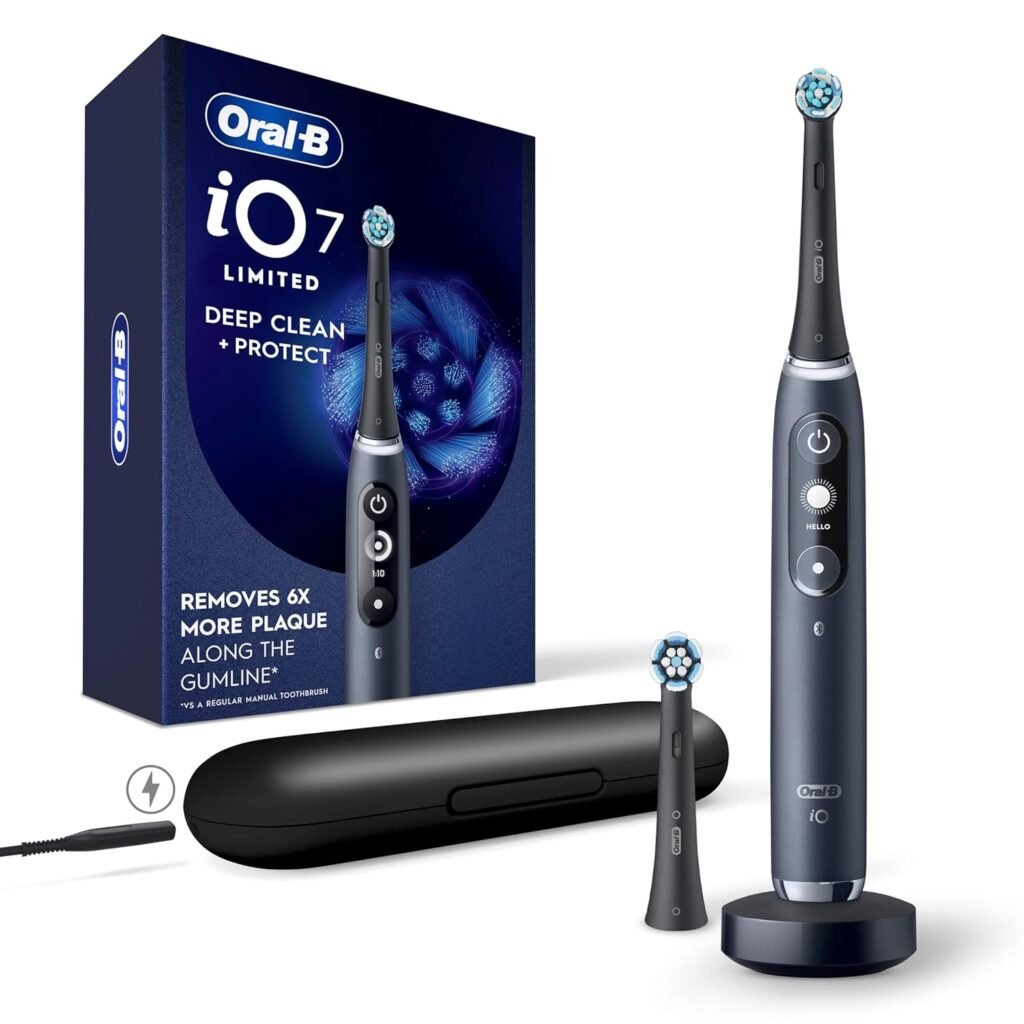
The Oral-B iO Series 7 hits the sweet spot between advanced implant protection and reasonable cost. Its magnetic drive system replaces the older gear-driven motor found in budget Oral-B models, producing noticeably smoother, quieter vibrations that feel less aggressive on implant sites.
The standout feature for implant patients is the smart pressure sensor with visual LED feedback. The LED ring on the handle changes color — green for optimal pressure, red when you’re pushing too hard. This real-time visual cue is genuinely useful during the weeks and months after implant placement, when you’re learning how much force is safe.
Five brushing modes give you flexibility. The Sensitive mode reduces speed and intensity, which is what you’ll want to use around implant sites, especially in the first 3–6 months. The brush head coupling has been redesigned for stability, so the head doesn’t wobble or shift during use — a small detail that matters when you’re trying to be precise around an abutment.
✅ Pros:
- Magnetic drive creates smooth, low-vibration operation ideal for implant areas
- Smart pressure sensor with color-coded visual feedback prevents over-brushing
- 5 brushing modes including a dedicated Sensitive mode
- Stable brush head coupling for precise control
- Compatible with all Oral-B iO replacement heads (choose soft bristles)
❌ Cons:
- Costs 2–5x more than budget alternatives
- Doesn’t include the AI-powered position tracking found in the iO Series 9/10
- Replacement brush heads run about $9–$12 each
Who it’s best for: Implant patients who want a meaningful upgrade in comfort and safety features without paying flagship prices. Especially good if you have multiple implants or implant-supported bridges where consistent gentle pressure across several sites matters.
2. Philips Sonicare 4100 — Best Value for Implant Patients
Price: $30–$55
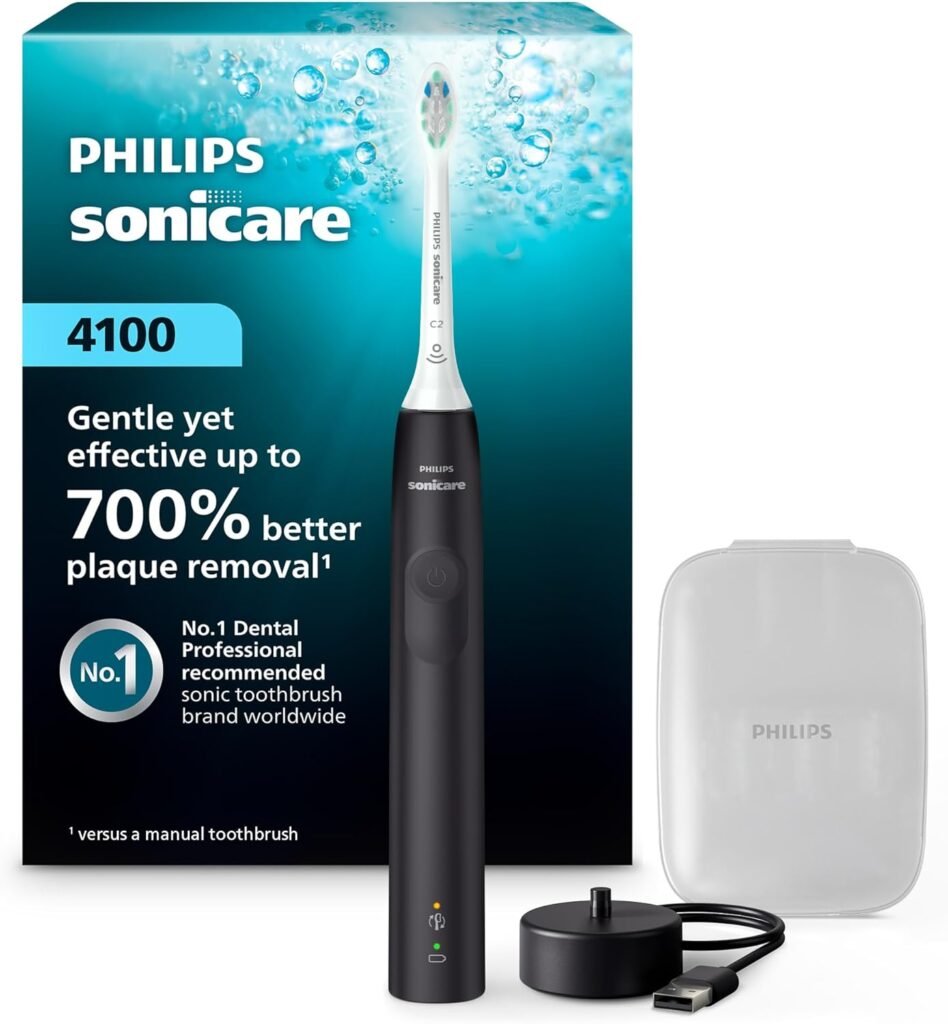
The Sonicare 4100 proves you don’t need to spend $150 to get effective, implant-safe cleaning. It delivers 62,000 brush strokes per minute — the same sonic frequency as Philips’ flagship models — at roughly one-third the price.
Sonic technology works differently than oscillating-rotating brushes. Instead of a spinning head, the bristles vibrate at high frequency, creating fluid dynamics (what Philips calls “dynamic cleaning action”) that helps disrupt plaque slightly beyond the bristle tips. Some implant patients prefer this because the brush head doesn’t physically rotate against the implant crown.
The built-in pressure sensor alerts you when you’re pushing too hard, and the two-minute timer with 30-second quadrant pacer helps ensure you’re spending enough time on each section of your mouth — including implant areas that patients sometimes rush past out of caution.
✅ Pros:
- Outstanding value at $30–$70
- 62,000 strokes/minute matches flagship Sonicare cleaning performance
- Pressure sensor protects implant sites from excessive force
- QuadPacer timer encourages thorough, even cleaning
- Slim, lightweight handle is easy to maneuver around implant sites
❌ Cons:
- No dedicated Sensitive mode (though sonic action is inherently gentler than some oscillating brushes)
- No app connectivity or position tracking
- Fewer intensity options than premium models
Who it’s best for: Implant patients who want proven cleaning technology at a price that doesn’t sting — especially if you’re already managing the cost of dental implants and need to keep other expenses reasonable. Also a strong choice if you’ve used Sonicare before and like the sonic feel.
3. Philips Sonicare DiamondClean 9900 Prestige — Most Advanced Implant Protection
Price: $150+
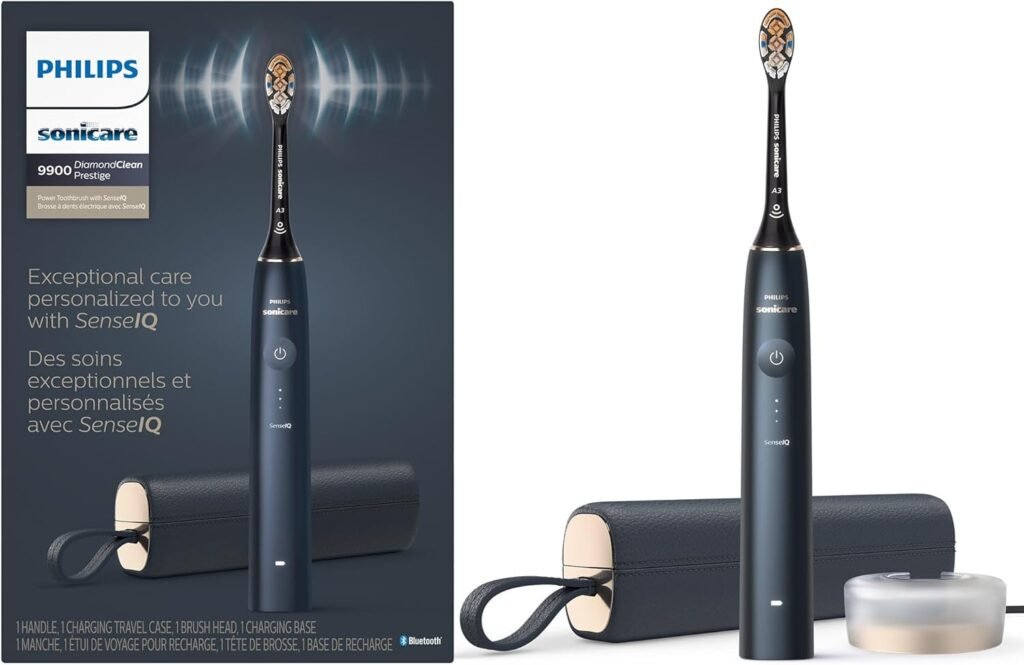
If you want the most technologically advanced toothbrush available for protecting dental implants, this is it. The DiamondClean 9900 Prestige’s SenseIQ technology uses built-in sensors to monitor your brushing pressure, speed, and coverage in real time, then automatically adjusts the brush’s power and intensity based on what it detects.
For implant patients, the practical benefit is significant: if you unconsciously press harder when brushing near an implant site (a common habit), the brush reduces its own intensity before you even realize you’re applying too much force. You don’t have to think about switching modes or watching an LED — the brush handles it.
The real-time adaptation also means the brush increases power in areas where you’re brushing lightly, ensuring you still get thorough plaque removal everywhere, including the gum margins around implants where peri-implantitis starts.
✅ Pros:
- SenseIQ auto-adapts pressure and intensity — the best passive implant protection available
- Real-time monitoring of pressure, speed, and coverage
- Premium build quality and elegant design
- Travel case with USB-C charging included
- All-day battery indicator (no guessing when it’ll die mid-brush)
❌ Cons:
- Significantly more expensive at $150+
- The adaptive technology, while impressive, may be more than many implant patients need
- Premium price doesn’t mean fundamentally better plaque removal — the cleaning itself is comparable to the Sonicare 4100
Who it’s best for: Patients with multiple implants, implant-supported bridges, or full-mouth restorations like All-on-4 who want maximum automated protection. Also a strong pick if you tend to brush aggressively and want the toothbrush to compensate for you.
4. Oral-B Pro 1000 — Best Budget Pick
Price: Under $49
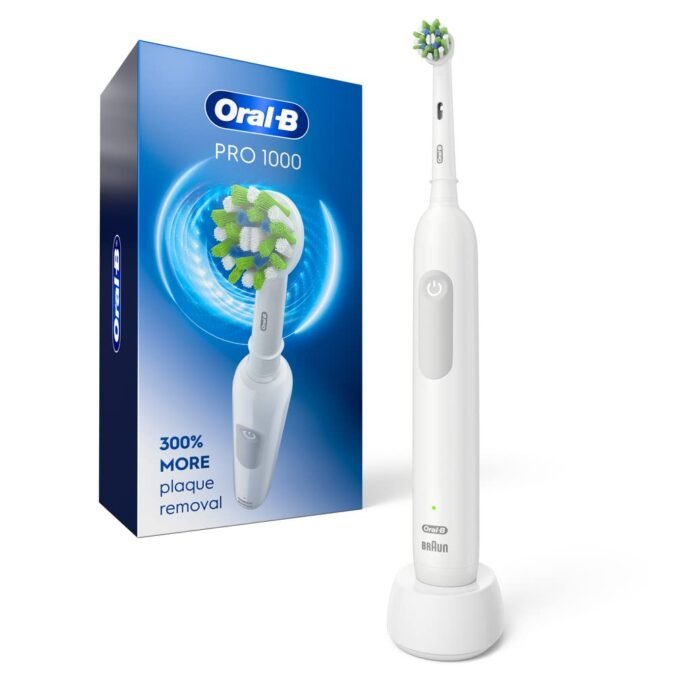
The Oral-B Pro 1000 strips away every luxury feature and keeps what actually matters: effective oscillating-rotating cleaning, a pressure sensor, and a two-minute timer. That’s it. And for implant care, that’s genuinely enough.
The oscillating-rotating action has decades of clinical evidence supporting its plaque removal effectiveness. The pressure sensor is basic — it simply reduces the brush’s pulsation when you press too hard — but it works. There’s no Sensitive mode, so you’ll want to use a light touch and choose a soft-bristle Oral-B replacement head.
This is the toothbrush to buy if you’ve just spent thousands on implants and don’t want to spend another $100+ on a toothbrush. It does the job.
✅ Pros:
- Under $30 — the most affordable effective option
- Proven oscillating-rotating cleaning action
- Pressure sensor prevents over-brushing on implants
- Simple, reliable, no learning curve
- Widely available replacement heads
❌ Cons:
- Only one cleaning mode (no Sensitive option)
- No visual pressure feedback — the brush just slows down
- Shorter battery life (~7 days)
- Basic design with no app or smart features
Who it’s best for: Cost-conscious implant patients who want a reliable electric toothbrush without extras. If you’re disciplined about using light pressure and soft bristles, this brush will clean your implants effectively. A good starter option if you’re comparing dental implant costs and watching your overall spending.
5. Oral-B iO3 — Best for Quiet, Gentle Operation
Price: ~$69.94

The Oral-B iO3 sits between the Pro 1000 and the iO Series 7, offering the iO platform’s smoother magnetic-drive technology at a lower price point. Its standout feature for implant patients is its notably quiet operation at 64dB — roughly the volume of a normal conversation.
Why does noise matter for implants? It doesn’t, directly. But many implant patients report anxiety about using an electric toothbrush near surgical sites, and a loud, aggressive-sounding motor doesn’t help. The iO3’s quieter operation makes the experience less intimidating, which can improve compliance — and consistent daily use is what actually protects implants.
The advanced pressure sensor provides clear feedback, and three brushing modes (including a gentler option) give you some flexibility, though not as much as the iO Series 7’s five modes.
✅ Pros:
- Quiet operation at 64dB reduces anxiety around implant brushing
- Advanced pressure sensor with clear feedback
- Magnetic drive for smooth, low-vibration cleaning
- Good mid-range price point
- Reliable Oral-B iO platform
❌ Cons:
- Replacement heads cost about $12 each (higher than standard Oral-B heads)
- Only 3 brushing modes
- Shorter battery life than some competitors
- Not compatible with standard Oral-B brush heads (iO heads only)
Who it’s best for: Implant patients who find loud electric toothbrushes uncomfortable or anxiety-inducing, and who want the smoother iO platform without paying iO Series 7 prices.
Sonicare vs Oral-B for Dental Implants
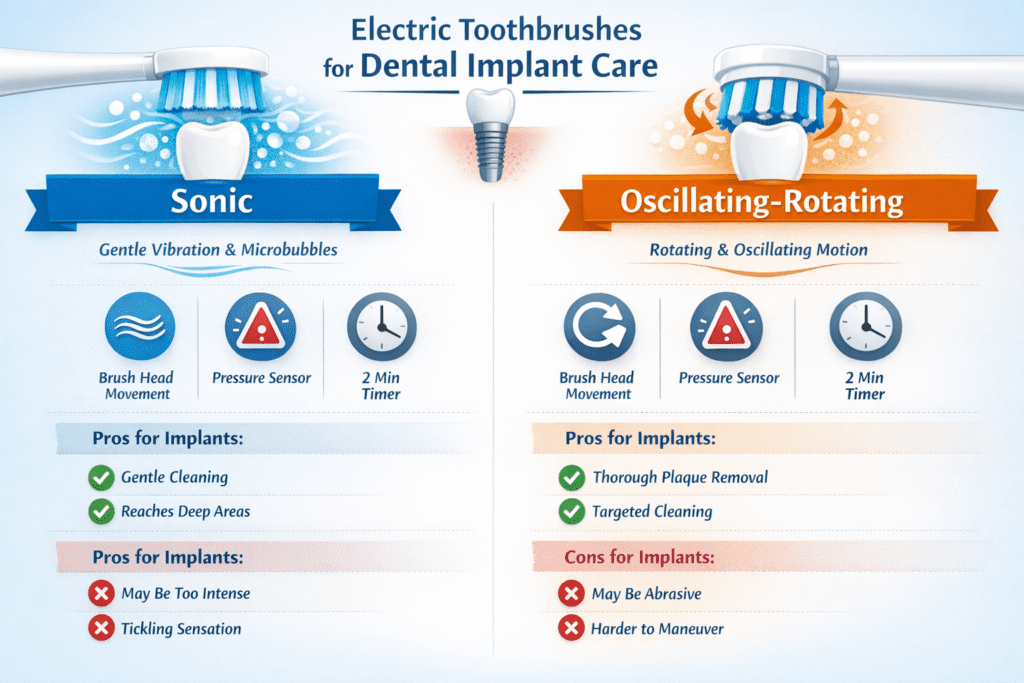
Both Sonicare and Oral-B electric toothbrushes are safe for dental implants, but they use different technologies.
Oral-B brushes use oscillating-rotating technology with a round brush head. This allows precise cleaning around individual implants and abutments.
Philips Sonicare brushes use sonic vibration with elongated brush heads. Some patients find this gentler because the head does not rotate.
Neither technology is proven superior for implants, but the most important feature is a pressure sensor that prevents excessive brushing force.
How to Brush Dental Implants Properly
When brushing dental implants with an electric toothbrush:
Use a soft-bristle brush head
Avoid pressing hard against the implant
Use a sensitive or gentle brushing mode
Brush twice daily for two minutes
Clean the gumline around the implant carefully
Buying Guide: What to Look for in an Electric Toothbrush for Dental Implants
Pressure Sensor Quality
This is the single most important feature. A pressure sensor that merely slows the motor (like the Oral-B Pro 1000) is better than nothing, but a sensor that provides visual or haptic feedback before you’ve already applied too much force (like the iO Series 7’s LED ring or the DiamondClean 9900’s auto-adjustment) offers meaningfully better implant protection.
Choose a visual/auto-adjusting pressure sensor if: you have implants in the front of your mouth where you naturally apply more force, or if you’re in the first year after implant placement.
Brushing Modes
At minimum, you want access to a Sensitive or Gentle mode that reduces speed and intensity. This is especially important during the first 3–6 months after implant surgery, when the implant is integrating with your jawbone. Using a high-power “Deep Clean” mode near a healing implant is a bad idea.
Sonic vs. Oscillating-Rotating
Both technologies effectively remove plaque around implants. Here’s the practical difference:
- Oscillating-rotating (Oral-B): The small, round brush head spins and pulsates. It’s precise and easy to position around individual implant crowns. Some patients feel it’s more “aggressive” in sensation.
- Sonic (Philips Sonicare): The elongated brush head vibrates at high frequency. It covers more surface area per stroke and some patients find the sensation gentler. The fluid dynamics may help clean slightly below the gumline.
Neither is clinically proven to be superior for implants specifically. Choose based on personal comfort.
Brush Head and Bristle Selection
Regardless of which toothbrush you buy, use soft or extra-soft bristle replacement heads on implant sites. Hard or medium bristles can scratch implant crowns (especially acrylic or composite materials used in some implant restorations) and irritate the gum tissue seal.
For Oral-B users: look for the Sensitive Clean or Gentle Care brush heads. For Sonicare users: the standard C2 Optimal Plaque Control heads with soft bristles work well.
Common Mistake: Avoiding Electric Toothbrushes Entirely After Implant Surgery
Some patients switch back to manual brushing after getting implants because they’re worried about vibration or force. This is usually counterproductive. Manual brushing tends to involve more uncontrolled force than an electric toothbrush with a pressure sensor. The exception is the immediate post-surgical healing period (typically 1–4 weeks), when your surgeon may recommend avoiding the surgical site entirely or using only a very soft manual brush with minimal pressure.
Always follow your implant dentist’s specific post-operative instructions.
How Soon After Implant Surgery Can You Use an Electric Toothbrush?
Most implant dentists recommend waiting at least 2 weeks after surgery before using an electric toothbrush near the implant site. Some advise waiting 4–6 weeks, depending on the complexity of the procedure and how healing is progressing.
During this waiting period:
- Brush the rest of your mouth normally with your electric toothbrush
- Use a soft manual toothbrush with very gentle strokes near the surgical site
- Follow any prescribed rinse protocol (often chlorhexidine for the first 1–2 weeks)
- Avoid directing water flosser jets at the implant site until cleared by your dentist
After clearance, start with the lowest intensity or Sensitive mode on your electric toothbrush and gradually increase as comfort allows.
If you’ve had a more complex procedure like All-on-4 implants or procedures involving bone grafting, your surgeon may have a longer or more specific timeline. Always defer to their guidance.
Do Electric Toothbrushes Damage Dental Implants?
No — when used correctly with appropriate pressure and soft bristles, electric toothbrushes do not damage dental implants. In fact, most dental professionals recommend electric toothbrushes over manual brushing for implant patients because they provide more consistent plaque removal with less user-dependent force variation.
The risks arise from:
- Excessive pressure applied by the user (which pressure sensors help prevent)
- Hard or medium bristles that can scratch restoration materials
- Using high-power modes on healing implant sites
- Brushing too soon after surgery before tissue has healed
A well-chosen electric toothbrush with a pressure sensor and soft bristles is one of the best tools you have for long-term implant maintenance.
FAQ
Can I use any electric toothbrush with dental implants?
Most electric toothbrushes from reputable brands are safe for dental implants when used with soft bristles and appropriate pressure. The key requirement is a pressure sensor to prevent over-brushing. Avoid ultrasonic toothbrushes (different from sonic) that operate at extremely high frequencies, as these are less studied for implant use.
Is Sonicare or Oral-B better for dental implants?
Neither brand is clinically proven to be superior for implants. Both Philips Sonicare (sonic) and Oral-B (oscillating-rotating) effectively remove plaque around implant sites. Choose based on personal comfort, budget, and whether you prefer a round brush head (Oral-B) or elongated head (Sonicare). The pressure sensor quality and available gentle modes matter more than the brand.
How often should I replace the brush head if I have implants?
Replace your brush head every 3 months, or sooner if the bristles appear frayed or splayed. Worn bristles are less effective at cleaning and can become abrasive. This timeline is the same as for natural teeth.
Should I use a water flosser in addition to an electric toothbrush with implants?
Yes, many implant dentists recommend using a water flosser (like a Waterpik) alongside an electric toothbrush. Water flossers are particularly effective at cleaning around implant abutments and under implant-supported bridges where traditional floss can’t reach. Use a low-pressure setting and avoid directing the jet under the gumline at healing implant sites.
Will the vibration from an electric toothbrush loosen my implant?
No. Once an implant has fully integrated with the jawbone (typically 3–6 months after placement), the vibrations from a standard electric toothbrush — whether sonic or oscillating-rotating — do not produce enough force to affect the implant’s stability. During the healing/integration period, follow your dentist’s guidance on when to resume electric toothbrush use near the site.
I have All-on-4 implants. Do I need a special toothbrush?
You don’t need a special toothbrush, but you do need to be thorough. All-on-4 restorations have areas where the prosthetic meets the gumline that require careful cleaning. An electric toothbrush with a pressure sensor and sensitive mode works well. Many All-on-4 patients also benefit from interproximal brushes and water flossers to clean under the bridge portion of the restoration.
What Dentists Recommend for Dental Implant Care
Dentists usually recommend electric toothbrushes with:
pressure sensors
soft bristle brush heads
gentle cleaning modes
timers for consistent brushing
These features help protect the gum seal around dental implants and reduce the risk of peri-implantitis.
Final Verdict: Which Electric Toothbrush Should You Buy for Your Dental Implants?
Best overall: Oral-B iO Series 7 ($70–$150). It offers the best combination of gentle operation, smart pressure protection, and cleaning effectiveness for implant patients. The magnetic drive feels noticeably smoother than gear-driven models, and the visual pressure sensor gives you confidence that you’re not overdoing it. Five brushing modes, including Sensitive, cover every scenario from daily maintenance to gentle post-healing care.
Best value: Philips Sonicare 4100 ($30–$70). If you want proven sonic cleaning performance without paying for features you may not need, this is the pick. The cleaning power matches Philips’ flagship models, and the pressure sensor and timer cover the essentials for implant safety.
Best advanced protection: Philips Sonicare DiamondClean 9900 Prestige ($150+). For patients with extensive implant work — multiple single implants, implant bridges, or full-arch restorations — the auto-adaptive SenseIQ technology provides the most hands-off protection available. It’s expensive, but for a patient who’s invested $20,000+ in full-mouth dental implants, a $150 toothbrush is a reasonable insurance policy.
Best budget: Oral-B Pro 1000 (under $30). It does everything an implant patient needs — effective cleaning, pressure sensor, timer — at the lowest price from a trusted brand. Pair it with soft-bristle replacement heads and you’re set.
No matter which toothbrush you choose, the most important factors remain consistent: use soft bristles, let the brush do the work without pressing hard, include a Sensitive mode when available, and follow your implant dentist’s specific care instructions. Your implants are built to last decades. The right toothbrush helps make sure they do.
Related Reading
- Average Cost of Dental Implants Per Tooth
- All-on-4 Dental Implants Cost Breakdown and Timeline
- Bone Graft Costs for Dental Implants: When You Need It and Pricing
- Best Dental Insurance for Implants in Texas
Leave a Reply
Share your thoughts or ask a question about dental implants. Your email address will not be published.