

Quick Answer: For most patients in Dallas, regular comprehensive dental insurance, especially a PPO plan, is generally preferable over separate implant insurance because it typically offers broader coverage for various dental needs, including components of the dental implant procedure, rather than solely focusing on the implant itself. However, understanding the specifics of your chosen plan is crucial, as coverage for dental implants often varies significantly.
Key Takeaways
- Most regular dental plans provide some coverage for dental implant components, but rarely full coverage for the implant post itself.
- Separate implant insurance plans exist but are less common and may not always be more cost-effective.
- Comprehensive PPO plans often offer better flexibility and higher coverage percentages for major services like implants compared to HMOs or basic plans.
- Annual maximums (typically $1,000–$1,500) limit overall reimbursement for dental implants, regardless of plan type.
- Waiting periods (6-18 months) for major procedures, including dental implants, are standard in most insurance policies.
- Medical insurance may cover dental implants if deemed medically necessary due to trauma, specific health conditions, or severe bone loss.
- Medicare generally does not cover routine dental care or implants, though some Medicare Advantage plans may offer limited benefits.
- A thorough consultation with your Dallas dentist is essential to understand both the procedure’s cost and your specific insurance benefits.
Do I Need Separate Implant Insurance or Regular Dental Coverage for Dental Implants in Dallas?

You likely do not need separate implant-specific insurance; regular comprehensive dental coverage, particularly a PPO plan, often suffices to provide partial benefits for dental implants in Dallas. While a separate implant insurance policy might seem appealing, most patients find better value and broader utility in a well-structured general dental plan that covers a wider array of oral health needs, including various components of the dental implant process [1, 9].
Dental implants are a significant investment for replacing missing teeth, and understanding how insurance plays a role is critical. Many standard dental plans are designed to cover various elements of dental care, such as diagnostic services, preventive care, restorative treatments like fillings and crowns, and even some major procedures, which can include parts of the implant process. For instance, regular dental plans often provide partial coverage for related procedures like extractions, bone grafting, and the prosthetic crown or abutment, even if the implant post itself is only minimally covered [9]. This integrated approach means you avoid managing multiple policies and benefit from coverage for your routine check-ups and other potential dental issues alongside any implant work.
How Does Regular Dental Coverage Handle Dental Implants?
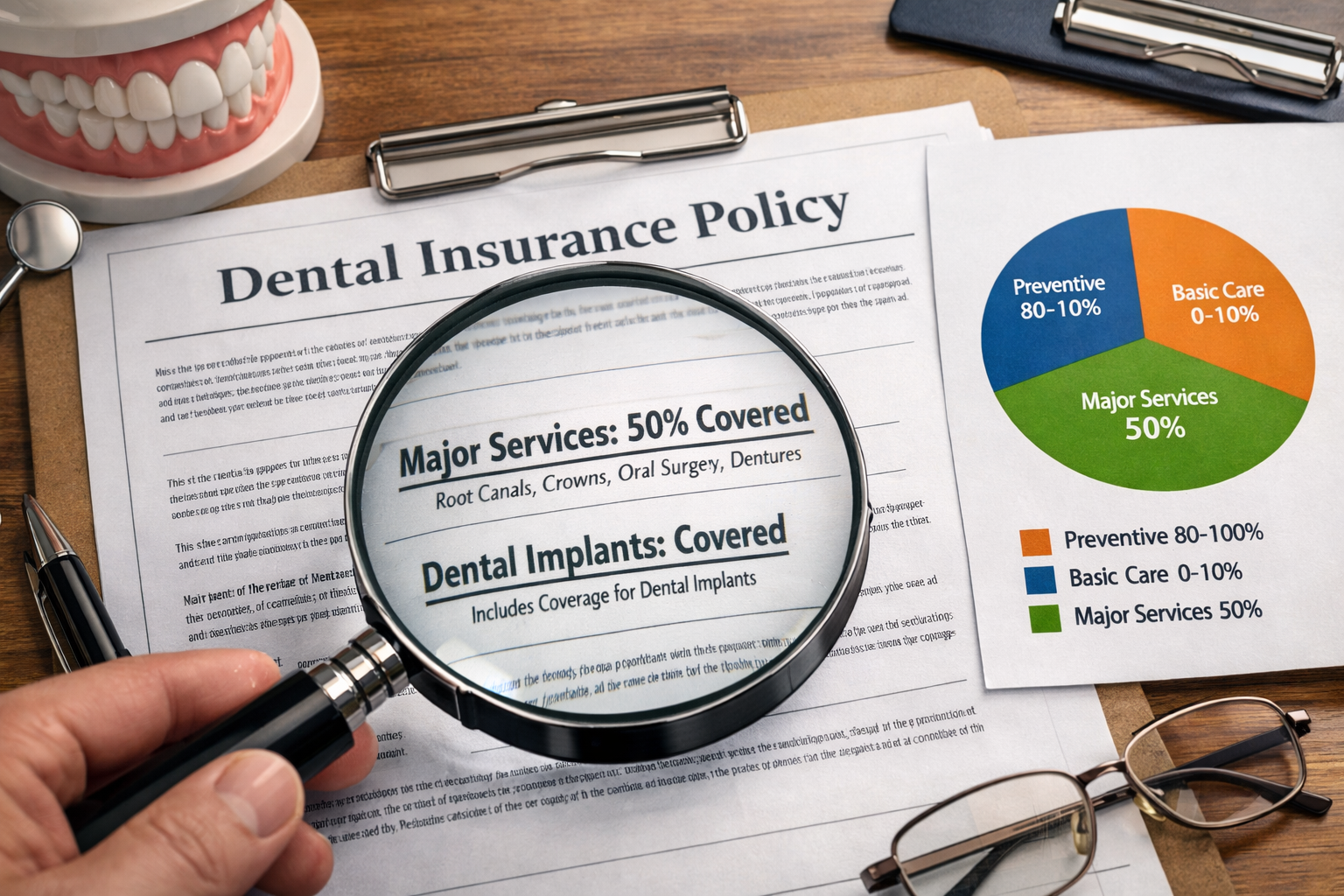
Regular dental coverage typically categorizes dental implant procedures under “major services” and offers partial coverage for various components, not always for the implant post itself. Most standard dental insurance plans in Dallas will cover a percentage of the overall cost, commonly around 50% for major services, after you meet your deductible [1].
This coverage usually applies to specific stages or components of the dental implant procedure. For example, your plan might cover:
- Initial consultations and diagnostic imaging: X-rays, 3D scans, and examinations needed to plan the implant surgery [1].
- Tooth extractions: If a tooth needs to be removed before implant placement, this is often covered under basic restorative procedures.
- Bone grafting: Many plans will cover a portion of bone grafting procedures if deemed necessary to prepare the jawbone for the implant [1].
- The implant crown or prosthesis: The visible part of the implant, which is a crown, bridge, or denture, is often covered at the same rate as other major restorative crowns or prosthetics [1].
- The abutment: The connector piece between the implant post and the crown may also receive partial coverage.
However, the actual implant post – the titanium screw surgically placed into the jawbone – is often considered a non-covered benefit, or covered at a much lower percentage, by many traditional plans [5]. This is where the term “partial coverage” becomes crucial. Even if your plan pays 50% for major services, that 50% might only apply to the crown and abutment, not the full cost of the implant surgery and post.
Decision Rule: Choose a comprehensive regular dental plan, particularly a PPO plan, if you anticipate needing various dental services beyond just implants, as it offers more holistic oral health coverage. If you are specifically looking for comprehensive implant coverage, be prepared for higher premiums and stricter waiting periods, or consider medical insurance if the implant is medically necessary due to trauma. For more insights into maximizing your dental implant reimbursement in Dallas, understanding these nuances is key.
What are Separate Dental Implant Insurance Plans?
Separate dental implant insurance plans are specialized policies designed to specifically address the costs associated with dental implant procedures, often offering higher coverage percentages for implants compared to standard dental plans. While standard plans might cover implant components, these specialized plans aim to cover more of the actual implant placement and materials [5].
These plans are less common than general dental insurance and typically come with their own set of considerations:
- Higher Premiums: Because they cover a high-cost procedure, premiums for implant-specific plans are often significantly higher than those for basic dental insurance.
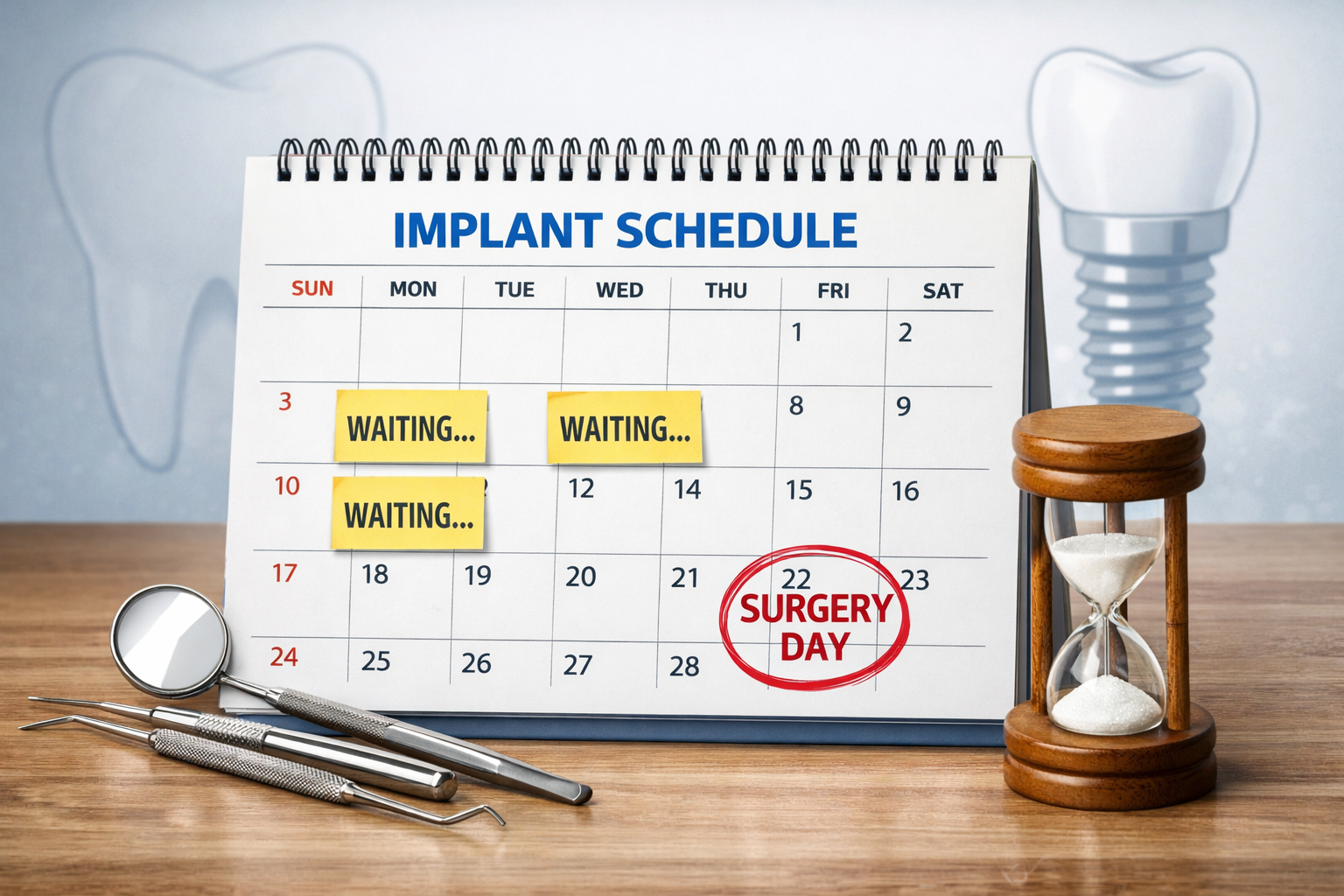
- Waiting Periods: Just like regular plans, most separate implant insurance policies will have waiting periods for major services, often 6 to 18 months, before implant coverage kicks in [9].
- Annual Maximums: Even with specialized plans, annual maximums remain a significant limiting factor. These maximums have largely stayed stagnant at $1,000–$1,500 since the 1970s, meaning even a plan with 80% coverage might only pay out up to this low cap for an expensive procedure like an implant [8].
- Limited Scope: The primary drawback is that these plans focus almost exclusively on implants. If you need other dental work like fillings, root canals, or orthodontics, you may still need a separate general dental policy or pay out-of-pocket for those services.
Common Mistake: Relying solely on a “separate implant insurance” plan without understanding its annual maximums and waiting periods can lead to unexpected out-of-pocket costs. Many people mistakenly believe these plans cover the entire cost, which is rarely the case due to the annual limits.
How Do PPO vs. HMO Plans Cover Dental Implants in Dallas?
When considering dental implants in Dallas, PPO (Preferred Provider Organization) plans generally offer more flexibility and often better coverage for major procedures like implants compared to HMO (Health Maintenance Organization) plans. This difference is particularly relevant given the specialized nature of implant dentistry.
PPO Plans: These plans provide a network of dentists, but they also allow you to see out-of-network providers, albeit at a potentially higher out-of-pocket cost. This flexibility is highly beneficial for dental implants, as it allows you to choose an experienced implant specialist in Dallas, even if they are not specifically “in-network.” PPO plans typically cover major services at 50% or more after your deductible, which can significantly reduce the implant cost in Dallas [5]. For a detailed comparison, see our guide on PPO vs. HMO Implant Coverage Comparison.
HMO Plans: These plans restrict you to a specific network of dentists and usually require you to select a primary care dentist within that network. Referrals are often needed to see specialists. While HMO plans usually have lower premiums and predictable co-pays, their coverage for major procedures like dental implants can be more limited, sometimes offering no coverage or very low percentages if the specific specialist or procedure is not within their narrow network [5].
| Feature | PPO Plans | HMO Plans |
|---|---|---|
| Provider Choice | Flexible; choose in-network or out-of-network | Restricted to a specific network of dentists |
| Referrals | Not typically required for specialists | Often required for specialists |
| Coverage for Implants | Often 50% or more for major services/components | Can be limited or require specific in-network providers |
| Premiums | Generally higher | Generally lower |
| Out-of-Pocket | Higher if out-of-network, but more choice | Predictable co-pays, but less choice |
| Flexibility | High, ideal for selecting implant specialists | Lower, may limit access to preferred specialists |
Edge Case: If a specific Dallas implant specialist is crucial for your treatment due to complex medical history or advanced techniques like 3D guided dental implants Dallas 2026, a PPO plan provides the necessary freedom to choose the right provider, even if it means a higher out-of-pocket percentage for some parts of the treatment.
What About Medical Insurance, Medicare, or Medicaid for Dental Implants?
In specific circumstances, medical insurance may offer coverage for dental implants, particularly when the tooth loss is due to trauma, disease, or a congenital condition that directly impacts overall health and function, rather than solely aesthetic reasons [5]. For example, if a severe accident resulted in tooth loss and required extensive reconstructive surgery that includes dental implants, your medical insurance might cover parts of the procedure, provided there is thorough documentation of medical necessity from your dentist and physician [1].
Medical Insurance: You may be able to submit claims to your medical insurance if your dental implant procedure is deemed medically necessary. This often requires detailed documentation from your dentist, oral surgeon, and sometimes even your primary care physician, outlining how the missing teeth or jawbone condition severely impacts your health, nutrition, or prevents you from using a medically necessary prosthetic device.
Medicare: Original Medicare (Parts A and B) generally does not cover routine dental care, including dental implants [3, 6]. This means that for most seniors seeking dental implants in Dallas, Original Medicare will not provide financial assistance.
Medicare Advantage Plans (Part C): Some Medicare Advantage plans (MA plans) may offer limited dental benefits that can include partial coverage for dental implants. These plans are offered by private companies approved by Medicare and often bundle dental, vision, and hearing coverage. However, the extent of implant coverage varies widely by plan and region. It’s crucial to thoroughly research specific Medicare Advantage plans in Dallas 2026 to understand their dental benefits and any associated waiting periods or annual maximums.
Medicaid: Medicaid programs, which provide health coverage to low-income individuals and families, typically offer very limited dental benefits for adults, and most do not cover dental implants. While some states have expanded dental benefits, implants are rarely included due to their high cost and classification as non-essential cosmetic procedures in many state programs.
Actionable Tip: If you believe your dental implant needs are medically necessary, ask your Dallas dentist to provide the necessary diagnostic codes and letters of medical necessity to submit a claim to your medical insurance provider. This approach can sometimes unlock unexpected coverage, especially for complex cases.
Maximizing Your Dental Implant Insurance Benefits in Dallas 2026
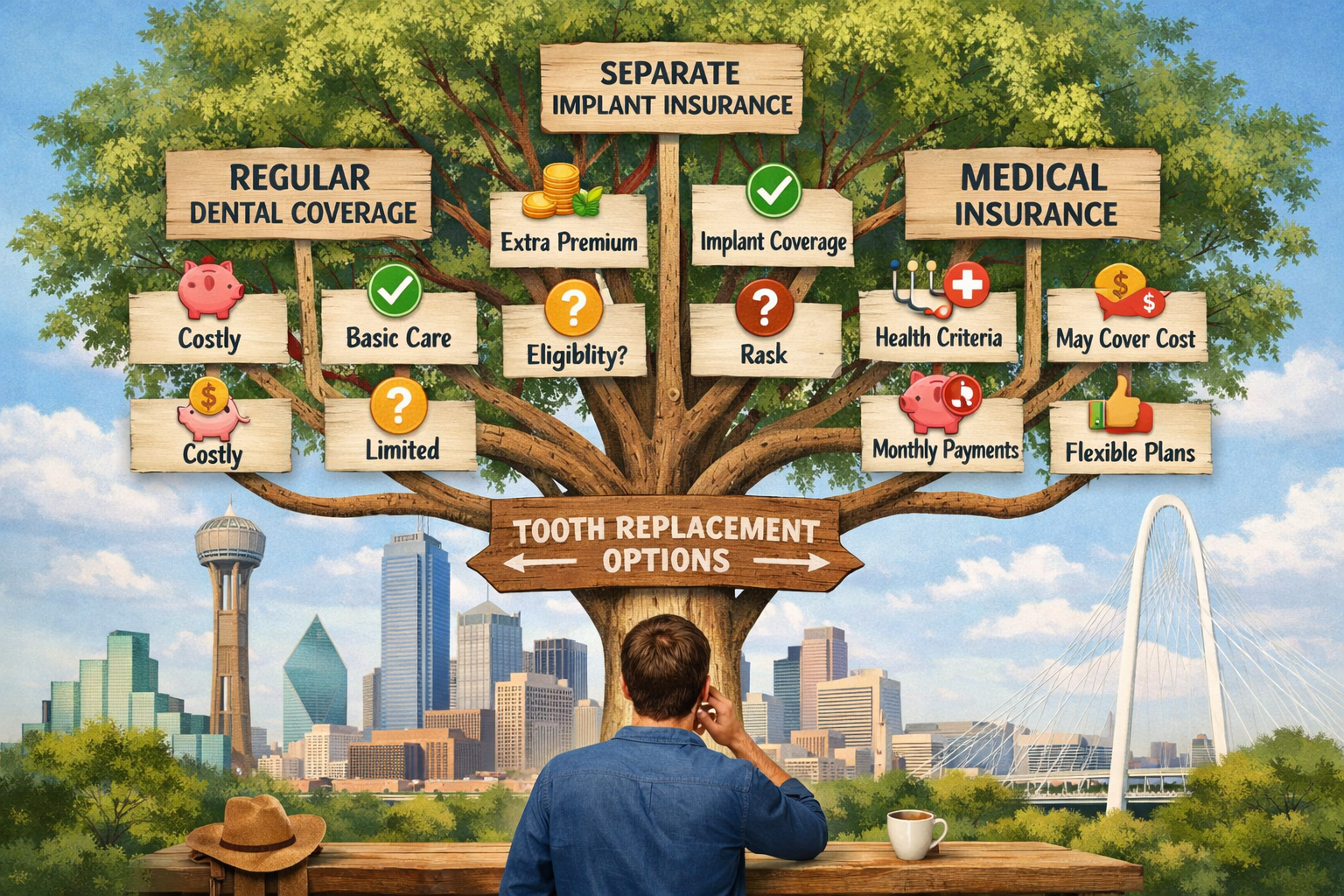
Navigating insurance for dental implants can be complex, but strategic planning can help maximize your benefits in 2026. Given the significant dental implant cost in Dallas, understanding how to leverage your existing coverage is vital.
Here are key strategies to maximize your dental implant insurance benefits:
Understand Your Policy’s Fine Print: Before any treatment, thoroughly review your dental insurance policy. Pay close attention to:
- Annual Maximums: Most dental plans have an annual limit on what they will pay, typically $1,000 to $1,500 [8]. Knowing this helps you plan treatment phases.
- Deductibles: This is the amount you must pay out-of-pocket before your insurance begins to cover costs.
- Waiting Periods: Major services like implants often have waiting periods (6-18 months). Factor this into your treatment timeline [9].
- Coverage Percentages: Note the percentage covered for major services (often 50%), and clarify if this applies to the implant post, abutment, and crown separately.
Phased Treatment Planning: Dental implant procedures can often be broken down into distinct phases (e.g., extraction, bone graft, implant placement, abutment, crown). If your annual maximum is a limiting factor, your Dallas dentist might be able to spread these phases across two calendar years. This strategy allows you to utilize two separate annual maximums, potentially doubling your insurance benefit [4]. For example, the extraction and bone graft could be done in late 2026, and the implant placement and crown in early 2027.
Utilize Your Flex Spending Account (FSA) or Health Savings Account (HSA): These accounts allow you to set aside pre-tax money for healthcare expenses. Dental implants are generally considered eligible expenses for both FSAs and HSAs, providing a tax-advantaged way to pay for out-of-pocket costs [4]. For comprehensive information, check our guide on Dallas Dental Implants HSA/FSA Eligible Expenses 2026.
Explore Medical Insurance Options: As discussed, if the dental implant is medically necessary due to injury, disease, or severe bone loss impacting overall health, your medical insurance might provide some coverage. Your Dallas dental professional can help you gather the necessary documentation.
Pre-Authorization: Always request a pre-treatment estimate or pre-authorization from your insurance company. Your dentist’s office can submit a treatment plan to your insurer, who will then provide a detailed breakdown of what they expect to cover. This eliminates surprises and clarifies your out-of-pocket responsibilities.
Shop for the Right Plan: If you know you need dental implants and are in a position to change your insurance, compare different PPO plans. Look for plans with higher annual maximums, lower deductibles, and better coverage percentages for major services. Our resource on the Best Dental Insurance for Implants in Texas 2026 can help.
Quick Example: Suppose your dental implant procedure costs $4,000, and your insurance has a $100 deductible and a $1,500 annual maximum, covering major services at 50%.
- You pay the $100 deductible.
- Your insurance covers 50% of the remaining $3,900, which is $1,950.
- However, due to the $1,500 annual maximum, the insurance will only pay $1,500.
- Your total out-of-pocket cost would be $100 (deductible) + ($4,000 – $1,500) = $2,600.
If the procedure could be split over two years, you might utilize two $1,500 maximums, significantly reducing your out-of-pocket expenses.
Why a Consultation with a Dallas Dentist is Essential
A comprehensive consultation with a qualified Dallas dentist is the most critical step in understanding whether you need separate implant insurance or regular dental coverage. Dental implant procedures are highly individualized, and only a dental professional can accurately assess your specific oral health needs, determine the most suitable tooth replacement options, and provide an accurate cost estimate.
During your consultation, your dentist will:
- Conduct a Thorough Examination: This includes assessing your overall oral health, bone density, and identifying any underlying issues that need to be addressed before implant placement.
- Develop a Personalized Treatment Plan: Based on their assessment, they will recommend the most appropriate dental implant procedure, which might include bone grafting, extractions, or other preparatory steps.
- Provide a Detailed Cost Breakdown: They will outline the total estimated cost of your specific treatment plan, including all components from surgery to the final restoration.
- Assist with Insurance Verification: Most dental offices in Dallas have dedicated staff who can help you contact your insurance provider, verify your benefits, and submit pre-authorization requests. This is invaluable in determining exactly what your regular dental coverage will pay versus what you might need to cover out-of-pocket.
- Discuss Financing Options: If insurance coverage is limited, your dentist’s office can often discuss various financing solutions, such as payment plans or third-party dental loans, to make the implant cost in Dallas more manageable.
By engaging in a detailed consultation, you gain clarity on the medical and financial aspects of your dental implant journey, enabling you to make an informed decision about your oral health and how to best manage the investment.
Conclusion
Deciding whether you need separate implant insurance or regular dental coverage for dental implants in Dallas largely depends on the specifics of your existing or prospective dental plan and your overall oral health needs. For most individuals, a comprehensive regular dental insurance plan, especially a PPO, is generally the most practical choice. These plans often provide partial coverage for the various components of the dental implant procedure and offer benefits for a broader range of dental services, simplifying your oral health management.
While separate implant-specific plans exist, they often come with higher premiums, similar waiting periods, and restrictive annual maximums, making their overall value debatable compared to a robust general dental plan. Furthermore, medical insurance may offer an avenue for coverage if the need for implants stems from a medically necessary condition. Given the complex nature of dental insurance and the individualized requirements of each patient, the most crucial step is to schedule a consultation with a qualified Dallas dentist. They can provide an accurate assessment of your needs, a detailed cost estimate, and invaluable assistance in navigating your insurance benefits to maximize your coverage and make informed decisions about your long-term oral health.
Related Reading:
- Employer Dental Insurance for Implants Dallas 2026: Group Pl
- Navigating PPO vs. HMO Dental Insurance for Implants in Dallas:
- The Psychological Impact of Tooth Loss and How Dental Implants in Dallas can Restore Confidence and Quality of Life
References
[1] How To Maximize Your Insurance Benefits For Dental Implants – https://www.centralvalleydentist.com/blog/how-to-maximize-your-insurance-benefits-for-dental-implants
[2] Maximize Your Dental Insurance Benefits In 2026 – https://www.impactdentalcare.com/maximize-your-dental-insurance-benefits-in-2026/
[3] Treatment Cost – https://www.deltadental.com/protect-my-smile/procedures/dental-implant/treatment-cost/
[4] Use Your 2026 Dental Benefits Wisely – https://www.mdco.dental/posts/use-your-2026-dental-benefits-wisely/
[5] Dental Implant Insurance – https://www.imperiumhealthgroup.com/blog/dental-implant-insurance/
[6] Medicare Will Not Expand On Dental Payment Examples In 2026 – https://medicareadvocacy.org/medicare-will-not-expand-on-dental-payment-examples-in-2026/
[7] Watch – https://www.youtube.com/watch?v=aqKBtKTBHFc
[8] Why Dental Insurance Hasnt Changed – https://toothsome.io/blog/why-dental-insurance-hasnt-changed
[9] Dental Implant Insurance – https://www.aspendental.com/dental-implants/dental-implant-insurance/
Leave a Reply
Share your thoughts or ask a question about dental implants. Your email address will not be published.