

Missing teeth can significantly impact one’s quality of life, affecting everything from speaking and eating to self-confidence. While traditional partial dentures have long been a solution, the advent of dental implants partials offers a more stable, durable, and comfortable alternative for individuals looking to replace several missing teeth without resorting to full dentures. This guide explores the specifics of implant-supported partials, their benefits, and what patients in Dallas, TX, can expect in 2026.
Key Takeaways
- Dental implants partials offer a superior alternative to traditional partial dentures by providing enhanced stability and preserving bone health.
- These solutions integrate dental implants into the jawbone, which then anchor a removable or fixed partial prosthesis.
- They lead to improved chewing efficiency, clearer speech, and a more natural appearance compared to conventional options.
- The procedure involves careful planning, implant placement, healing, and final prosthesis attachment, with variations in cost and timeline.
- Consultation with a qualified dentist in Dallas is essential to determine if dental implants partials are the right tooth replacement option for your specific oral health needs.
What Are Dental Implants Partials and How Do They Work?
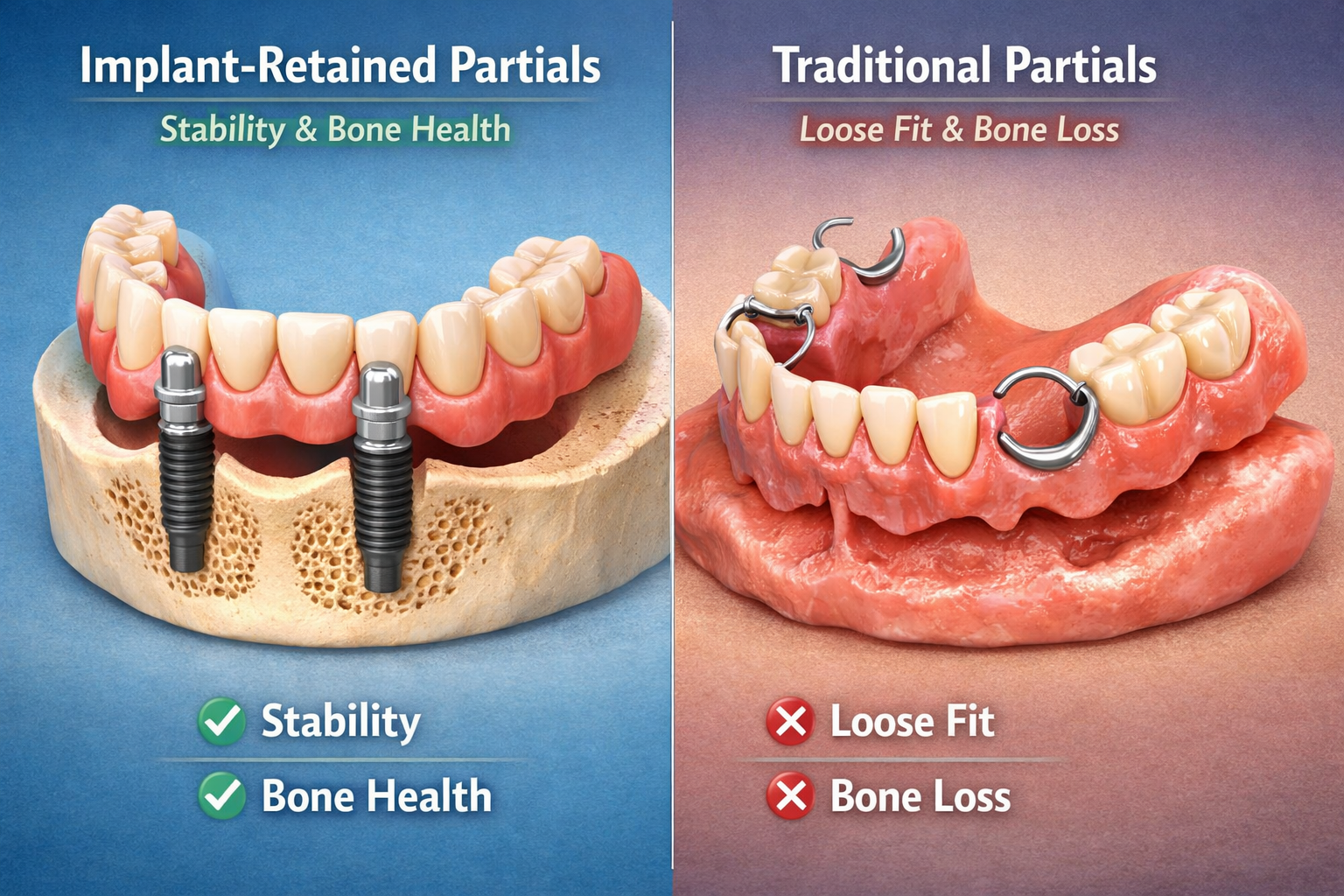
Dental implants partials are a modern tooth replacement option that uses dental implants surgically placed into the jawbone to support a partial denture. Unlike traditional partial dentures that rely on clasps attached to adjacent natural teeth, implant-supported partials derive their stability directly from the implants, offering a more secure and comfortable fit [4]. This approach not only restores the appearance and function of missing teeth but also helps preserve the integrity of the jawbone, preventing the bone loss commonly associated with tooth absence.
For individuals with several missing teeth in a row, or in different areas of the mouth, but who still retain some healthy natural teeth, dental implants partials—often referred to as implant-retained dentures or implant-supported partial bridges—provide a robust solution. The process typically involves placing two to four implants per arch, which then serve as anchors for the custom-made partial prosthesis [4]. These implants integrate with the bone through a process called osseointegration, creating a strong, stable foundation for the replacement teeth [3]. This type of solution can be removable, snapping onto the implants for added stability, or fixed, permanently cemented or screwed onto the implants.
Why Choose Dental Implants Partials Over Traditional Dentures in 2026?
Choosing dental implants partials over traditional partial dentures in 2026 offers significant advantages primarily related to stability, longevity, and oral health preservation. While traditional partial dentures can be a more immediate and less expensive solution, they often come with drawbacks such as instability, discomfort, and the potential to accelerate bone loss and stress on natural teeth [4].
Key Advantages of Dental Implants Partials:
- Enhanced Stability and Comfort: Implant-supported partials are far more stable than traditional removable partial dentures. Because they are anchored to the jawbone, they do not slip, click, or cause irritation to the gums, allowing for more confident speaking and eating [4]. This stability eliminates the need for messy adhesives, improving overall comfort.
- Preservation of Jawbone: One of the most critical benefits of dental implants is their ability to stimulate the jawbone, preventing the bone resorption (loss) that naturally occurs after tooth extraction [4]. Traditional partial dentures do not offer this benefit, often leading to a sunken facial appearance over time as the jawbone diminishes.
- Improved Chewing Efficiency: With the superior stability of dental implants partials, patients can chew a wider variety of foods with greater ease and force, closer to that of natural teeth. This significantly improves digestion and overall nutritional intake.
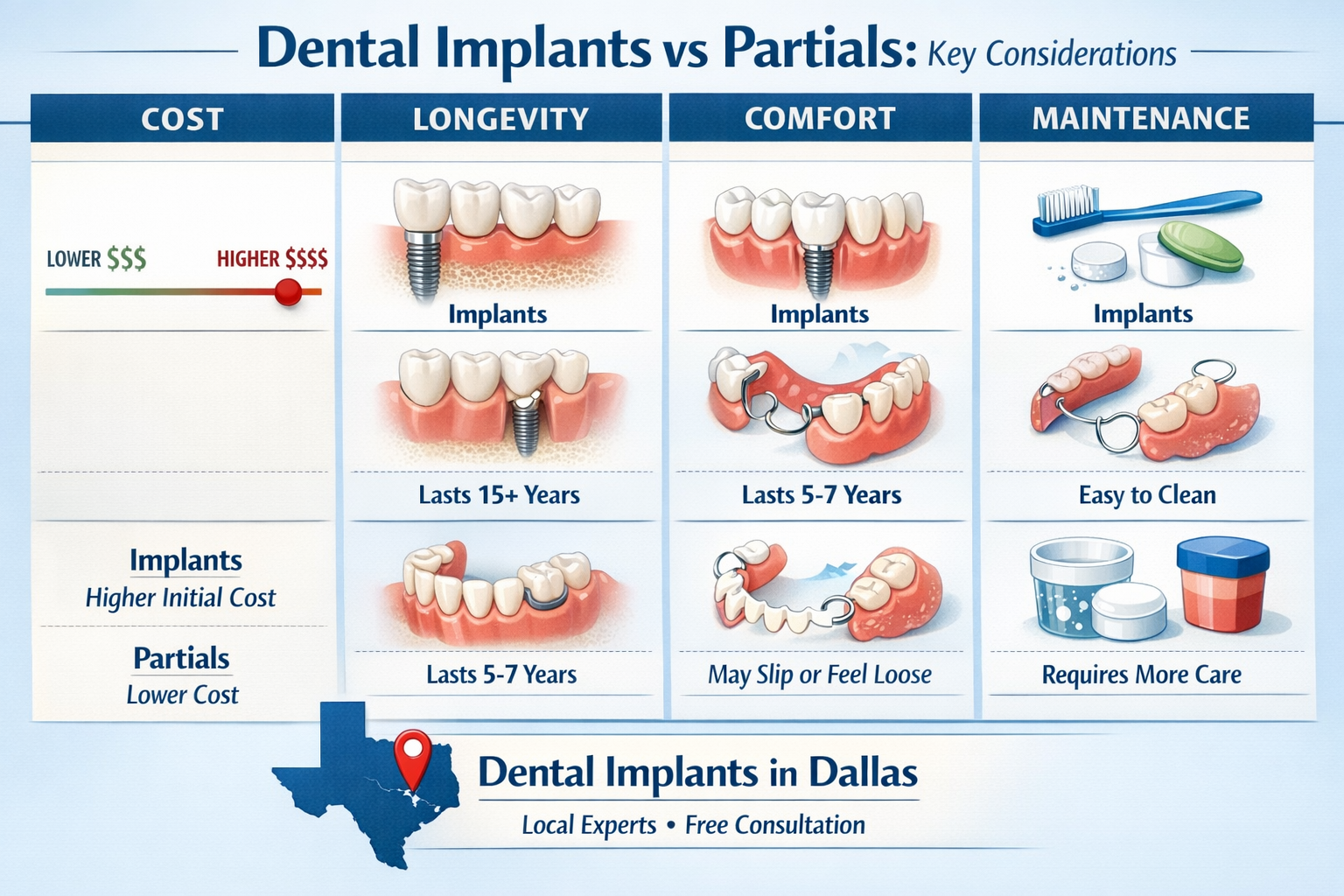
- Durability and Longevity: While traditional partial dentures may only last 5-7 years before needing repair or replacement, dental implants can last 20-30 years or even a lifetime with proper care [4]. This makes implant-supported partials a more cost-effective long-term investment.
- Protection of Adjacent Teeth: Traditional partial dentures often rely on clasps that attach to neighboring natural teeth. Over time, these clasps can put undue stress on these teeth, leading to loosening or damage. Dental implants partials are self-supporting, protecting your remaining natural teeth from this additional strain [4].
- Natural Appearance: Because implants integrate with the jawbone, the partials they support look and feel more like natural teeth. The absence of visible clasps and the preservation of bone structure contribute to a more aesthetically pleasing outcome.
- Better Oral Health Education: Embracing advanced options like dental implants aligns with a commitment to long-term oral health education. Understanding how implants work to preserve bone and protect remaining teeth empowers patients to make informed decisions about their dental care, particularly in locations like Dallas, TX, where access to advanced dental solutions is prevalent.
Decision Rule: Choose dental implants partials if you prioritize long-term stability, bone health, and a solution that feels and functions as close to natural teeth as possible, even if it involves a higher initial investment and a longer treatment timeline. If budget is the primary constraint and a temporary, less stable solution is acceptable, traditional partial dentures might be considered, though it’s crucial to understand their limitations.
The Dental Implant Procedure for Partials in Dallas
The dental implant procedure for partials in Dallas involves several distinct stages, each critical to the success and longevity of the tooth replacement option. While the overall process length can vary, it typically spans several months, allowing for proper healing and integration.
Initial Consultation and Assessment: The journey begins with a comprehensive consultation with a qualified dentist in Dallas. During this visit, the dentist will conduct a thorough oral examination, review your medical history, and utilize advanced imaging technologies, such as 3D CT scans, to assess the quality and quantity of your jawbone [3]. This stage is crucial for determining if you are a suitable candidate for dental implants and to develop a personalized treatment plan. Factors like bone density, gum health, and overall systemic health are evaluated. This also provides an opportunity to discuss dental implant cost in Dallas specific to your case. For a detailed guide on what to expect, refer to our article on Dental Implant Consultation: What to Expect in 2026.
Implant Placement Surgery: Once the treatment plan is finalized, the oral implant surgery process begins. This involves surgically placing the dental implant posts—small, biocompatible titanium screws—into the jawbone at precise locations [1]. This procedure is often performed under local anesthesia, and sedation options like twilight sleep are also available for patient comfort. For more information on sedation, read our guide on Dental Implant with Sedation Twilight Sleep Guide 2025. After placement, the gums are sutured closed over the implants.
Healing and Osseointegration: Following implant placement, a critical healing period of several months begins. During this time, the dental implants fuse with the surrounding jawbone through a biological process called osseointegration [1]. This fusion creates a strong, stable foundation for the partial denture, much like the root of a natural tooth. The duration of this healing period can vary based on individual healing capabilities and the specific site of the implants. Patients often wear a temporary tooth while waiting for implant integration. Read more about the healing timeline here: Senior Dental Implant Healing Time: Your 2026 Guide.
Abutment Placement (if necessary): In some cases, a second minor surgical procedure may be required to uncover the implants and attach an abutment. The abutment is a small connector post that extends through the gum line, serving as the attachment point for the custom-made partial denture. In other cases, the abutment may be attached during the initial implant surgery.
Partial Denture Fabrication and Attachment: After the abutment is in place and the surrounding gum tissue has healed, impressions of your mouth are taken. These impressions are sent to a dental lab where your custom partial denture is fabricated. The partial will be meticulously designed to match the color, shape, and size of your natural teeth, ensuring a seamless and aesthetic result. Once completed, the partial denture is securely attached to the abutments.
Potential Complications and What to Expect:
While dental implant surgery has a high success rate, it’s important for patients to be aware of potential dental implant complications. These can include infection, nerve damage, or implant failure, though these are rare. Following post-operative instructions carefully, including detailed dental implant post-op instructions, and attending follow-up appointments are crucial for minimizing risks and ensuring proper healing. For insights into recovery, check out our guide on Navigating Dental Implant Recovery Complications in Dallas.
Cost Considerations for Dental Implants Partials in Dallas in 2026
Understanding the cost of dental implants partials in Dallas is a crucial part of the decision-making process. The total cost can vary significantly based on several factors, including the number of implants required, the materials used for the partial denture, any necessary preparatory procedures (like bone grafting), and the specific dental practice in Dallas you choose. While the initial investment for implant-supported partials may be higher than traditional partial dentures, their long-term benefits and durability often make them a more cost-effective solution over time.
Factors Influencing Cost:
- Number of Implants: The more dental implants needed to support the partial, the higher the overall cost. Typically, 2-4 implants are used per arch for an implant-retained partial [4].
- Preparatory Procedures: Some patients may require bone grafting if their jawbone density is insufficient to support implants, or tooth extractions if damaged teeth are present. These procedures add to the total cost and extend the treatment timeline.
- Type of Partial Denture: The material and complexity of the custom-made partial denture (e.g., acrylic, metal framework, specialized attachments) will impact the price.
- Clinic Location and Expertise: Dental implant costs can vary between different practices in Dallas. Experienced specialists or clinics with advanced technology may have higher fees, but often offer a higher level of care and predictability of outcomes.
- Anesthesia and Sedation: The type of anesthesia chosen, such as local anesthesia, oral sedation, or IV sedation, will also affect the overall price.
Average Cost Estimates in Dallas (2026):
While specific pricing can only be obtained through a direct consultation, patients in Dallas can generally expect the cost for dental implants partials to range from $4,000 to $15,000 or more, depending on the complexity of the case. This estimate typically includes the surgical placement of the implants and the fabrication and attachment of the custom partial denture. For a single dental implant, costs can vary significantly, as detailed in our guide on the average cost of 1 dental implant.
Financing and Payment Options:
Many dental practices in Dallas offer various financing options to make dental implants more accessible. These may include:
- Payment Plans: In-house payment plans or third-party dental financing services can help break down the total cost into manageable monthly installments. Explore options like Dallas Dental Implant Financing Options.
- Dental Insurance: While most dental insurance plans may not cover the full cost of dental implants, they might cover a portion of the surgical procedure or the prosthetic component. It’s crucial to check with your insurance provider about their specific coverage for implant-supported restorations.
- Dental Discount Plans: Some patients find value in dental discount plans which can offer a percentage off services from participating providers. More information can be found on Dental Discount Plans Dallas Implants.
It is highly recommended to schedule a consultation with a local Dallas dentist to receive an accurate, personalized quote based on your specific oral health needs and treatment plan. This will allow for a clear understanding of all associated costs and available payment options.
Maintaining Your Dental Implants Partials for Long-Term Oral Health
Proper maintenance of your dental implants partials is essential for ensuring their longevity, preventing complications, and supporting your overall long-term oral health. Just like natural teeth, implant-supported restorations require consistent and diligent care.
Daily Oral Hygiene Practices:
- Brushing: Brush your implant-retained partials and any remaining natural teeth at least twice a day using a soft-bristled toothbrush. Pay close attention to the areas where the partial meets your gums and any exposed implant abutments.
- Flossing or Interdental Cleaning: Use dental floss, interdental brushes, or a water flosser daily to clean around your implants and natural teeth. Special floss designed for implants can help clean hard-to-reach areas and prevent plaque buildup, which is crucial for preventing peri-implantitis (inflammation around the implant) [1].
- Rinsing: Use an antimicrobial mouthwash as recommended by your dentist to help control bacteria and maintain gum health.
- Cleaning Removable Partials: If your dental implants partials are removable (e.g., snap-on dentures), you must remove them daily for thorough cleaning. Use a soft brush and a non-abrasive denture cleanser to clean all surfaces. Store them in water or a denture cleaning solution when not in use, as advised by your dental professional.
Regular Dental Check-ups in Dallas:
- Professional Cleanings: Schedule regular dental check-ups and professional cleanings, typically every six months, or more frequently if recommended by your dentist. These appointments allow your dental hygienist to thoroughly clean areas that are difficult to reach with daily brushing and flossing.
- Implant Health Monitoring: Your dentist will closely monitor the health of your dental implants and surrounding tissues, including taking regular dental implant X-rays to check for any issues with the bone or the implants themselves. This proactive approach helps detect potential problems early, such as can a dental implant get infected years later?. For more on monitoring, see our Optimal Dental Implant X-Ray Frequency Guide 2026.
- Prosthesis Inspection: The partial denture itself will be inspected for wear, damage, or proper fit. Adjustments or replacements of components like O-rings or clips may be necessary over time to maintain optimal retention.
- Addressing Issues Promptly: If you experience any discomfort, pain, swelling, or notice any changes around your implants or partials, contact your Dallas dentist immediately. Addressing issues like bad breath from dental implants or any signs of infection promptly can prevent more serious complications.
Lifestyle Factors:
- Avoid Hard and Sticky Foods: While implant-supported partials offer excellent chewing efficiency, it’s wise to avoid excessively hard candies, nuts, or sticky caramels that could potentially damage the prosthesis or put undue stress on the implants.
- Quit Smoking: Smoking is a significant risk factor for implant failure and can impede healing. Quitting smoking can drastically improve the success rate and longevity of your dental implants.
- Manage Bruxism (Teeth Grinding): If you grind or clench your teeth (bruxism), your dentist may recommend a custom night guard. Bruxism can put excessive force on implants and lead to complications. Protecting your investment with a night guard is crucial. For more information, read our guide on Bruxism & Dental Implants: Prevent Damage in 2026.
By adhering to these maintenance guidelines, patients in Dallas can significantly extend the lifespan of their dental implants partials and ensure continued comfort, function, and aesthetics for many years to come, contributing to excellent long-term oral health.
The Future of Dental Implants Partials: Innovations in 2026
The field of dental implants is continuously evolving, with significant technological advancements enhancing predictability, efficiency, and patient outcomes for dental implants partials in 2026. These innovations are making implant-supported solutions more accessible and effective than ever before.
Key Technological Advances:
- Advanced Materials: New generations of implant materials, beyond traditional titanium, are being explored and integrated. Zirconia implants, for instance, offer a metal-free alternative that can be beneficial for patients with metal sensitivities or those seeking highly aesthetic solutions [1]. These materials are designed for improved biocompatibility and integration with bone [3].
- 3D Imaging and Planning: Cone-beam computed tomography (CBCT) provides highly detailed 3D images of the oral cavity, allowing for incredibly precise treatment planning. This technology enables dentists to virtually plan implant placement, avoiding critical anatomical structures and ensuring optimal positioning for partial denture support [1, 5]. This precision significantly reduces surgical risks and improves success rates.
- Guided Surgery: Robotic and computer-guided implant surgery systems are becoming more prevalent. These systems use the 3D planning data to create surgical guides, or even robot-assisted placement, ensuring extreme accuracy during the actual implant surgery [2, 3]. This leads to less invasive procedures, reduced chair time, and faster recovery for patients.
- Enhanced Osseointegration Surfaces: Innovations in implant surface technology are speeding up the osseointegration process, allowing the implants to fuse with the bone more rapidly and reliably. New surface treatments and coatings enhance bone cell attachment and growth, which can potentially shorten overall treatment times [1].
- Digital Workflow and CAD/CAM: The entire process, from taking impressions to designing and fabricating the partial denture, is increasingly digitized using Computer-Aided Design (CAD) and Computer-Aided Manufacturing (CAM) technologies. This digital workflow improves accuracy, efficiency, and the aesthetic outcome of the final prosthesis [5].
- Immediate Load Implants: For suitable candidates, immediate load implants allow for a temporary partial denture to be placed on the implants shortly after surgery, often on the same day. While not universally applicable, this innovation significantly reduces the waiting period for functional and aesthetic restoration [6].
- AI-Powered Diagnostics: Artificial intelligence (AI) is beginning to play a role in analyzing diagnostic images and patient data, assisting dentists in more accurately predicting outcomes and identifying potential risks. AI can help optimize treatment planning and personalize care for dental implants partials [9].
These advancements in dental implant technology are not only improving the effectiveness and longevity of dental implants partials but also enhancing the patient experience by making procedures more predictable, less invasive, and more comfortable. Patients seeking tooth replacement options in Dallas in 2026 can benefit from these cutting-edge solutions, offering better quality of life and long-term oral health.
Who is a Candidate for Dental Implants Partials?
Determining candidacy for dental implants partials involves a comprehensive evaluation by a qualified dental professional. While many individuals missing several teeth are excellent candidates, certain factors are crucial for successful implant integration and long-term stability.
Ideal Candidates Generally Possess:
- Good General Health: Patients should be in good overall health, as systemic conditions like uncontrolled diabetes or certain autoimmune diseases can affect healing and osseointegration. A thorough review of medical history is always conducted [2].
- Adequate Jawbone Density: Sufficient bone volume and density in the areas where implants will be placed are critical. Implants need a strong foundation to fuse with. If bone is insufficient, procedures like bone grafting may be necessary, which can extend the treatment timeline [3].
- Healthy Gums: Gums must be free of active periodontal disease. Gum disease can compromise implant success, so any existing conditions must be treated before implant placement.
- Commitment to Oral Hygiene: Candidates must be willing and able to maintain excellent oral hygiene practices, including regular brushing, flossing, and routine dental check-ups, to ensure the long-term health of their implants and partials.
- Non-Smoker or Willingness to Quit: Smoking significantly increases the risk of implant failure and complications during the healing process. While not an absolute contraindication, dentists often strongly advise quitting or significantly reducing smoking prior to and after implant surgery [4].
When Dental Implants Partials May Not Be Suitable (or require additional considerations):
- Severe Bone Loss: If there is extensive bone loss, and bone grafting is not a viable option, alternative tooth replacement solutions might be recommended.
- Certain Medical Conditions: Individuals with severe, uncontrolled chronic diseases (e.g., uncontrolled diabetes, certain heart conditions, or those undergoing radiation therapy to the head and neck) may have a higher risk of complications. A medical clearance from a physician may be required.
- Heavy Bruxism (Teeth Grinding): While not an absolute contraindication, severe teeth grinding can put excessive stress on implants and partials. A custom night guard is often recommended to protect the restorations. For patients in Dallas struggling with bruxism, a dental implant night guard is an essential protective measure.
- Age: While advanced age itself is not a barrier to dental implants, overall health is a more important factor. Many seniors successfully undergo dental implant procedures. However, their healing time may differ, as explored in our Senior Dental Implant Healing Time: Your 2026 Guide.
- Active Periodontal Disease: Untreated gum disease is a major risk factor for implant failure. The disease must be controlled before any implant treatment can proceed.
A thorough dental implant consultation with a qualified dentist in Dallas is essential to evaluate individual eligibility and discuss the most appropriate tooth replacement options. This personalized assessment ensures patient safety and the best possible long-term outcomes for those considering dental implants partials.
FAQ About Dental Implants Partials
Q1: What is the main difference between dental implants partials and traditional partial dentures?
A1: Dental implants partials are anchored to dental implants surgically placed in the jawbone, providing superior stability and bone preservation, whereas traditional partial dentures use clasps that attach to natural teeth and rest on the gums, which can lead to instability and bone loss over time [4].
Q2: How long do dental implants partials last?
A2: With proper care and maintenance, the dental implants themselves can last 20-30 years, or even a lifetime. The partial denture attached to them may need adjustments or replacement after 10-15 years due to wear and tear [4].
Q3: Is the dental implant procedure for partials painful?
A3: The implant surgery is typically performed under local anesthesia, so you should not feel pain during the procedure. Post-operative discomfort can be managed with prescribed or over-the-counter pain medication. For more on pain management, see our Dental Implant Pain Relief Guide: Manage Discomfort in 2026.
Q4: Can I eat normally with dental implants partials?
A4: Yes, one of the significant benefits is improved chewing efficiency and the ability to eat a wider variety of foods compared to traditional dentures, as the partials are securely anchored [4].
Q5: How do I clean my dental implants partials?
A5: Daily brushing and flossing are crucial. If the partial is removable, it must be taken out and cleaned thoroughly with a soft brush and denture cleanser. Regular professional cleanings and check-ups are also essential.
Q6: Are dental implants partials a permanent solution?
A6: Dental implants are considered a permanent tooth replacement option as they fuse with your jawbone. While the prosthetic partial may need eventual refurbishment, the implants themselves are designed for long-term stability.
Q7: What if I don’t have enough jawbone for dental implants?
A7: If you have insufficient jawbone, bone grafting procedures may be performed to build up the bone density, making you a suitable candidate for implants. This will extend the overall treatment timeline.
Q8: What is the cost of dental implants partials in Dallas?
A8: The cost varies significantly based on factors like the number of implants, preparatory procedures, and the specific clinic, but generally ranges from $4,000 to $15,000 or more. A consultation is necessary for an accurate quote.
Q9: Can dental implants partials get infected?
A9: Yes, like natural teeth, dental implants can get infected, a condition called peri-implantitis. This is often due to poor oral hygiene. Regular care and professional check-ups are vital to prevent this [1].
Q10: How long does the entire process take for dental implants partials?
A10: The entire process, from initial consultation to final placement of the partial, typically takes several months, usually between 4 to 9 months, to allow for proper healing and osseointegration of the implants. Read more about the full timeline here: How Long Does Dental Implant Process Take? 2026 Guide.
Conclusion
The journey to restoring a complete and confident smile, particularly for those missing several teeth, has evolved significantly. Dental implants partials stand out in 2026 as a premier tooth replacement option, offering a blend of stability, durability, and aesthetic appeal far superior to traditional removable partial dentures. By anchoring custom-designed prosthetics directly into the jawbone, these solutions not only bring back the function and appearance of natural teeth but also play a vital role in preserving crucial jawbone health.
For individuals in Dallas, TX, considering solutions for missing teeth, understanding the comprehensive benefits—from improved chewing efficiency and clearer speech to enhanced self-confidence and long-term oral health—is paramount. While the process involves several stages and a significant investment, the enduring advantages and the continually advancing dental technologies make dental implants partials a worthwhile consideration.
We encourage anyone exploring missing teeth solutions to prioritize an informed decision-making process. The first crucial step is a professional consultation with an experienced dentist in Dallas. During this consultation, your unique oral health needs will be thoroughly assessed, a personalized treatment plan will be developed, and all cost considerations and financing options will be discussed. Investing in your oral health with dental implants partials can truly change your life, providing a stable foundation for a healthier, more confident smile for years to come.
Key Takeaways
- Dental implants partials are a robust and stable alternative for replacing multiple missing teeth, anchored by implants in the jawbone.
- They significantly improve chewing function, speech, and aesthetics, while also preserving jawbone integrity.
- The treatment process involves surgical implant placement, a healing period for osseointegration, and the attachment of a custom-fabricated partial denture.
- While potentially a higher upfront investment, their long-term durability makes them a cost-effective solution compared to traditional partials.
- Maintaining excellent oral hygiene and attending regular dental check-ups are crucial for the longevity of your implant-supported partials.
- Advances in materials, 3D imaging, and guided surgery continue to enhance the success and efficiency of implant procedures.
- Candidacy is determined through a comprehensive dental examination, considering overall health, bone density, and oral hygiene habits.
- A consultation with a qualified Dallas dentist is the essential first step to explore if dental implants partials are the right choice for your specific needs.
- Understanding the dental implant procedure and implant cost in Dallas helps patients make educated decisions.
- Investing in long-term oral health with solutions like dental implants partials offers substantial benefits to quality of life.
References
[1] Dental Implants In 2026 Advances In Longevity Materials And Faster Recovery – https://trinitydentist.com/dental-implants-in-2026-advances-in-longevity-materials-and-faster-recovery/
[2] The Future Of Dental Implants Predictions For 2026 – https://miamidesignersmiles.com/the-future-of-dental-implants-predictions-for-2026/
[3] Advances In Dental Implant Technology Whats New – https://www.lukerdental.com/advances-in-dental-implant-technology-whats-new/
[4] Dental Implants Vs Dentures Which Is Right For Me In 2026 – https://www.kissdental.co.uk/dental-implants-vs-dentures-which-is-right-for-me-in-2026/
[5] 7 Latest Dental Technologies 2026 – https://mainstreetdentalnewark.com/7-latest-dental-technologies-2026/
[6] New Dental Implants In 2026 – https://www.nuviasmiles.com/blog/new-dental-implant
[7] Set Your Implant Practice Up For Success In 2026 – https://glidewelldental.com/company/blog/Set-Your-Implant-Practice-Up-for-Success-in-2026
[8] Evolving Dental Implant Solutions Journey From Traditional To Modern – https://clarahyundmd.com/blog/our-office/2026/14834/evolving-dental-implant-solutions-journey-from-traditional-to-modern/
[9] Ai Powered Dental Implants 2026 – https://dr-abdurrahmanozturk.com/ai-powered-dental-implants-2026/
Leave a Reply
Share your thoughts or ask a question about dental implants. Your email address will not be published.