

Quick Answer: Navigating dental implants insurance in 2026 can significantly impact your out-of-pocket costs, but full coverage is rare. Most dental insurance plans, particularly Preferred Provider Organization (PPO) plans, may cover a portion of the dental implant procedure, typically around 50% after deductibles, up to a set annual maximum, which for many plans is $1,500 to $2,000 [2]. However, factors like waiting periods and pre-existing condition clauses often limit immediate or extensive coverage for dental implants in Dallas.
Key Takeaways
- Limited Coverage: Most dental insurance plans offer partial, not full, coverage for dental implants.
- PPO vs. HMO: PPO plans generally offer better flexibility and some coverage, while Health Maintenance Organization (HMO) plans rarely cover implants [2].
- Annual Maximums: Even with coverage, annual maximums (often $1,500–$2,000) mean you’ll likely pay a significant portion out-of-pocket for dental implants [2].
- Waiting Periods: Many plans have 6-12 month waiting periods for major procedures like dental implant surgery [2].
- Missing Tooth Clauses: If your tooth was missing before your current insurance started, coverage might be denied as a pre-existing condition [2].
- Medicare & Medicare Advantage: Original Medicare typically doesn’t cover dental implants, but some Medicare Advantage (Part C) plans may offer limited benefits [1].
- Alternatives: Dental discount plans, HSAs/FSAs, and payment plans can help manage costs when insurance coverage is insufficient.
- Consultation is Key: Always verify your specific plan’s benefits with your provider and your Dallas dentist.
What is Dental Implants Insurance and How Does It Affect Cost?
Dental implants insurance refers to coverage offered by a dental plan that helps offset the cost of receiving dental implants. When considering dental implants in Dallas, understanding your insurance benefits is crucial because it directly influences your final out-of-pocket expenses. While traditional medical insurance typically doesn’t cover dental procedures, some dental plans do provide partial benefits for tooth replacement options like implants.
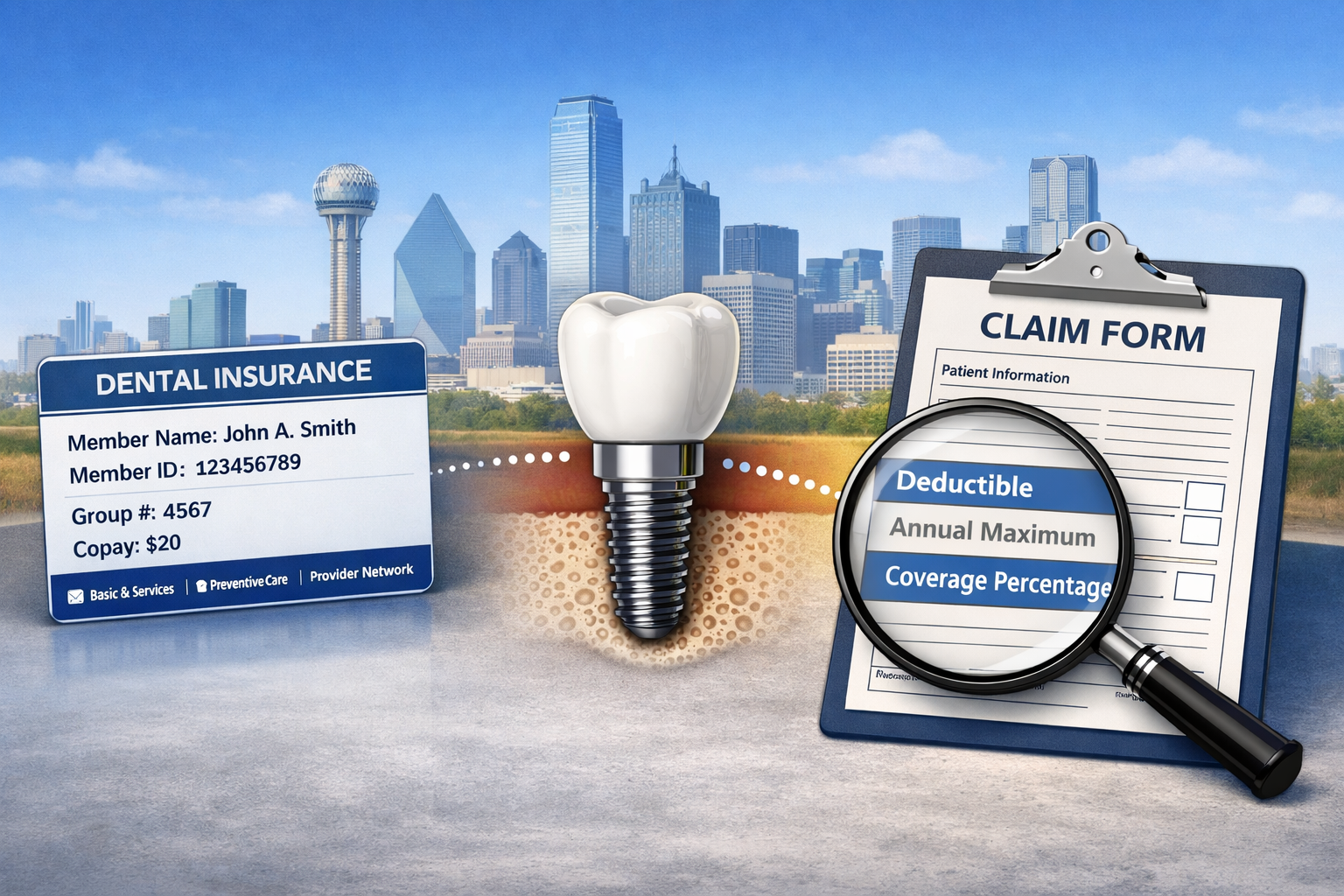
Most dental insurance plans classify dental implants as a “major restorative procedure.” This means they usually cover a lower percentage of the cost compared to routine care, often around 50%, after you’ve met your deductible [2]. However, the most significant limitation is the annual maximum, which is the total amount your insurance company will pay for your dental care in a plan year. For many plans, this maximum ranges from $1,500 to $2,000 [2]. Given that the average cost of a single dental implant can range from $3,000 to $6,000 per tooth, depending on factors like the dentist’s fees, location, and any necessary preparatory work such as bone grafts, your annual maximum may be quickly exhausted by even one implant [1, 2]. Therefore, even with insurance, patients should anticipate significant out-of-pocket costs for dental implants in Dallas.
Types of Dental Plans and Implant Coverage
Different types of dental insurance plans offer varying levels of coverage for dental implants:
- PPO (Preferred Provider Organization) Plans: These are generally the most flexible and offer the best chance of obtaining some coverage for dental implants. PPO plans allow you to choose any licensed dentist, though you’ll save money by staying within their network. They often cover around 50% of major restorative procedures like implants after deductibles are met, up to the annual maximum [2]. For specific details on PPO coverage, you can refer to our guide on Qualifying for Dental Implant Insurance Reimbursement Dallas.
- HMO (Health Maintenance Organization) Plans: HMO plans typically have lower monthly premiums but come with stricter network requirements and generally provide very limited, if any, coverage for dental implants [2]. You must choose a dentist within their network, and referrals may be required for specialized care. These plans are rarely a good option if dental implant surgery is a primary need.
- Indemnity (Fee-for-Service) Plans: These plans offer the most choice in dentists, allowing you to see any provider. The insurance company reimburses you for a set percentage of the cost after treatment. While they offer flexibility, premiums are usually higher, and these plans are less common for dental implant coverage [2].
Maximizing Dental Implants Insurance Benefits in Dallas
To maximize your dental implants insurance benefits in Dallas, careful planning and understanding your policy’s specifics are essential. This often involves verifying coverage, timing your procedure, and understanding common limitations. It’s not just about having insurance; it’s about knowing how to best use it for your dental implant procedure.
Key Strategies for Leveraging Your Insurance
Here are practical steps to get the most out of your dental implants insurance:
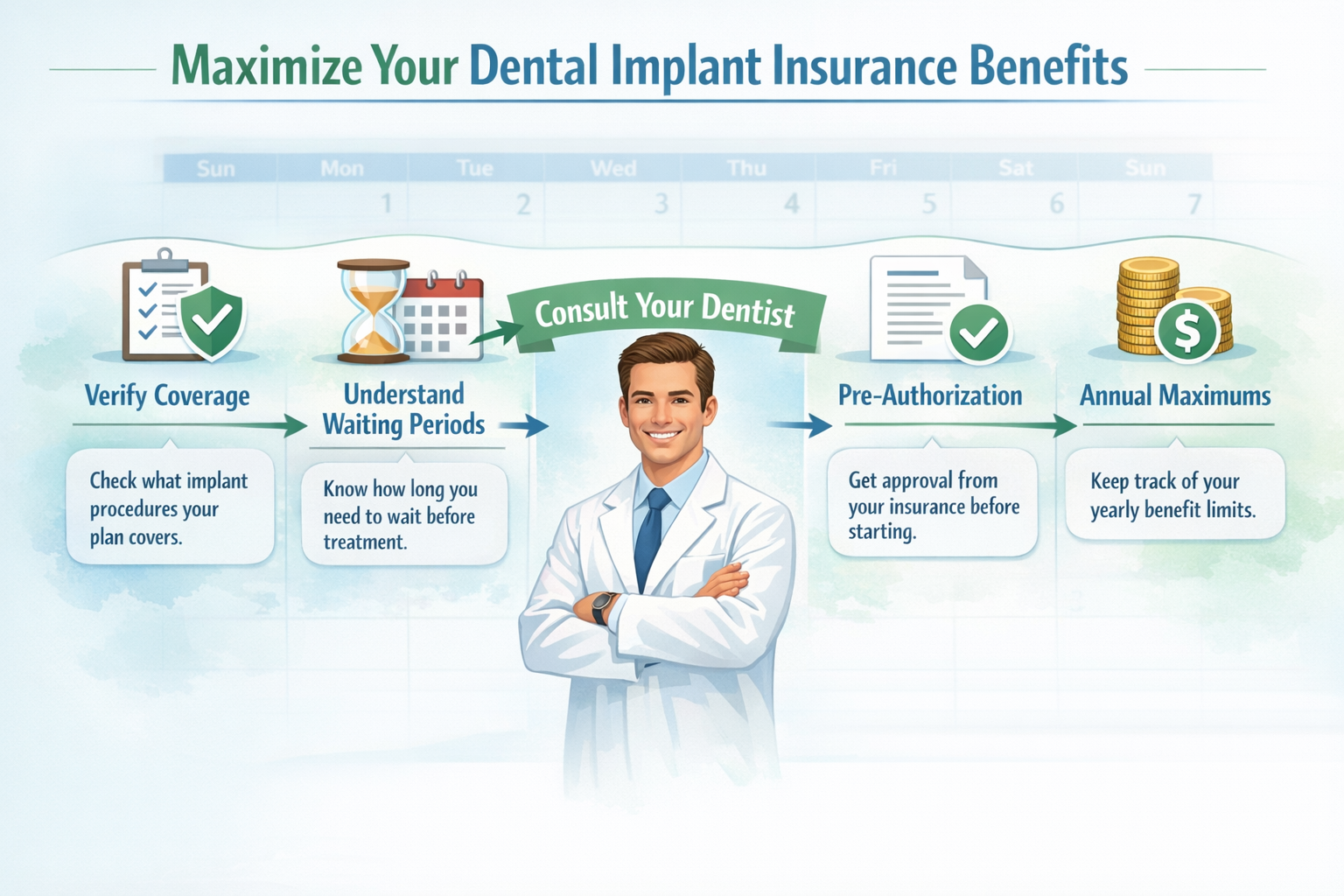
- Verify Your Specific Coverage: Before any treatment begins, contact your insurance provider directly or review your plan documents. Ask specific questions about dental implant coverage, including:
- What percentage is covered for major restorative procedures?
- What is your annual maximum benefit?
- What is your deductible, and has it been met?
- Are there any waiting periods for implant procedures?
- Does your plan have a “missing tooth clause” that would deny coverage if the tooth was missing before your policy started [2]?
- Understand Waiting Periods: Many dental insurance plans impose waiting periods, typically ranging from 6 months to 1 year, before coverage for major procedures like dental implant surgery becomes active [2]. If you’ve recently enrolled, you might need to delay your treatment to qualify for benefits.
- Pre-Authorization: Requesting a pre-authorization or pre-determination from your insurance company is highly recommended. Your dentist’s office in Dallas can submit a treatment plan to your insurer, who will then inform you in writing what they will and will not cover. This prevents unexpected out-of-pocket expenses.
- Split Treatment Across Calendar Years: If your dental implant procedure spans multiple stages (e.g., extraction, bone graft, implant placement, crown attachment), you may be able to maximize two annual maximums by scheduling parts of the treatment in different calendar years. For instance, if your annual maximum is $1,500, and your procedure totals $4,000, you could pay $1,500 this year and $1,500 next year, reducing your personal cost.
- Consider Bundling Procedures: Sometimes, certain components of the dental implant procedure, such as tooth extractions or bone grafting, might be covered under different benefit categories (e.g., basic restorative) with higher coverage percentages. Discuss with your Dallas dentist how to best code procedures to maximize coverage. For information on bone graft costs, see our article on Bone Graft Costs for Dental Implants in Dallas TX.
- Review Replacement Clauses: Be aware of replacement clauses, which limit how often an implant can be replaced, often within a 5-10 year window. Coverage for replacement might be stronger if the failure results from new medical issues or accidents [2].
What to Do If Your Insurance Doesn’t Cover Dental Implants (or Coverage is Limited)
Even with dental implants insurance, patients in Dallas often find that their coverage is limited, or their plan does not cover implants at all. Fortunately, several alternative solutions can help manage the cost of dental implants without relying solely on traditional insurance. It’s important to explore these options to ensure long-term oral health is achievable.
Alternative Payment and Savings Options
If your dental implants insurance doesn’t provide the coverage you need, consider these alternatives:
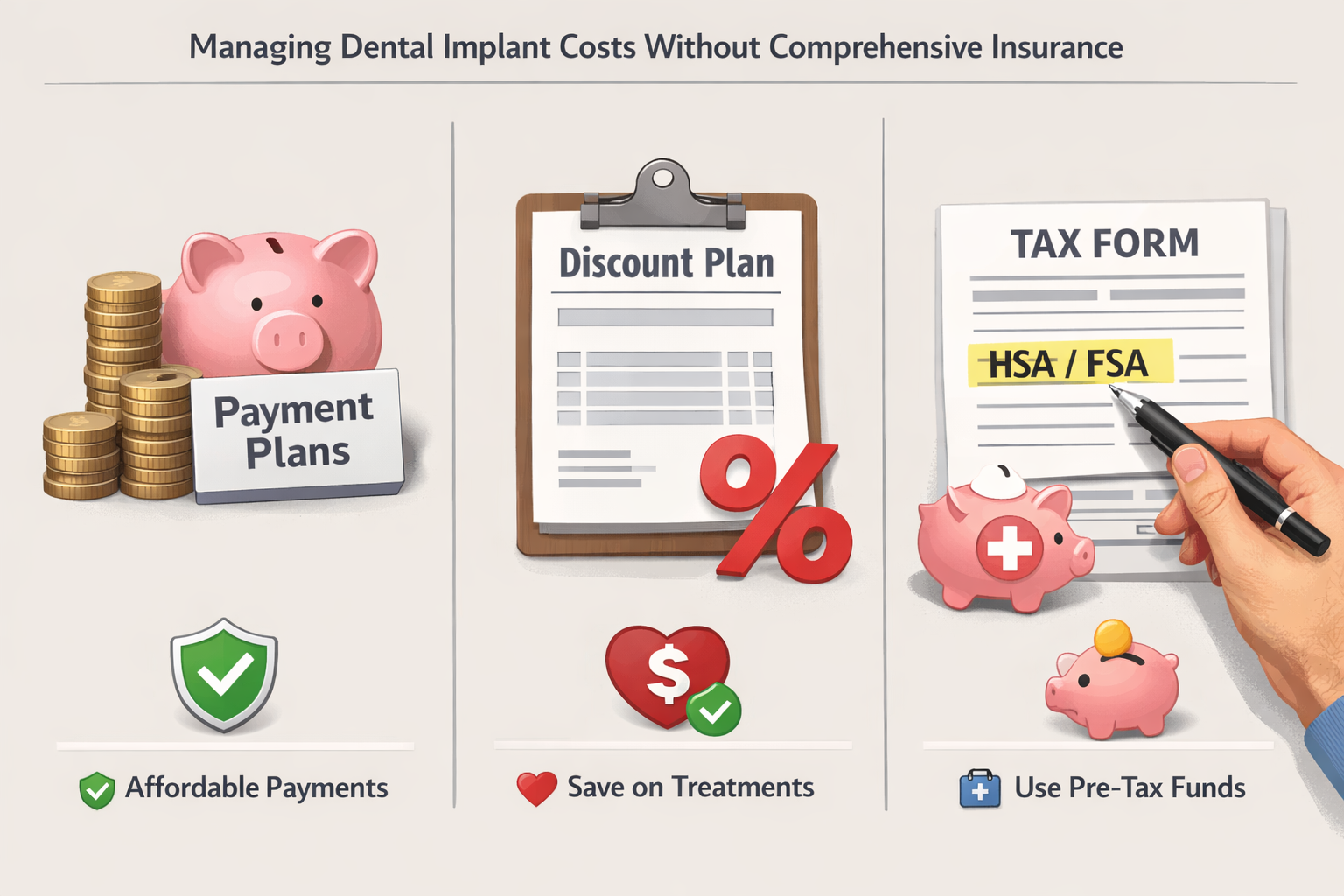
- Dental Discount Plans: These are not insurance but membership programs where you pay an annual fee to get negotiated discounts (typically 15%–50%) on dental services, including dental implants, from participating dentists [1]. These plans have no annual maximums, deductibles, or waiting periods, making them an immediate option for savings.
- Health Savings Accounts (HSAs) and Flexible Spending Accounts (FSAs): If you have an HSA or FSA through your employer, you can use these pre-tax funds to pay for medically necessary dental implants [4]. These accounts allow you to set aside money from your paycheck before taxes, effectively reducing the overall cost of your treatment.
- Payment Plans and Financing Options: Many dental practices in Dallas offer in-house payment plans or partner with third-party financing companies (like CareCredit) that provide low-interest or interest-free payment options for a set period. This allows you to spread the cost of your dental implant procedure over several months or years.
- Medical Loans: Personal medical loans from banks or credit unions can be an option for financing significant dental work. Interest rates and terms will vary based on your creditworthiness.
- Dental Schools: While less common for active treatment, dental schools can sometimes offer lower-cost dental implant procedures performed by students under the supervision of experienced faculty. This might involve longer treatment times but significant savings.
- Negotiate with Your Dentist: Don’t hesitate to discuss payment concerns with your Dallas dental provider. Some clinics may offer discounts for upfront payments or cash payments, or have flexible policies they can extend.
- Compare Costs in Dallas: Costs for dental implants can vary among different clinics in Dallas. It’s wise to get quotes from a few reputable dentists to compare pricing for the same procedure. You can learn more about local costs in our article on Dallas Dental Implant Cost vs National Averages 2026.
- Medicare Advantage (Part C) Plans: While Original Medicare (Part A and B) does not cover dental implants unless they are part of a reconstructive surgery following an accident, some Medicare Advantage (Part C) plans offer limited dental benefits that might include partial coverage for implants [1]. This coverage varies greatly by plan and state, with annual caps typically ranging from $1,000–$2,000 [1]. Seniors in Dallas should carefully research these plans. For more details, see our guide on Medicare & Medicaid Dental Implant Coverage in Texas.
By exploring these options, individuals seeking dental implants in Dallas can find viable ways to manage the cost and achieve their long-term oral health goals, even if traditional insurance coverage is limited.
FAQ About Dental Implants Insurance / Cost with Insurance
Q1: Does dental insurance typically cover 100% of dental implant costs?
No, dental insurance rarely covers 100% of dental implant costs. Most plans classify implants as major restorative procedures, covering about 50% after deductibles, up to an annual maximum, which is typically $1,500–$2,000 [2].
Q2: How much does a single dental implant cost with insurance in Dallas?
The average cost of a single dental implant without insurance ranges from $3,000 to $6,000 in Dallas [1, 2]. With insurance, if your plan covers 50% and you hit an annual maximum of $1,500–$2,000, your out-of-pocket cost for one implant could still be $1,500–$4,500 or more, depending on the total procedure cost and if additional treatments like bone grafts are needed.
Q3: Are there waiting periods for dental implant coverage?
Yes, many dental insurance plans have waiting periods, often 6 months to 1 year, before coverage for major procedures like dental implants becomes effective [2].
Q4: What is a “missing tooth clause” and how does it affect implant coverage?
A “missing tooth clause” in a dental insurance policy can deny coverage for a dental implant if the tooth was already missing before you enrolled in that specific plan, treating it as a pre-existing condition [2].
Q5: Does Medicare cover dental implants in 2026?
Original Medicare (Part A and B) generally does not cover routine dental care, including dental implants, in 2026, unless it’s part of reconstructive surgery after an accident [1]. Some Medicare Advantage (Part C) plans may offer limited dental benefits that could include partial implant coverage [1].
Q6: Can I use an HSA or FSA to pay for dental implants?
Yes, dental implants are considered medically necessary and are eligible expenses for Health Savings Accounts (HSAs) and Flexible Spending Accounts (FSAs), allowing you to pay with pre-tax dollars [4].
Q7: What are dental discount plans, and how do they differ from insurance for implants?
Dental discount plans are membership programs where you pay an annual fee for reduced prices (15%–50% off) on dental services from participating dentists [1]. Unlike insurance, they have no deductibles, annual maximums, or waiting periods.
Q8: Should I get pre-authorization from my insurance for dental implants?
Yes, getting a pre-authorization or pre-determination from your insurance company is highly recommended. It provides a written estimate of what your plan will cover, helping you avoid unexpected costs for your dental implant procedure.
Conclusion
Understanding dental implants insurance and its impact on your cost with insurance is a crucial step for anyone in Dallas considering tooth replacement options. While insurance can help mitigate expenses, it’s rare for plans to cover the entire cost of dental implants due to deductibles, annual maximums, and specific policy limitations like waiting periods or missing tooth clauses. For many individuals, PPO plans offer the most potential for partial coverage, typically around 50% up to a modest annual cap.
For those facing limited or no insurance coverage, exploring alternatives such as dental discount plans, utilizing HSAs/FSAs, or arranging payment plans with your Dallas dental provider can make dental implants a more accessible option. Ultimately, a thorough consultation with your dentist and a direct verification of your insurance benefits are the best ways to get a clear picture of your total cost and the financial support available. At Dental Implant Education – Dallas TX, we encourage informed decision-making and are dedicated to providing clear, factual information to help you achieve long-term oral health.
References
[1] Medicare Dental Implant Coverage 2026 Whats Covered And Whats Not – https://skylinebenefit.com/medicare-dental-implant-coverage-2026-whats-covered-and-whats-not/
[2] Dental Insurance Cover Implants – https://dentistkatytx.com/dental-insurance-cover-implants/
[3] Dental Implant Insurance – https://www.imperiumhealthgroup.com/blog/dental-implant-insurance/
[4] Dental Implant Coverage – https://www.humana.com/dental-insurance/dental-resources/dental-implant-coverage
Leave a Reply
Share your thoughts or ask a question about dental implants. Your email address will not be published.