

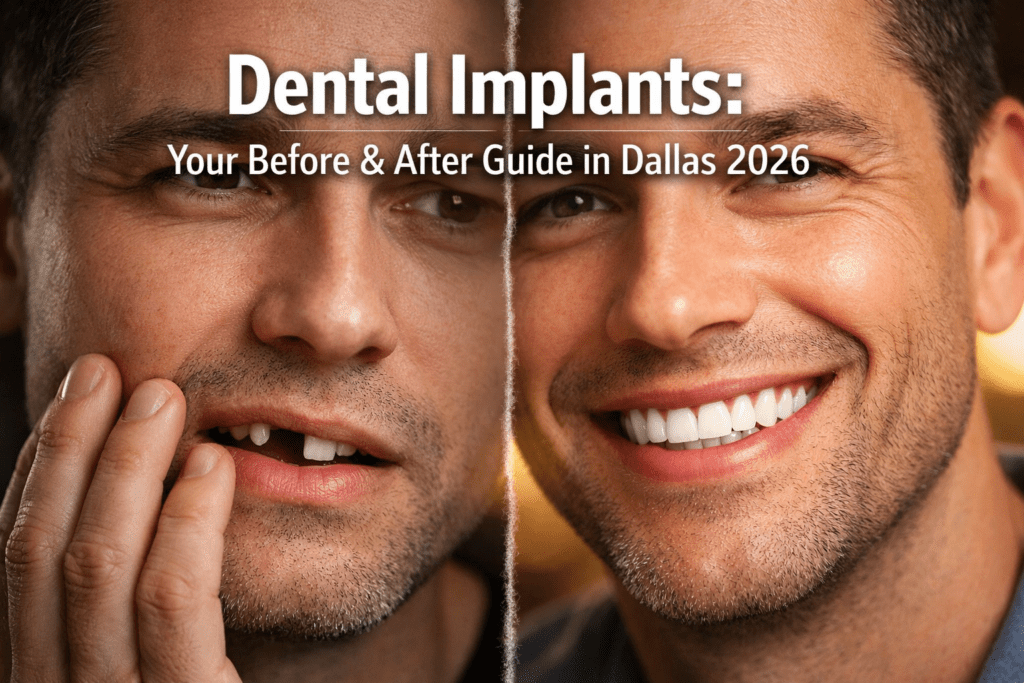
Dental implants offer a remarkable solution for missing teeth, providing both functional stability and aesthetic improvement that can dramatically transform your smile and overall oral health. Understanding the journey of dental implants before and after involves recognizing the initial challenges of missing teeth, the intricate steps of the implant procedure, and the profound, lasting benefits of a fully restored smile. For individuals in Dallas, exploring dental implants means considering a comprehensive path to renewed confidence and improved quality of life.
Key Takeaways
- Dental implants replace missing teeth, offering a permanent solution that looks and feels natural.
- The “before” often involves addressing issues like bone loss, difficulty eating, and compromised aesthetics due to missing teeth.
- The “after” showcases restored chewing function, improved speech, enhanced facial structure, and a confident, natural-looking smile.
- The procedure involves several stages: initial consultation and planning, implant placement, osseointegration, and final crown/prosthetic attachment.
- Modern advancements, including 3D technology and minimally invasive techniques, contribute to high success rates and predictable outcomes.
- Proper oral hygiene and regular dental check-ups are crucial for the long-term success and longevity of dental implants.
- Consulting with a qualified dentist in Dallas is the first step to determine if dental implants are the right tooth replacement option for you.
Understanding Your Smile: Dental Implants Before
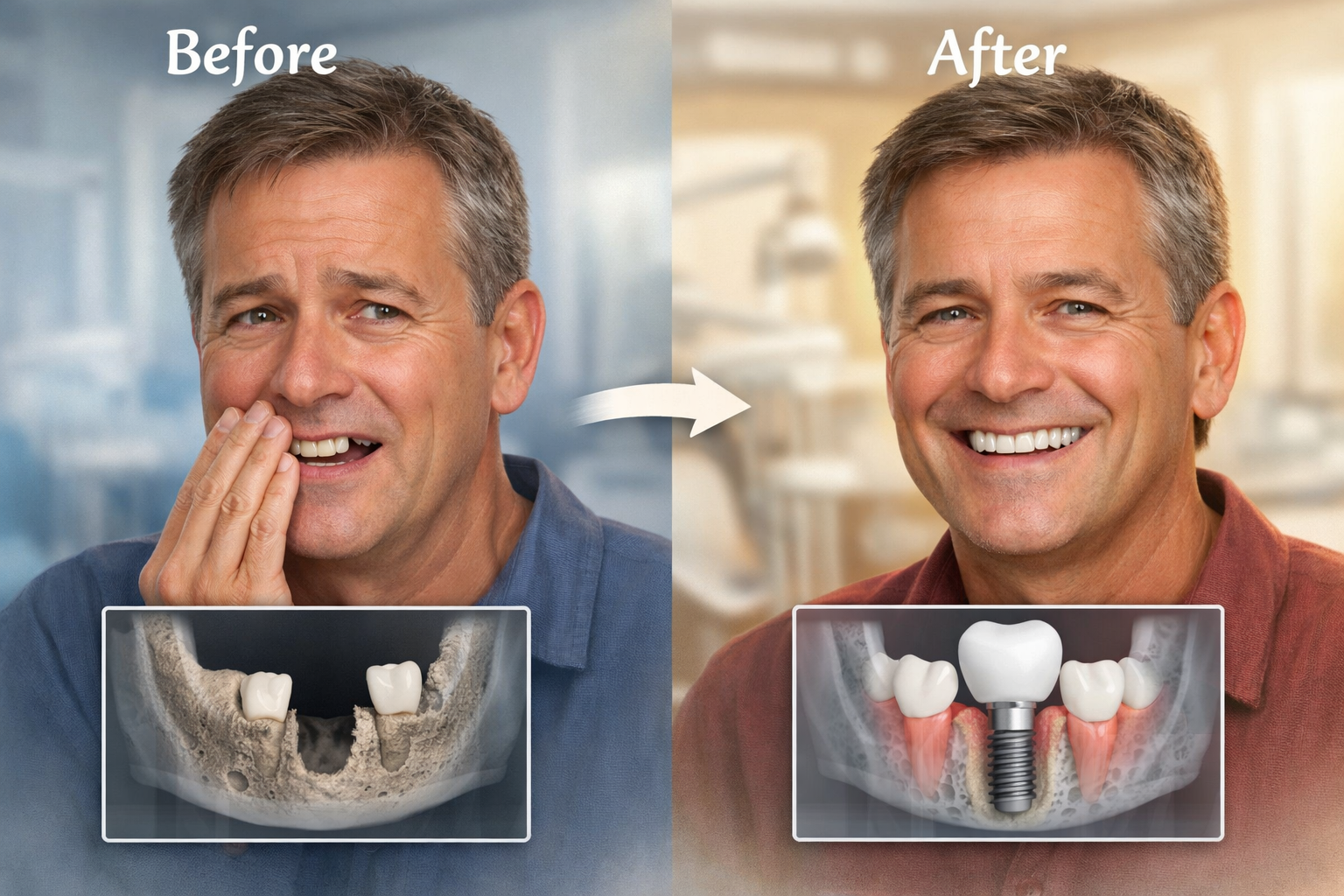
Before considering dental implants, most patients experience a range of oral health issues and aesthetic concerns due to missing teeth, which can impact daily life significantly. These initial conditions often include visible gaps, difficulty chewing, altered speech, and even potential bone loss in the jaw.
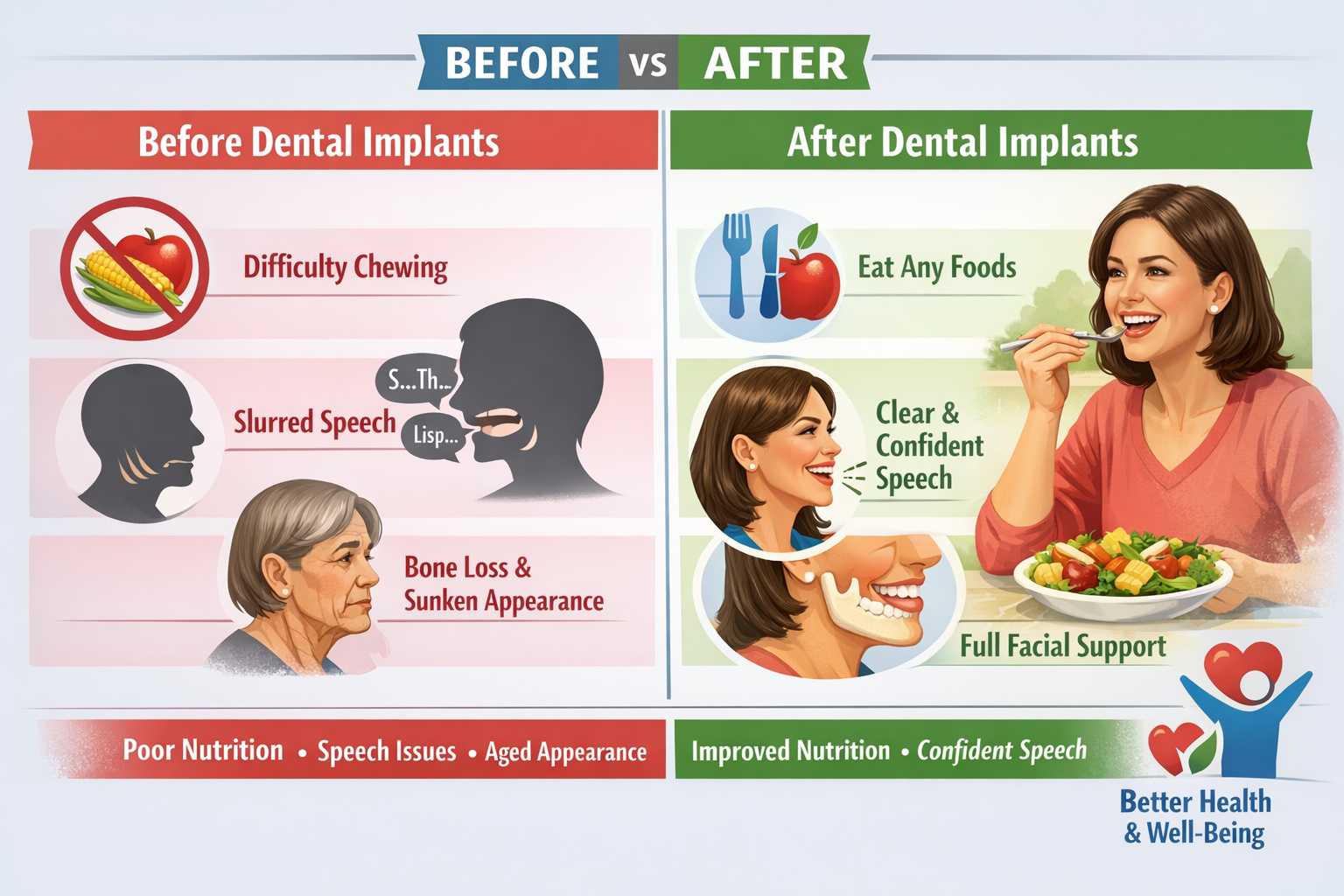
Missing teeth create noticeable gaps that can detract from a person’s appearance and self-confidence. Beyond aesthetics, the absence of a tooth root allows the jawbone in that area to deteriorate over time, a process known as resorption. This bone loss can affect the stability of surrounding teeth and even change facial structure, leading to a sunken or aged appearance. Patients may find it challenging to properly chew certain foods, leading to dietary restrictions and potential nutritional deficiencies. Speech can also be affected, causing lisps or difficulty pronouncing specific sounds. Addressing these “before” conditions is a primary motivation for exploring tooth replacement options like dental implants in Dallas. For example, if you’ve recently had a tooth extraction, understanding the right time to pursue implants can prevent further complications Dental Implants After Tooth Extraction Dallas: Timing, Costs.
Common “Before” Scenarios for Dental Implants
- Single Missing Tooth: A visible gap in the smile, affecting appearance and chewing function.
- Multiple Missing Teeth: Larger gaps, potentially impacting speech and causing stress on remaining natural teeth.
- Deteriorating Dentition: Teeth that are severely decayed, fractured, or failing, necessitating extraction and replacement.
- Loose or Uncomfortable Dentures: Traditional dentures can slip, cause sores, and make eating difficult, leading many to seek a more stable solution.
- Bone Loss in Jaw: When a tooth is missing, the jawbone no longer receives the necessary stimulation, leading to gradual bone resorption. This can weaken the jaw and impact facial contours. In some cases, a bone graft might be necessary before an implant can be placed Bone Graft Costs for Dental Implants in Dallas: When You Nee.
- Compromised Oral Function: Difficulty biting and chewing, leading to avoidance of certain foods and potential nutritional issues.
- Reduced Self-Confidence: Many individuals feel self-conscious about their smile, impacting social interactions and professional life.
The Dental Implant Procedure: A Step-by-Step Overview
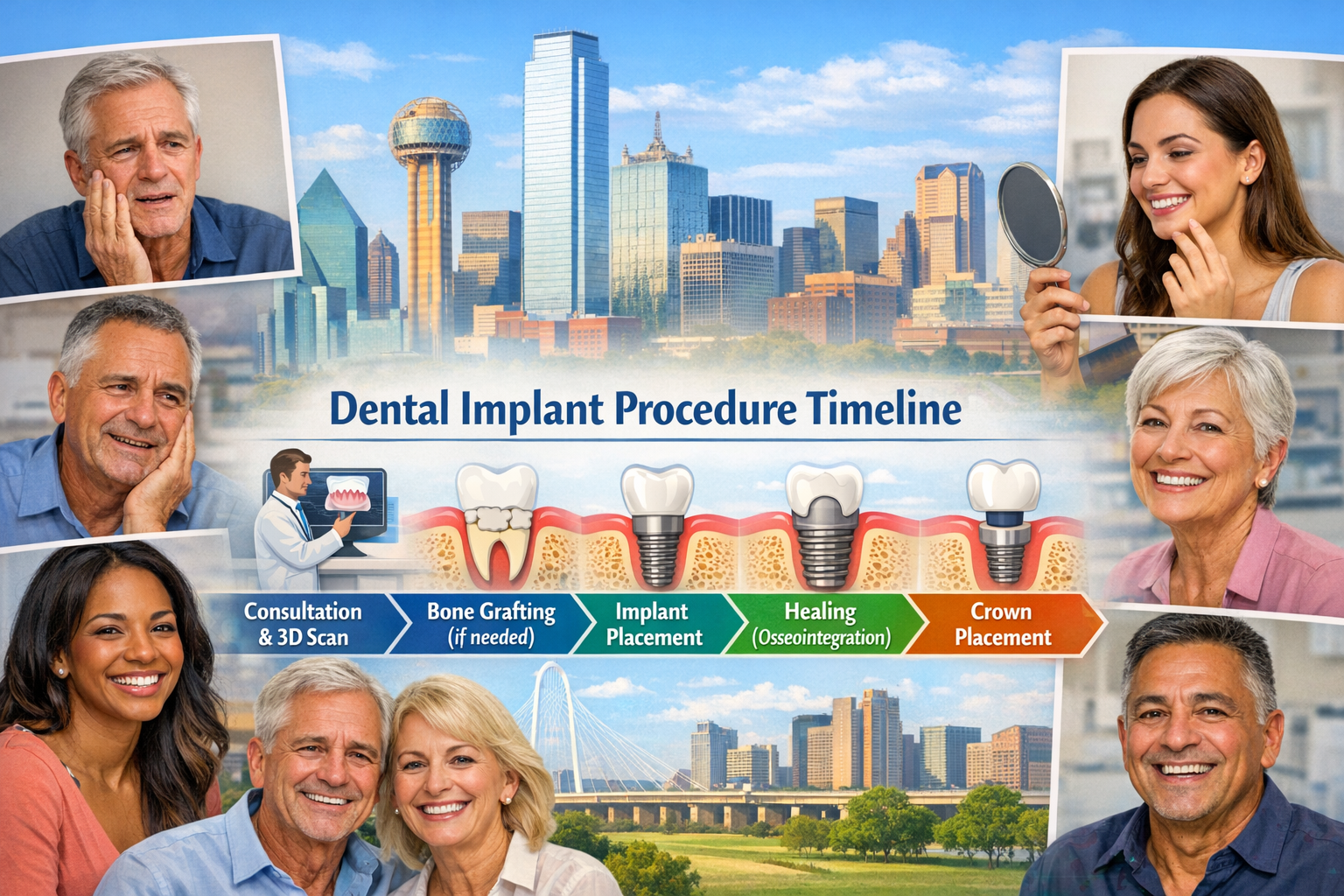
The dental implant procedure is a multi-stage process designed to meticulously replace a missing tooth root with a titanium post, culminating in a natural-looking artificial tooth. It typically begins with a thorough consultation and imaging, followed by implant placement, a healing period, and finally, the attachment of the prosthetic crown.
Initial Consultation and Planning
The journey to a restored smile begins with a comprehensive evaluation by a qualified dental professional in Dallas. This initial consultation includes a review of your medical history, a detailed oral examination, and advanced imaging such as X-rays and CBCT (Cone Beam Computed Tomography) scans. These scans provide 3D images of your jawbone, nerves, and sinus cavities, allowing the dentist to plan the precise placement of the implant, avoiding potential complications [3]. This detailed planning is crucial for ensuring patient safety and the long-term success of the implant. During this stage, your dentist will discuss tooth replacement options and determine if you are a suitable candidate for dental implants.
Pre-Treatment (If Necessary)
Some patients may require preparatory procedures before implant placement. These can include:
- Tooth Extraction: If a damaged tooth needs to be removed, it will be done before implant placement. The timing of this can sometimes allow for immediate implant placement, but often a healing period is needed.
- Bone Grafting: If insufficient jawbone density is present due to bone loss, a bone graft may be necessary to build up the bone and provide a stable foundation for the implant Bone Graft Healing for Dental Implants: Your 2026 Timeline. This process can add several months to the overall treatment timeline as the graft needs time to integrate.
Implant Placement Surgery
The actual implant surgery involves placing a small, screw-shaped titanium post into the jawbone where the tooth is missing. This is typically an outpatient procedure performed under local anesthesia, though various dental implant sedation options are available in Dallas to ensure patient comfort [3]. Guided implant surgery, utilizing digital planning from the initial scans, helps ensure precise placement and reduces risks [3]. Minimally invasive techniques are increasingly common, leading to quicker procedures with less tissue trauma and faster recovery [1, 3].
Osseointegration and Healing
After implant placement, a critical healing period begins, typically lasting 3-6 months. During this time, the titanium implant fuses with the surrounding jawbone through a biological process called osseointegration. This creates a strong, stable anchor for the future artificial tooth. Advances in biotechnology are accelerating this process, potentially reducing overall treatment duration [2]. Regular follow-up appointments are essential during this phase to monitor healing and ensure proper integration.
Abutment Placement and Final Restoration
Once osseointegration is complete, a small connector piece called an abutment is attached to the implant. This abutment protrudes above the gum line and serves as the base for the final restoration. Impressions are then taken to custom-fabricate your crown, bridge, or denture, which will perfectly match your existing teeth in color, shape, and size. When the custom prosthetic is ready, it is securely attached to the abutment, completing the dental implant procedure. In some cases, “same-day teeth” solutions like All-on-4 dental implants can provide a functional, non-removable bridge on the same day the implants are placed, eliminating waiting periods [4].
Your Transformed Smile: Dental Implants After
After the successful completion of the dental implant procedure, patients experience a profound transformation in both oral function and overall quality of life. The “after” phase of dental implants brings a restored, natural-looking smile, improved ability to eat and speak, and a significant boost in self-confidence.
With dental implants, patients can enjoy a full range of foods without discomfort or worry about their teeth slipping, a common concern with traditional dentures. Speech patterns, which may have been affected by missing teeth, often return to normal. The stable and permanent nature of implants also means no more removable prosthetics, offering unparalleled convenience and comfort. Furthermore, implants help preserve jawbone health, preventing further bone loss and maintaining the natural contours of the face [2]. The high success rates, often exceeding 95-98%, contribute to their widespread acceptance as a leading missing teeth solution [6].
Benefits of Dental Implants After Placement
- Natural Appearance and Feel: Dental implants are designed to look and feel like your own teeth. They blend seamlessly with your natural dentition, often making it impossible to distinguish them from real teeth.
- Improved Chewing Function: Unlike dentures, implants are permanently anchored in your jawbone, providing excellent stability for biting and chewing. This allows you to eat your favorite foods with confidence and comfort.
- Enhanced Speech: Missing teeth or ill-fitting dentures can affect speech. Dental implants restore proper tooth structure, helping you speak clearly and naturally.
- Preservation of Bone Structure: The implant post stimulates the jawbone, just like a natural tooth root. This stimulation helps prevent bone loss and deterioration, which can occur when teeth are missing.
- Durability and Longevity: With proper care, dental implants can last for many decades, often a lifetime. They are a long-term investment in your oral health [1].
- Convenience: Implants eliminate the need for messy adhesives or the worry of dentures slipping. Once placed, you care for them just like natural teeth.
- Increased Self-Confidence: A complete, healthy smile can significantly boost self-esteem and improve social interactions, allowing you to smile, laugh, and speak without hesitation.
- Protection of Adjacent Teeth: Unlike bridges, dental implants do not require altering adjacent healthy teeth. They stand alone, protecting the integrity of your remaining natural teeth.
Long-Term Care for Dental Implants
Maintaining excellent oral hygiene is crucial for the long-term success of your dental implants. This includes:
- Regular Brushing and Flossing: Treat your implants like your natural teeth, brushing twice daily and flossing around them to remove plaque and food debris.
- Routine Dental Check-ups: Visiting your Dallas dentist for regular cleanings and examinations is essential to monitor the health of your implants and surrounding gums. Your dentist can catch any potential issues early, such as peri-implantitis.
- Avoiding Harmful Habits: Refrain from chewing on hard objects, grinding your teeth, or using your teeth as tools, as these can damage your implants.
The Evolution of Dental Implants in 2026
Dental implant technology has seen remarkable advancements by 2026, leading to improved outcomes, faster recovery times, and increased patient comfort. These innovations have made the “before and after” journey even more predictable and satisfying for patients in Dallas.
Modern dental implant procedures in 2026 benefit from breakthroughs in materials science and digital technology. Enhanced osseointegration techniques are extending implant durability, with researchers developing new surface treatments to help implants last beyond 20-30 years [1]. Beyond traditional titanium, newer ceramic-based options and innovative alloys are emerging, offering better corrosion resistance, wear resistance, and a more natural appearance [1]. Customized implants are now a standard, with 3D scanning and printing enabling devices tailored to each patient’s unique mouth geometry [2]. This precision is further enhanced by digital impressions and guided implant surgery, which use CBCT scans for exact placement, significantly reducing complications and improving healing outcomes [3].
Key Advancements Impacting Dental Implants Before and After
- 3D Guided Implant Surgery: Utilizing CBCT scans and digital planning software, surgeons can precisely map the ideal implant placement, avoiding nerves and sinuses. This technology minimizes errors, enhances predictability, and can lead to faster, less invasive procedures [3].
- Advanced Materials: While titanium remains the gold standard, alternatives like zirconia are gaining popularity, especially for patients with metal sensitivities or those seeking a highly aesthetic, metal-free option. Research into new alloys and surface coatings continues to improve implant integration and longevity [1]. For a comparison, see our guide on Titanium vs Zirconia Dental Implants in Dallas 2026.
- Minimally Invasive Techniques: Improved surgical tools and advanced imaging allow for smaller incisions and less tissue manipulation, leading to reduced post-operative pain and quicker recovery periods [1]. This includes approaches like Minimally Invasive Dental Implants Dallas.
- Accelerated Healing Protocols: Techniques such as Platelet-Rich Fibrin (PRF) therapy utilize the patient’s own blood components to promote faster and more efficient soft tissue and bone healing around the implant site [5]. This can significantly improve gum appearance and overall recovery.
- Immediate Load Dental Implants: For suitable candidates, “same-day teeth” procedures allow for a temporary crown or bridge to be placed immediately after implant surgery, providing instant aesthetic and functional improvement [4]. This is often discussed as Immediate Load Dental Implants Dallas 2026.
- Digital Impressions: Traditional gooey impressions are largely replaced by intraoral scanners, which offer faster, more accurate digital models of your teeth and gums, enhancing patient comfort and precision for crown fabrication [3].
These advancements collectively make the dental implant process in 2026 more efficient, comfortable, and predictable, providing Dallas patients with superior “before and after” results.
Who is a Candidate for Dental Implants?
Generally, most adults who are missing one or more teeth and have good overall oral health are potential candidates for dental implants. However, certain factors can influence eligibility.
Ideal candidates typically possess sufficient jawbone density to support the implant and healthy gum tissue free from periodontal disease. Good general health is also important, as chronic conditions like uncontrolled diabetes or certain autoimmune diseases can impact healing and implant success. Smoking can also significantly reduce success rates, so dentists often recommend quitting before and after the procedure. Ultimately, a thorough consultation with a dental implant specialist in Dallas is essential to determine individual candidacy. For example, seniors are often excellent candidates, and there are specific considerations for Dallas TX Dental Implants for Seniors 2026.
Factors Influencing Candidacy:
- Good General Health: Patients should be in good overall health, free from conditions that severely compromise healing. Conditions like uncontrolled diabetes or certain cancers can impact the success of osseointegration Diabetic Dental Implant Recovery: Guide & Timeline (2026).
- Sufficient Jawbone Density: Adequate bone volume is crucial for providing a stable foundation for the implant. If bone loss has occurred, bone grafting might be recommended.
- Healthy Gums: The absence of active periodontal disease is vital, as gum infections can compromise implant success.
- Commitment to Oral Hygiene: Candidates must be willing to maintain rigorous oral hygiene practices post-procedure to ensure the longevity of their implants.
- Non-Smoker or Willing to Quit: Smoking significantly impairs healing and increases the risk of implant failure.
- Age: While age itself is rarely a barrier, factors like bone quality and overall health become more critical for older patients.
Comparing Dental Implants to Other Tooth Replacement Options
When considering tooth replacement, understanding how dental implants stack up against alternatives like dentures and bridges is crucial for making an informed decision. Dental implants offer unique long-term benefits that often outweigh the initial considerations of other options.
Unlike removable dentures, which rest on the gums and can slip, or traditional bridges, which require altering adjacent healthy teeth, dental implants provide a permanent, stand-alone solution anchored directly into the jawbone. This not only offers superior stability and chewing efficiency but also helps preserve jawbone health, preventing the bone loss that often occurs with missing teeth. While the initial implant cost may seem higher, their long-term durability and benefits in oral health, function, and aesthetics often make them a more cost-effective choice in the long run Dental Implants vs Dentures Cost Comparison in Dallas TX: Lo.
Comparison Table: Dental Implants vs. Alternatives
| Feature | Dental Implants | Traditional Dental Bridges | Removable Partial/Full Dentures |
|---|---|---|---|
| Stability | Excellent (anchored in jawbone) | Good (cemented to adjacent teeth) | Fair (rests on gums, can slip) |
| Jawbone Health | Preserves bone, prevents atrophy | Does not prevent bone loss in missing tooth area | Accelerates bone loss due to pressure on gums |
| Longevity | 20+ years to a lifetime with proper care [1] | 5-15 years, typically | 5-10 years, requiring adjustments/relines |
| Adjacent Teeth | Does not affect neighboring teeth | Requires reshaping of adjacent healthy teeth | Puts pressure on adjacent teeth or gums |
| Comfort | Very comfortable, feels like natural tooth | Generally comfortable, but can feel bulky | Can be uncomfortable, may cause sores |
| Chewing Power | Near natural chewing efficiency | Good, but not as strong as implants | Limited, can be difficult to eat certain foods |
| Maintenance | Brush & floss like natural teeth, regular dental visits | Regular brushing & flossing, special cleaning under bridge | Requires daily removal, cleaning, and adhesives (sometimes) |
| Cost (Initial) | Higher initial investment | Moderate initial investment | Lower initial investment |
This comparison highlights why dental implants are often considered the premier tooth replacement option, particularly for those seeking a durable, natural-feeling, and health-preserving solution for their missing teeth in Dallas.
Maximizing Your “After” Results: Tips for Success
Achieving the best possible “after” results from your dental implants requires careful adherence to post-procedure guidelines and a long-term commitment to oral health. Following your dentist’s instructions is paramount for successful healing and maintaining implant longevity.
Immediately following implant surgery, it’s crucial to follow specific care instructions to facilitate healing and prevent complications. This includes managing discomfort with prescribed medication, eating soft foods, avoiding strenuous activity, and practicing gentle oral hygiene around the surgical site. Long-term success hinges on consistent daily brushing and flossing, along with regular professional cleanings and check-ups. Neglecting oral hygiene can lead to peri-implantitis, an infection that can jeopardize the implant Can Dental Implants Get Infected Years Later? Your 2026 Gui. Choosing an experienced implant dentist in Dallas and maintaining open communication throughout your treatment journey significantly contributes to a successful outcome.
Essential Tips for Dental Implant Success:
- Follow Post-Operative Instructions Carefully: Adhere to all guidelines regarding medication, diet, activity restrictions, and oral care immediately after surgery. This is critical for initial healing and avoiding issues like spitting blood after dental implant surgery beyond normal.
- Maintain Excellent Oral Hygiene: Brush twice a day with a soft-bristled toothbrush and use dental floss or interdental brushes specifically designed for implants. This prevents plaque buildup around the implant and gums.
- Attend Regular Dental Check-ups: Schedule routine visits with your Dallas dentist for professional cleanings and examinations. These appointments allow your dentist to monitor your implants, gums, and overall oral health. For long-term success, consistent Dallas Dental Implant Follow-Up is key.
- Avoid Smoking: Smoking significantly increases the risk of implant failure and complications during healing.
- Manage Underlying Health Conditions: If you have conditions like diabetes, ensure they are well-controlled, as they can affect healing and implant success.
- Wear a Nightguard (If Needed): If you grind or clench your teeth (bruxism), your dentist might recommend a nightguard to protect your implants from excessive forces.
- Choose a Qualified Dentist: Selecting an experienced and reputable implant dentist in Dallas is one of the most important steps to ensure a successful procedure and optimal “after” results. Look for clinics known for Top Dallas Dental Implant Clinics 2026.
By diligently following these recommendations, patients can maximize the longevity and aesthetic appeal of their dental implants, enjoying the full benefits of their transformed smile for many years.
Conclusion
The journey of “dental implants before and after” represents a profound transformation, moving from the challenges of missing teeth to the confidence and functionality of a fully restored smile. For individuals in Dallas, dental implants offer a state-of-the-art tooth replacement option that addresses not only aesthetics but also critical aspects of oral health, speech, and chewing ability. With advancements in technology and techniques, the procedure is more predictable and successful than ever before, providing a durable, long-lasting solution.
If you are considering dental implants, the first and most crucial step is to seek a consultation with a qualified dental professional in Dallas. They can assess your specific oral health needs, discuss your tooth replacement options, and create a personalized treatment plan tailored to your unique situation. This informed decision-making process ensures patient safety and optimal long-term oral health, leading to a confident and healthy smile that truly stands the test of time.
FAQ
What does “dental implants before and after” typically involve?
“Dental implants before and after” refers to the significant transformation from having missing teeth, which can cause bone loss and difficulty eating, to a fully restored smile with stable, natural-looking artificial teeth that improve oral function and aesthetics.
How long does the dental implant process take from “before” to “after”?
The entire dental implant process typically takes 3 to 9 months, though this can vary depending on individual healing time, whether bone grafting is needed, and the specific type of implant procedure.
Can dental implants fix jawbone loss that occurs “before” the procedure?
Yes, dental implants can help prevent further jawbone loss, and if significant bone loss has already occurred, a bone grafting procedure can be performed “before” implant placement to create a stable foundation.
Will my “after” smile look natural with dental implants?
Yes, dental implants are designed to look and feel like your natural teeth. The crowns are custom-made to match the color, shape, and size of your existing teeth, ensuring a seamless and aesthetic “after” result.
What are the main functional improvements “after” getting dental implants?
After getting dental implants, you can expect significant improvements in chewing ability, clearer speech, and a stable bite, allowing you to enjoy a wider variety of foods and speak with confidence.
What is the success rate of dental implants in 2026?
By 2026, dental implants continue to boast high success rates, consistently exceeding 95-98% when performed by qualified professionals and properly maintained [6].
How do I maintain my dental implants “after” they are placed?
Maintaining dental implants “after” placement involves diligent oral hygiene (brushing and flossing twice daily), regular dental check-ups, and avoiding habits like smoking or chewing on hard objects.
Are there any risks involved in the “before” and “after” process of dental implants?
As with any surgical procedure, there are risks, including infection, nerve damage, or implant failure. However, these risks are minimal, especially with thorough pre-operative planning and choosing an experienced dentist.
References
[1] Dental Implants In 2026 Advances In Longevity Materials And Faster Recovery – https://trinitydentist.com/dental-implants-in-2026-advances-in-longevity-materials-and-faster-recovery/
[2] The Future Of Dental Implants Predictions For 2026 – https://miamidesignersmiles.com/the-future-of-dental-implants-predictions-for-2026/
[3] 7 Latest Dental Technologies 2026 – https://mainstreetdentalnewark.com/7-latest-dental-technologies-2026/
[4] 6 Trends Making All On 4 Dental Implants Easier And Safer In 2026 – https://trinitydentalcares.com/6-trends-making-all-on-4-dental-implants-easier-and-safer-in-2026/
[5] Watch – https://www.youtube.com/watch?v=PXl1dU7BYxQ
[6] Dental Implant Demand Statistics – https://www.imagineyoursmile.com/blog/dental-implant-demand-statistics/
Leave a Reply
Share your thoughts or ask a question about dental implants. Your email address will not be published.