


Picture this: you’re sitting in a dental office, staring at a missing tooth in the mirror, and your dentist just presented you with three completely different solutions. Sound familiar? If you’re wondering about dental implant vs bridge vs denture which is better for your specific situation, you’re not alone. This decision affects millions of people every year, and choosing the wrong option can impact your quality of life, budget, and oral health for decades to come.
The truth is, there’s no one-size-fits-all answer when comparing dental implant vs bridge vs denture which is better. Each option has distinct advantages, drawbacks, and ideal candidates. What works perfectly for your neighbor might be completely wrong for you, depending on factors like your oral health, lifestyle, budget, and personal preferences.
Key Takeaways
• Dental implants offer the most natural feel and longest lifespan but require higher upfront investment and good bone density
• Dental bridges provide a middle-ground solution with faster treatment time but may affect adjacent healthy teeth
• Dentures are the most budget-friendly option initially but may require frequent adjustments and replacements
• Success depends on individual factors including oral health, bone density, lifestyle, and budget considerations
• Long-term costs often favor implants despite higher initial investment due to their durability and minimal maintenance needs
Understanding Your Tooth Replacement Options
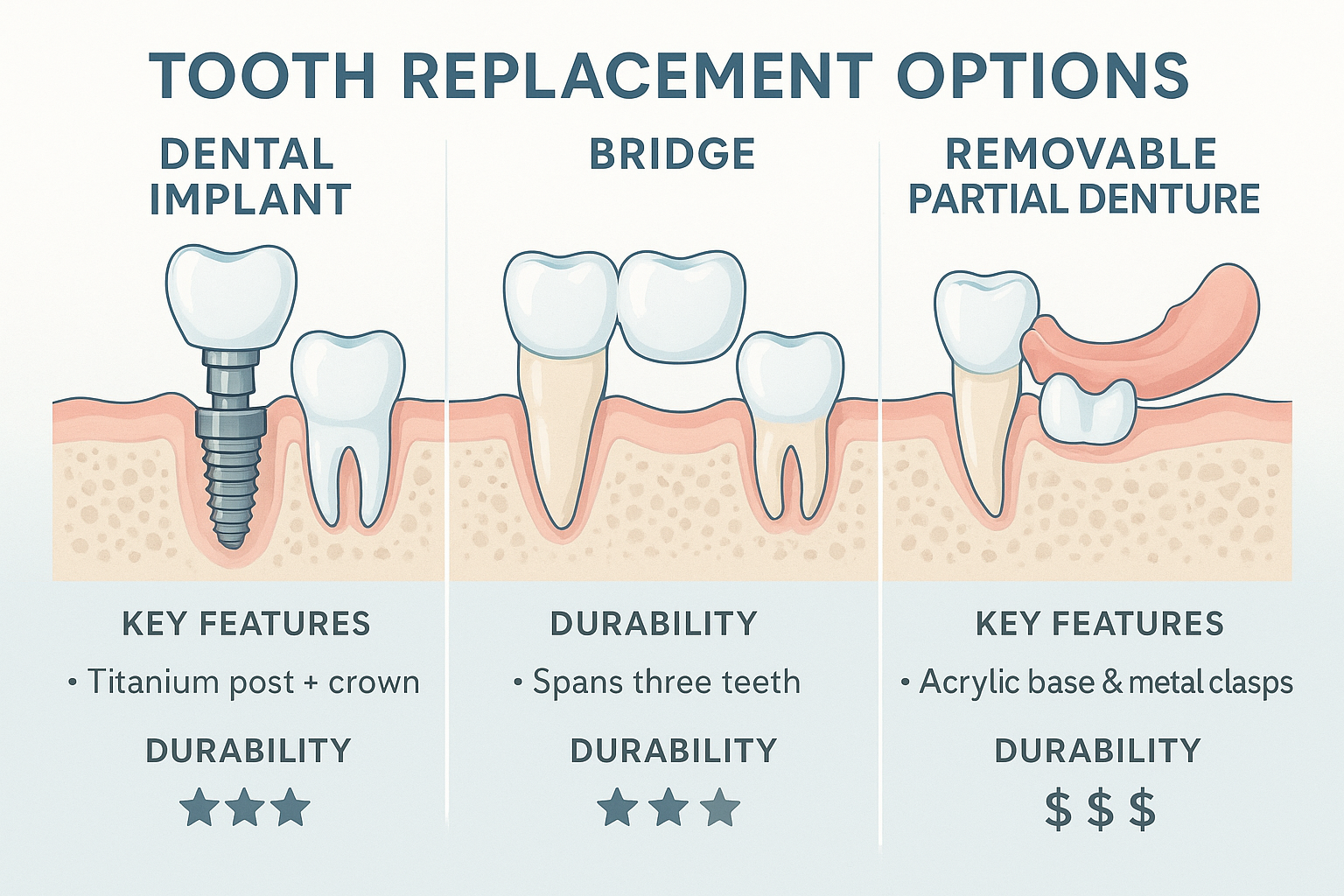
When you lose a tooth, whether due to injury, decay, or gum disease, you’re faced with an important decision that will affect your daily life for years to come. The question of dental implant vs bridge vs denture which is better doesn’t have a simple answer because each option serves different needs and circumstances.
Let me break down what each option actually involves:
Dental Implants are titanium posts surgically placed into your jawbone, topped with a custom crown. They’re designed to mimic your natural tooth root and provide the most authentic replacement experience.
Dental Bridges literally “bridge” the gap left by missing teeth using crowns on adjacent teeth as anchors. The replacement tooth (or teeth) sits between these supporting crowns.
Dentures are removable prosthetic devices that replace multiple missing teeth. They can be partial (replacing some teeth) or complete (replacing all teeth in an arch).
Understanding these fundamental differences is crucial when evaluating dental implant costs and options for your specific situation.
Dental Implants: The Gold Standard Solution
What Makes Dental Implants Special?
Dental implants have earned their reputation as the “gold standard” for tooth replacement, and for good reason. When considering dental implant vs bridge vs denture which is better, implants consistently rank highest for patient satisfaction and long-term success.
Here’s what sets implants apart:
🦴 Bone Preservation: Unlike other options, implants actually stimulate your jawbone, preventing the bone loss that naturally occurs after tooth loss. This is crucial for maintaining your facial structure and preventing that “sunken” appearance that can develop over time.
🍎 Natural Function: Implants restore nearly 100% of your natural bite force, meaning you can eat whatever you want without worry. Try biting into a crisp apple with a denture – you’ll quickly understand the difference!
🔧 No Impact on Other Teeth: Implants are completely independent, meaning your healthy adjacent teeth remain untouched. This is a significant advantage when comparing dental implant vs bridge vs denture which is better for overall oral health.
The Implant Process: What to Expect
The implant journey typically involves several stages:
- Initial Consultation: Comprehensive examination including X-rays or CT scans
- Surgical Placement: The titanium implant is placed into the jawbone
- Healing Period: 3-6 months for osseointegration (bone fusion)
- Abutment Placement: Connecting piece attached to the implant
- Crown Placement: Custom crown designed to match your natural teeth
For those interested in the technical details, abutment placement is a crucial step that ensures proper crown attachment and gum health.
Implant Success Rates and Longevity
The statistics speak for themselves:
- Success rate: 95-98% for healthy patients
- Lifespan: 25+ years with proper care, often lasting a lifetime
- Patient satisfaction: Over 95% report being “very satisfied”
However, success depends on several factors including oral hygiene, smoking habits, and overall health. Patients with significant bone loss may need additional procedures like bone grafting.
Who’s a Good Candidate for Implants?
Ideal candidates have:
- ✅ Adequate bone density
- ✅ Healthy gums
- ✅ Good overall health
- ✅ Commitment to oral hygiene
- ✅ Non-smoker (or willing to quit)
Implants may not be suitable if you have:
- ❌ Severe bone loss (without grafting)
- ❌ Uncontrolled diabetes
- ❌ Active gum disease
- ❌ Heavy smoking habit
- ❌ Certain medications affecting bone healing
Dental Bridges: The Traditional Middle Ground
How Dental Bridges Work
When evaluating dental implant vs bridge vs denture which is better, bridges offer an interesting compromise. They’ve been successfully used for decades and remain a popular choice for replacing one to three consecutive missing teeth.
A traditional bridge involves:
- Preparation: Adjacent teeth are shaped to receive crowns
- Impression: Detailed molds are taken for the lab
- Temporary bridge: Worn while the permanent bridge is crafted
- Final placement: The completed bridge is cemented in place
Types of Dental Bridges
Traditional Bridges use crowns on adjacent teeth as anchors. This is the most common type when replacing 1-3 consecutive teeth.
Cantilever Bridges anchor to teeth on only one side of the gap. These are used when there’s only one adjacent tooth available for support.
Maryland Bridges use metal or porcelain wings bonded to the back of adjacent teeth. They’re more conservative but less durable.
Implant-Supported Bridges combine the stability of implants with the bridge concept. Learn more about dental implant bridges and how they work.
Bridge Advantages
⚡ Faster Treatment: Bridges can be completed in 2-4 weeks versus several months for implants
💰 Lower Initial Cost: Generally less expensive upfront than implants
🏥 Non-Surgical: No surgery required, making it suitable for patients who can’t undergo implant surgery
🎯 Proven Track Record: Decades of successful use with predictable outcomes
Bridge Disadvantages
🦷 Affects Healthy Teeth: Adjacent teeth must be permanently altered, removing healthy tooth structure
🧽 Cleaning Challenges: Special flossing techniques required to clean under the bridge
🔄 Replacement Needed: Average lifespan of 10-15 years before replacement
🦴 No Bone Stimulation: Doesn’t prevent bone loss in the jaw
Dentures: The Budget-Friendly Option
Understanding Modern Dentures
When considering dental implant vs bridge vs denture which is better for your budget, dentures often win on initial cost. However, modern dentures have come a long way from the stereotypical “false teeth” of previous generations.
Today’s dentures offer:
- Better Materials: More natural-looking and comfortable materials
- Improved Fit: Advanced impression techniques for better retention
- Aesthetic Options: Customizable to match your natural appearance
- Functional Designs: Better chewing and speaking capabilities
For those interested in the latest innovations, custom fit functional dentures represent significant improvements over traditional options.
Types of Dentures
Complete Dentures replace all teeth in an arch (upper, lower, or both). They rely on suction and adhesive for retention.
Partial Dentures replace several missing teeth while preserving remaining natural teeth. They typically use clasps or precision attachments for stability.
Implant-Supported Dentures combine the affordability of dentures with the stability of implants. Options include All-on-4 and All-on-6 systems.
Denture Advantages
💵 Most Affordable Initially: Lowest upfront cost of all options
🚫 Non-Invasive: No surgery or alteration of existing teeth required
⚡ Quick Solution: Can often be completed in a few weeks
🔄 Easily Adjustable: Can be modified or relined as needed
🦷 Replaces Multiple Teeth: Efficient for extensive tooth loss
Denture Challenges
🍖 Reduced Chewing Efficiency: Only 20-25% of natural bite force
🗣️ Speech Adjustments: May affect pronunciation initially
💧 Daily Maintenance: Requires removal and cleaning
🦴 Bone Loss: Doesn’t prevent jawbone deterioration
🔧 Regular Adjustments: May need frequent relining or adjustments
Cost Comparison: Dental Implant vs Bridge vs Denture Which is Better for Your Budget?
Understanding the financial implications is crucial when deciding dental implant vs bridge vs denture which is better for your situation. Let’s break down both initial and long-term costs:
Initial Investment Comparison
| Option | Single Tooth | Multiple Teeth | Full Arch |
|---|---|---|---|
| Dental Implant | $3,000-$6,000 | $6,000-$30,000 | $20,000-$50,000+ |
| Dental Bridge | $2,000-$5,000 | $6,000-$15,000 | Not applicable |
| Dentures | N/A | $1,500-$4,000 | $2,000-$8,000 |
Note: Costs vary significantly based on location, complexity, and materials chosen.
Long-Term Financial Considerations
Dental Implants:
- Minimal ongoing costs
- Occasional crown replacement (15-20 years)
- Regular dental cleanings and checkups
Dental Bridges:
- Replacement every 10-15 years
- Potential complications with supporting teeth
- Regular maintenance and cleaning
Dentures:
- Relines every 2-3 years ($300-$800)
- Replacement every 5-10 years
- Adhesives and cleaning supplies
- Potential implant conversion later
For those seeking affordable dental implant options, financing plans can make implants more accessible than many realize.
Durability and Maintenance: Long-Term Considerations
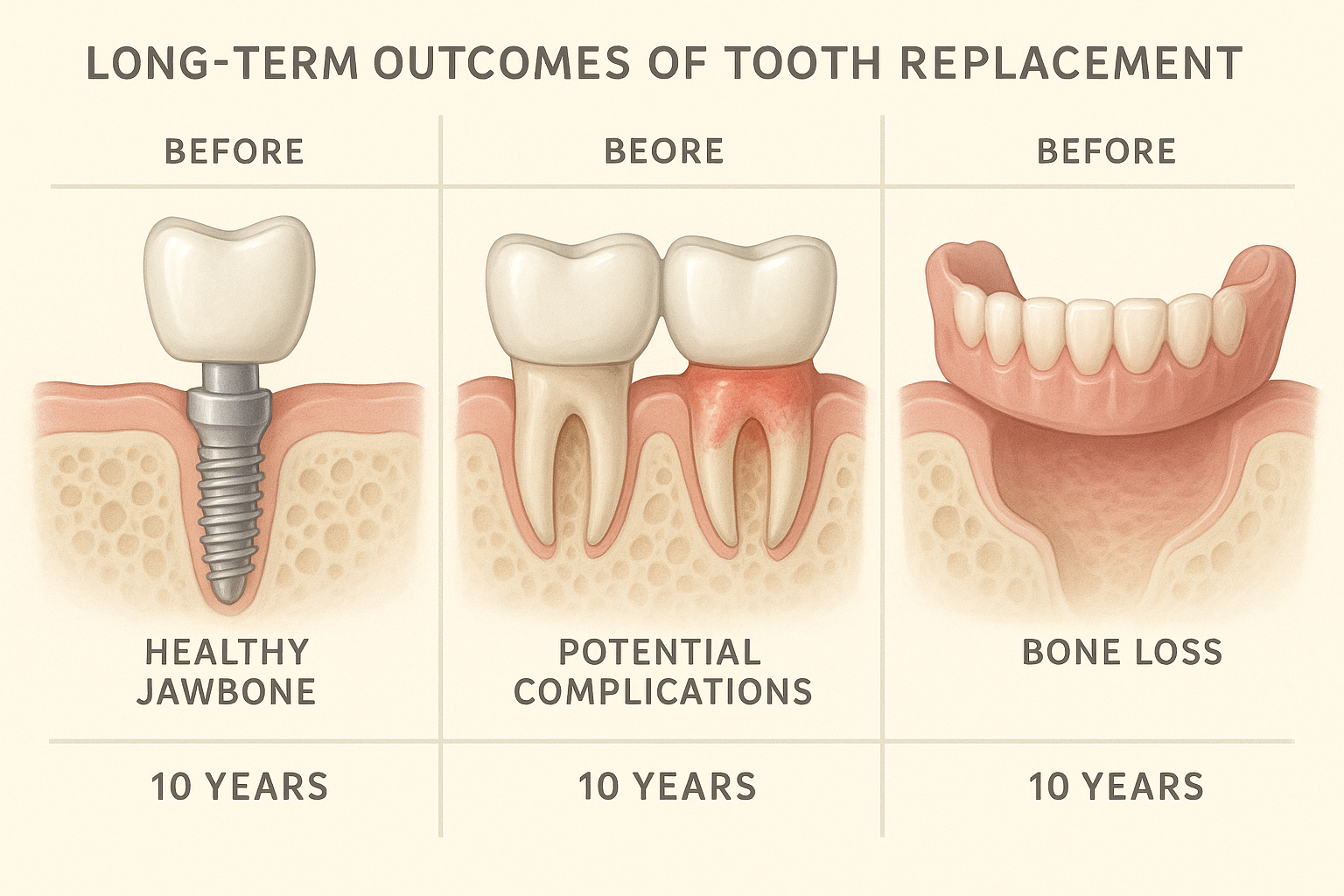
Lifespan Expectations
When evaluating dental implant vs bridge vs denture which is better for longevity, the differences are significant:
Dental Implants: 25+ years to lifetime with proper care
Dental Bridges: 10-15 years average lifespan
Dentures: 5-10 years before replacement needed
Daily Maintenance Requirements
Implant Care:
- Brush and floss like natural teeth
- Regular dental checkups
- Best toothpaste for implants can help maintain them
- Water flossing highly recommended
Bridge Care:
- Special flossing under the bridge
- Regular brushing and mouthwash
- Avoiding hard or sticky foods
- Professional cleanings every 6 months
Denture Care:
- Daily removal and cleaning
- Soaking overnight
- Regular dental visits for adjustments
- Careful handling to prevent damage
Potential Complications
Implant Complications (rare):
- Infection around the implant site
- Implant failure or rejection
- Crown chipping or loosening
Bridge Complications:
- Decay in supporting teeth
- Bridge loosening or breaking
- Gum recession around bridge margins
Denture Complications:
- Poor fit leading to sores
- Bone loss causing looseness
- Breaking or cracking
- Digestive issues from inadequate chewing
Making Your Decision: Dental Implant vs Bridge vs Denture Which is Better for You?
Factors to Consider
Your Oral Health Status:
- Condition of remaining teeth
- Gum health and bone density
- History of dental problems
- Overall health conditions
Lifestyle Factors:
- Dietary preferences
- Speaking requirements (professional/social)
- Activity level and sports participation
- Comfort with daily maintenance routines
Financial Considerations:
- Available budget for initial treatment
- Insurance coverage and benefits
- Long-term financial planning
- Value placed on convenience vs. cost
Personal Preferences:
- Comfort with surgical procedures
- Desire for permanent vs. removable solution
- Aesthetic expectations
- Time available for treatment
Decision-Making Framework
To help determine dental implant vs bridge vs denture which is better for your situation, consider this framework:
Choose Implants If:
✅ You want the most natural solution
✅ You have adequate bone density
✅ You’re willing to invest in long-term value
✅ You want to preserve adjacent teeth
✅ You’re committed to the treatment timeline
Choose Bridges If:
✅ Adjacent teeth need crowns anyway
✅ You want faster treatment completion
✅ You prefer non-surgical options
✅ You have good supporting teeth
✅ Cost is a primary concern initially
Choose Dentures If:
✅ You’re missing multiple teeth
✅ Budget is the primary constraint
✅ You prefer non-invasive treatment
✅ You’re comfortable with removable appliances
✅ Bone loss makes implants challenging
Questions to Ask Your Dentist
- What’s my current oral health status?
- Which option best suits my specific situation?
- What are the risks and benefits for each option?
- How much will each option cost over 20 years?
- What’s the expected timeline for each treatment?
- How will each option affect my daily life?
- What happens if complications arise?
For personalized guidance, consider consulting with experienced dental professionals who can evaluate your specific situation.
Special Considerations and Advanced Options
All-on-X Solutions
For patients missing most or all teeth, All-on-4 and similar systems offer an innovative approach that combines implant stability with full-arch restoration. These solutions can be particularly appealing when traditional dentures aren’t providing adequate function.
Combination Approaches
Sometimes the answer to dental implant vs bridge vs denture which is better isn’t choosing just one option. Many patients benefit from combination treatments:
- Implants for back teeth, bridge for front teeth
- Partial dentures with strategic implant placement
- Phased treatment plans addressing priorities first
Future-Proofing Your Decision
Consider how your choice today will affect future dental needs:
Implants preserve bone and don’t affect other teeth, making future treatments easier
Bridges may complicate future implant placement if supporting teeth fail
Dentures often lead to progressive bone loss, potentially limiting future options
Recovery and Healing: What to Expect
Implant Recovery Timeline
Understanding the healing process is crucial when comparing dental implant vs bridge vs denture which is better for your lifestyle:
Immediate Post-Surgery (1-7 days):
- Mild discomfort and swelling
- Soft food diet recommended
- 50 soft foods after dental implant surgery can guide your meal planning
- Avoid strenuous activity
Healing Phase (1-6 months):
- Gradual return to normal activities
- Temporary crown may be placed
- Regular follow-up appointments
- Osseointegration occurs during this time
Final Restoration (6+ months):
- Permanent crown placement
- Full function restored
- Normal oral hygiene routine established
Bridge Recovery
Bridge placement typically involves:
- Minimal discomfort after preparation
- Temporary sensitivity to temperature
- Adjustment period for new bite
- Full function within days
Denture Adjustment Period
New denture wearers often experience:
- Initial soreness and irritation
- Speech adjustments for 1-2 weeks
- Eating modifications during adaptation
- Multiple adjustment appointments
The Verdict: Dental Implant vs Bridge vs Denture Which is Better?
After examining all factors, the question of dental implant vs bridge vs denture which is better depends entirely on your individual circumstances. However, some general patterns emerge:
For most single tooth replacements: Implants offer the best long-term value and oral health benefits, despite higher initial costs.
For multiple consecutive teeth: The decision becomes more complex, with bridges and implant-supported options both viable depending on your situation.
For extensive tooth loss: Modern implant-supported solutions like All-on-4 often provide better quality of life than traditional dentures, though cost considerations may favor dentures initially.
For budget-conscious patients: Dentures remain a viable option, especially when considering future upgrade paths to implant-supported solutions.
The key is working with a qualified dental professional who can evaluate your specific oral health, lifestyle needs, and financial situation to recommend the best option for you.
Conclusion
Choosing between dental implant vs bridge vs denture which is better for your situation is one of the most important dental decisions you’ll make. Each option has its place in modern dentistry, and the “best” choice depends on your unique combination of oral health, lifestyle, budget, and personal preferences.
Dental implants consistently rank highest for patient satisfaction and long-term value, offering the most natural function and preserving your oral health. While they require a higher initial investment, their longevity and minimal maintenance often make them the most cost-effective choice over time.
Dental bridges provide an excellent middle-ground solution, offering good function and aesthetics with faster treatment times. They’re particularly suitable when adjacent teeth need restoration anyway or when implant placement isn’t feasible.
Dentures remain a valuable option, especially for extensive tooth loss or when budget constraints are primary concerns. Modern denture technology has significantly improved comfort and function, and they can serve as an excellent stepping stone to implant-supported solutions later.
Your Next Steps
- Schedule a comprehensive dental consultation to evaluate your oral health and discuss all options
- Get multiple opinions if you’re unsure about the recommended treatment
- Consider your long-term goals and how each option aligns with your lifestyle
- Explore financing options if cost is preventing you from choosing your preferred treatment
- Don’t delay treatment – the longer you wait, the more complex and expensive treatment may become
Remember, the best tooth replacement option is the one that meets your needs, fits your budget, and provides the quality of life you desire. Take time to research, ask questions, and make an informed decision that you’ll be happy with for years to come.
Whether you choose implants, bridges, or dentures, the most important step is taking action to restore your smile and oral health. Your future self will thank you for making this important investment in your wellbeing.
🦷 Tooth Replacement Decision Tool
Answer these questions to find the best tooth replacement option for your situation
Leave a Reply
Share your thoughts or ask a question about dental implants. Your email address will not be published.