

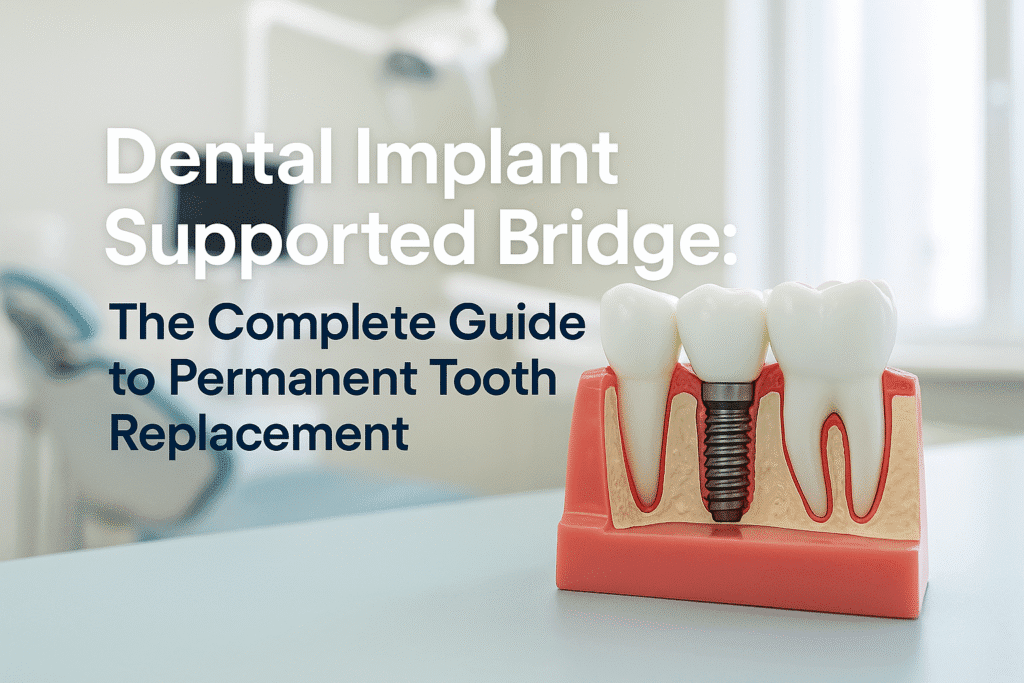
Imagine waking up every morning with the confidence to smile, laugh, and eat anything you want without worrying about loose dentures or embarrassing gaps in your teeth. For millions of people missing multiple teeth, this dream becomes reality through a revolutionary dental solution called a dental implant supported bridge. This advanced treatment combines the stability of dental implants with the seamless appearance of a fixed bridge, offering a permanent solution that looks, feels, and functions just like your natural teeth.
Key Takeaways
- Dental implant supported bridges provide a permanent, stable solution for replacing multiple missing teeth without affecting adjacent healthy teeth
- The treatment typically requires 3-6 months for complete healing and integration, with success rates exceeding 95%
- Cost ranges from $3,000-$25,000 depending on the number of implants needed and materials chosen
- Proper oral hygiene and regular dental visits can make implant bridges last 15-25 years or longer
- Candidates must have adequate bone density and healthy gums for successful implant placement
What Is a Dental Implant Supported Bridge?
A dental implant supported bridge is a fixed dental restoration that replaces multiple missing teeth using dental implants as anchors instead of relying on adjacent natural teeth. Unlike traditional bridges that require grinding down healthy teeth for support, this innovative solution preserves your existing tooth structure while providing superior stability and longevity.
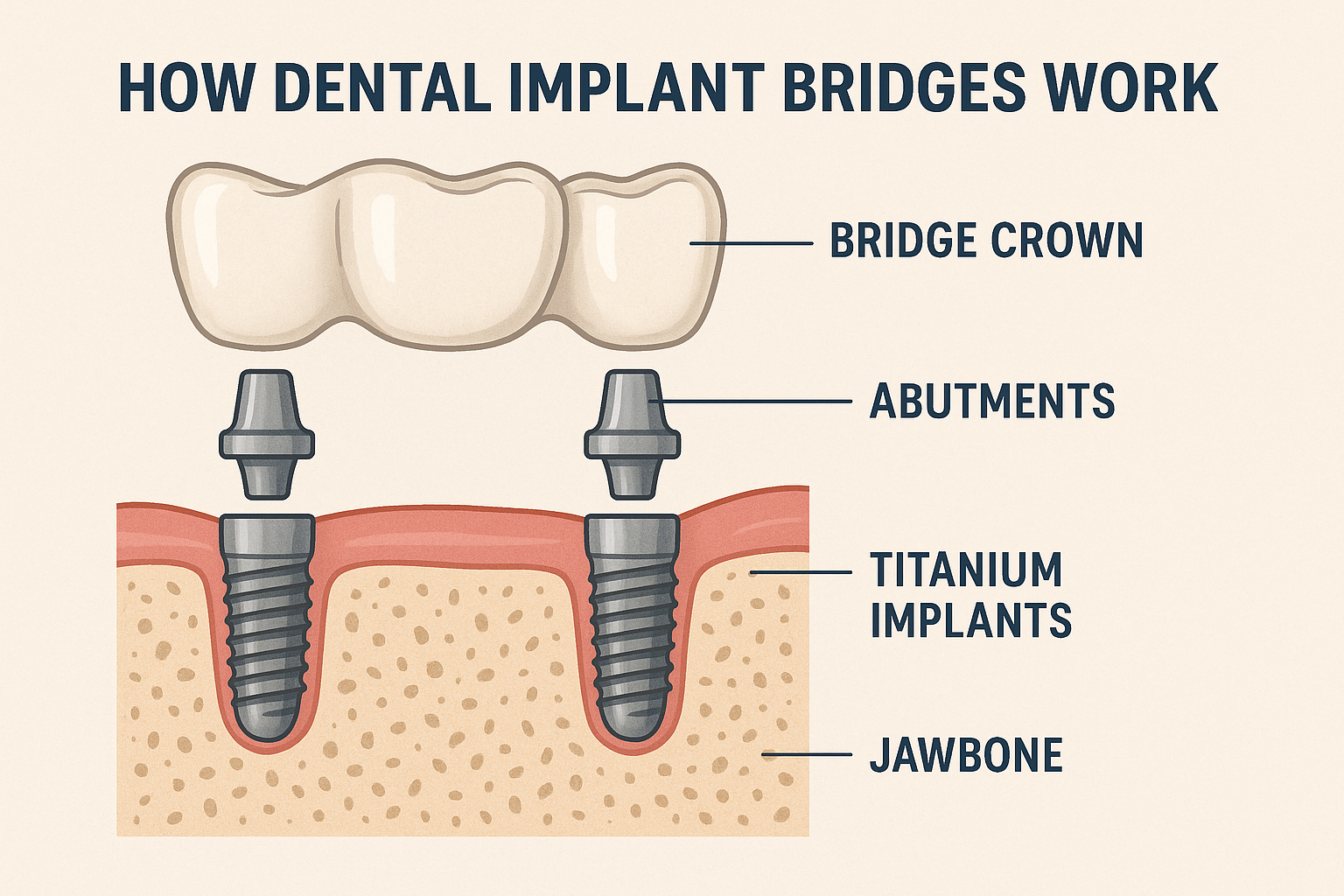
The system consists of three main components:
🦷 Dental Implants: Titanium posts surgically placed into the jawbone that act as artificial tooth roots
🔗 Abutments: Connector pieces that attach to the implants and support the bridge
👄 Bridge Crown: The visible portion that replaces your missing teeth, custom-made to match your natural smile
This combination creates a restoration that’s virtually indistinguishable from natural teeth while providing the strength and durability needed for normal eating and speaking.
How Dental Implant Supported Bridges Work
The magic of a dental implant supported bridge lies in a biological process called osseointegration. When titanium implants are placed in your jawbone, your body naturally fuses bone tissue around the implant surface over several months. This creates an incredibly strong foundation that can withstand the forces of chewing and biting.
The Integration Process
Phase 1: Initial Healing (2-4 weeks)
- Soft tissue heals around the implant sites
- Initial stability develops
- Temporary restoration may be placed
Phase 2: Osseointegration (3-6 months)
- Bone cells grow and attach to the implant surface
- Implants become permanently anchored in the jaw
- Maximum stability is achieved
Phase 3: Final Restoration
- Custom bridge is fabricated and attached
- Bite is adjusted for optimal function
- Regular maintenance schedule begins
This biological integration is what makes implant-supported bridges so much more stable than removable dentures or traditional bridges that rely solely on adjacent teeth for support.
Types of Dental Implant Supported Bridges
Not all dental implant supported bridges are created equal. The type that’s best for you depends on how many teeth you’re missing, where they’re located, and your individual oral health situation.
Fixed Bridge on Implants
Best for: Replacing 3-4 consecutive missing teeth Implants needed: Usually 2 implants supporting 3-4 crowns Advantages: Most cost-effective option, shorter treatment time Considerations: Requires adequate bone support at implant sites
All-on-4/All-on-6 Bridges
Best for: Full arch replacement (entire upper or lower jaw) Implants needed: 4-6 strategically placed implants Advantages: Full mouth restoration with fewer implants Considerations: May require bone grafting in some cases
Individual Implant Bridge
Best for: Multiple non-consecutive missing teeth Implants needed: One implant per missing tooth Advantages: Maximum preservation of bone and gum tissue Considerations: Higher cost but optimal long-term results
Benefits of Choosing a Dental Implant Supported Bridge
When I discuss treatment options with patients, the advantages of dental implant supported bridges consistently make them the preferred choice for permanent tooth replacement.
🦴 Preserves Jawbone Health
Unlike dentures that can cause bone loss over time, implants actually stimulate bone growth and maintain your facial structure. This prevents the sunken appearance that often develops with traditional tooth replacement options.
🍎 Unrestricted Diet
You can enjoy all your favorite foods without worry. Implant bridges provide 85-90% of natural bite force, compared to only 20-25% with conventional dentures.
😊 Natural Appearance
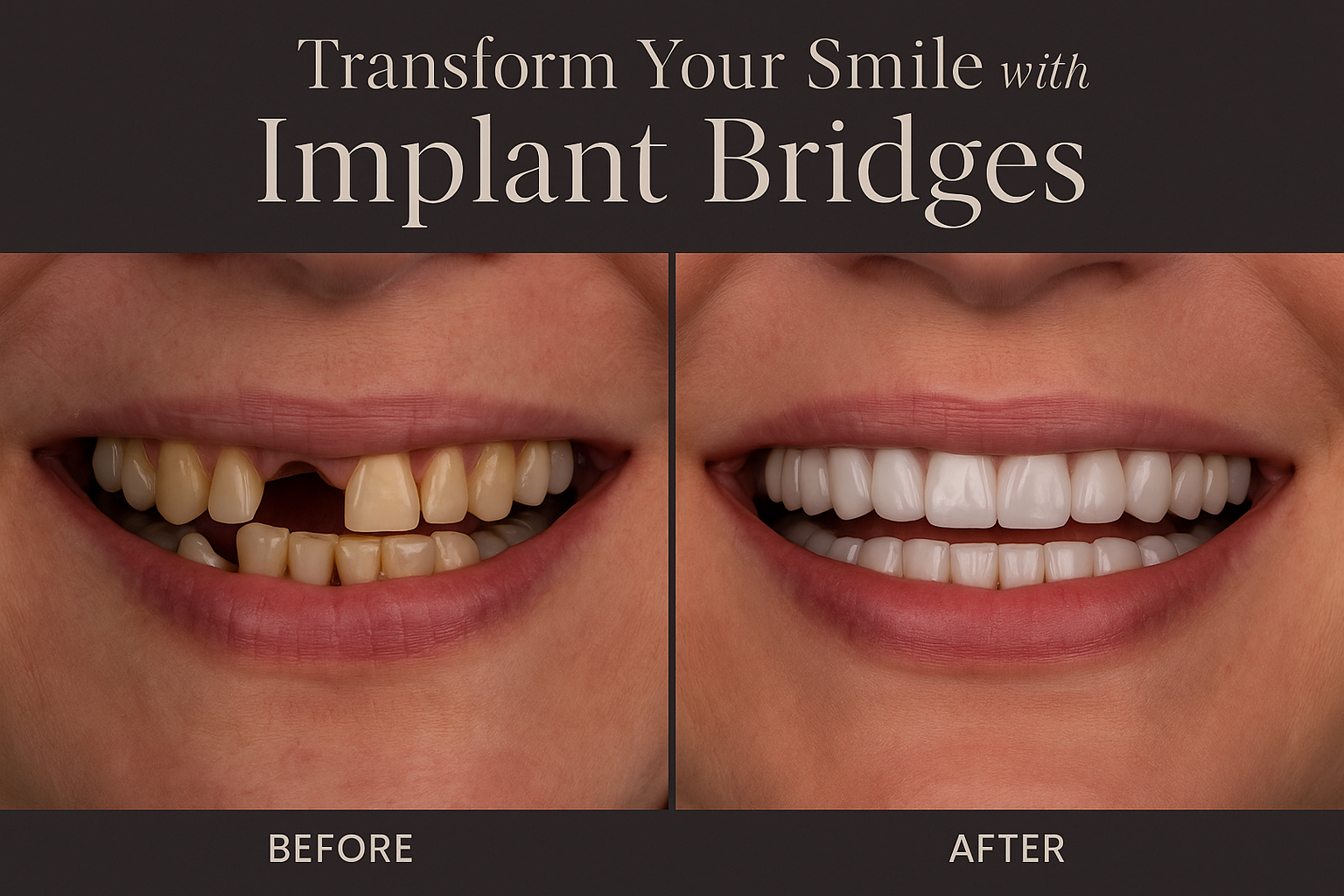
Modern implant bridges are virtually indistinguishable from natural teeth. The crowns are custom-crafted to match your existing teeth in color, shape, and size.
🧽 Easy Maintenance
Caring for your implant bridge is as simple as brushing and flossing your natural teeth. No special adhesives, soaking solutions, or removal required.
⏰ Long-lasting Solution
With proper care, implant bridges can last 15-25 years or even a lifetime, making them an excellent long-term investment in your oral health.
The Treatment Process: What to Expect
Understanding the dental implant supported bridge process helps reduce anxiety and ensures you’re prepared for each step of your journey to a restored smile.
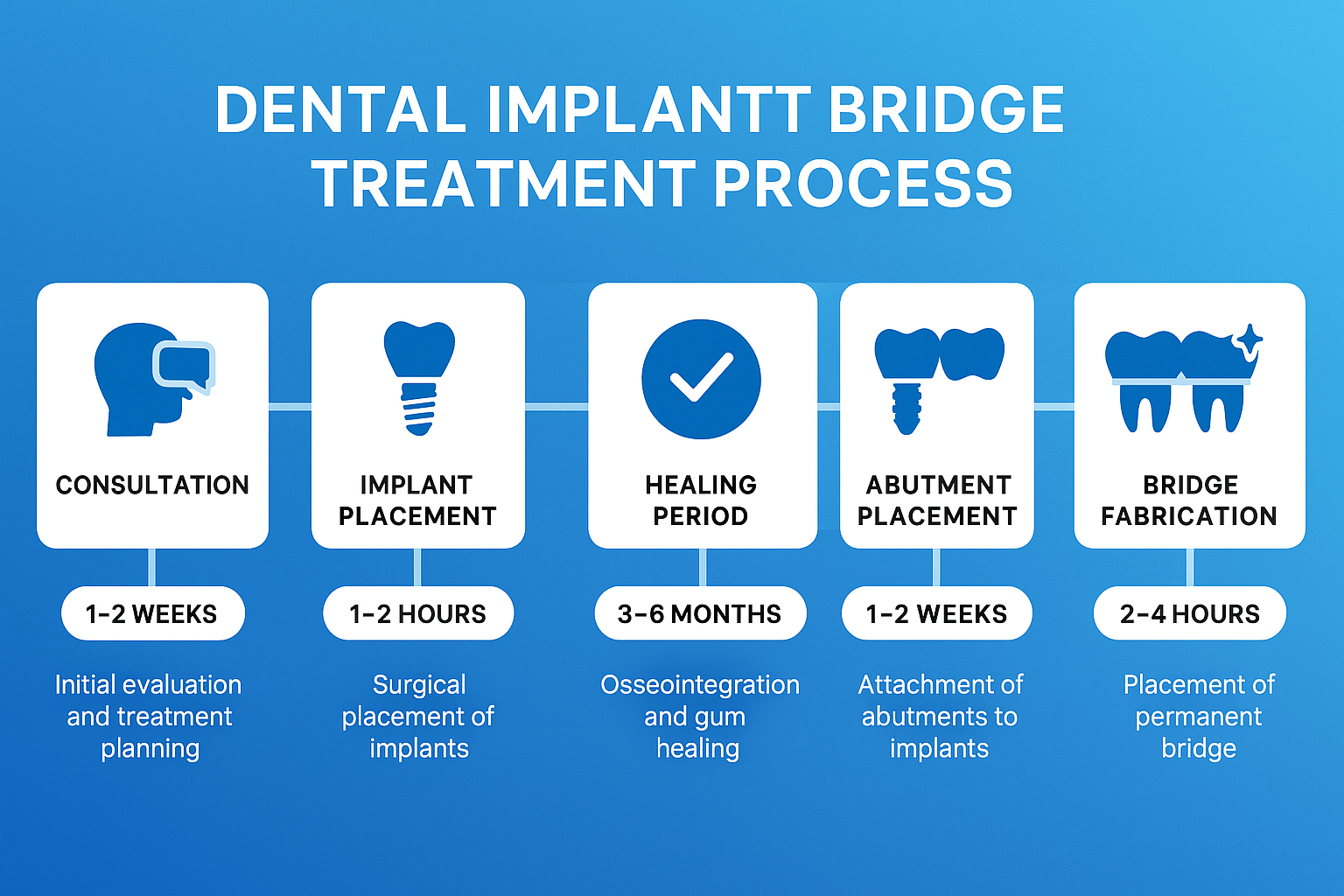
Initial Consultation and Planning
Your treatment begins with a comprehensive evaluation that includes:
- Digital X-rays and 3D imaging to assess bone density and structure
- Oral health examination to identify any issues that need addressing
- Medical history review to ensure you’re a good candidate for surgery
- Treatment planning using advanced computer software to map implant placement
During this visit, we’ll discuss your goals, answer questions, and create a personalized treatment timeline. Many patients are surprised to learn about various factors affecting implant cost in Dallas and the financing options available.
Surgical Phase
The implant placement surgery is typically performed under local anesthesia, with sedation options available for anxious patients. The procedure involves:
- Site preparation: Creating precise openings in the jawbone
- Implant placement: Inserting titanium implants at predetermined angles and depths
- Temporary restoration: Placing a provisional bridge if immediate function is needed
- Post-operative care: Detailed instructions for optimal healing
Most patients report minimal discomfort and return to normal activities within 2-3 days.
Healing and Integration Period
The 3-6 month healing period is crucial for long-term success. During this time:
- Osseointegration occurs as bone fuses with the implant surface
- Regular check-ups monitor healing progress
- Temporary restoration maintains function and aesthetics
- Oral hygiene protocols ensure optimal healing conditions
Final Restoration
Once integration is complete, the final bridge fabrication begins:
Impression taking: Precise molds capture the exact position of your implants Laboratory work: Master technicians craft your custom bridge Try-in appointment: Ensuring perfect fit, color, and bite alignment Final delivery: Securing your permanent bridge and bite adjustment
The result is a beautiful, functional restoration that feels completely natural.
💰 Dental Implant Bridge Cost Calculator
Cost Factors for Dental Implant Supported Bridges
Understanding the investment required for a dental implant supported bridge helps you make an informed decision about your oral health. The cost varies significantly based on several key factors.
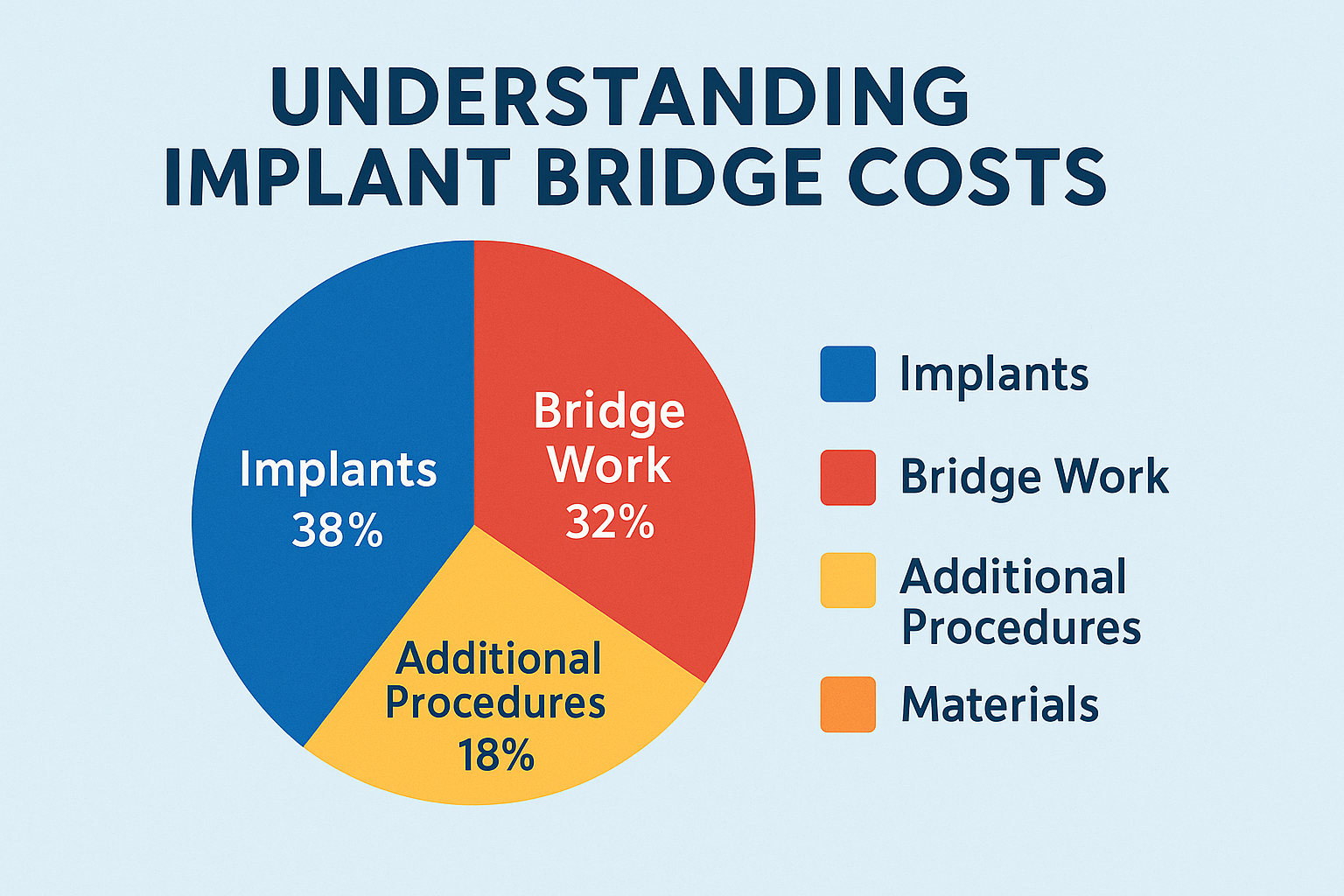
Primary Cost Components
| Component | Price Range | Notes |
|---|---|---|
| Dental Implants | $3,000-$5,000 each | Includes surgery and abutment |
| Bridge Crown | $1,000-$3,000 per tooth | Varies by material and complexity |
| Bone Grafting | $300-$3,000 | If additional bone support needed |
| Extraction | $150-$500 per tooth | If failing teeth need removal |
Factors That Influence Total Cost
Number of Implants Needed A 3-tooth bridge typically requires 2 implants, while full mouth restoration may need 4-8 implants depending on the approach chosen.
Geographic Location Dental implant costs in Dallas can vary between practices, but the city offers competitive pricing compared to coastal areas.
Material Selection
- Standard materials: Porcelain-fused-to-metal crowns
- Premium options: All-ceramic or zirconia for superior aesthetics
- Luxury choices: Custom-layered porcelain for the most natural appearance
Complexity of Case Patients requiring bone grafting, sinus lifts, or multiple extractions will have higher overall costs but achieve better long-term results.
Making Treatment Affordable
Many patients are pleasantly surprised to discover the financing options available. Consider exploring payment plans for implants in Dallas or researching affordable dental implants to make your treatment more manageable.
💡 Pro Tip: While the initial investment may seem significant, calculate the long-term value. A quality implant bridge lasting 20+ years often costs less per year than repeated repairs on failing dental work.
Candidacy Requirements
Not everyone is automatically a candidate for a dental implant supported bridge, but most people with missing teeth can successfully receive this treatment with proper planning.
Ideal Candidates Have:
✅ Adequate bone density to support implant placement ✅ Healthy gums free from active periodontal disease
✅ Good overall health for minor oral surgery ✅ Realistic expectations about treatment timeline and results ✅ Commitment to oral hygiene and regular dental care
Conditions That May Require Additional Treatment:
Insufficient Bone Volume Bone grafting can restore adequate support for implants in most cases. Modern techniques make this highly predictable.
Gum Disease Periodontal treatment must be completed before implant placement to ensure long-term success.
Medical Conditions Diabetes, heart disease, and other conditions require medical clearance but rarely prevent implant treatment.
Smoking While not an absolute contraindication, smoking significantly increases complications and should be stopped before surgery.
Age Considerations
Young Adults: Must wait until jaw growth is complete (usually age 18-21) Seniors: Age alone is not a limiting factor; overall health is more important Active Lifestyle: Implant bridges are ideal for people who want to maintain an active, unrestricted lifestyle
The key is working with experienced dental implant specialists who can evaluate your individual situation and develop a treatment plan that ensures success.
Maintenance and Longevity
One of the most attractive aspects of a dental implant supported bridge is how simple and straightforward the maintenance requirements are compared to other tooth replacement options.
Daily Care Routine
Brushing: Use a soft-bristled toothbrush twice daily, just like natural teeth Flossing: Special floss threaders or water flossers help clean around implants Rinsing: Antimicrobial mouthwash reduces bacteria around implant sites
Professional Maintenance
Regular Cleanings: Every 3-6 months depending on your oral health Professional Monitoring: Annual x-rays to check implant integration Protective Measures: Night guards if you grind your teeth
Expected Lifespan
With proper care, dental implant supported bridges typically last:
- 15-25 years for the crown/bridge portion
- Lifetime for the implant fixtures themselves
- 95%+ success rate at 10 years post-treatment
Warning Signs to Watch For
While complications are rare, contact your dentist if you experience:
🚨 Persistent pain or swelling around implant sites 🚨 Loose or shifting bridge components 🚨 Bleeding or inflammation that doesn’t resolve 🚨 Changes in bite or difficulty chewing
Early intervention can address minor issues before they become major problems.
Comparing Treatment Options
When considering tooth replacement, it’s important to understand how a dental implant supported bridge compares to other available options.
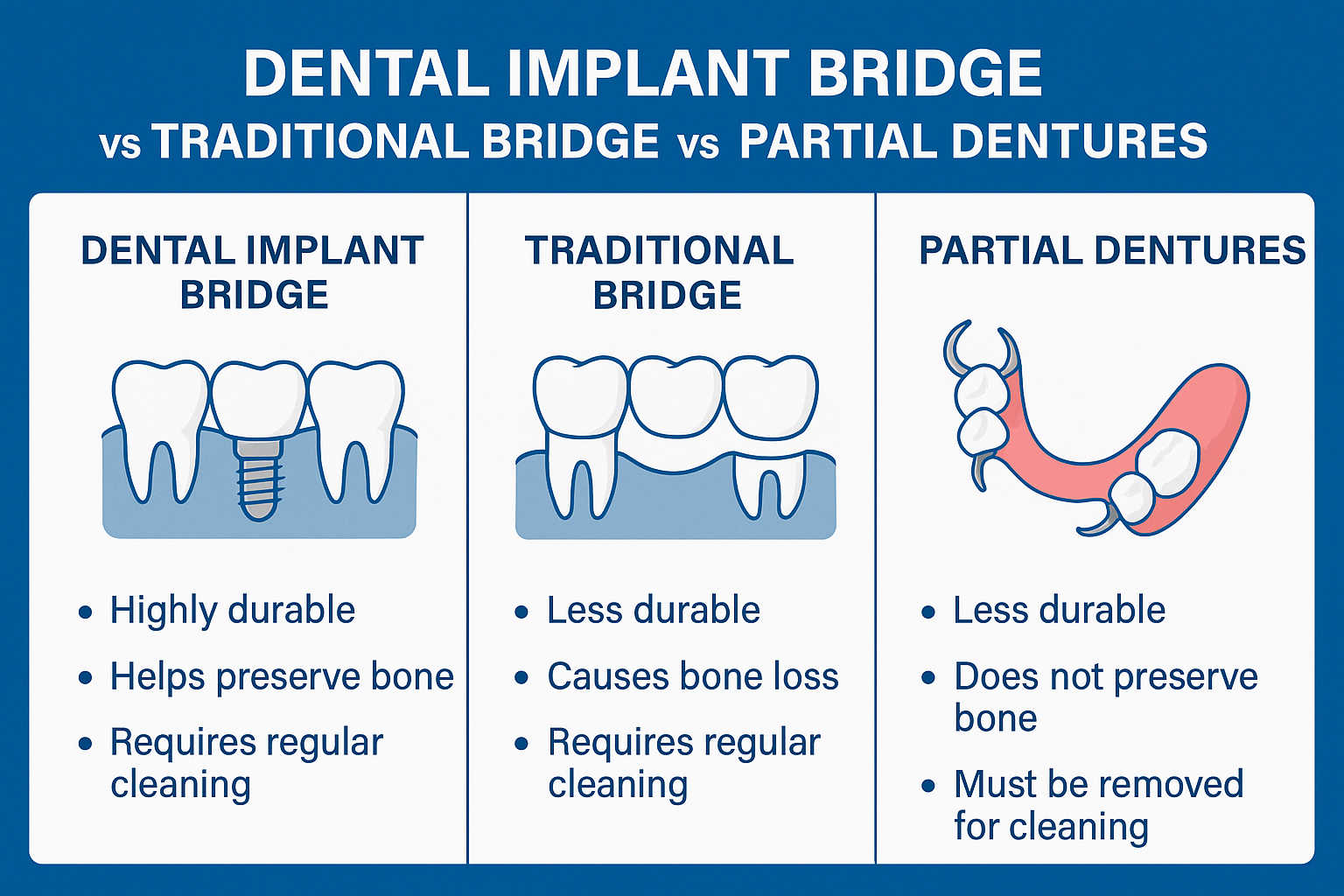
Implant Bridge vs. Traditional Bridge
| Factor | Implant Bridge | Traditional Bridge |
|---|---|---|
| Adjacent Teeth | Preserved intact | Must be ground down |
| Bone Preservation | Maintains jawbone | Bone loss over time |
| Lifespan | 15-25+ years | 10-15 years |
| Cleaning | Brush and floss normally | Special flossing required |
| Replacement | Individual components | Entire bridge |
Implant Bridge vs. Partial Dentures
Stability: Implant bridges are fixed and don’t move during eating or speaking Comfort: No pressure points or sore spots common with removable appliances
Function: Full chewing capacity vs. limited diet with dentures Confidence: No worry about slipping or clicking sounds Bone Health: Implants prevent bone loss that occurs with dentures
Implant Bridge vs. Individual Implants
Cost Efficiency: Fewer implants needed for multiple teeth Treatment Time: Shorter overall treatment period Maintenance: Easier cleaning than multiple individual crowns Flexibility: Individual implants allow independent replacement if needed
The choice depends on your specific situation, budget, and long-term goals. Many patients find that implant bridges offer the perfect balance of function, aesthetics, and value.
Potential Risks and Complications
Like any surgical procedure, dental implant supported bridge treatment carries some risks, though serious complications are rare when performed by qualified professionals.
Surgical Risks (Temporary)
Bleeding: Normal for 24-48 hours after surgery Swelling: Peaks at 48-72 hours, then gradually subsides
Discomfort: Managed effectively with prescribed medications Infection: Less than 2% risk with proper post-operative care
Long-term Considerations
Implant Failure: Occurs in less than 5% of cases, usually within the first year Mechanical Issues: Crown chipping or screw loosening (easily repaired) Gum Recession: May expose implant margins over many years Sinus Issues: Rare complication with upper jaw implants
Minimizing Risks
Choosing qualified dental implant dentists significantly reduces complication rates. Look for:
- Board certification in oral surgery or periodontics
- Extensive implant experience with documented success rates
- Modern technology including 3D imaging and guided surgery
- Comprehensive aftercare protocols and emergency availability
When Problems Occur
The vast majority of issues are minor and easily resolved:
- Loose screws can be tightened in a simple appointment
- Chipped crowns are repaired or replaced quickly
- Gum inflammation responds well to professional cleaning
- Failed implants can usually be replaced after healing
Understanding these potential issues helps you make an informed decision and know what to expect throughout your treatment journey.
Advanced Technology in Implant Bridge Treatment
Modern dental implant supported bridge treatment benefits from remarkable technological advances that improve precision, reduce treatment time, and enhance patient comfort.
3D Imaging and Planning
Cone Beam CT Scans provide detailed 3D images of your jawbone, allowing surgeons to:
- Measure exact bone dimensions
- Identify vital structures like nerves and sinuses
- Plan optimal implant placement angles
- Predict treatment outcomes before surgery begins
Computer-Guided Surgery
Surgical Guides created from 3D scans ensure:
- Precise implant placement within 1mm accuracy
- Reduced surgery time and patient discomfort
- Minimally invasive procedures with faster healing
- Predictable results matching the treatment plan
Digital Impressions
Intraoral Scanners eliminate messy impression materials while providing:
- Highly accurate digital models
- Immediate visualization of the planned restoration
- Better patient communication and understanding
- Faster turnaround times for final bridges
Same-Day Solutions
Immediate Load Protocols allow some patients to receive:
- Temporary bridges on the day of implant placement
- Maintained function and aesthetics during healing
- Reduced number of appointments required
- Faster return to normal activities
These technological advances make dental implants in Dallas, TX more predictable and comfortable than ever before.
Recovery and Healing Timeline
Understanding what to expect during recovery helps you plan accordingly and ensures optimal healing for your dental implant supported bridge.
Immediate Post-Surgery (First 24-48 Hours)
What’s Normal:
- Mild to moderate discomfort managed with prescribed medications
- Some bleeding that gradually decreases
- Swelling that peaks around day 2-3
- Temporary dietary restrictions to soft foods
Important Activities:
- Take medications as prescribed
- Apply ice packs for 15 minutes on, 15 minutes off
- Avoid strenuous activity and exercise
- Sleep with head elevated to reduce swelling
First Week
Healing Progress:
- Swelling begins to subside significantly
- Discomfort decreases to mild levels
- Sutures may be removed (if non-dissolving type used)
- Return to work is typical for most patients
Care Instructions:
- Gentle brushing around surgical sites
- Salt water rinses 2-3 times daily
- Gradually introduce more solid foods
- Avoid smoking and alcohol consumption
Weeks 2-8
Integration Begins:
- Soft tissue healing is largely complete
- Initial bone formation around implants starts
- Temporary bridge adjustments if needed
- Regular check-up appointments scheduled
Months 3-6
Osseointegration Phase:
- Bone tissue grows and fuses with implant surface
- Implants become permanently anchored
- Final impressions taken for permanent bridge
- Bite analysis and adjustment planning
Final Restoration
Completion Phase:
- Custom bridge fabrication and delivery
- Final bite adjustments for optimal function
- Oral hygiene instruction for long-term maintenance
- Regular maintenance schedule established
Most patients are amazed at how quickly they adapt to their new dental implant supported bridge and often forget they ever had missing teeth.
Choosing the Right Provider
The success of your dental implant supported bridge treatment depends heavily on selecting a qualified, experienced dental professional. This decision impacts not only your treatment outcome but also your overall experience and long-term satisfaction.
Essential Qualifications to Look For
Educational Background
- Dental degree from an accredited institution
- Specialty training in oral surgery, periodontics, or prosthodontics
- Continuing education in implant dentistry
- Board certifications where applicable
Experience and Expertise
- Minimum 5+ years of implant experience
- Hundreds of successful implant cases completed
- Specific experience with implant-supported bridges
- Before and after photos of actual patient results
Questions to Ask During Consultation
- How many implant bridges have you placed?
- What is your success rate with implant treatments?
- Can you provide patient references or testimonials?
- What technology do you use for planning and placement?
- How do you handle complications if they arise?
- What warranty or guarantee do you provide?
Red Flags to Avoid
❌ Pressure for immediate decisions without adequate consultation time ❌ Prices significantly below market rates which may indicate shortcuts ❌ Lack of 3D imaging or modern diagnostic equipment ❌ No clear treatment plan or timeline provided ❌ Unwillingness to discuss risks or alternative treatments
Technology and Facility Standards
Modern Equipment
- 3D cone beam CT scanners
- Digital impression systems
- Computer-guided surgery capabilities
- On-site laboratory or partnerships with quality labs
Facility Accreditation
- Proper sterilization protocols
- Emergency equipment and procedures
- Comfortable patient amenities
- Convenient scheduling and location
Taking time to research and choose the right dental implant dentist ensures you receive the highest quality care and achieve the best possible results for your investment.
Insurance and Financing Options
The financial aspect of dental implant supported bridge treatment is often a primary concern for patients. Understanding your options helps make this life-changing treatment more accessible and affordable.
Insurance Coverage Landscape
Medical Insurance
- May cover implants if tooth loss resulted from accident or medical condition
- Coverage varies significantly between plans
- Prior authorization often required
- Documentation of medical necessity may be needed
Dental Insurance
- Traditional plans often have limited implant coverage
- Annual maximums typically $1,000-$2,000
- May cover portion of crown/bridge work
- Waiting periods may apply for major procedures
Maximizing Insurance Benefits
Timing Strategy
- Split treatment across benefit years to maximize coverage
- Coordinate with medical insurance when applicable
- Submit pre-treatment estimates for coverage verification
- Appeal denied claims with additional documentation
Documentation Requirements
- Medical necessity letters from your dentist
- X-rays and treatment plans
- Photos showing functional impairment
- Records of failed alternative treatments
Alternative Financing Solutions
In-Office Payment Plans Many practices offer flexible payment plans including:
- 0% interest financing for qualified patients
- Extended payment terms up to 60 months
- No down payment options
- Quick approval processes
Healthcare Credit Cards
- CareCredit and similar programs
- Promotional interest rates
- Immediate approval in many cases
- Can be used for family members
Health Savings Accounts (HSA)
- Pre-tax dollars reduce effective cost
- No restrictions on dental implant coverage
- Funds roll over year to year
- Can be used for family dental expenses
Cost-Saving Strategies
Explore Low-Cost Options
- Dental schools with supervised student clinics
- Group practices with economies of scale
- Seasonal promotions and package deals
- Multi-implant discounts
Value-Based Decisions Focus on long-term value rather than just initial cost. A quality dental implant supported bridge lasting 20+ years often provides better value than cheaper alternatives requiring frequent repairs or replacement.
Future Developments in Implant Bridge Technology
The field of dental implant supported bridge treatment continues to evolve rapidly, with exciting developments on the horizon that promise to make treatment even more predictable, comfortable, and accessible.
Emerging Technologies
3D Printing Advances
- Custom implants printed to match patient anatomy
- Same-day bridge fabrication in dental offices
- Biocompatible materials with enhanced properties
- Reduced costs through automated manufacturing
Stem Cell Therapy
- Enhanced bone regeneration around implants
- Faster healing and integration times
- Reduced need for bone grafting procedures
- Improved success rates in challenging cases
Smart Implant Materials
- Titanium alloys with improved osseointegration
- Antibacterial surface coatings
- Drug-eluting implants for enhanced healing
- Sensors for monitoring implant health
Treatment Protocol Improvements
Minimally Invasive Techniques
- Flapless surgery procedures
- Reduced post-operative discomfort
- Faster healing times
- Better preservation of existing tissues
Accelerated Healing
- Growth factor applications
- Photobiomodulation therapy
- Platelet-rich plasma treatments
- Reduced treatment timelines
Accessibility Improvements
Cost Reduction
- Simplified surgical protocols
- Standardized implant systems
- Increased competition and efficiency
- Better insurance coverage trends
Expanded Candidacy
- Techniques for patients with limited bone
- Solutions for medically compromised patients
- Age-appropriate treatment modifications
- Improved success in challenging cases
These advances ensure that dental implant supported bridges will continue to be the gold standard for tooth replacement, with even better outcomes and accessibility for patients in the years ahead.
Conclusion
A dental implant supported bridge represents one of the most significant advances in modern dentistry, offering a permanent, natural-looking solution for multiple missing teeth that preserves your oral health while restoring full function and confidence to your smile.
Throughout this comprehensive guide, we’ve explored every aspect of this remarkable treatment option, from the initial consultation through long-term maintenance. The key benefits are clear: superior stability compared to removable dentures, preservation of adjacent healthy teeth unlike traditional bridges, and exceptional longevity that makes it an excellent long-term investment in your oral health.
Your Next Steps
If you’re considering a dental implant supported bridge, I recommend taking these important actions:
- Schedule a consultation with a qualified implant specialist to evaluate your candidacy and discuss treatment options
- Explore financing options including affordable payment plans that can make treatment accessible within your budget
- Research providers carefully using the guidelines in this article to ensure you receive the highest quality care
- Ask questions about everything from treatment timeline to long-term maintenance requirements
The investment you make in a dental implant supported bridge today will pay dividends in improved quality of life, better oral health, and increased confidence for decades to come. Don’t let missing teeth continue to limit your ability to eat, speak, and smile with complete confidence.
Remember, every day you wait is another day that bone loss continues and your oral health potentially deteriorates. The sooner you explore your options, the more treatment choices you’ll have available and the better your long-term results are likely to be.
Take the first step toward restoring your smile and reclaiming your quality of life by scheduling a consultation with a qualified dental professional today. Your future self will thank you for making this important investment in your oral health and overall well-being.
Leave a Reply
Share your thoughts or ask a question about dental implants. Your email address will not be published.