

Dental implants offer a durable and aesthetic solution for missing teeth, involving a precise surgical procedure and a careful healing period. The comprehensive dental implant step-by-step process typically includes an initial consultation, detailed treatment planning, implant placement surgery, a crucial osseointegration phase, abutment placement, and the final restoration with a custom crown. This multi-stage journey ensures a strong, long-lasting foundation for your new smile.
Key Takeaways
- Dental implants involve a multi-stage process from initial consultation to final restoration and long-term care.
- The entire timeline can range from 3 to 9 months, depending on individual healing and case complexity [2].
- Advanced 3D imaging is crucial for precise treatment planning and virtual implant placement [1].
- Osseointegration, the fusion of the implant with the jawbone, is a vital healing period with a success rate of up to 98% [3].
- Titanium is the preferred implant material due to its strength and compatibility with the human body [4].
- Local anesthesia and sedation options ensure comfort during the implant placement surgery.
- Proper oral hygiene and regular dental check-ups are essential for the long-term success of dental implants.
- Patients typically require 2-4 dental visits to complete the entire implant process [5].
Understanding the Initial Consultation and Comprehensive Evaluation
The dental implant process begins with a thorough initial consultation and comprehensive evaluation to determine if you are a suitable candidate for dental implants in Dallas. During this critical first step, your dentist will assess your oral health, discuss your medical history, and evaluate the condition of your jawbone and remaining teeth.
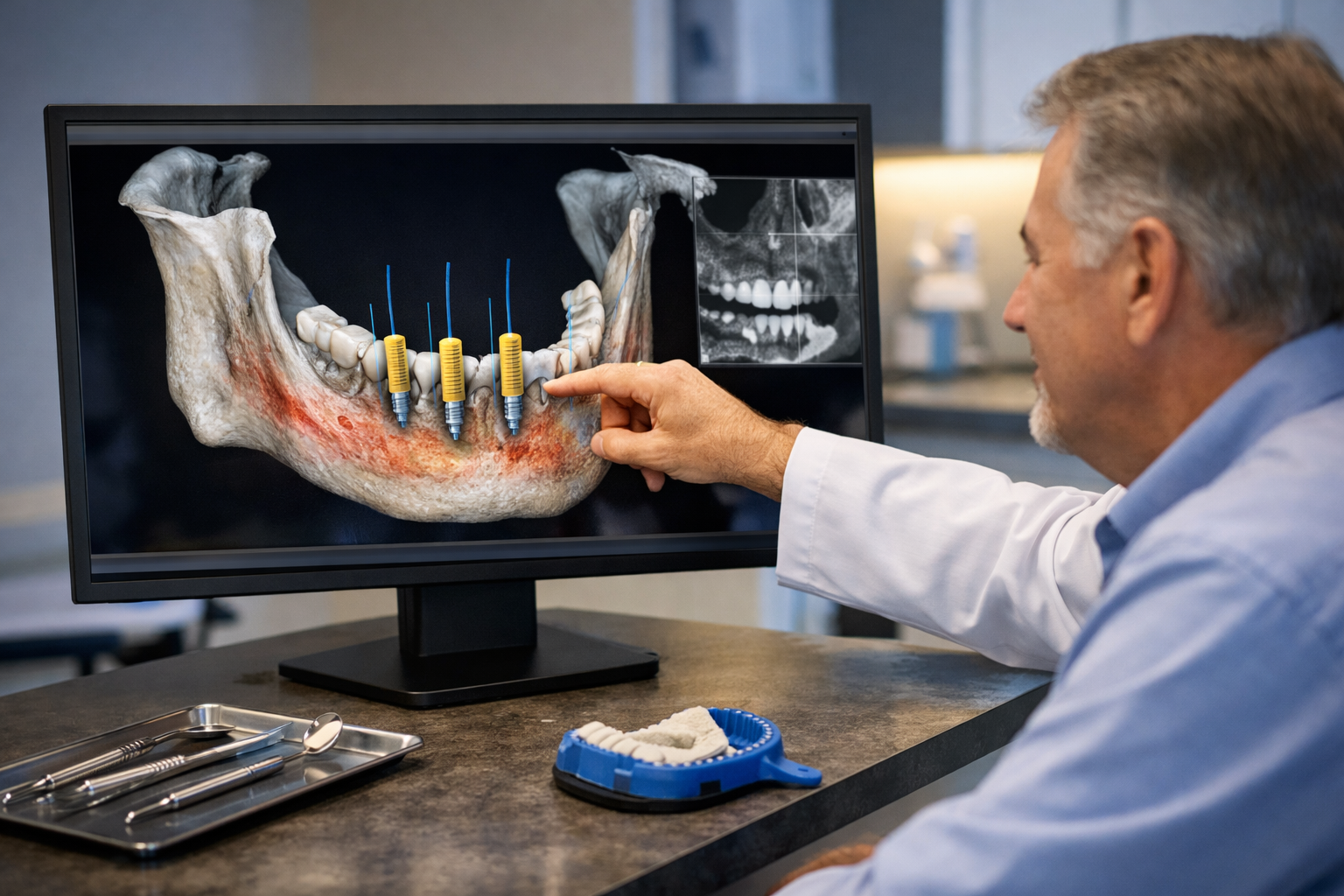
This phase typically includes digital tools and imaging, such as CBCT 3D scans, which provide a detailed, three-dimensional map of your jawbone, nerves, and sinus cavities [1]. These scans allow for virtual implant placement planning, identifying the ideal location for the implant and anticipating any potential challenges. If you are exploring tooth replacement options, this evaluation is crucial for personalized care and patient safety.
Step-by-Step Treatment Planning and Preparatory Procedures
Following the initial evaluation, the next crucial phase in the dental implant step-by-step process is detailed treatment planning, often incorporating preparatory procedures. Based on your unique oral anatomy and health needs, your dental professional will develop a precise plan for your implant placement.
The Planning Process
- 3D Imaging Analysis: The CBCT scans allow the dental team to virtually place the implant, considering bone density, nerve pathways, and adjacent tooth structures for optimal positioning and to ensure patient safety [1]. This technology, sometimes referred to as 3D Guided Dental Implants Dallas 2026, significantly enhances precision.
- Surgical Guide Creation: For complex cases or enhanced precision, a custom surgical guide might be fabricated. This guide, based on the 3D plan, fits over your existing teeth or jawbone during surgery, directing the implant placement with pinpoint accuracy.
- Material Selection: Titanium is the standard material for dental implants due to its strength, lightweight properties, and excellent biocompatibility with virtually no history of body rejection [4].
Preparatory Procedures (If Needed)
Not every patient will require preparatory procedures, but they are essential for individuals with insufficient bone or other oral health issues. These may include:
- Tooth Extraction: If a damaged tooth needs to be removed before implant placement, this will be scheduled first. Sometimes, an implant can be placed immediately after extraction, depending on the case [1]. For more information on timing, see our guide on Dental Implants After Tooth Extraction Dallas.
- Bone Grafting: If your jawbone lacks sufficient density or volume to support an implant, a bone graft may be necessary to rebuild the bone [1]. This procedure adds bone material to the jaw, which then integrates with your natural bone over several months. This is a common requirement, and you can learn more about Bone Graft Costs for Dental Implants in Dallas.
- Sinus Lift: For implants in the upper back jaw where the sinus cavity might be too close to the jawbone, a sinus lift procedure elevates the sinus floor, allowing for sufficient bone height for implant placement.
These preparatory steps ensure a strong foundation for the dental implant, contributing significantly to its long-term success.
The Dental Implant Placement Surgery
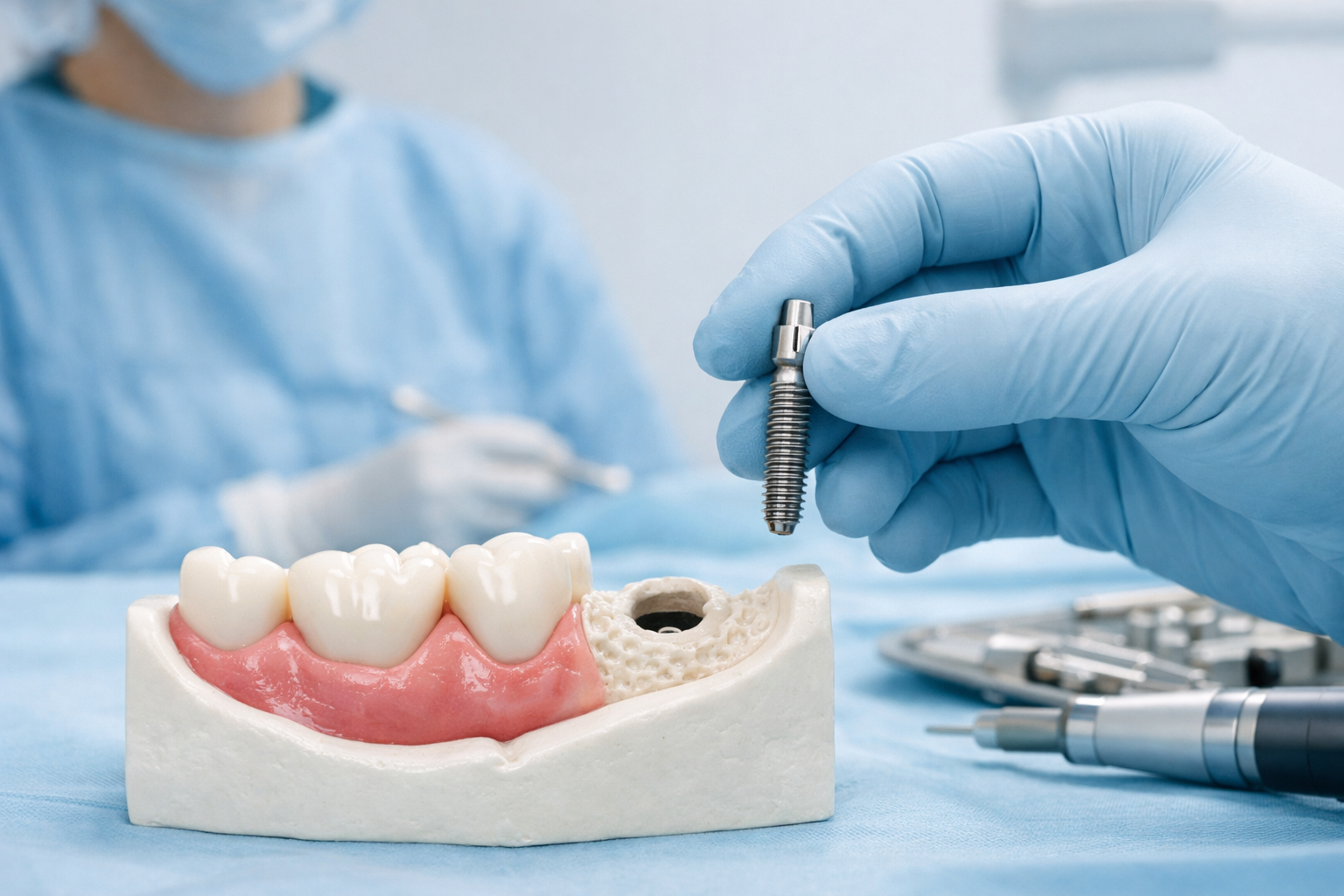
The core of the dental implant step-by-step process is the implant placement surgery, where the titanium post is surgically inserted into the jawbone. This procedure is performed by a qualified dental professional, often an oral surgeon or periodontist, using sterile techniques and local anesthesia to ensure your comfort.
The surgery typically takes about 1-2 hours for a single implant, though this can vary based on the number of implants and the complexity of the case [4]. Most patients experience minimal discomfort during the procedure itself, with various Dental Implant Sedation Options Dallas available to help manage anxiety.
Steps During Surgery
- Anesthesia: Local anesthetic is administered to numb the surgical area. Sedation options, such as oral conscious sedation or IV sedation, are often available for patient comfort.
- Incision: A small incision is made in the gum tissue to expose the underlying jawbone.
- Pilot Hole: A small pilot hole is carefully drilled into the bone at the pre-planned location.
- Implant Placement: The titanium dental implant screw is then precisely placed into the prepared bone socket.
- Suturing: The gum tissue is carefully sutured closed over the implant. In some cases, especially with immediate load implants, a temporary crown may be placed on the same day.
After surgery, you will receive detailed post-operative care instructions to promote healing and reduce the risk of complications. This typically includes guidance on pain management, diet, and oral hygiene. For insights into managing post-operative sensations, you might find our article on Dental Implant Feels Weird? Timeline to Natural Comfort helpful.
The Healing Phase: Osseointegration
Following the surgical placement of the implant, the next critical stage in the dental implant step-by-step process is osseointegration, a biological process where the titanium implant fuses directly with your jawbone. This healing phase is essential for creating a strong, stable foundation for your future tooth replacement.
Osseointegration is a gradual process that can take anywhere from 3 to 6 months, or even longer, depending on individual healing rates and the location of the implant [2]. For instance, healing in the upper jaw can take as long as 7 months, while the lower jaw typically takes approximately 5 months [4]. The success rate for osseointegration is remarkably high, up to 98%, especially when patients diligently follow post-operative care instructions [3].
During this period, the implant is typically left undisturbed beneath the gum line to allow for proper integration. It is crucial to maintain good oral hygiene and follow your dentist’s recommendations to ensure optimal healing.
Abutment Placement and Final Restoration
Once osseointegration is complete and your implant has fully integrated with the bone, the next steps in the dental implant step-by-step process involve placing the abutment and the final restoration. This is when your new tooth begins to take its final form.
Abutment Placement
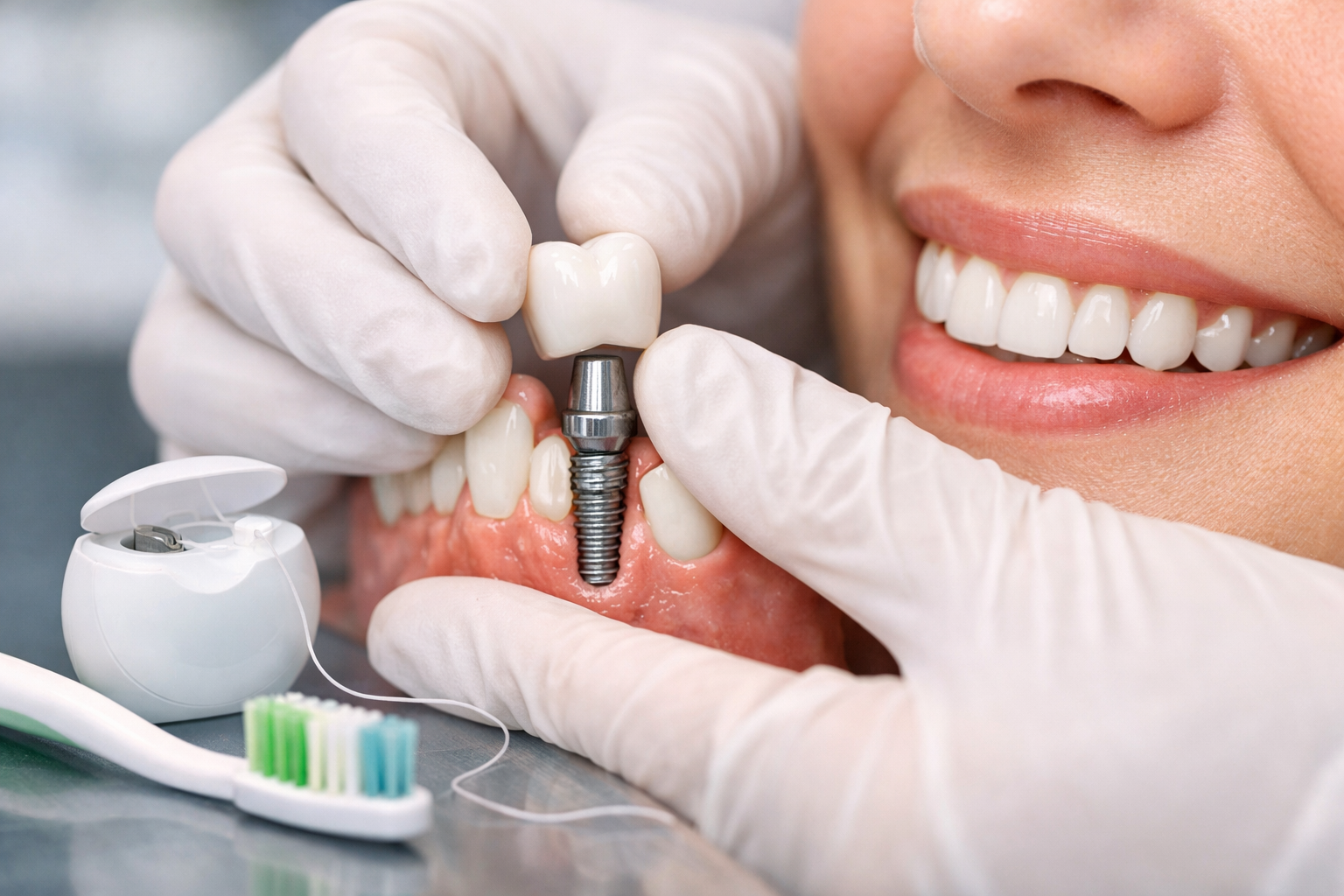
After the implant has fused with the bone, a minor procedure is often performed to expose the top of the implant. An abutment, a small connector post, is then attached to the implant. This abutment protrudes above the gum line and serves as the anchor for your new crown. In some cases, the abutment may be attached at the time of implant placement.
Custom Crown Fabrication
After the abutment is in place and the surrounding gum tissue has healed (which may take a couple of weeks), your dentist will take impressions or digital scans of your mouth. These are used to custom-fabricate your permanent crown, bridge, or denture, ensuring a precise fit, natural appearance, and proper bite [1]. This custom fabrication process is vital for the long-term oral health and aesthetic outcome.
Placing the Final Restoration
Once your custom crown (or other restoration) is ready, it will be securely attached to the abutment. Your dentist will make any necessary adjustments to ensure comfort and a natural feel. The goal is a restoration that looks, feels, and functions just like a natural tooth, blending seamlessly with your existing smile.
Long-Term Care and Maintenance for Your Dental Implants
The final stage of the dental implant step-by-step process focuses on long-term care and maintenance, which is crucial for the longevity and success of your dental implants. While dental implants are highly durable, they still require diligent care to prevent complications and ensure they last for many years.
Maintaining excellent oral hygiene is paramount. This includes:
- Regular Brushing: Brush your teeth and implant restorations at least twice a day using a soft-bristled toothbrush and non-abrasive toothpaste.
- Daily Flossing: Floss daily, paying special attention to the areas around your implants to remove plaque and food debris. Special implant-friendly floss or interdental brushes may be recommended.
- Professional Cleanings: Schedule regular dental check-ups and professional cleanings with your dentist in Dallas, typically every six months [1]. These visits allow your dental team to monitor the health of your implants, gums, and remaining natural teeth, and perform thorough cleanings that you can’t achieve at home.
- Periodontal Assessments: Your dentist will assess the gum tissue around your implants and check for any signs of inflammation or infection, such as peri-implantitis. Early detection and intervention are key to preventing complications. For concerns about potential issues, our article on Can Dental Implants Get Infected Years Later? Your 2026 Guide offers valuable information.
- Avoid Harmful Habits: Refrain from chewing on hard objects like ice or using your teeth to open packages, as these can damage your restorations. If you grind or clench your teeth, your dentist may recommend a Dental Implant Night Guard to protect your implants.
By adhering to these maintenance guidelines, you can significantly extend the life of your dental implants and continue to enjoy the benefits of a healthy, functional smile.
How Long Does the Dental Implant Process Take?
The entire dental implant step-by-step process typically spans 3 to 9 months, though this timeline can vary significantly based on individual patient needs and the complexity of the case [2]. This duration includes all stages from initial consultation through final restoration and accounts for the crucial healing periods required for preparatory procedures and osseointegration.
Factors Influencing the Timeline:
- Need for preparatory procedures: If bone grafting or extractions are necessary, these add several months to the overall timeline, as the bone needs time to heal and integrate.
- Location of the implant: Implants in the upper jaw generally take longer to integrate than those in the lower jaw, with respective healing times of up to 7 and 5 months [4].
- Individual healing capacity: Every patient heals differently. Factors like age, general health, and lifestyle choices (e.g., smoking) can influence healing times.
- Number of implants: Multiple implants or a full mouth reconstruction will naturally extend the procedural time.
While the total process might seem lengthy, each step is vital for the long-term success and stability of your dental implants. The patience during the healing phases ultimately ensures a durable and reliable foundation for your new teeth.
How Many Dental Visits Are Required?
Generally, completing the dental implant step-by-step process requires 2-4 dental visits for most patients, though this can vary depending on the specific case complexity and whether additional procedures are needed [5]. These visits are typically spread out over several months to accommodate healing times.
Typical Visit Schedule:
- Visit 1: Initial Consultation and Planning: This includes examination, X-rays, 3D scans, and discussion of the treatment plan.
- Visit 2: Implant Placement Surgery: The surgical placement of the titanium post into the jawbone.
- Visit 3: Abutment Placement (if a two-stage procedure): A minor surgery to attach the connector post once osseointegration is complete. In some single-stage procedures, this is done simultaneously with implant placement.
- Visit 4: Final Restoration (Crown/Bridge Placement): Impressions are taken, and the custom-made crown, bridge, or denture is fitted and permanently attached.
Additional visits may be required if preparatory procedures like bone grafting or extractions are necessary before implant placement. Regular follow-up appointments after the final restoration are also important for long-term maintenance and monitoring of your oral health.
Conclusion
Embarking on the dental implant step-by-step process is a commitment to restoring your smile, oral health, and confidence. From the initial consultation and detailed planning to the surgical placement, crucial osseointegration, and final restoration, each stage plays a vital role in ensuring the success and longevity of your new teeth. While the timeline can span several months, the meticulous nature of the process is designed to provide a durable and aesthetically pleasing solution for missing teeth.
For residents in Dallas seeking to understand their tooth replacement options, a consultation with a dentist specializing in dental implants is the best next step. They can provide a personalized assessment, discuss the implant cost in Dallas, and outline a tailored treatment plan, helping you make an informed decision for your long-term oral health. Don’t hesitate to reach out to a trusted professional to explore how dental implants can transform your smile.
FAQ
What is osseointegration in the dental implant process?
Osseointegration is the critical biological process where the surgically placed titanium dental implant fuses directly with the surrounding jawbone, forming a strong and stable foundation for the artificial tooth [3]. This typically takes 3-6 months.
Is the dental implant surgery painful?
Dental implant surgery is generally performed under local anesthesia, so you should not feel pain during the procedure. Many dentists in Dallas also offer various sedation options to ensure comfort and manage any anxiety [4]. Post-operative discomfort is manageable with prescribed pain medication.
How long do dental implants last?
With proper oral hygiene and regular dental check-ups, dental implants can last for many years, often a lifetime. Their longevity is a significant advantage over other tooth replacement options [1].
Can anyone get dental implants?
Not everyone is a candidate for dental implants. Ideal candidates generally have good overall oral health, sufficient jawbone density, and healthy gum tissue. A comprehensive evaluation by a qualified dentist is necessary to determine eligibility [1].
What is the recovery time after dental implant surgery?
Initial recovery from the implant surgery typically takes a few days, during which you might experience some swelling or mild discomfort. However, the full healing period for osseointegration, where the implant fuses with the bone, usually takes 3-6 months [2].
Are dental implants expensive in Dallas?
The cost of dental implants in Dallas can vary based on factors like the number of implants, preparatory procedures needed, and the type of restoration. While the initial investment might be higher than other options, dental implants offer long-term value. Many clinics offer Dental Implant Financing in Dallas to make them more accessible.
What are the risks associated with dental implants?
Dental implants have a high success rate, but as with any surgical procedure, there are some risks, including infection, nerve damage, or implant failure. These risks are minimal, especially when performed by experienced professionals and when post-operative instructions are followed [3].
References
[1] Dental Implant Process Step By Step What To Expect From Start To Finish – https://www.stateoftheartdentalgroup.com/dental-implant-process-step-by-step-what-to-expect-from-start-to-finish/
[2] What Is The Dental Implant Process Explained Step By Step – https://twinoaksdentistry.com/what-is-the-dental-implant-process-explained-step-by-step/
[3] Dental Implant Stages Step By Step Guide To The Tooth Implant Process – https://www.vipdentalny.com/daniel-ilyabayev/dental-implant-stages-step-by-step-guide-to-the-tooth-implant-process/
[4] A Complete Guide To Dental Implants Process And Timeline – https://omegadentists.com/blog/a-complete-guide-to-dental-implants-process-and-timeline/
[5] Dental Implant Procedure Guide Bedford Hills – https://www.bedford-smiles.com/dental-implant-procedure-guide-bedford-hills/
Leave a Reply
Share your thoughts or ask a question about dental implants. Your email address will not be published.