

When I first learned about dental implant osseointegration, I was amazed by how titanium could literally fuse with living bone tissue. This remarkable biological process has revolutionized modern dentistry, transforming the lives of millions who have lost teeth due to injury, disease, or aging.
Key Takeaways
- Dental implant osseointegration is the biological process where titanium implants form a direct structural bond with living bone tissue, achieving 95-98% success rates
- Primary stability during initial placement is crucial – lack of osseointegration (36.4%) and poor primary stability (22.4%) are the leading causes of implant failure
- Bone density significantly impacts success rates, with high-density bone achieving 95-98% success versus 85-90% in low-density bone
- Patient health factors like smoking and systemic medical conditions substantially increase failure rates and peri-implantitis risk
- Modern technology including guided surgery and surface modifications continue to improve osseointegration outcomes in 2025
What Is Dental Implant Osseointegration? 🦴
Dental implant osseointegration represents one of the most remarkable achievements in modern medicine. This biological phenomenon occurs when titanium or other biocompatible implant materials form a direct structural and functional connection with living bone tissue, essentially creating an artificial tooth root that your body accepts as its own.
The term “osseointegration” comes from the Latin words “os” (bone) and “integration” (to make whole). Swedish orthopedic surgeon Per-Ingvar Brånemark first discovered this process in the 1950s while studying bone healing in rabbits. He noticed that titanium chambers implanted in the animals’ bones became so firmly attached that they couldn’t be removed without damaging the surrounding tissue.
This discovery laid the foundation for modern dental implant procedures that have helped millions of patients regain their smiles and oral function.
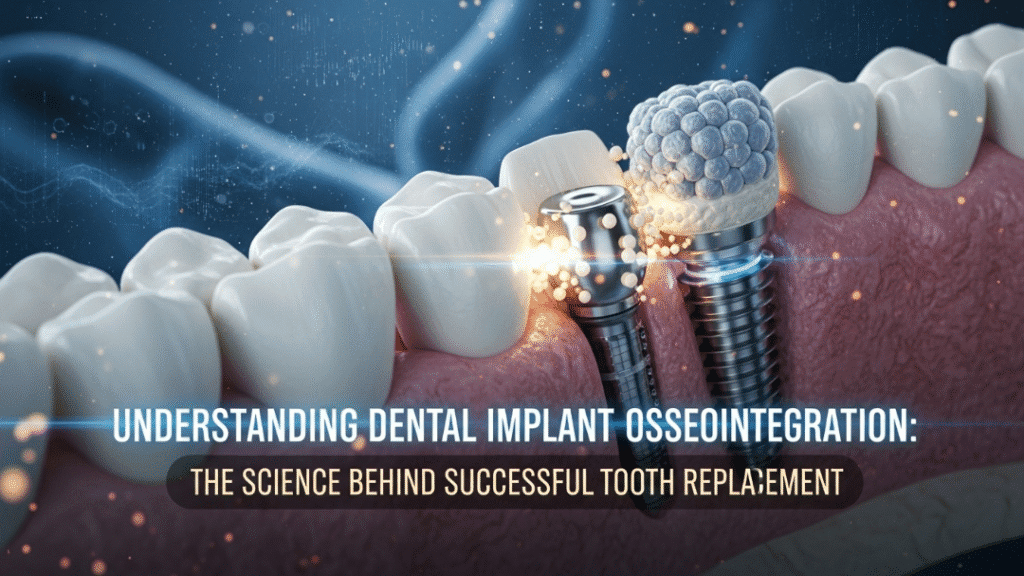
The Science Behind Osseointegration
The Biological Process
When a dental implant is placed into the jawbone, a complex cascade of biological events begins immediately. The process occurs in several distinct phases:
Phase 1: Hemostasis and Inflammation (0-3 days)
- Blood clot formation around the implant
- Initial inflammatory response
- Platelet activation and fibrin network development
Phase 2: Proliferation (3-14 days)
- New blood vessel formation (angiogenesis)
- Cellular migration to the implant site
- Soft tissue healing begins
Phase 3: Maturation (2-8 weeks)
- Bone cell formation and migration
- Initial bone matrix deposition
- Soft tissue integration
Phase 4: Remodeling (2-6 months)
- Mature bone formation
- Complete osseointegration
- Load-bearing capacity development
Factors Influencing Osseointegration Success
The success of dental implant osseointegration depends on multiple interconnected factors that work together to create optimal healing conditions.
Implant Surface Properties
Modern implants feature specially treated surfaces that enhance bone integration:
- Roughened surfaces increase surface area for bone contact
- Hydroxyapatite coatings promote faster bone formation
- Anodized surfaces improve biocompatibility
- Acid-etched textures enhance cellular attachment
Bone Quality and Density
The Lekholm & Zarb classification system categorizes jawbone into four types:
| Bone Type | Description | Success Rate | Healing Time |
|---|---|---|---|
| Type 1 | Dense cortical bone | 98% | 3-4 months |
| Type 2 | Thick cortical with trabecular core | 96% | 3-4 months |
| Type 3 | Thin cortical with dense trabecular | 90% | 4-6 months |
| Type 4 | Thin cortical with low-density trabecular | 85% | 6+ months |
Dental Implant Osseointegration Timeline
Success Rates and Clinical Outcomes 📊
Current evidence demonstrates remarkably high success rates for dental implant osseointegration. Recent studies indicate overall success rates ranging from 95-98%, with properly maintained implants achieving long-term functionality extending beyond 25 years[1].
Short-term vs. Long-term Success
Short-term Success (1-3 years):
- Implant survival rates reach 98.9% at the 3-year mark[2]
- Most failures occur within the first year due to osseointegration issues
- Primary stability is crucial during this period
Long-term Success (5+ years):
- Five-year retrospective analysis shows survival rates of 92.54%[3]
- 12 out of 161 implants (7.45%) experienced failure in long-term studies[3]
- Failures shift from biological to mechanical causes over time
Retention System Performance
The type of implant retention system significantly impacts long-term success:
Cement-Retained Implants:
- Superior survival rates at 63.4%
- Fewer complications such as screw loosening
- Better stress distribution
- Reduced biological issues like peri-implantitis
- Enhanced aesthetic outcomes due to no visible screw access
Screw-Retained Implants:
- Lower survival rates but easier maintenance
- Retrievable for repairs
- Higher risk of mechanical complications
- Visible screw access may affect aesthetics
For patients considering full mouth dental implants, understanding these differences is crucial for treatment planning.
Primary Causes of Osseointegration Failure ⚠️
Understanding why dental implant osseointegration fails helps both patients and practitioners optimize treatment outcomes. Research identifies several primary failure mechanisms:
Early Failure Causes (0-6 months)
1. Lack of Osseointegration (36.4%)
- Poor bone quality or quantity
- Inadequate implant surface preparation
- Surgical trauma during placement
- Premature loading before integration
2. Absence of Primary Stability (22.4%)
- Insufficient bone density
- Oversized osteotomy preparation
- Poor implant design selection
- Inadequate torque during placement
3. Infection and Contamination
- Poor surgical sterility
- Pre-existing periodontal disease
- Compromised healing due to smoking
- Inadequate post-operative care
Late Failure Causes (6+ months)
Once osseointegration is established, failure patterns change dramatically:
Peri-implantitis:
- Bacterial infection around the implant
- Progressive bone loss
- Similar to periodontal disease
- Often preventable with proper hygiene
Mechanical Complications:
- Prosthetic trauma from excessive forces
- Implant fracture (rare but serious)
- Abutment loosening
- Crown or bridge failures
"The significantly shorter survival times observed in cases with poor primary stability underscore the critical importance of initial mechanical engagement between the implant and bone tissue."
The Role of Bone Density in Osseointegration
Dental implant osseointegration success is heavily influenced by the quality and density of the recipient bone. Understanding these factors helps set realistic expectations and guide treatment decisions.
Bone Classification Impact
Jawbone density varies significantly between patients and even within the same patient's mouth. The posterior maxilla (upper back jaw) typically has the lowest density, while the anterior mandible (lower front jaw) offers the highest density bone.
High-Density Bone Benefits:
- Excellent primary stability
- Faster osseointegration
- Higher success rates (95-98%)
- Shorter healing periods
- Better long-term stability
Low-Density Bone Challenges:
- Reduced primary stability
- Extended healing requirements
- Lower success rates (85-90%)
- Higher risk of early failure
- May require bone grafting
Strategies for Low-Density Bone
For patients with compromised bone density, several therapeutic strategies can optimize results:
Surface Modifications:
- Hydroxyapatite-coated implants enhance integration
- Roughened surfaces increase bone contact area
- Bioactive coatings promote faster healing
Surgical Techniques:
- Gentle surgical techniques minimize thermal damage
- Piezosurgery reduces bone trauma
- Under-preparation of osteotomy sites
- Immediate implant placement when appropriate
Healing Enhancement:
- Extended healing periods up to 6 months before loading
- Platelet-rich fibrin (PRF) application
- Growth factor therapy
- Bone grafting materials when needed
Patients exploring permanent teeth in a day procedures should understand that bone density significantly impacts candidacy for immediate loading protocols.
Crestal Bone Loss and Long-term Stability
A critical aspect of successful dental implant osseointegration involves understanding normal bone remodeling versus pathological bone loss.
Normal Bone Remodeling
Research indicates that 65% of implants experience crestal bone loss below 1mm, which aligns with other studies reporting 52% of cases with bone loss under 1mm[3]. This minimal bone loss level is:
- Clinically acceptable and doesn't compromise longevity
- Part of normal remodeling as bone adapts to implant loading
- Stabilizes after initial healing in most cases
- Manageable with proper oral hygiene
Pathological Bone Loss
Excessive bone loss (>2mm annually) indicates:
- Peri-implantitis development
- Mechanical overload
- Poor oral hygiene
- Systemic health factors
- Implant design issues
Prevention Strategies:
- Regular professional cleanings
- Proper home care techniques
- Smoking cessation
- Management of systemic conditions
- Bite adjustment when necessary
Risk Factors and Patient Considerations 🚨
Several patient-specific factors significantly influence dental implant osseointegration outcomes. Understanding these risks helps optimize treatment planning and set realistic expectations.
Medical Conditions
High-Risk Conditions:
- Diabetes (especially uncontrolled)
- Osteoporosis and bone metabolism disorders
- Autoimmune diseases (rheumatoid arthritis, lupus)
- Cancer and radiation therapy history
- Cardiovascular disease
Patients with systemic medical conditions experience substantially higher rates of peri-implantitis (26.8% versus 8.8% in healthy patients)[5]. These conditions create a proinflammatory microenvironment that accelerates peri-implant bone loss.
Lifestyle Factors
Smoking Impact:
- Remarkably elevated failure rates compared to non-smokers[5]
- Reduced blood flow to healing tissues
- Impaired immune response
- Increased infection risk
- Delayed healing times
Other Lifestyle Considerations:
- Alcohol consumption affects healing
- Poor nutrition impairs bone formation
- Stress impacts immune function
- Medications (bisphosphonates, steroids) affect bone metabolism
Age Considerations
While age alone isn't a contraindication, older patients may face:
- Slower healing processes
- Reduced bone density
- Multiple medical conditions
- Medication interactions
- Decreased manual dexterity for oral hygiene
For patients considering full mouth implant packages, comprehensive medical evaluation is essential for optimal outcomes.
Modern Advances in Osseointegration Technology 🔬
The field of dental implant osseointegration continues to evolve rapidly, with 2025 bringing exciting technological advances that improve success rates and patient experiences.
Digital Integration Revolution
CAD/CAM Technology:
- Precise implant planning using 3D imaging
- Custom abutments designed for optimal emergence profiles
- Virtual treatment planning with predictable outcomes
- Same-day crown fabrication capabilities
3D Printing Applications:
- Custom surgical guides for precise placement
- Patient-specific implants for complex cases
- Temporary restorations during healing
- Bone graft scaffolds with optimal architecture
Guided Surgery Benefits
Modern guided surgery systems offer:
- Millimeter-precise implant placement
- Reduced surgical time and patient discomfort
- Minimally invasive techniques
- Predictable outcomes based on pre-surgical planning
- Flapless surgery options when appropriate
Surface Technology Innovations
Nanotechnology Applications:
- Nanostructured surfaces promote cellular attachment
- Antimicrobial coatings reduce infection risk
- Drug-eluting surfaces deliver healing factors
- Hydrophilic surfaces enhance protein adhesion
Bioactive Coatings:
- Calcium phosphate promotes bone formation
- Growth factor incorporation accelerates healing
- Antimicrobial agents prevent infection
- Osteoconductive materials guide bone growth
Material Science Advances
Titanium Alloy Improvements:
- Enhanced biocompatibility
- Reduced allergic reactions
- Improved mechanical properties
- Better fatigue resistance
Zirconia Implants:
- Metal-free alternative for sensitive patients
- Excellent aesthetic properties
- Biocompatible ceramic material
- White color prevents gray show-through
Market Growth and Future Trends 📈
The global dental osseointegration therapy market reflects the growing demand for implant treatments. Current projections indicate the market will reach $472.3 million in 2025 with a compound annual growth rate of 5.8% through 2033[10].
Driving Factors
Increasing Demand:
- Rising prevalence of tooth loss due to periodontal disease
- Growing awareness of implant benefits
- Aging population requiring tooth replacement
- Improved insurance coverage for implant procedures
Technological Advances:
- Enhanced implant materials and surface modifications
- Digital workflow integration
- Minimally invasive surgical techniques
- Personalized treatment approaches
Personalized Medicine in Implantology
The trend toward personalized medicine involves:
- Genetic testing to predict healing responses
- Customized implant systems based on patient anatomy
- Patient-specific treatment protocols considering health status
- Biomarker analysis to optimize timing and techniques
Patients researching full mouth teeth replacement cost should consider these advancing technologies when evaluating treatment options.
Implant System Performance Comparison
Different implant systems demonstrate varying performance characteristics that affect dental implant osseointegration success.
Connection Types
Morse Taper Connections:
- Superior survival rates in clinical studies[3]
- Improved mechanical strength
- Reduced bone remodeling around implant neck
- Better bacterial seal
- Enhanced long-term stability
Internal Hex Connections:
- Good mechanical properties
- Easier prosthetic procedures
- Wide compatibility with components
- Proven track record
External Hex Connections:
- Traditional design with extensive research
- Simple prosthetic procedures
- More susceptible to screw loosening
- May experience more bone remodeling
Platform Switching Concept
Modern implant design incorporates platform switching, where the abutment diameter is smaller than the implant platform. Benefits include:
- Reduced crestal bone loss
- Improved soft tissue aesthetics
- Better emergence profile control
- Enhanced long-term stability
Clinical Implications and Best Practices
Successful dental implant osseointegration requires attention to multiple interconnected factors throughout the treatment process.
Pre-surgical Planning
Comprehensive Evaluation:
- Detailed medical and dental history
- 3D imaging (CBCT) for bone assessment
- Periodontal health evaluation
- Occlusal analysis
- Risk factor identification
Treatment Planning:
- Implant size and position optimization
- Bone grafting needs assessment
- Provisional restoration design
- Timeline establishment
- Patient education and consent
Surgical Excellence
Primary Stability Achievement:
- Proper osteotomy preparation
- Appropriate implant selection
- Optimal insertion torque (25-45 Ncm)
- Immediate stability assessment
- Atraumatic surgical technique
Sterility and Infection Control:
- Strict aseptic protocols
- Sterile implant handling
- Prophylactic antibiotics when indicated
- Proper wound closure
- Post-operative care instructions
Post-operative Management
Healing Period Optimization:
- Load management during osseointegration
- Regular monitoring appointments
- Oral hygiene instruction and maintenance
- Complication recognition and management
- Patient compliance monitoring
For patients considering treatment options, reviewing ClearChoice Dallas reviews can provide insights into different provider experiences and outcomes.
Long-term Maintenance and Success
Once dental implant osseointegration is achieved, long-term success depends on proper maintenance and monitoring.
Professional Maintenance
Regular Monitoring:
- Clinical examination every 6 months
- Radiographic assessment annually
- Probing depth measurements
- Mobility testing
- Occlusal evaluation
Professional Cleaning:
- Specialized implant cleaning instruments
- Biofilm removal techniques
- Soft tissue health assessment
- Patient education reinforcement
- Early intervention when needed
Patient Home Care
Daily Hygiene Protocol:
- Soft-bristled toothbrush or electric toothbrush
- Non-abrasive toothpaste
- Interdental cleaning with floss or brushes
- Antimicrobial mouth rinse when recommended
- Water flosser for enhanced cleaning
Lifestyle Modifications:
- Smoking cessation maintenance
- Healthy diet supporting bone health
- Regular exercise for overall health
- Stress management
- Medication compliance
Complication Prevention
Early Warning Signs:
- Bleeding around implants
- Gum recession or swelling
- Persistent bad taste or odor
- Loose crowns or bridges
- Changes in bite or comfort
Risk Reduction Strategies:
- Consistent oral hygiene
- Regular professional care
- Avoid hard foods that could damage prosthetics
- Wear night guards if recommended
- Address systemic health issues promptly
Cost Considerations and Treatment Planning
Understanding the financial aspects of dental implant osseointegration helps patients make informed decisions about their oral health investment.
Treatment Investment Factors
Initial Costs:
- Implant placement surgery
- Bone grafting if needed
- Provisional restorations
- Final crown or bridge fabrication
- Specialist consultations
Long-term Value:
- Durability (25+ years with proper care)
- Improved quality of life
- Preserved facial structure
- Enhanced nutrition from better chewing
- Confidence and social benefits
Many patients find full mouth dental implants payment plans helpful for managing treatment costs while accessing advanced care.
Insurance and Financing
Insurance Coverage:
- Medical insurance may cover implants in trauma cases
- Dental insurance increasingly covers implant procedures
- Flexible spending accounts (FSA) and health savings accounts (HSA)
- Third-party financing options
- Practice payment plans
International Treatment Options:
- Some patients explore dental implants abroad for cost savings
- Consider travel costs and follow-up care logistics
- Verify practitioner credentials and facility standards
- Understand warranty and complication management
Patient Success Stories and Outcomes
Real-world outcomes demonstrate the transformative power of successful dental implant osseointegration. Patients consistently report significant improvements in:
Functional Benefits
Chewing Efficiency:
- Restoration of normal bite force
- Ability to eat previously avoided foods
- Improved nutrition and digestion
- Enhanced taste sensation
Speech Improvement:
- Clear pronunciation
- Increased confidence in social situations
- Professional presentation benefits
- Elimination of denture-related speech issues
Psychological Benefits
Quality of Life Enhancement:
- Restored self-confidence
- Improved social interactions
- Professional advantages
- Better overall mental health
Long-term Satisfaction:
- High patient satisfaction rates (>95%)
- Willingness to recommend treatment
- Improved oral health awareness
- Better overall health outcomes
Viewing full mouth reconstruction before and after cases can help patients visualize potential outcomes and set realistic expectations.
Future Directions in Osseointegration Research
The field of dental implant osseointegration continues to evolve with exciting research directions that promise even better outcomes for patients.
Regenerative Medicine Applications
Stem Cell Therapy:
- Bone marrow-derived stem cells for enhanced healing
- Adipose-derived stem cells for tissue regeneration
- Dental pulp stem cells for localized applications
- Platelet-rich plasma (PRP) and platelet-rich fibrin (PRF)
Growth Factor Research:
- Bone morphogenetic proteins (BMPs)
- Platelet-derived growth factor (PDGF)
- Insulin-like growth factor (IGF)
- Vascular endothelial growth factor (VEGF)
Smart Implant Technology
Sensor Integration:
- Real-time monitoring of osseointegration progress
- Early detection of complications
- Load monitoring and bite force analysis
- Wireless data transmission to healthcare providers
Drug Delivery Systems:
- Controlled release of healing factors
- Antimicrobial agent delivery
- Anti-inflammatory medication release
- Personalized therapeutic protocols
Artificial Intelligence Applications
Treatment Planning:
- AI-assisted implant placement planning
- Predictive modeling for success rates
- Risk assessment algorithms
- Personalized treatment protocols
Outcome Prediction:
- Machine learning analysis of success factors
- Patient-specific risk profiling
- Treatment optimization recommendations
- Long-term prognosis modeling
Conclusion
Dental implant osseointegration represents one of modern dentistry's greatest achievements, offering patients a reliable, long-lasting solution for tooth replacement. With success rates ranging from 95-98% and the potential for 25+ years of function, dental implants have transformed millions of lives worldwide.
The key to successful osseointegration lies in understanding the complex interplay of biological, mechanical, and patient-specific factors. From the initial inflammatory response to complete bone integration, each phase requires careful attention to optimize outcomes. Modern advances in digital planning, guided surgery, and surface technology continue to improve success rates while reducing treatment time and patient discomfort.
As we move through 2025, the field continues to evolve with exciting developments in regenerative medicine, smart implant technology, and artificial intelligence applications. These advances promise even better outcomes for patients while making treatment more predictable and accessible.
Next Steps for Patients
If you're considering dental implants, I recommend:
- Consult with a qualified implant specialist to evaluate your candidacy and discuss treatment options
- Understand your risk factors and how they might affect osseointegration success
- Explore financing options including payment plans to make treatment accessible
- Research providers thoroughly and review patient experiences and outcomes
- Commit to long-term maintenance to ensure your investment provides decades of service
For those considering comprehensive treatment, understanding the cost to replace all teeth with implants helps in making informed decisions about this life-changing investment in your oral health and quality of life.
The science of dental implant osseointegration continues to advance, offering hope and improved outcomes for patients worldwide. With proper planning, execution, and maintenance, dental implants can provide a lifetime of confident smiles and optimal oral function.
References
[1] Journal of Oral Implantology - Long-term Success Rates of Dental Implants (2024)
[2] Clinical Oral Implants Research - Three-year Survival Analysis (2024)
[3] International Journal of Oral and Maxillofacial Implants - Retrospective Five-year Study (2024)
[4] Journal of Periodontology - Cement vs Screw-Retained Implants (2024)
[5] Clinical Implant Dentistry and Related Research - Failure Analysis Study (2024)
[6] Bone Density and Implant Success - Oral Surgery Research (2024)
[7] Peri-implantitis Risk Factors - Journal of Clinical Periodontology (2024)
[8] Smoking and Implant Outcomes - Tobacco Research International (2024)
[9] Systemic Disease Impact - Medical Dental Interface Journal (2024)
[10] Global Dental Implant Market Analysis - Healthcare Market Research (2025)
Dental Implants Market Forecasts from 2025 to 2030 - Yahoo Finance
Leave a Reply
Share your thoughts or ask a question about dental implants. Your email address will not be published.