

Considering dental implants to restore your smile in Dallas, Texas? It’s an excellent choice for replacing missing teeth, offering a durable and natural-looking solution. However, before embarking on the dental implant procedure, a crucial step involves obtaining dental implant medical clearance. This process ensures your overall health is suitable for surgery, minimizing risks and maximizing the long-term success of your implants. Understanding what this clearance entails is key to a smooth and safe treatment journey.
Key Takeaways
- Dental implant medical clearance is a mandatory pre-surgical evaluation to assess a patient’s overall health and suitability for the procedure.
- The clearance process involves evaluating medical history, current health conditions, medications, and lifestyle factors.
- Common medical conditions like diabetes, heart disease, and autoimmune disorders require careful management and coordination with your primary care physician.
- Uncontrolled medical conditions or active oral health issues like severe gum disease can temporarily disqualify a patient from dental implant surgery until managed.
- Working closely with your dental implant specialist and other healthcare providers ensures patient safety and optimal implant success.
What is Dental Implant Medical Clearance?
Dental implant medical clearance is a thorough evaluation performed by a medical doctor, often your primary care physician or a specialist, to confirm that your general health allows you to safely undergo dental implant surgery. This step is essential because, while dental implant procedures are generally safe, they are surgical interventions that carry inherent risks, especially for individuals with underlying health conditions. Your dental implant specialist in Dallas will require this assessment to ensure patient safety and to anticipate any potential complications during or after the implant surgery process.
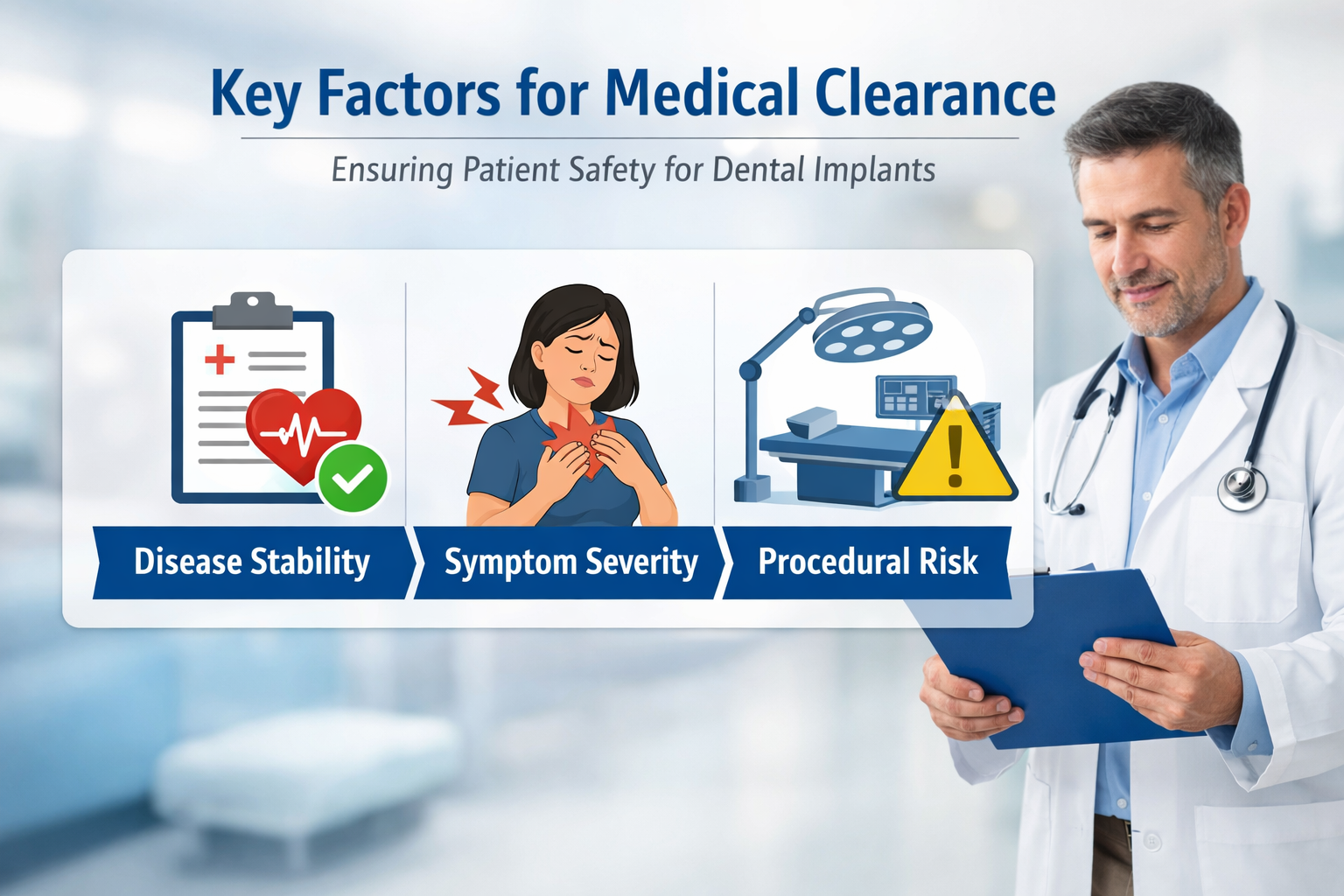
The clearance decision involves assessing three critical factors: the stability of any existing diseases, the severity of your symptoms, and the overall risk associated with the dental procedure [3]. For example, a patient with well-controlled diabetes would likely receive clearance, whereas someone with uncontrolled blood sugar levels might need to stabilize their condition first. This systematic approach ensures that the benefits of the dental implant outweigh any potential health risks, making it a cornerstone of responsible oral health education.
Why is Medical Clearance for Dental Implants Necessary?
Medical clearance for dental implants is necessary to identify and manage any potential health risks that could impact the safety or success of the dental implant procedure. This pre-operative screening helps prevent complications such as excessive bleeding, infection, adverse reactions to anesthesia, or poor healing, which are particularly critical given the surgical nature of implant placement. Without proper clearance, a patient’s existing medical conditions could lead to serious post-surgical issues, compromising both their general health and the longevity of their dental implants in Dallas.
Dental implant surgery involves creating an incision in the gums, drilling into the jawbone, and placing a titanium post to serve as an artificial tooth root. This process requires healthy bone and soft tissues, a robust immune system for healing, and stable systemic health to prevent complications. For instance, individuals with uncontrolled bleeding disorders could experience significant hemorrhage during surgery, while those with compromised immune systems might face a higher risk of infection around the implant site. Ensuring medical clearance integrates medical history review, physical examination, and sometimes diagnostic tests, providing a comprehensive overview of your suitability for this tooth replacement option.
Which Medical Conditions Require Special Consideration for Dental Implant Medical Clearance?
Several medical conditions require special consideration and often specific medical clearance before undergoing dental implant placement, as they can significantly impact surgical safety, healing, and long-term implant success. These conditions primarily include cardiovascular issues, uncontrolled diabetes, autoimmune diseases, and severe bone loss, among others. Your dental implant specialist will work closely with your primary care physician and other specialists to manage these conditions effectively, safeguarding your long-term oral health.
Here’s a breakdown of common conditions and their implications:
- Cardiovascular Conditions: Patients with heart disease, a history of heart attack, stroke, or those on blood thinners (anticoagulants) need careful evaluation. Medical clearance helps determine if medication adjustments are necessary to prevent excessive bleeding during surgery or to manage cardiac risk [3].
- Diabetes: Uncontrolled diabetes significantly impairs the body’s ability to heal and increases the risk of infection, making successful osseointegration (the fusion of the implant with the bone) more challenging [5]. Patients with diabetes must have their blood sugar levels well-controlled before and after surgery to be considered good candidates for dental implants.
- Autoimmune Diseases: Conditions like lupus or rheumatoid arthritis, and the immunosuppressive medications used to treat them, can slow bone healing and elevate the risk of infection around implants [5]. Coordination with a rheumatologist is often required to adjust medication schedules around the time of surgery, and prophylactic antibiotics may be prescribed to reduce infection risk [5].
- Osteoporosis and Bisphosphonate Use: While osteoporosis itself isn’t always a direct disqualifier, long-term use of certain bisphosphonate medications (especially intravenous forms) can increase the risk of osteonecrosis of the jaw, a serious complication. Thorough medical history and consultation with the prescribing physician are crucial.
- Bleeding Disorders: Patients with hemophilia or other clotting disorders require clearance from a hematologist to manage bleeding risks during and after the procedure.
- Immunosuppression: Conditions like HIV/AIDS or organ transplant recipients on immunosuppressant drugs have a higher risk of infection and delayed healing. Prophylactic antibiotics are often necessary, and careful monitoring is crucial [5].
- Smoking: Active smoking significantly compromises blood flow, slows healing, and increases the risk of implant failure and gum complications [5]. While not a direct medical condition, patients are often advised to quit or significantly reduce smoking before and after surgery to improve outcomes [5].
- Active Gum Disease (Periodontitis): This is one of the most common reasons for temporary disqualification. Active gum disease creates an inflammatory environment that can lead to implant failure. It must be thoroughly treated and brought under control before implant placement [5].
| Medical Condition | Impact on Dental Implants | Required Action for Clearance |
|---|---|---|
| Uncontrolled Diabetes | Impaired healing, increased infection risk, poor osseointegration | Blood sugar stabilization, physician clearance |
| Cardiovascular Disease | Bleeding risk, cardiac events during surgery | Physician clearance, potential medication adjustment |
| Autoimmune Diseases | Slowed healing, increased infection risk | Rheumatologist consultation, possible medication adjustment, antibiotics |
| Bisphosphonate Use | Risk of osteonecrosis of the jaw | Prescribing physician consultation, risk-benefit assessment |
| Active Gum Disease | Infection, implant failure | Complete periodontal treatment before implant placement |
| Smoking | Slowed healing, increased failure rate | Cessation or significant reduction before and after surgery |
Your dentist will assess your specific situation and refer you to a medical doctor for further evaluation if any of these conditions are present. This collaborative approach ensures that your journey to a new smile with dental implants in Dallas is as safe and successful as possible. For more information on patient safety, consider reading our guide on Terrified of Dental Implants? Conquer Your Fear in 2026.
The Dental Implant Medical Clearance Process in 2026

The dental implant medical clearance process in 2026 typically begins with a comprehensive consultation with your dental implant specialist in Dallas, followed by an evaluation from your primary care physician or a relevant medical specialist. This ensures a coordinated approach to patient care, prioritizing your overall health and the success of the dental implant procedure. The process is designed to be thorough yet straightforward, ensuring all necessary health aspects are addressed before proceeding with treatment.
Here’s a step-by-step breakdown:
- Initial Dental Consultation: Your first step is to meet with a qualified dental implant provider. They will perform an oral examination, review your dental history, and discuss your tooth replacement options. During this consultation, you’ll also discuss your general medical history, including any current health conditions, medications (prescription, over-the-counter, and supplements), and allergies. This initial assessment helps the dental team identify potential concerns that might require medical clearance. They might also discuss the cost of dental implants in Dallas and financing options during this visit.
- Referral for Medical Evaluation: If your dental implant specialist identifies any medical conditions or medications that could affect the implant surgery or healing, they will refer you to your primary care physician (PCP) or a specific medical specialist (e.g., cardiologist, endocrinologist) for a medical clearance evaluation. This referral will often include a request for a written letter of clearance, detailing your medical status.
- Medical Appointment and Assessment: During your medical appointment, your doctor will:
- Review your medical history thoroughly: This includes past surgeries, hospitalizations, chronic illnesses, and family history.
- Perform a physical examination: This helps assess your current health status.
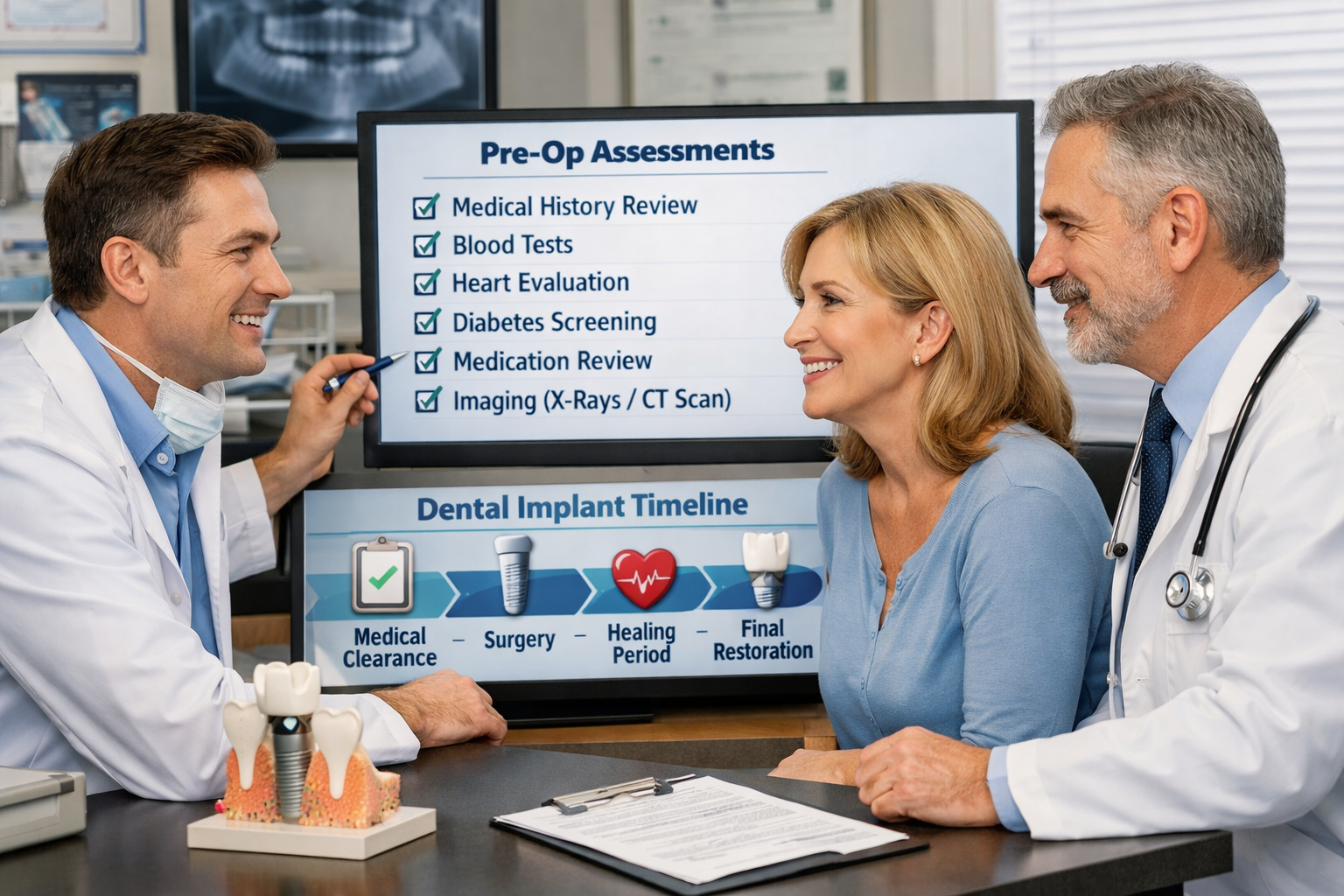
- Order diagnostic tests (if necessary): This might include blood tests (e.g., blood sugar levels, complete blood count, coagulation profile), an electrocardiogram (ECG), or other imaging, depending on your health conditions.
- Evaluate your medications: The doctor will check for potential interactions or risks associated with your current medications and may recommend temporary adjustments, such as stopping certain blood thinners before surgery [3].
- Assess disease stability, symptom severity, and procedural risk: This framework guides their decision-making process for clearance [3].
- Medical Clearance Documentation: Your physician will provide a written medical clearance, typically in the form of a letter, directly to your dental implant specialist. This document will state whether you are cleared for surgery, any specific precautions or recommendations (e.g., prophylactic antibiotics, specific monitoring during surgery, medication adjustments), and if there are any contraindications that would prevent the procedure. For procedures requiring general anesthesia or IV sedation, detailed medical narratives, ICD-10 diagnosis codes, and anesthesia provider information are crucial for proper documentation [2].
- Dental Team Review and Planning: Once your dental implant specialist receives the medical clearance, they will review it to finalize your treatment plan. This ensures that any medical recommendations are integrated into your pre-operative, operative, and post-operative care.
It is crucial for patients to be completely transparent with both their dentist and physician about their health status. With careful planning and communication, even individuals with complex medical histories can often safely receive dental implants.
What Factors Can Lead to Temporary or Permanent Disqualification for Dental Implants?
Several factors can lead to either temporary postponement or permanent disqualification from receiving dental implants, primarily due to concerns about surgical safety, healing capacity, or the long-term success of the implant. Understanding these factors is crucial for anyone considering this tooth replacement option, as some issues can be addressed, while others might necessitate alternative solutions for missing teeth.
Temporary Disqualification Factors
These issues can often be managed or resolved, allowing you to proceed with dental implants after appropriate intervention:
- Active Gum Disease (Periodontitis): This is a significant temporary disqualifier. The presence of active infection and inflammation in the gums can compromise healing and lead to implant failure. Gum disease must be treated and brought under control before implant placement [5].
- Uncontrolled Chronic Medical Conditions: Conditions like uncontrolled diabetes, hypertension (high blood pressure), or severe heart conditions can increase surgical risks and impair healing. Once these conditions are stabilized and well-managed by a physician, clearance may be granted [5].
- Insufficient Bone Density (Jawbone Loss): If there isn’t enough healthy jawbone to support the implant, it’s a temporary disqualifier. However, bone grafting procedures can often resolve this issue, allowing for implant placement after a healing period [5].
- Smoking: Active smoking severely inhibits healing and increases the risk of complications like implant failure. Patients are typically advised to quit or significantly reduce smoking for a period before and after surgery to improve outcomes [5].
- Poor Oral Hygiene: A persistent lack of proper oral hygiene indicates a higher risk of peri-implantitis (gum disease around the implant). Improving oral hygiene habits is often a prerequisite.
- Certain Medications: Some medications, particularly certain blood thinners, may need to be temporarily adjusted or paused before surgery to minimize bleeding risk. This is always done under the guidance of the prescribing physician.
Permanent Disqualification Factors
These factors are typically irreversible or pose too significant a risk to safely proceed with dental implant surgery:
- Radiation Therapy to the Head and Neck: High-dose radiation therapy to the jaw area can severely compromise bone quality and blood supply, making successful osseointegration and healing very difficult, increasing the risk of osteonecrosis.
- Certain Immunosuppressive Conditions: While many can be managed, some severe, uncontrolled immunocompromising conditions might make implant surgery too risky due to high infection rates and poor healing.
- Untreatable Jawbone Deficiency: In rare cases, even with advanced bone grafting techniques, there may be insufficient jawbone to support implants, and no viable grafting options exist.
- Severe Bruxism (Teeth Grinding): While manageable with nightguards, extreme, uncontrolled bruxism can place excessive forces on implants, leading to failure. If the condition cannot be managed, implants may be contraindicated. For more information, see our guide on Protect Your Implants: Stop Teeth Grinding Damage 2026.
- Unrealistic Expectations or Non-Compliance: Patients unwilling or unable to commit to the necessary pre- and post-operative care, including stringent oral hygiene, might not be suitable candidates, as long-term success heavily relies on patient cooperation.
- Young Age: Dental implants are typically not recommended for individuals whose jawbones are still developing, usually under 18-20 years old, as bone growth can affect implant position and integration.
It’s important to note that advances in dental technology and medical management mean that fewer patients are permanently disqualified than in the past. If you have concerns about your candidacy, a consultation with an experienced dental implant specialist in Dallas is the best way to determine your specific options and develop a personalized treatment plan.
The Role of Your Primary Care Physician in Dental Implant Planning
Your primary care physician (PCP) plays a critical, collaborative role in the overall planning and execution of your dental implant journey, acting as a crucial link between your general health and your oral health. While your dental implant specialist focuses on the surgical aspect of tooth replacement, your PCP provides the essential medical context and clearance necessary for a safe and successful outcome. This partnership ensures a holistic approach to your care.
Here’s how your PCP contributes:
- Comprehensive Health Assessment: Your PCP has a complete record of your medical history, including chronic conditions, past surgeries, and ongoing medications. They can assess how these factors might influence your body’s ability to heal after surgery, your susceptibility to infection, or your reaction to anesthesia [3].
- Medication Review and Adjustment: Many patients take medications for various conditions. Your PCP will evaluate all your current medications, especially blood thinners (anticoagulants), immunosuppressants, or drugs for diabetes, and advise on any necessary adjustments before or after surgery to minimize risks like excessive bleeding or poor healing [5].
- Stabilization of Chronic Conditions: If you have an uncontrolled medical condition (e.g., high blood pressure, diabetes), your PCP will work with you to stabilize it before recommending medical clearance for dental implant surgery. This proactive management significantly reduces complications.
- Risk Assessment: Your PCP can assess your overall surgical risk using classification systems like the American Society of Anesthesiologists (ASA) physical status classification, which helps guide clearance decisions before dental implant treatment [3]. This assessment considers disease stability, symptom severity, and procedural risk [3].
- Prophylactic Antibiotic Recommendations: For patients with certain medical conditions, such as those with artificial heart valves or compromised immune systems, your PCP may recommend a course of prophylactic antibiotics before and after surgery to prevent infections [5].
- Communication with Your Dental Specialist: Your PCP will communicate directly with your dental implant specialist, providing a formal medical clearance letter that outlines your health status, any specific precautions, and recommendations for your care. This clear line of communication is vital for patient safety and effective treatment planning.
By involving your PCP, your dental implant team can tailor your treatment plan to your unique health needs, ensuring the safest possible procedure and promoting optimal healing and long-term success for your dental implants. This collaborative approach underscores our commitment to patient-first care at Dental Implant Education – Dallas TX.
Anesthesia and Sedation Considerations in 2026
Anesthesia and sedation are integral components of many dental implant procedures, helping to ensure patient comfort and manage anxiety during surgery. In 2026, the choice of anesthesia or sedation type is carefully determined based on the complexity of the dental implant procedure, your medical clearance, and your personal comfort levels. This decision-making process prioritizes patient safety and aims to provide a relaxed and pain-free experience for individuals seeking missing teeth solutions in Dallas.
Here’s a look at common options and considerations:
Types of Anesthesia and Sedation
- Local Anesthesia: This is typically used for most straightforward dental implant placements. It numbs the surgical area, so you won’t feel pain, but you remain fully awake and aware. It’s often combined with other forms of sedation for increased comfort.
- Nitrous Oxide (Laughing Gas): Administered through a mask, nitrous oxide provides a mild sedative effect, helping you feel relaxed and detached from the procedure. You remain conscious and can respond to instructions.
- Oral Sedation: This involves taking a prescribed pill (like an anti-anxiety medication) an hour before the procedure. It induces a state of deep relaxation, though you remain conscious. You will likely need someone to drive you home afterward.
- Intravenous (IV) Sedation (Conscious Sedation): Administered directly into your bloodstream, IV sedation provides a deeper level of relaxation, often making you feel drowsy or even as if you’ve been asleep. While you can still respond to verbal commands, you’ll have little memory of the procedure.
- General Anesthesia: This is typically reserved for complex cases, full-mouth dental implant procedures, or patients with significant anxiety. You are completely unconscious and require close monitoring by an anesthesiologist.
Medical Clearance and Anesthesia
The medical clearance you obtain plays a crucial role in determining the appropriate type of anesthesia or sedation. For procedures involving IV sedation or general anesthesia, a detailed medical evaluation is absolutely essential. Your medical clearance must confirm that your heart, lungs, and other vital systems can safely tolerate the chosen anesthetic agents [3].
- Heart Conditions: Patients with certain cardiac conditions may require specific monitoring or adjustments to anesthesia protocols to minimize risk.
- Respiratory Issues: Asthma, COPD, or sleep apnea can affect how your body responds to sedatives and general anesthesia, necessitating careful planning.
- Medication Interactions: Your medical clearance will highlight any medications you are taking that could interact negatively with anesthetic drugs.
- Allergies: Any known allergies to medications, including anesthetics, must be clearly communicated.
When general anesthesia or IV sedation is used, dental practices must provide detailed documentation for insurance claim submission. This includes narratives explaining the medical necessity, appropriate ICD-10 diagnosis codes, information about the anesthesia provider, and the start/stop times and location of the facility [2]. This ensures both patient safety and proper administrative processing of your dental implant costs in Dallas.
What Happens if Medical Clearance is Denied or Requires Further Steps?
If medical clearance for dental implants is denied or indicates that further steps are needed, it means your current health status poses a significant risk to the safety or success of the dental implant procedure. This does not necessarily mean dental implants are impossible, but rather that certain health conditions must be addressed or managed before proceeding. This patient-first approach ensures that any tooth replacement option is pursued with your long-term health in mind.
Here’s what typically happens:
- Understanding the Reason for Denial/Further Steps: Your dental implant specialist and your medical doctor will clearly explain why clearance was denied or why additional steps are required. This might involve:
- Uncontrolled Chronic Conditions: Your physician might recommend a period of treatment to stabilize conditions like diabetes or high blood pressure. This could involve medication adjustments, lifestyle changes, or specialist consultations.
- Active Infections or Oral Health Issues: If active gum disease or other oral infections are the cause, your dental specialist will first treat these conditions. This might include periodontal therapy, extractions of severely infected teeth, or other interventions.
- Specific Medical Concerns: If a specialist (e.g., cardiologist, endocrinologist) needs to evaluate you further, the dental team will facilitate that referral.
- Smoking Cessation: If smoking is a major barrier, your doctor may recommend programs or strategies to help you quit or significantly reduce tobacco use.
- Developing a Collaborative Action Plan: Your dental team will work closely with your medical doctor(s) to create a clear action plan. This plan will outline the necessary steps, treatments, or lifestyle changes required to improve your health status to a point where you can safely receive dental implants.
- Re-evaluation: Once the recommended steps have been taken (e.g., blood sugar levels are controlled, gum disease is treated, smoking has ceased), your medical doctor will conduct a re-evaluation and issue a new medical clearance.
- Exploring Alternatives: In rare cases where a medical condition cannot be adequately managed or poses a permanent contraindication, your dental implant specialist will discuss alternative missing teeth solutions. These could include:
- Dental Bridges: A traditional dental bridge can replace one or more missing teeth by anchoring to adjacent natural teeth. For more, see Dental Bridge vs. Implant Cost in 2025.
- Partial or Full Dentures: Removable dentures can be a viable option for multiple missing teeth or full arch replacement.
- Implant-Supported Dentures: For some, even if conventional implants are challenging, a reduced number of implants might support a removable or fixed denture, offering greater stability than traditional dentures. Our article on Unlock Your Smile: A Comprehensive Guide to the Cost of Implant-Supported Dentures at Aspen Dental in 2025 provides more details.
The goal is always to find the safest and most effective solution for your long-term oral health. Your Dallas dental implant team is committed to guiding you through this process with professionalism and care.
FAQs About Dental Implant Medical Clearance
What if I have multiple medical conditions?
If you have multiple medical conditions, your dental implant specialist will coordinate closely with all your relevant physicians (e.g., cardiologist, endocrinologist) to ensure a comprehensive medical clearance that addresses all health concerns and potential interactions [3].
Can I get dental implants if I’m on blood thinners?
Being on blood thinners does not automatically disqualify you, but it requires careful management. Your physician may recommend temporarily adjusting or pausing your medication under medical supervision before surgery to minimize bleeding risk, always weighing the risks and benefits [3].
Does age affect medical clearance for dental implants?
While advanced age alone is not a contraindication, older patients may have more underlying health conditions that require thorough medical clearance. The focus is on your overall health, not just your age.
How long does medical clearance typically last?
Medical clearance for dental implant surgery is usually valid for a specific period, typically 3 to 6 months. If there’s a significant delay in your treatment plan or a change in your health status, an updated clearance may be required.
Is dental implant medical clearance covered by insurance?
The cost of your medical clearance appointment itself (with your primary care physician or specialist) is usually covered by your medical insurance, not dental insurance. However, the dental implant procedure itself may have partial dental insurance coverage [7]. For more on insurance, check out Demystifying the Cost of Dental Implants with Insurance in 2025.
What if my doctor is hesitant to give clearance?
If your doctor is hesitant, it typically means they have concerns about your health risks. Encourage direct communication between your doctor and your dental implant specialist. Often, a detailed discussion between the two professionals can clarify risks and lead to a modified plan that ensures safety.
Conclusion
Navigating the process of dental implant medical clearance is a vital step toward safely and successfully restoring your smile in 2026. This comprehensive evaluation ensures that your overall health supports the dental implant procedure, minimizing risks and promoting optimal healing and long-term success for your tooth replacement. By understanding the importance of this clearance, working closely with your dental implant specialist in Dallas, and openly communicating with your primary care physician, you are taking proactive steps toward achieving a healthy, lasting smile.
For anyone considering dental implants, remember that patient safety and well-being are paramount. Do not hesitate to ask questions and seek clarification from your healthcare providers throughout this journey. Your Dallas dental implant education team is here to support you in making informed decisions for your oral health. Schedule a consultation with a dentist today to discuss your unique situation and embark on your path to renewed confidence.
Key Takeaways
- Dental implant medical clearance is a mandatory pre-surgical health assessment.
- It ensures patient safety by evaluating medical history, current health, and medications.
- Common conditions requiring consideration include cardiovascular disease, diabetes, and autoimmune disorders.
- Clearance involves assessing disease stability, symptom severity, and procedural risk.
- Uncontrolled medical issues or active gum disease are common reasons for temporary disqualification.
- Your primary care physician collaborates with your dental specialist to provide clearance and manage health risks.
- Anesthesia and sedation choices depend on medical clearance and procedural complexity.
- If clearance is denied, a plan for managing conditions or exploring alternatives will be developed.
- Open communication with all healthcare providers is crucial for a successful outcome.
- Dental implants offer a durable missing teeth solution, but only for medically cleared candidates.
References
[1] 2026 Cdt Codes – https://www.dentalclaimsupport.com/blog/2026-cdt-codes
[2] Pehp%202026%20cdt%20code%20guide Fe38a96e – https://www.pehp.org/mango/pdf/pehp/pdc/pehp%202026%20cdt%20code%20guide_FE38A96E.pdf
[3] pubmed.ncbi.nlm.nih.gov – https://pubmed.ncbi.nlm.nih.gov/41627268/
[4] Cdt Summary Provider – https://www1.deltadentalins.com/content/dam/ddins/en/pdf/blogs/fyi-online/2025/cdt-summary-provider.pdf
[5] Dental Implant Candidacy – https://www.allinthefamilydental.com/blog/dental-implant-candidacy/
[6] P476 – https://www.aafp.org/pubs/afp/issues/2021/1100/p476.html
[7] Dental Policies – https://www.uhcprovider.com/en/policies-protocols/dental-policies.html
[8] New Ada Recommendations Confirm Dental Imaging Most Effectively Used In Moderation – https://adanews.ada.org/ada-news/2026/january/new-ada-recommendations-confirm-dental-imaging-most-effectively-used-in-moderation/
[9] Delta%20dental%20dentist%20handbook%202026 – https://deltadentalnc.com/hubfs/Delta%20Dental%20Dentist%20Handbook%202026.pdf?hsLang=en
Leave a Reply
Share your thoughts or ask a question about dental implants. Your email address will not be published.