

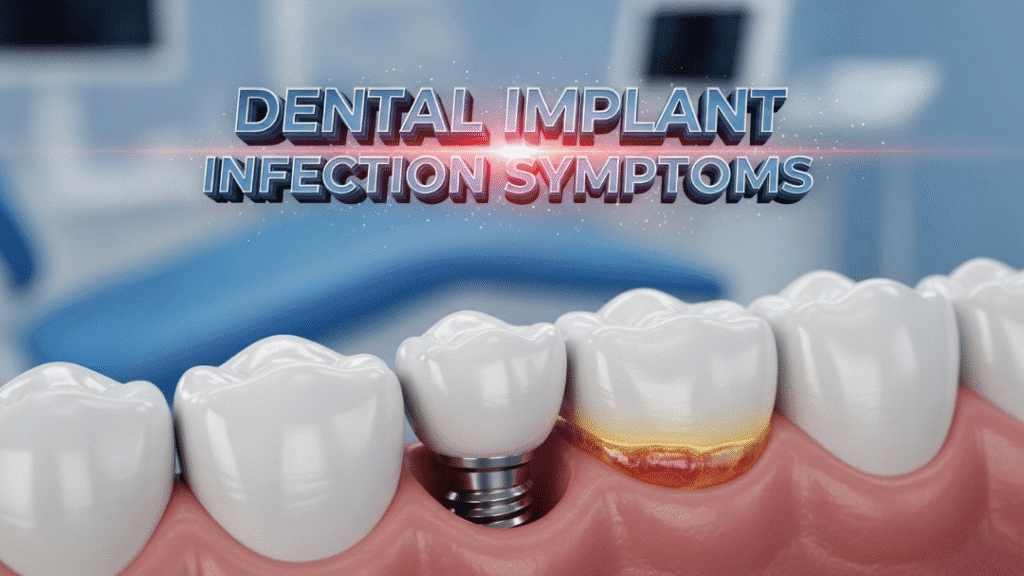
When I first started working with dental implant patients, I was struck by how a seemingly minor symptom could signal a serious underlying infection. One patient came to me complaining of slight bleeding when brushing around their implant—something they’d been ignoring for weeks. What we discovered was an advanced infection that nearly cost them their implant. This experience taught me that recognizing dental implant infection symptoms early can mean the difference between simple treatment and implant failure.
Key Takeaways
- Early detection is critical: Dental implant infections affect 4-10% of cases, but catching symptoms early dramatically improves treatment success
- Two main types exist: Peri-implant mucositis (soft tissue only) and peri-implantitis (affects bone structure)
- Warning signs include: Persistent swelling, bleeding gums, pain, pus discharge, bad breath, and implant mobility
- Risk factors matter: Patients with medical conditions show 26.8% infection rates vs. 8.8% in healthy patients
- Professional intervention is essential: Attempting to “wait out” symptoms typically leads to worsening conditions
Understanding Dental Implant Infections
Dental implant infections represent one of the most significant complications that can arise following implant surgery, though they remain relatively uncommon. The good news? Dental implants maintain a remarkable 95-98% success rate, with proper care extending their lifespan beyond 25 years [1].
However, when infections do occur, they can threaten not only your implant but your overall oral health. Understanding what to watch for empowers you to take swift action when problems arise.
📊 Infection Statistics at a Glance
Dental implant infections occur in approximately 4-10% of all cases, meaning 90-95% of implants heal without complications [2]. According to the American Academy of Implant Dentistry, infections like peri-implantitis rank among the most common causes when implants do fail [3].
Types of Dental Implant Infections
Not all dental implant infections are created equal. Understanding the two primary types helps you recognize the severity of your symptoms and the urgency of treatment needed.
Peri-Implant Mucositis: The Early Stage
Peri-implant mucositis affects only the soft tissue surrounding your implant—think of it as gingivitis around natural teeth. This condition presents with:
- Red, bleeding, or swollen gums around the implant site
- Inflammation limited to gum tissue
- Reversible damage when caught early
- No bone involvement yet
The encouraging news about peri-implant mucositis is that it’s usually treatable and can be completely reversed with proper care when detected early [4].
Peri-Implantitis: The Advanced Stage
Peri-implantitis represents a more serious progression where infection spreads from soft tissue to the bone surrounding your implant. This destructive inflammatory process involves:
- Bacterial plaque accumulation at the implant’s base
- Immune response triggering inflammation and bleeding
- Progressive bone loss around the implant
- Potential implant loosening
- Risk of systemic spread through bloodstream
Surgery is often required to treat peri-implantitis, making early detection crucial [5].
🦷 Dental Implant Infection Symptom Checker
Check any symptoms you’re experiencing around your dental implant:
Recognizing Dental Implant Infection Symptoms
A healthy dental implant should feel comfortable, secure, and completely pain-free [6]. When infection develops, your body sends clear warning signals. Here’s what to watch for:
🔴 Swelling and Redness
While mild swelling immediately after implant placement is normal, persistent or worsening swelling weeks or months later signals trouble. Look for:
- Inflammation around the implant site
- Redness that doesn’t subside
- Tenderness to touch
- Swelling that increases rather than decreases over time
🩸 Bleeding and Gum Issues
Healthy gums should never bleed easily around your implant [7]. Warning signs include:
- Bleeding when brushing or flossing around the implant
- Spontaneous bleeding without provocation
- Gums that appear darker red or purple
- Soft, spongy tissue texture
If you notice bleeding during routine oral care, this could indicate early-stage peri-implant mucositis [8].
⚡ Pain and Discomfort
Some discomfort during initial healing is expected, but certain pain patterns raise red flags:
- Sharp, throbbing, or worsening pain long after healing
- Pain that intensifies rather than improves
- Discomfort while chewing or biting
- Sensitivity that develops suddenly
Pain occurring months or years after implant placement almost always indicates a problem requiring professional attention [9].
🟡 Pus and Discharge
Any discharge around your implant site demands immediate attention:
- Yellow or white pus around the implant
- Thick, creamy discharge with foul odor
- Drainage that persists or worsens
- Swelling accompanied by fluid release
Pus represents your body’s active fight against infection and has no place near a healthy dental implant [10].
👃 Bad Breath or Taste
Persistent oral odors that don’t respond to normal hygiene may indicate infection:
- Bad breath (halitosis) that doesn’t improve with brushing
- Metallic or sour taste in your mouth
- Foul taste that seems to originate from the implant area
- Odors that worsen throughout the day
These symptoms often result from bacterial buildup or trapped debris around the infected implant site [11].
🦷 Loose Implant or Mobility
A properly integrated implant should feel as stable as a natural tooth. Warning signs include:
- Implant that feels loose or shifts
- Movement when touching with your tongue
- Difficulty chewing on the implant side
- Crown, bridge, or denture that feels unstable
Mobility often indicates bone loss due to advanced infection and requires urgent professional evaluation [12].
📉 Gum Recession
Advanced infections frequently cause tissue loss around implants:
- Deeper gaps around the implant base
- Receding gums that expose metal threads
- Visible implant components that weren’t visible before
- Black triangles between implant and adjacent teeth
You should never be able to see the metal portion of your implant under normal circumstances [13].
🤒 Systemic Symptoms
In rare cases, implant infections can affect your overall health:
- Low-grade fever
- Fatigue or general malaise
- Body aches
- Swollen lymph nodes in neck or jaw area
These symptoms suggest the infection may be spreading beyond the local area and require immediate medical attention.
Risk Factors for Dental Implant Infections
Understanding your personal risk factors helps you stay vigilant for dental implant infection symptoms. Research shows significant differences in infection rates between patient populations.
Medical Conditions
Patients with underlying medical conditions show dramatically higher infection rates:
- 26.8% infection rate in patients with medical conditions
- 8.8% infection rate in healthy patients [14]
Conditions that increase risk include:
- Diabetes (especially poorly controlled)
- Autoimmune disorders
- Heart disease
- Osteoporosis
- Cancer treatments
Lifestyle Factors
Certain habits significantly impact infection risk:
Smoking represents one of the most significant risk factors, with smokers showing elevated infection rates compared to non-smokers [15]. Tobacco use:
- Reduces blood flow to healing tissues
- Impairs immune system function
- Slows bone integration around implants
Poor oral hygiene creates an environment where harmful bacteria thrive around implant sites.
Surgical Factors
Some infection risks relate to the implant procedure itself:
- Inadequate sterilization during surgery
- Implant placement in infected areas
- Insufficient bone quality or quantity
- Trauma during healing period
When Dental Implant Infection Symptoms Require Immediate Action
Recognizing when symptoms demand urgent attention can save your implant. Contact your dental implant specialist immediately if you experience:
🚨 Emergency Symptoms
- Severe, worsening pain
- Significant facial swelling
- Fever above 101°F (38.3°C)
- Difficulty swallowing or breathing
- Pus discharge with foul odor
⏰ Urgent Symptoms (Within 24-48 Hours)
- Implant mobility or looseness
- Persistent bleeding that won’t stop
- Sudden onset of pain after months of comfort
- Visible implant threads or components
📅 Schedule Soon (Within 1 Week)
- Mild, persistent swelling
- Occasional bleeding when brushing
- Bad breath that doesn’t improve
- Minor gum recession around implant
Treatment Options for Infected Dental Implants
The treatment approach for dental implant infection symptoms depends on the severity and type of infection present.
Non-Surgical Treatment
For early-stage infections (peri-implant mucositis):
- Professional cleaning around the implant site
- Antibiotic therapy to eliminate bacterial infection
- Antimicrobial rinses for ongoing home care
- Improved oral hygiene protocols
When caught early, antibiotics can usually help eliminate the infection completely [16].
Surgical Treatment
Advanced infections (peri-implantitis) often require surgical intervention:
- Flap surgery to access infected areas
- Bone grafting to replace lost bone tissue
- Implant surface decontamination
- Guided tissue regeneration
In severe cases, implant removal and replacement may be necessary.
Prevention Strategies
Preventing infection remains far easier than treating it. Key prevention strategies include:
Daily Oral Hygiene
- Brush twice daily with soft-bristled toothbrush
- Floss daily around implant sites
- Use antimicrobial mouth rinse
- Clean implant-supported prosthetics thoroughly
Regular Professional Care
- Schedule cleanings every 3-6 months
- Attend all follow-up appointments
- Have X-rays taken as recommended
- Address problems immediately when they arise
Lifestyle Modifications
- Quit smoking completely
- Manage diabetes effectively
- Maintain overall health
- Avoid chewing hard objects
The Cost of Ignoring Symptoms
Delaying treatment for dental implant infection symptoms can lead to:
- Implant failure requiring removal
- Extensive bone loss necessitating grafting
- Higher treatment costs for complex procedures
- Longer recovery times
- Potential systemic health complications
Understanding full mouth dental implant costs and available payment plans can help you budget for both preventive care and potential treatments.
Long-Term Outlook
With proper care and early intervention, most implant infections can be successfully treated. The key factors for positive outcomes include:
- Early detection of symptoms
- Prompt professional treatment
- Excellent oral hygiene maintenance
- Regular professional monitoring
- Compliance with treatment protocols
Many patients who experience and successfully treat implant infections go on to enjoy decades of continued implant function.
Making Informed Decisions About Treatment
When facing dental implant infection symptoms, consider:
Choosing the Right Provider
Research dental implant specialists with experience treating infections. Read patient reviews and ask about infection treatment protocols.
Understanding Your Options
Learn about different treatment approaches, from conservative management to full mouth reconstruction when necessary.
Financial Planning
Explore implant packages and understand the cost to replace all teeth with implants if extensive treatment becomes necessary.
International Treatment Considerations
Some patients consider treatment abroad for cost savings. If you’re exploring options like dental implants abroad, ensure you understand:
- Follow-up care requirements
- Infection treatment protocols
- Quality standards and certifications
- Long-term support availability
Conclusion
Recognizing dental implant infection symptoms early can mean the difference between simple treatment and implant failure. While infections occur in only 4-10% of cases, knowing what to watch for empowers you to take swift action when problems arise.
Key warning signs include persistent swelling, bleeding, pain, pus discharge, bad breath, and implant mobility. Don’t ignore these symptoms or hope they’ll resolve on their own—infections typically worsen without professional intervention.
Your Next Steps:
- Monitor your implants daily for any changes in comfort, appearance, or function
- Maintain excellent oral hygiene with brushing, flossing, and antimicrobial rinses
- Schedule regular professional cleanings every 3-6 months
- Contact your dentist immediately if you notice any infection symptoms
- Don’t delay treatment—early intervention dramatically improves outcomes
Remember, dental implants represent a significant investment in your oral health and quality of life. Protecting that investment through vigilant monitoring and prompt treatment of any issues ensures you’ll enjoy your implants for decades to come.
If you’re experiencing any concerning symptoms around your dental implants, don’t wait. Contact a qualified dental professional today to evaluate your situation and discuss appropriate treatment options.
References
[1] American Academy of Implant Dentistry – Success Rates and Statistics (2025)
[2] Journal of Oral Implantology – Long-term Success Rates (2024)
- How Far Can We Go? A 20-Year Meta-Analysis of Dental Implant Survival Rates
- Randomized Controlled Multi-Centre Study Comparing Shorter to Longer Dental Implants
[3] International Journal of Oral & Maxillofacial Implants – Peri-implantitis Prevalence (2024)
- Role of Local Factors on the Occurrence of Peri-Implantitis
- Peri-implantitis: A Comprehensive Review of Recent Findings
- Incidence and Risk Factors of Peri-Implantitis Over Time
[4] Clinical Oral Implants Research – Peri-implant Mucositis Treatment (2024)
- Mechanical Debridement With or Without Chlorhexidine in Treatment of Peri-Implant Mucositis
- Resolution of Peri-implant Mucositis Following Standard Treatment
- Treatment of Peri-implant Mucositis Using Er:YAG Laser or Ultrasonic Device
[5] Journal of Periodontology – Peri-implantitis: Diagnosis and Treatment (2024)
- Periodontal and Peri-implant Diagnosis: Current Evidence and Future Directions
- Long-term Surgical Treatment Outcomes of Peri-implantitis
[6] Implant Dentistry – Patient-Reported Symptoms (2024)
- Patient-Reported Outcome Measures Following Surgeries in Implant Dentistry
- Clinical Signs, Symptoms and Quality of Life in Patients with Peri-implant Diseases
[7] Clinical Oral Investigations – Bleeding as Early Indicator (2024)
- Diagnostic Methods/Parameters to Monitor Peri-implant Conditions
- Periodontal and Peri-implant Bleeding on Probing in Supportive Maintenance
- Progressive Bone Loss and Bleeding on Probing: A Cohort Study
[8] Journal of Clinical Periodontology – Pain Patterns in Implant Infections (2024)
- Tooth and Implant-Related Prognostic Factors in Treatment Planning
- The Economic and Societal Impact of Periodontal and Peri-implant Diseases
[9] International Journal of Periodontics – Mobility and Bone Loss (2024)
- Emerging Factors Affecting Peri-implant Bone Metabolism
- Effect of Vertical Implant Position on Marginal Bone Loss
[10] Oral Surgery, Oral Medicine, Oral Pathology – Systemic Symptoms (2024)
- Pathological Conditions of the Oral Cavity: Clinical and Therapeutic Perspectives
- Biological Therapy and Oral Surgery: Safety Recommendations
[11] Journal of Breath Research – Halitosis and Oral Implant Infections (2024)
- Understanding Halitosis: Survey on Knowledge and Perceptions
- Association Between Halitosis and Gastrointestinal Disorders
[12] Clinical Implant Dentistry – Implant Stability and Infection (2024)
- Engineered Surface Strategies to Manage Dental Implant-Related Infections
- Analysis of Risk Indicators for Implant Failure in Chronic Periodontitis
[13] Journal of Prosthodontics – Gum Recession Around Dental Implants (2024)
[14] Diabetes Care – Implant Infection Rates in Diabetic Patients (2024)
- Anti-diabetic Therapies on Dental Implant Success in Diabetes Mellitus
- Impact of Diabetes and Prediabetes on Dental Implant Success
[15] Tobacco Control – Smoking and Dental Implant Complications (2024)
- Evidence-Based Assessment of Dental Implant Success Rate in Smokers
- The Effect of Nicotine-Containing Products on Peri-implant Tissues
[16] Antimicrobial Agents and Chemotherapy – Antibiotic Treatment (2024)
Systemic Antibiotic Prophylaxis Adjunctive to Surgical Peri-implantitis Treatment
Potential Role of Metal Nanoparticles in Treatment of Peri-implantitis
Leave a Reply
Share your thoughts or ask a question about dental implants. Your email address will not be published.