

It’s an exciting journey to regain your smile and chewing ability with dental implants, a modern marvel in restorative dentistry. However, the experience can quickly turn frustrating if your dental implant hurts when chewing. This discomfort can range from a dull ache to sharp pain, making everyday activities like eating a challenge. If you’re experiencing pain or discomfort around your dental implant, especially when chewing, it’s crucial to understand why this might be happening and what steps you can take to resolve it. This comprehensive guide will explore the common causes behind why your dental implant might hurt when chewing and outline the most effective fixes, ensuring you get back to enjoying your meals with confidence.
Key Takeaways
- Persistent Pain Requires Professional Attention: Any lingering pain or discomfort around a dental implant when chewing is a signal that warrants immediate dental evaluation to prevent further complications.
- Multiple Potential Causes: Pain can stem from various issues, including improper healing, infection (peri-implantitis), mechanical problems with the crown or abutment, nerve impingement, or even bite misalignment.
- Early Diagnosis is Crucial: Prompt diagnosis by a qualified implant dentist is key to identifying the root cause and implementing the correct treatment plan effectively.
- Treatment Varies by Cause: Fixes range from simple adjustments like bite correction or antibiotic therapy to more complex interventions like crown replacement, surgical debridement, or even implant removal in rare cases.
- Prevention and Aftercare are Paramount: Adhering to diligent oral hygiene and attending regular follow-up appointments are essential for the long-term success and comfort of your dental implants.
Understanding Why Your Dental Implant Hurts When Chewing
When a dental implant is properly integrated and restored, it should feel as natural and comfortable as a healthy tooth. The titanium implant post fuses with your jawbone in a process called osseointegration, providing a stable foundation that doesn’t typically transmit pain in the same way a natural tooth might (which has a periodontal ligament). Therefore, if your dental implant hurts when chewing, it indicates an underlying issue that needs to be addressed. Let’s delve into the primary reasons for this discomfort.
Common Causes of Pain When Chewing After Dental Implant Placement
Understanding the specific cause is the first step toward an effective solution. Here are the most frequent culprits behind a painful dental implant when chewing:
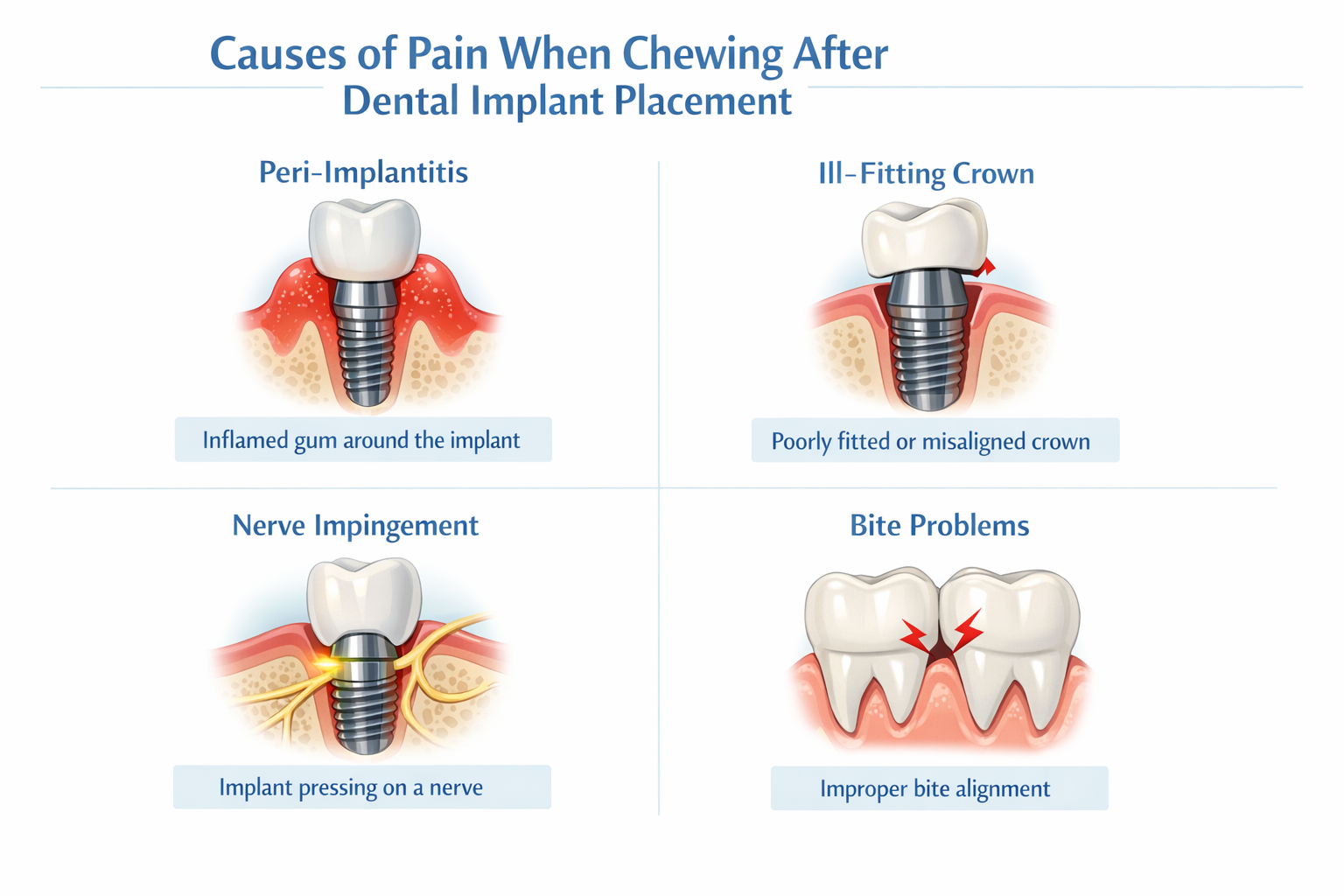
Peri-implantitis (Infection): This is arguably the most serious cause. Peri-implantitis is an inflammatory condition affecting the tissues surrounding a dental implant, leading to progressive bone loss around the implant [1]. It’s similar to periodontal disease around natural teeth.
- How it causes pain: Bacteria accumulate around the implant, leading to inflammation of the gum tissue and potentially affecting the bone. When you chew, pressure on the infected area can cause throbbing pain, tenderness, and sometimes even pus discharge.
- Risk factors: Poor oral hygiene, smoking, uncontrolled diabetes, and a history of gum disease can increase the risk of peri-implantitis.
- Symptoms: Besides pain when chewing, you might notice bleeding gums around the implant, swelling, redness, a bad taste, or even visible recession of the gum line.
Improper Healing or Osseointegration Failure: The success of a dental implant relies on its ability to fuse with the jawbone. If this process, known as osseointegration, is compromised, the implant may remain mobile or unstable.
- How it causes pain: A non-integrated or failing implant doesn’t have the stable foundation required to withstand chewing forces. This instability can cause pain, especially under pressure.
- Causes of failure: Insufficient bone density, premature loading (placing the crown too soon), excessive force during surgery, or certain medical conditions can hinder osseointegration.
- Symptoms: Persistent pain, movement of the implant, or a feeling that the implant isn’t secure can be signs of this issue. For more on the healing process, you can read about the complete dental implant recovery timeline.
Ill-Fitting Crown or Abutment: The crown is the visible part of the implant, and the abutment connects the crown to the implant post. Problems with either can lead to pain.
- How it causes pain:
- Crown too high: If the implant crown is slightly higher than your other teeth, it will bear excessive force during chewing, leading to localized pressure and pain on the implant and surrounding bone. This is a common reason why a dental implant hurts when chewing.
- Loose crown or abutment: A loose connection can cause micro-movements, leading to irritation, inflammation, and pain. You might even hear a dental implant clicking noise.
- Improper contour: A crown that doesn’t fit properly can create food traps, leading to gum inflammation or peri-implantitis.
- Symptoms: Pain specifically when biting down hard, sensitivity to pressure, or a noticeable shift in your bite.
- How it causes pain:
Nerve Impingement or Damage: Though rare, dental implant placement can sometimes affect nearby nerves.
- How it causes pain: If the implant is placed too close to a nerve bundle (most commonly in the lower jaw, near the inferior alveolar nerve), it can cause direct compression or irritation.
- Symptoms: This typically manifests as a sharp, shooting pain, numbness, tingling, or an electric shock sensation, sometimes extending beyond the implant site.
Referred Pain from Adjacent Structures: Sometimes, the pain you feel isn’t directly from the implant but is referred from other oral structures.
- How it causes pain: Issues with adjacent natural teeth (like decay, a cracked tooth, or gum disease), jaw joint problems (TMJ disorders), or even sinus issues (for upper jaw implants) can mimic implant pain.
- Symptoms: Pain that is diffuse, difficult to pinpoint, or accompanied by symptoms from other areas.
Bone Graft Complications (If Applicable): If you had a bone graft prior to implant placement, complications with the graft itself can contribute to pain.
- How it causes pain: An infected or failing bone graft site can cause localized pain and discomfort, especially under chewing pressure.
- Symptoms: Swelling, redness, pus, or persistent pain at the graft site. More information on bone graft recovery is available.
Overloading/Bruxism: Excessive forces on the implant, whether from grinding your teeth (bruxism) or clenching, can lead to pain.
- How it causes pain: The implant is designed to withstand normal chewing forces, but chronic, excessive force can stress the bone and implant components, leading to inflammation and pain.
- Symptoms: Generalized jaw pain, headaches, wear on other teeth, and discomfort around the implant, often worse in the morning.
“A well-integrated dental implant should never cause significant pain when chewing. If it does, it’s a clear signal that something is amiss and requires professional evaluation.” – Dr. Sarah Chen, Implant Specialist
Fixes for When Your Dental Implant Hurts When Chewing
The good news is that most causes of dental implant pain when chewing are treatable, especially with early intervention. The specific fix will depend entirely on the accurate diagnosis of the underlying problem.
Diagnostic Steps Your Dentist Will Take
Before any treatment, your implant dentist will conduct a thorough examination:
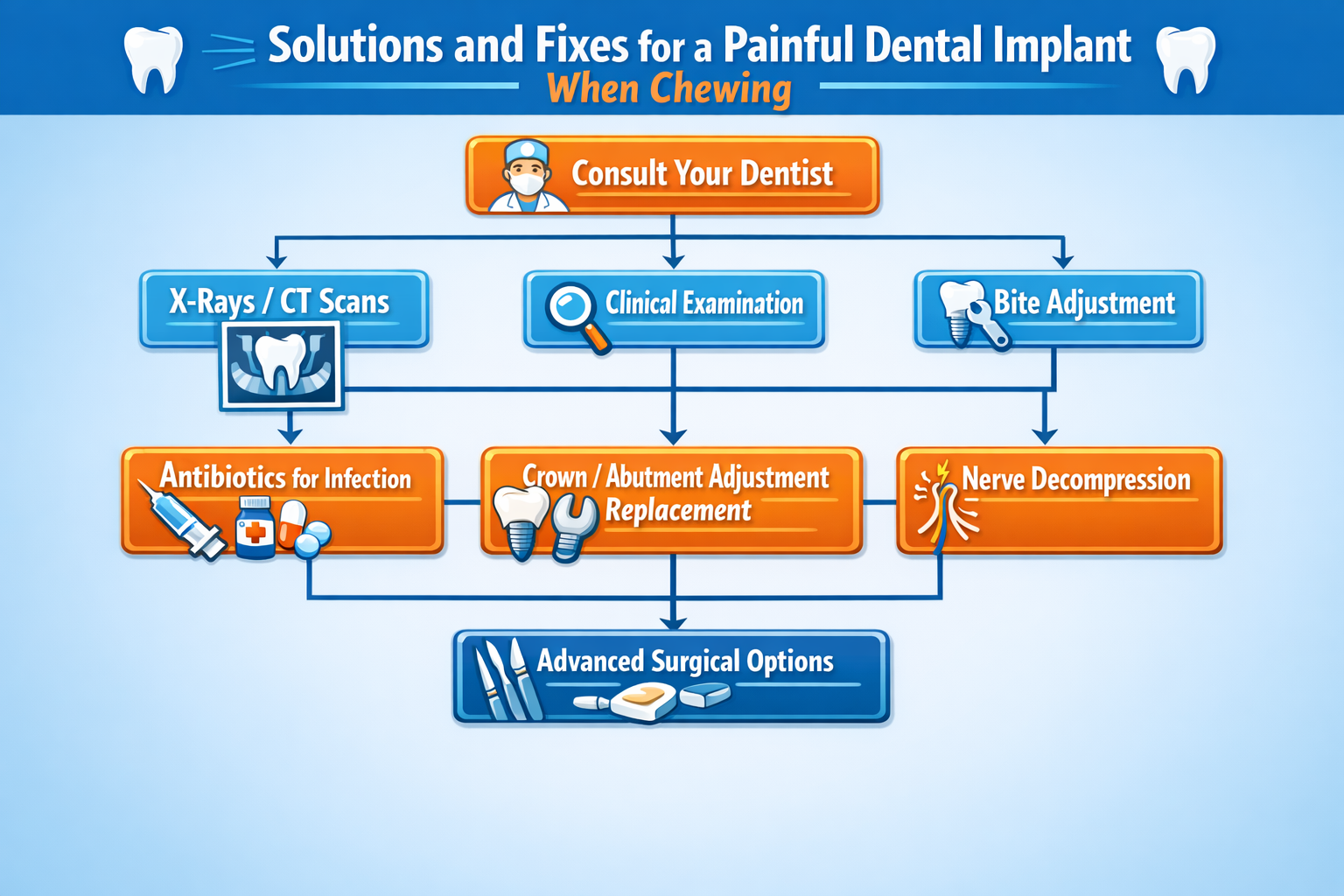
- Clinical Examination: They will visually inspect the implant site for signs of swelling, redness, bleeding, or pus. They’ll check for mobility of the implant or crown and assess your bite.
- Radiographic Imaging: X-rays (like periapical or panoramic) or a 3D Cone Beam Computed Tomography (CBCT) scan are crucial. These images allow the dentist to visualize the implant’s position relative to nerves and sinuses, assess bone levels around the implant, and check for signs of infection or improper osseointegration [2]. Learn more about [CT scans and dental implants](https://dentalimplantsdallastx.com/ct-scan-and-dental-implant s/).
- Bite Analysis: Your dentist will use articulating paper to identify any high spots on your implant crown that might be causing premature contact and excessive chewing forces.
Targeted Solutions for a Painful Dental Implant When Chewing
Once the cause is identified, your dentist will recommend one or more of the following treatment options:
For Peri-implantitis (Infection):
- Non-surgical Treatment: For early stages, this involves thorough cleaning (debridement) of the implant surface to remove plaque and calculus, often with specialized instruments. Antiseptic rinses (like chlorhexidine) and antibiotics (oral or localized) may be prescribed to control the infection.
- Surgical Treatment: If bone loss is significant, surgery might be necessary. This could involve open-flap debridement to access and clean the implant surface more thoroughly, guided bone regeneration (bone grafting) to repair lost bone, or even implant surface decontamination procedures [3]. In severe, untreatable cases, the implant may need to be removed.
- Prevention: Diligent dental implant aftercare instructions are vital, including regular brushing, flossing, and professional cleanings. Consider using a best water flosser for dental implants for optimal hygiene.
For Ill-Fitting Crown or Abutment:
- Bite Adjustment (Occlusal Adjustment): If the crown is too high, your dentist will carefully adjust and polish the chewing surface to ensure it matches your natural bite, distributing chewing forces evenly. This is often a quick and effective fix.
- Tightening/Replacement: If the crown or abutment is loose, the dentist will tighten the screw that holds it in place. If components are stripped or damaged, replacement of the abutment or crown may be necessary. For more details, see our guide on the abutment placement procedure.
- Remaking the Crown: If the crown’s shape or fit is fundamentally incorrect, a new crown will be fabricated to ensure proper occlusion and comfort.
For Improper Healing/Osseointegration Failure:
- Rest and Time: In some cases, if the implant is still early in its healing phase and only slightly mobile, the dentist might recommend removing the crown and allowing more time for osseointegration without any chewing pressure.
- Implant Removal and Re-implantation: If osseointegration has clearly failed (the implant is significantly mobile), the implant will need to be removed. After the site heals and potentially undergoes further bone grafting (e.g., if there’s 90 percent bone loss in teeth), a new implant can be placed. This can be a longer process, but it’s essential for long-term success.
For Nerve Impingement:
- Conservative Management: For mild cases, anti-inflammatory medications and pain relievers may be prescribed.
- Surgical Intervention: If the nerve impingement is severe and persistent, surgical intervention to remove the implant or decompress the nerve may be required. This is a delicate procedure often performed by an oral surgeon.
For Referred Pain:
- Address the Source: Your dentist will diagnose and treat the actual source of the pain, whether it’s an adjacent tooth issue (e.g., a cavity requiring a filling or root canal), TMJ disorder, or sinus infection. Once the primary issue is resolved, the referred pain to the implant area should subside.
For Overloading/Bruxism:
- Nightguard/Occlusal Splint: A custom-made nightguard can protect your implant and other teeth from the excessive forces of bruxism, helping to alleviate pain and prevent further damage.
- Bite Adjustment: Similar to ill-fitting crowns, ensuring your overall bite is balanced can reduce stress on the implant.
The Importance of Seeking Professional Help
It cannot be stressed enough: do not attempt to self-diagnose or treat your dental implant pain. Attempting to fix the problem yourself can worsen the condition and lead to more severe complications. Always consult with your implant dentist or oral surgeon if your dental implant hurts when chewing. They have the expertise and diagnostic tools to accurately identify the cause and provide the most appropriate and effective treatment. Our team at dentalimplantsdallastx.com is equipped to handle such complexities.
Post-Treatment Care and Long-Term Success
After treatment, following your dentist’s post-operative instructions is crucial for complete healing and to prevent recurrence. This includes:
- Medication Adherence: Take all prescribed antibiotics and pain relievers as directed.
- Dietary Modifications: Stick to a soft food diet as recommended, especially during the initial healing phases. Check out our list of 50 soft foods after dental implant.
- Oral Hygiene: Maintain meticulous oral hygiene, which is the cornerstone of implant longevity. Your dentist will advise on specific techniques and products suitable for implants, such as specialized brushes or interdental cleaners.
- Regular Check-ups: Attend all scheduled follow-up appointments and routine dental check-ups. These visits allow your dentist to monitor the implant’s health, perform professional cleanings, and address any potential issues early.
- Avoid Smoking: Smoking significantly increases the risk of peri-implantitis and implant failure. If you smoke, this is an excellent reason to consider quitting.
By proactively addressing any pain and diligently following professional advice, you can ensure the long-term health and comfort of your dental implants, allowing you to enjoy all the benefits they offer for years to come.
🤔 Dental Implant Pain When Chewing: Symptom Checker
Use this tool to get a preliminary idea of what might be causing your dental implant discomfort when chewing. **Always consult a dental professional for an accurate diagnosis.**
This symptom checker is for informational purposes only and does not constitute medical advice. Please consult a qualified dental professional for any concerns regarding your dental implant.
Conclusion
Experiencing pain when your dental implant hurts when chewing can be alarming, but it’s important to remember that it’s often a treatable issue. From infections like peri-implantitis to mechanical problems with your crown or abutment, or even nerve-related concerns, a variety of factors can contribute to this discomfort. The key to resolving the pain and ensuring the long-term success of your implant lies in prompt action and professional dental care.
If you are experiencing any persistent pain, swelling, or discomfort around your dental implant, especially when chewing, do not delay. Contact your implant dentist immediately. They possess the necessary diagnostic tools and expertise to pinpoint the exact cause of your pain and recommend the most effective treatment. Ignoring the symptoms can lead to more complex and difficult-to-treat problems, potentially jeopardizing the implant itself.
By being proactive, maintaining excellent oral hygiene, and adhering to your dentist’s recommendations, you can overcome implant discomfort and continue to enjoy the confidence and functionality that dental implants provide. Our team at Dental Implants Dallas TX is committed to helping you achieve and maintain a healthy, pain-free smile.
References
[1] Albrektsson, T., & Isidor, F. (1994). Consensus report of Session IV. In: Proceedings of the 1st European Workshop on Periodontology. Lang NP, Karring T, eds. Berlin: Quintessenz Verlag.
[2] Misch, C. E. (2008). Contemporary Implant Dentistry (3rd ed.). Mosby Elsevier.
[3] Mombelli, A., Müller, N., & Cionca, N. (2012). The epidemiology of peri-implantitis. Clinical Oral Implants Research, 23(Suppl 6), 7-10.
Leave a Reply
Share your thoughts or ask a question about dental implants. Your email address will not be published.