

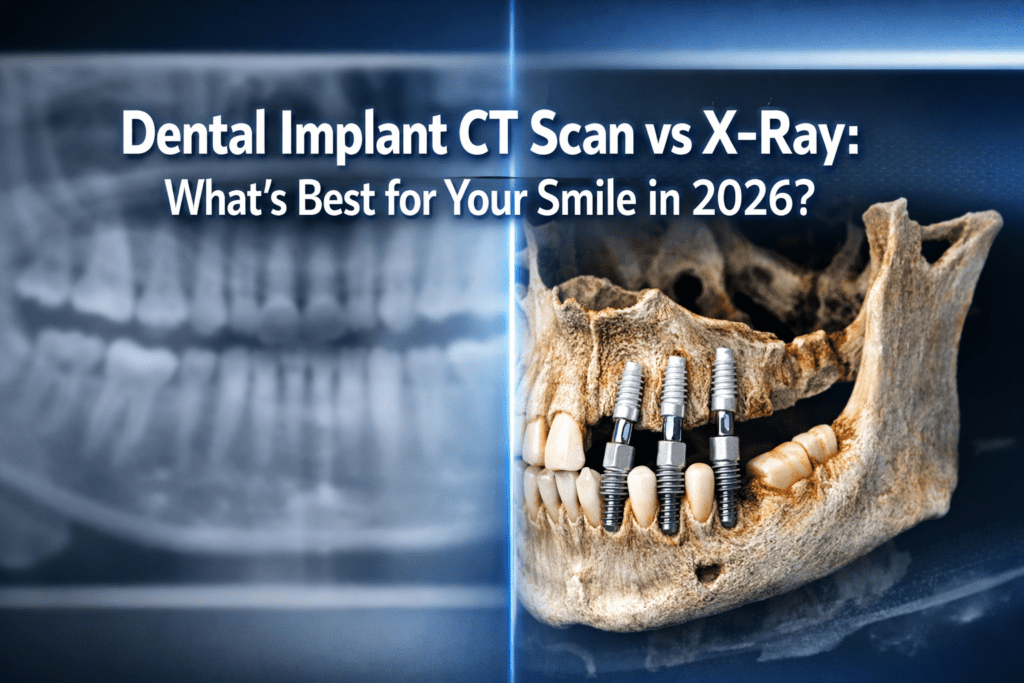
Considering dental implants in Dallas to replace missing teeth? Understanding the imaging technologies used in your treatment planning is crucial. When comparing a dental implant CT scan vs X-ray, it’s important to recognize that while both are valuable diagnostic tools, they offer vastly different levels of detail and utility, especially for complex procedures like implant surgery. In 2026, Cone Beam Computed Tomography (CBCT), often referred to as a dental CT scan, stands as the gold standard for comprehensive pre-surgical assessment due to its superior three-dimensional imaging capabilities.
Key Takeaways
- CT scans (CBCT) provide detailed 3D images, while traditional X-rays offer limited 2D views, making CBCT essential for precise dental implant planning.
- CBCT scans offer significantly higher accuracy (±0.1 mm) and capture comprehensive anatomical data, including bone density, nerve pathways, and sinus locations, which traditional X-rays cannot [1, 2].
- Despite higher detail, modern CBCT systems are designed to minimize radiation exposure, often comparable to or even less than a full set of traditional X-rays, making them safe for patients [5].
- Utilizing a dental CT scan leads to improved implant success rates, reduced surgical time, and decreased risks of complications like nerve injury, enhancing patient safety and long-term oral health [2, 3].
- For optimal planning of dental implants in Dallas, a consultation with a dentist utilizing advanced CBCT technology is highly recommended to ensure the most predictable and successful outcome.
What is the Fundamental Difference Between a Dental Implant CT Scan and an X-ray?
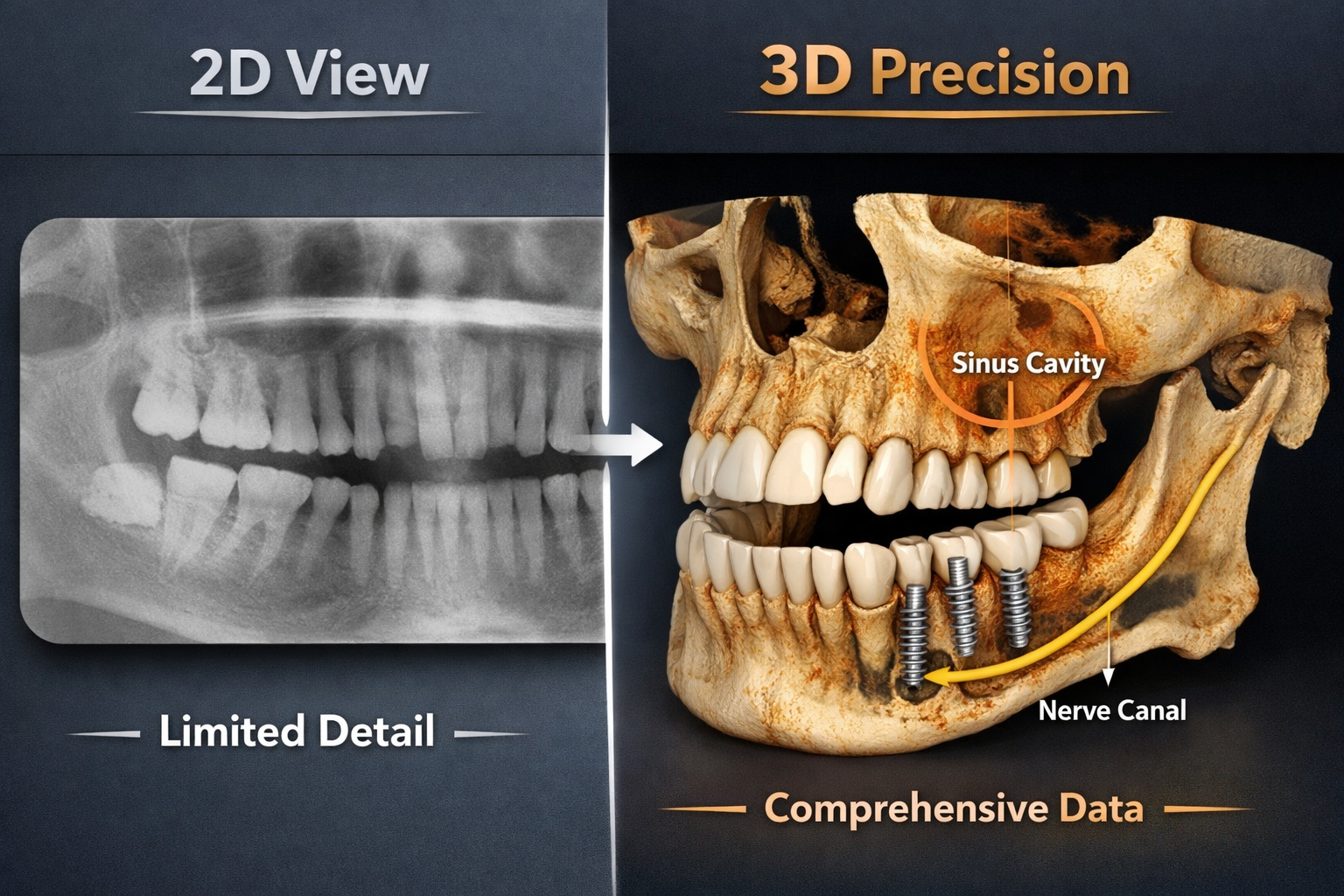
The fundamental difference between a dental implant CT scan and an X-ray lies in the dimension of the images they produce: traditional X-rays provide a two-dimensional (2D) view, while a dental implant CT scan (specifically Cone Beam Computed Tomography or CBCT) generates detailed three-dimensional (3D) images. This distinction is critical for dental implant planning, as 3D imaging offers an unparalleled view of complex oral structures.
Traditional dental X-rays, such as panoramic or periapical X-rays, capture flat images of your teeth and surrounding bone. While useful for detecting cavities, checking root health, or viewing the general alignment of teeth, they present a compressed view of the mouth. This means that structures can overlap, and the true depth, width, and density of bone—all critical factors for successful dental implant placement—cannot be accurately assessed [6].
In contrast, a dental CT scan (CBCT) rotates around the patient’s head, capturing hundreds of images from various angles in a single pass. These images are then digitally reconstructed to create a precise 3D model of the patient’s oral and maxillofacial anatomy [2, 4]. This 3D rendering allows dentists to visualize:
- Bone structure and density: Essential for determining if there is adequate bone to support a dental implant.
- Nerve pathways: Crucial for avoiding nerve damage during implant surgery, especially in the lower jaw.
- Sinus cavities: Important for planning implants in the upper jaw and preventing sinus perforations [2, 6].
- Presence of any hidden pathologies: Such as cysts or tumors that might impact treatment.
For anyone considering tooth replacement options, particularly dental implants, this detailed 3D information from a CBCT scan is indispensable for truly informed treatment planning and patient safety.
Why is a Dental Implant CT Scan Preferred for Implant Planning Over an X-ray?
A dental implant CT scan is overwhelmingly preferred for implant planning over a traditional X-ray because it provides a level of detail and accuracy that 2D imaging simply cannot match, directly impacting the success and safety of the implant surgery process. This advanced imaging allows dentists to develop a precise, customized treatment plan, mitigating risks and optimizing outcomes.
The advantages of CBCT in dental implantology are numerous and directly contribute to superior patient care:
- Unrivaled Accuracy: CBCT scans offer exceptional accuracy, typically reaching ±0.1 mm, without the distortion that can affect traditional panoramic X-rays (which can be distorted up to 25% in size) [1]. This precision is vital for planning the exact size and angulation of the implant.
- Comprehensive Anatomical Assessment: Unlike X-rays that only visualize teeth and basic bone outlines, CBCT captures detailed images of the entire bone structure, including cortical and cancellous bone, nerve pathways, and sinus cavities. This allows the dentist to identify optimal implant positioning while carefully avoiding vital anatomical structures [2, 6].
- Improved Success Rates: Meticulous pre-surgical planning made possible by CBCT significantly increases the success rates of dental implants [3]. By understanding the exact bone available and identifying potential challenges beforehand, the dental team can anticipate and prepare for complexities, leading to a more predictable procedure.
- Reduced Surgical Time and Anesthesia: With complete anatomical visibility provided by a CBCT scan, dentists can perform implant surgery more efficiently. This often leads to reduced surgical time and a decreased duration of anesthesia, making the procedure more comfortable for the patient [2].
- Minimized Complications: By clearly visualizing nerve paths and sinus locations, CBCT helps reduce the risk of procedural complications such as nerve injury or sinus perforation [2]. This focus on patient safety is paramount, especially for complex cases or individuals with significant bone loss requiring bone grafting.
For patients in Dallas seeking dental implants, choosing a practice that utilizes CBCT for initial assessments demonstrates a commitment to advanced care and long-term oral health. This thorough preparation contributes to the durability and stability of the implant, ensuring it integrates successfully with the jawbone.
Understanding Radiation Exposure: Dental Implant CT Scan vs X-ray
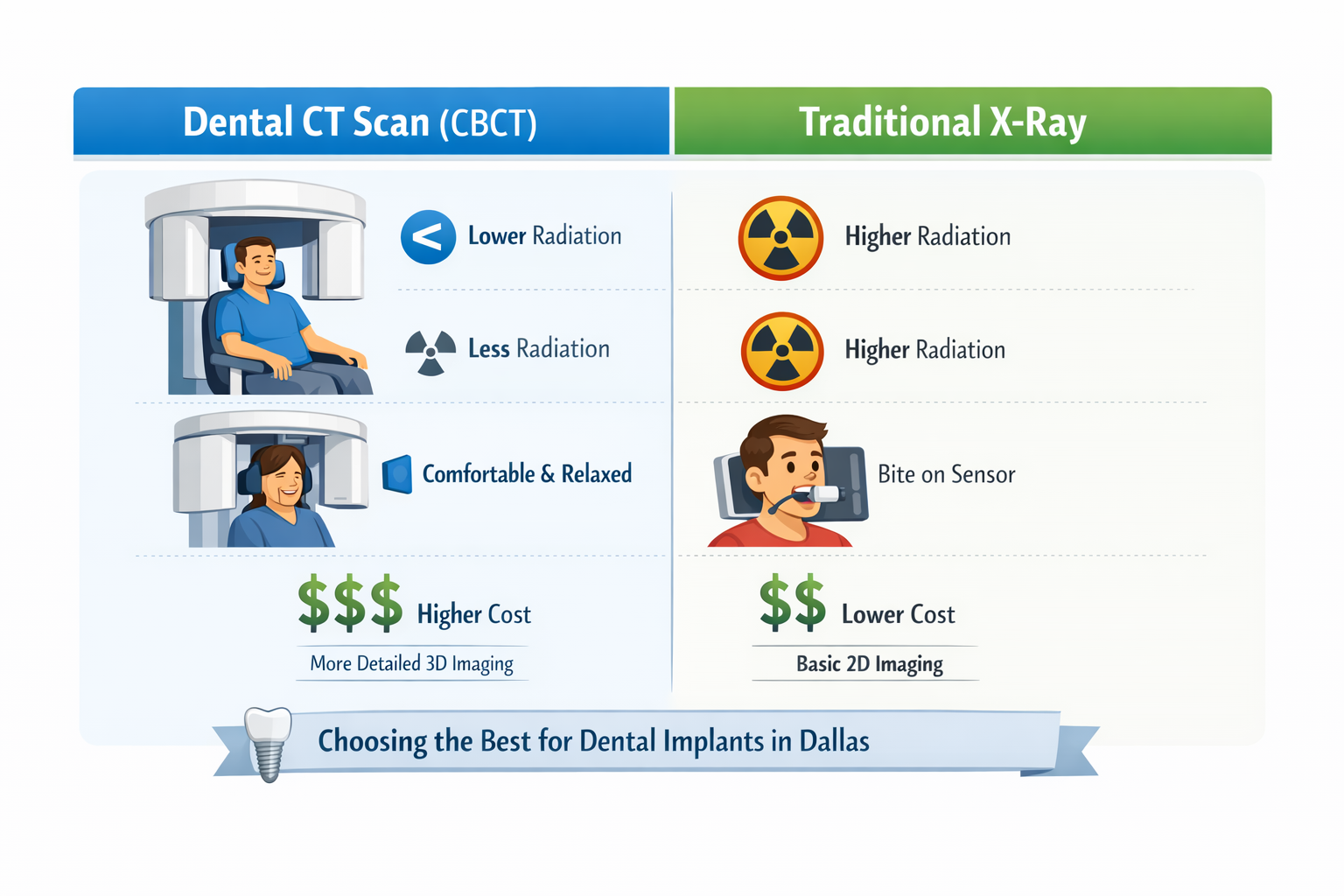
When considering a dental implant CT scan vs X-ray, patients often have questions about radiation exposure. It’s reassuring to know that while both involve radiation, modern dental CT scan (CBCT) technology is designed with patient safety in mind, offering a highly beneficial diagnostic tool with optimized radiation levels.
Historically, the perception was that CT scans delivered significantly more radiation than X-rays. However, Cone Beam CT technology specifically developed for dentistry utilizes a cone-shaped X-ray beam, which significantly minimizes radiation exposure compared to medical-grade CT scans or even traditional film X-rays [5]. In fact, some sources indicate that CBCT can minimize radiation exposure by approximately 98% compared to traditional X-rays [2]. Another perspective notes that modern CBCT scans involve slightly higher radiation than a single traditional X-ray but are optimized for patient safety [5]. The key is that the clinical benefits for dental implant planning often outweigh the minimal radiation risk.
Here’s a breakdown of considerations regarding radiation:
- Targeted Imaging: CBCT scans are highly targeted to the oral and maxillofacial regions, meaning only the necessary area is exposed to radiation, unlike older, broader CT scans [7].
- Reduced Scan Time: A typical CBCT scan completes in less than 15 seconds, and sometimes as quickly as 10-40 seconds, capturing all necessary 3D data in a single rotation [1, 2, 5]. This rapid capture limits the overall radiation dose.
- Diagnostic Necessity: For procedures like dental implant surgery, the detailed 3D information from a CBCT scan is not just helpful but often essential for preventing complications and ensuring long-term success. The ability to precisely identify optimal implant placement, avoid critical anatomical structures, and assess bone quality far outweighs the minimal radiation exposure [3].
- Digital X-rays: Traditional digital X-rays also represent a significant advancement, reducing radiation compared to older film X-rays. They are still a valuable tool for routine check-ups and basic diagnostics [7].
A dental professional will always weigh the diagnostic benefits against any potential risks, adhering to the “ALARA” principle (As Low As Reasonably Achievable) for radiation exposure. For patients exploring dental implants in Dallas, a consultation with a dentist will include a discussion of all imaging options and their safety profiles.
The Role of CT Scans in Achieving Optimal Dental Implant Outcomes
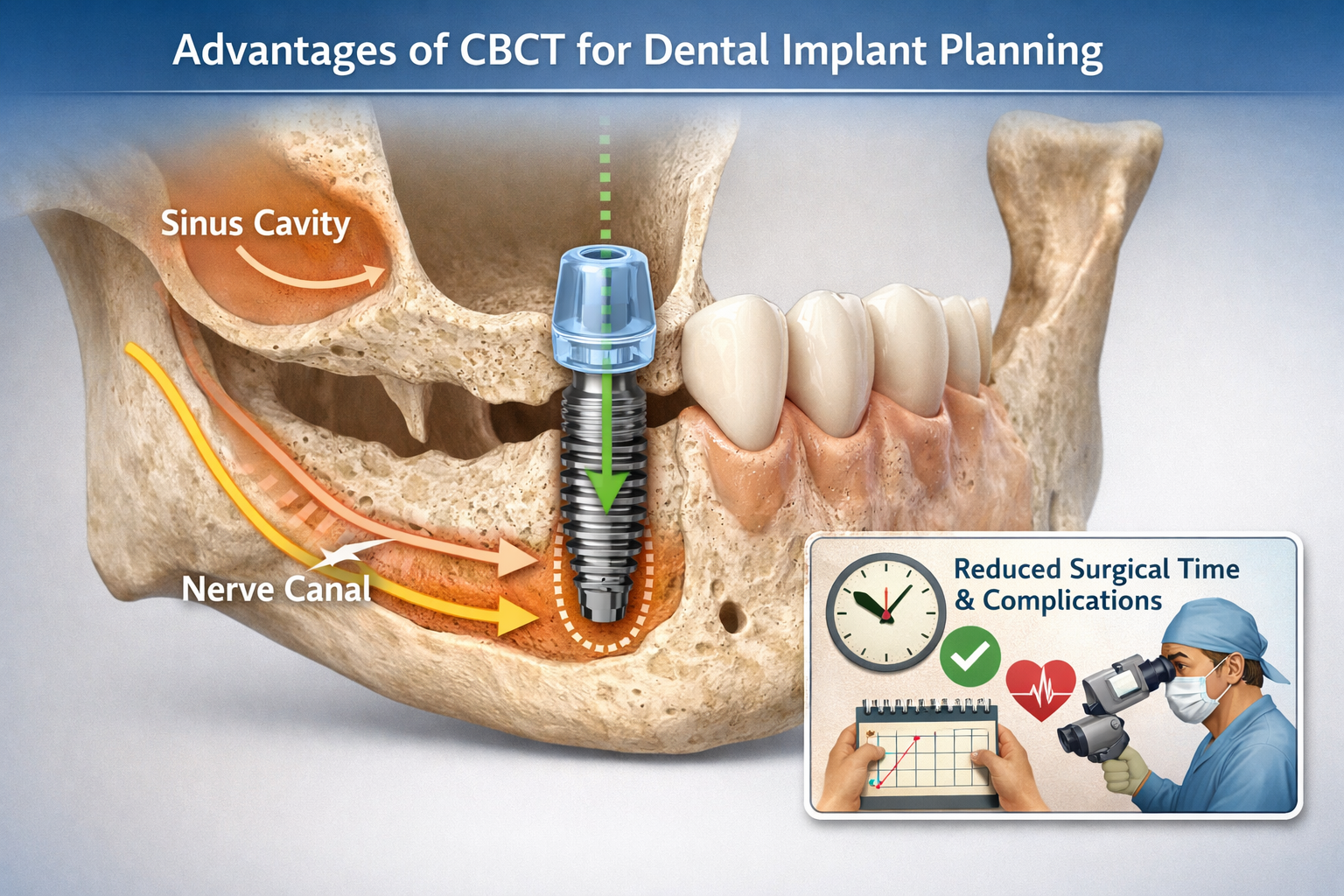
The role of CT scans, specifically Cone Beam Computed Tomography (CBCT), in achieving optimal dental implant outcomes is foundational. By providing a detailed 3D blueprint of the patient’s oral anatomy, CBCT empowers dental professionals to plan and execute implant surgery with unparalleled precision, directly contributing to the long-term success and stability of the dental implants.
This advanced imaging technology allows for several critical planning steps that enhance the success of the dental implant procedure:
- Precise Site Selection: CBCT enables the dentist to identify the ideal location for each implant, taking into account bone quantity, quality, and the proximity of vital structures like nerves, blood vessels, and sinus cavities [2]. This precision helps prevent complications such as nerve damage or sinus perforation, which can significantly impact patient safety and recovery.
- Customized Implant Sizing and Angulation: With 3D visualization, the dental team can accurately determine the optimal length, width, and angulation of the dental implant to maximize stability and integration with the jawbone. This customization is crucial for the implant to withstand biting forces and function naturally [2].
- Pre-Surgical Risk Assessment: The comprehensive view offered by a CBCT scan allows the dentist to anticipate potential challenges before surgery. This includes identifying areas requiring bone grafting or assessing the need for specialized techniques, leading to a more predictable and smoother implant surgery process. For instance, if insufficient bone density is observed, a bone graft can be planned proactively, improving the chances of successful osseointegration.
- Guided Surgery Planning: Many dentists utilize the 3D data from CBCT scans to create surgical guides. These guides are custom-made templates that fit over the patient’s teeth or bone and dictate the exact position, angle, and depth for implant placement during surgery. This technology transforms the procedure into a highly controlled and minimally invasive process.
- Enhanced Patient Communication: The visual clarity of 3D images helps patients better understand their anatomy and the proposed treatment plan. This transparency fosters trust and allows for more informed decision-making regarding their tooth replacement options. For more information on what to expect during this initial stage, consider reviewing our guide on Dental Implant Consultation: What to Expect in 2026.
Ultimately, incorporating CBCT into the pre-surgical phase significantly increases the predictability and success of dental implant procedures, ensuring patient safety and promoting long-term oral health.
Patient Comfort and Convenience: CBCT vs. Traditional X-rays
When comparing a dental implant CT scan vs X-ray from a patient’s perspective, factors like comfort and convenience play a significant role. While both are generally well-tolerated, modern CBCT systems often offer a more comfortable and less intrusive experience, especially for individuals who may feel anxious during dental procedures.
Here’s how CBCT generally compares to traditional X-rays in terms of patient experience:
- No Intra-Oral Sensors: One of the most common discomforts with traditional X-rays, particularly bitewings or periapical X-rays, involves biting down on awkward, rigid sensors placed inside the mouth. CBCT scans eliminate the need for these intra-oral sensors, as the patient simply sits or stands still while the machine rotates around their head [2]. This can be a major relief for patients with a strong gag reflex or small mouths.
- Open Design: Unlike medical CT or MRI machines that can be enclosed and potentially induce claustrophobia, dental CBCT units are typically open-design scanners. Patients remain in an open space, which contributes to a more relaxed experience [1]. This openness is particularly beneficial for those who may be “terrified of dental implants” and the associated procedures.
- Quick Scan Time: CBCT scans are remarkably fast, often completing in under 15 seconds [1]. This rapid imaging means less time spent sitting still and a quicker overall appointment, contributing to a more convenient experience. While standard X-rays are also quick, the comprehensive data gathered in a single CBCT scan often makes it a more efficient use of time for complex planning.
- Reduced Need for Multiple Images: Because a single CBCT scan captures a vast amount of 3D data, it can often replace the need for multiple individual X-rays, streamlining the diagnostic process and reducing overall chair time.
- Easier for Special Needs Patients: The quick, non-invasive nature of CBCT can also be advantageous for patients with special needs, children, or those who find it challenging to hold still for extended periods or tolerate intra-oral devices. For families researching options for children, understanding these nuances can be helpful. While dental implants are less common for children, the principles of comfort apply to various dental imaging needs.
For those considering dental implants in Dallas, these comfort and convenience factors add to the overall positive experience, making the initial assessment phase as stress-free as possible.
Cost Considerations: Dental Implant CT Scan vs X-ray
When evaluating the dental implant CT scan vs X-ray debate, cost is a natural consideration for patients. Generally, a dental implant CT scan (CBCT) will have a higher upfront cost than a traditional 2D X-ray due to the advanced technology and the extensive data it provides. However, viewing this cost solely in isolation can be misleading, as the benefits of CBCT often lead to overall savings and improved outcomes in the long run.
Here’s a breakdown of cost considerations:
- Initial Cost: A CBCT scan typically costs more than a standard panoramic or periapical X-ray. This difference reflects the investment in sophisticated equipment, specialized software for 3D reconstruction, and the enhanced diagnostic capabilities. While exact prices vary, patients should expect a CBCT scan to be in a higher price range than basic X-rays.
- Value for Investment: For complex procedures like dental implant placement, the higher initial cost of a CBCT scan is often viewed as a worthwhile investment. The detailed 3D information allows for:
- Reduced Risk of Complications: By precisely mapping out anatomy, CBCT significantly lowers the chance of unforeseen issues during surgery, which could otherwise lead to costly follow-up treatments or repairs [2].
- Improved Success Rates: Accurate planning with CBCT leads to more successful implant integration, reducing the likelihood of implant failure and the need for costly re-treatment [3].
- More Efficient Surgery: With a clear roadmap, the surgical procedure can be more streamlined, potentially reducing overall chair time.
- Avoiding Unnecessary Procedures: The detailed diagnostics can sometimes reveal underlying conditions that might have been missed by 2D X-rays, allowing for appropriate pre-treatment and preventing more complex issues down the line.
- Insurance Coverage: Coverage for dental imaging, whether X-rays or CBCT, varies widely by dental insurance plans. Some plans may cover a portion of CBCT scans if deemed medically necessary for a procedure like dental implants, while others might have limitations. It is always recommended to check with your insurance provider and the dental office regarding coverage details.
- Overall Treatment Cost Impact: While the CBCT itself adds to the diagnostic portion of the implant cost, its role in preventing errors and ensuring a smooth procedure can contribute to a more predictable overall implant cost in Dallas. Avoidance of complications often saves patients money and discomfort in the long term. For more information on financing and understanding the broader financial picture of dental implants, resources like Dallas Dental Implant Financing Options | Payment Plans 2025 can be helpful.
Patients exploring tooth replacement options should discuss the necessity and cost of imaging with their dentist during the initial consultation. An experienced dental professional will explain why a specific imaging type is recommended for their unique case, balancing diagnostic needs with patient financial considerations.
When is Each Imaging Type Most Appropriate?
Determining when a dental implant CT scan vs X-ray is most appropriate depends largely on the complexity of the dental issue and the specific information required for diagnosis and treatment planning. Both imaging modalities have distinct applications within dentistry.
Traditional Dental X-rays (2D Imaging) are generally appropriate for:
- Routine Check-ups and Diagnostics: For detecting common issues like cavities, bone loss around existing teeth, periodontal disease, and assessing wisdom teeth development.
- Simple Procedures: For straightforward extractions, root canal treatments, or evaluating the general health of teeth and surrounding bone structures.
- Post-Treatment Follow-up (General): To monitor the healing of an extraction site or the general health of a restored tooth. Our guide on Optimal Dental Implant X-Ray Frequency: Your 2026 Guide provides more insight into routine follow-up.
- Screening: To get a quick, overall view of the entire mouth (panoramic X-ray) or detailed views of individual teeth (periapical X-ray).
Dental Implant CT Scans (CBCT, 3D Imaging) are most appropriate for:
- Dental Implant Planning: This is where CBCT truly excels. It provides the essential 3D detail needed to assess bone density and volume, locate nerve canals and sinus cavities, and plan the precise placement of dental implants to maximize success and minimize complications [2, 3].
- Complex Extractions: For impacted wisdom teeth close to nerves or other vital structures, CBCT offers a clearer picture to plan a safer extraction.
- Orthodontic Treatment Planning: To assess jaw relationships, impacted teeth, and root positions more accurately than 2D images.
- Diagnosis of Oral Pathologies: To precisely locate and evaluate cysts, tumors, or other anatomical abnormalities that require a 3D view for accurate diagnosis and treatment planning.
- Endodontic Treatment Planning: For complex root canal cases, CBCT can help identify extra canals or unusual anatomy.
- Periodontal Disease Assessment: To evaluate the extent of bone loss in three dimensions, especially in complex cases.
In summary, if the situation requires a detailed understanding of three-dimensional anatomical relationships, particularly for surgical procedures or complex diagnoses, a CBCT scan is the superior choice. For more routine, less invasive evaluations, traditional X-rays remain a valuable and effective diagnostic tool. Your dentist in Dallas will recommend the appropriate imaging based on your individual oral health needs and treatment goals.
Conclusion
Choosing between a dental implant CT scan and an X-ray is a critical decision in the journey toward restoring your smile with dental implants. While traditional X-rays offer valuable two-dimensional insights for routine dental care, the unmatched precision and comprehensive three-dimensional data provided by a dental CT scan (CBCT) are indispensable for successful dental implant planning in 2026.
For patients in Dallas considering tooth replacement options, especially dental implants, a CBCT scan offers numerous advantages. It provides a detailed blueprint of your oral anatomy, allowing your dental team to accurately assess bone structure, identify nerve pathways, and map out sinus cavities. This meticulous planning ensures optimal implant placement, significantly increases success rates, reduces surgical time, and minimizes potential complications, prioritizing your long-term oral health and patient safety.
We encourage you to prioritize an informed decision-making process. During your consultation with a dentist, inquire about the diagnostic tools they utilize. A practice committed to advanced imaging like CBCT demonstrates a dedication to precision, patient comfort, and the highest standards of care for dental implant procedures. By understanding the distinction between a dental implant CT scan vs X-ray, you are taking a proactive step towards achieving a confident, lasting smile.
Related Reading
- Dental Implant Consultation: What to Expect in 2026
- Optimal Dental Implant X-Ray Frequency: Your 2026 Guide
- Terrified of Dental Implants? Conquer Your Fear in 2026
FAQ
Is a CT scan necessary for every dental implant procedure?
A dental CT scan (CBCT) is highly recommended for nearly all dental implant procedures because it provides crucial 3D information about bone volume, nerve locations, and sinus cavities that 2D X-rays cannot, enabling precise planning and reducing risks.
Is a dental CT scan safe?
Yes, modern dental CT scans (CBCT) are designed for patient safety, utilizing a focused cone beam that significantly minimizes radiation exposure compared to medical CT scans, often comparable to or slightly more than a full mouth series of traditional X-rays [2, 5].
How long does a dental implant CT scan take?
A dental implant CT scan is very quick, typically completing in less than 15 seconds, and sometimes as quickly as 10-40 seconds, capturing all necessary 3D data in a single, fast rotation [1, 2, 5].
Will my dental insurance cover a CBCT scan?
Coverage for CBCT scans varies by insurance plan. Many plans will cover a portion if deemed medically necessary for a procedure like dental implant placement. It’s best to check with your specific provider and dental office for details.
Can an X-ray truly replace a CBCT scan for dental implant planning?
No, a traditional 2D X-ray cannot truly replace a 3D CBCT scan for dental implant planning. X-rays provide limited, flat images, whereas CBCT offers comprehensive three-dimensional views essential for accurate bone assessment, nerve mapping, and precise implant placement [1, 2, 6].
Is a dental CT scan enclosed like an MRI?
No, dental CT scan (CBCT) machines are typically open-design scanners, meaning you sit or stand in an open space, which is generally more comfortable and less claustrophobic than an enclosed MRI or medical CT machine [1].
What information does a CBCT scan provide that an X-ray doesn’t?
A CBCT scan provides detailed 3D information on bone density and volume, the exact location of nerve pathways and sinus cavities, and precise measurements without distortion, which are critical for safe and effective dental implant placement [1, 2, 6].
Why is patient comfort better with a CBCT scan than traditional X-rays?
CBCT scans often offer better patient comfort because they don’t require biting down on uncomfortable intra-oral sensors, and the scan is completed very quickly in an open-design machine [2, 1].
What is the primary benefit of using CBCT for dental implants in Dallas?
The primary benefit of using CBCT for dental implants in Dallas is enhanced patient safety and improved success rates through precise pre-surgical planning, which minimizes complications and optimizes the long-term health and stability of the implant [2, 3].
Does a dental CT scan help reduce surgical time?
Yes, by providing dentists with a complete anatomical blueprint, a CBCT scan allows for more efficient and predictable implant surgery, often leading to reduced surgical time and decreased anesthesia duration [2].
References
[1] 58 Ct Scans Improve Dental Implant Surgery – https://dentistryofnaples.com/blog/58-ct-scans-improve-dental-implant-surgery
[2] The Importance Of 3d Ct Scan For Dental Implant Surgery – https://rockvilledentalarts.com/the-importance-of-3d-ct-scan-for-dental-implant-surgery/
[3] What Is Dental Cone Beam Ct Scan And When Its Recommended – https://www.sncdentalbh.com/blog/what-is-dental-cone-beam-ct-scan-and-when-its-recommended/
[4] Cbct Scan Vs Traditional X Ray – https://www.aspiredental.com/cbct-scan-vs-traditional-x-ray/
[5] How Cbct Differs From Traditional X Ray Technology – https://www.valleyhillsdentistry.com/blog/2025/06/how-cbct-differs-from-traditional-x-ray-technology
[6] 3d Dental Scans Vs Traditional X Rays Key Differences – https://www.girgisortho.com/3d-dental-scans-vs-traditional-x-rays-key-differences/
[7] Digital X Ray Vs Cbct Understanding Radiation Detail Purpose – https://dentistkatytx.com/digital-x-ray-vs-cbct-understanding-radiation-detail-purpose/
[8] Is 3d Advanced Imaging Better Than X Ray In Dentistry – https://www.periohealth.com/is-3d-advanced-imaging-better-than-x-ray-in-dentistry/
Leave a Reply
Share your thoughts or ask a question about dental implants. Your email address will not be published.