

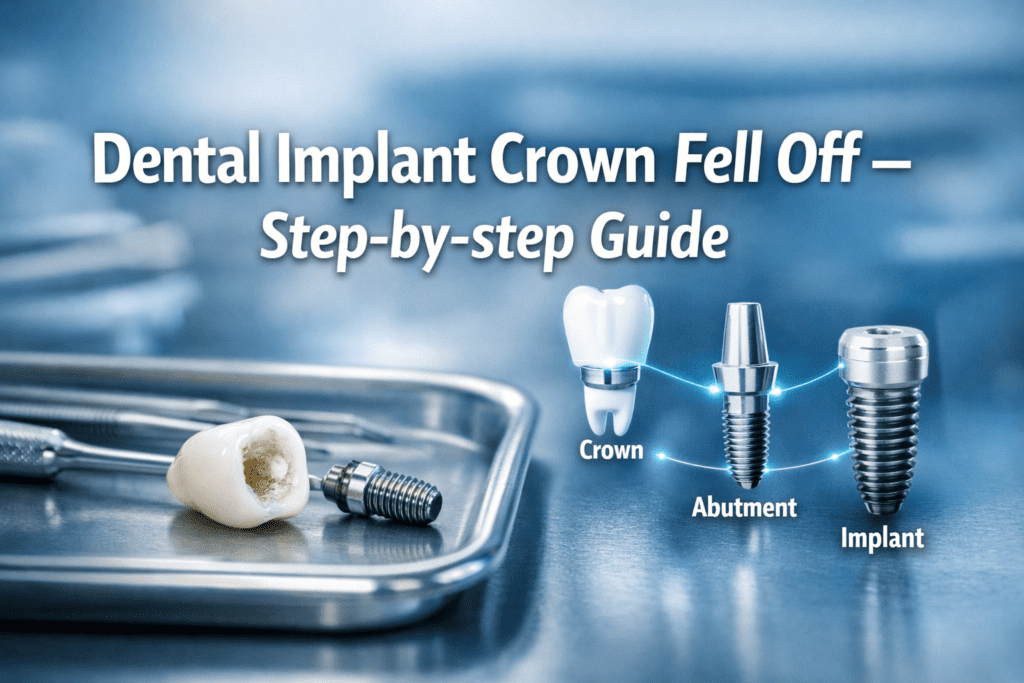
Experiencing a dental implant crown falling off can be a startling and concerning event. One moment you’re going about your day, and the next, a crucial piece of your smile is detached. This can immediately lead to anxiety about pain, cost, and the integrity of your dental work. If you find yourself in this situation, a clear, actionable plan is essential. This comprehensive “Dental Implant Crown Fell Off – Step-by-step Guide” aims to provide you with expert advice, helping you understand what to do immediately, what might have caused the issue, and what to expect from your dental professional. Don’t panic; with the right steps, this common dental issue can often be resolved effectively.
Key Takeaways
- Don’t Panic, Preserve the Crown: Immediately secure the dislodged crown to prevent damage or loss. Avoid trying to reattach it yourself.
- Contact Your Dentist Promptly: This is the most crucial step. Schedule an emergency or urgent appointment to assess the situation and plan for repair.
- Understand Potential Causes: Crowns can detach due to cement failure, loose abutment screws, trauma, or material issues. Identifying the cause helps in proper treatment.
- Avoid Self-Treatment: Never use household adhesives or attempt to force the crown back into place, as this can cause further damage to the implant or surrounding tissues.
- Follow Post-Repair Instructions: Adhere strictly to your dentist’s guidelines after the crown is reattached or replaced to ensure long-term success.
What to Do Immediately When Your Dental Implant Crown Fell Off – Step-by-step Guide
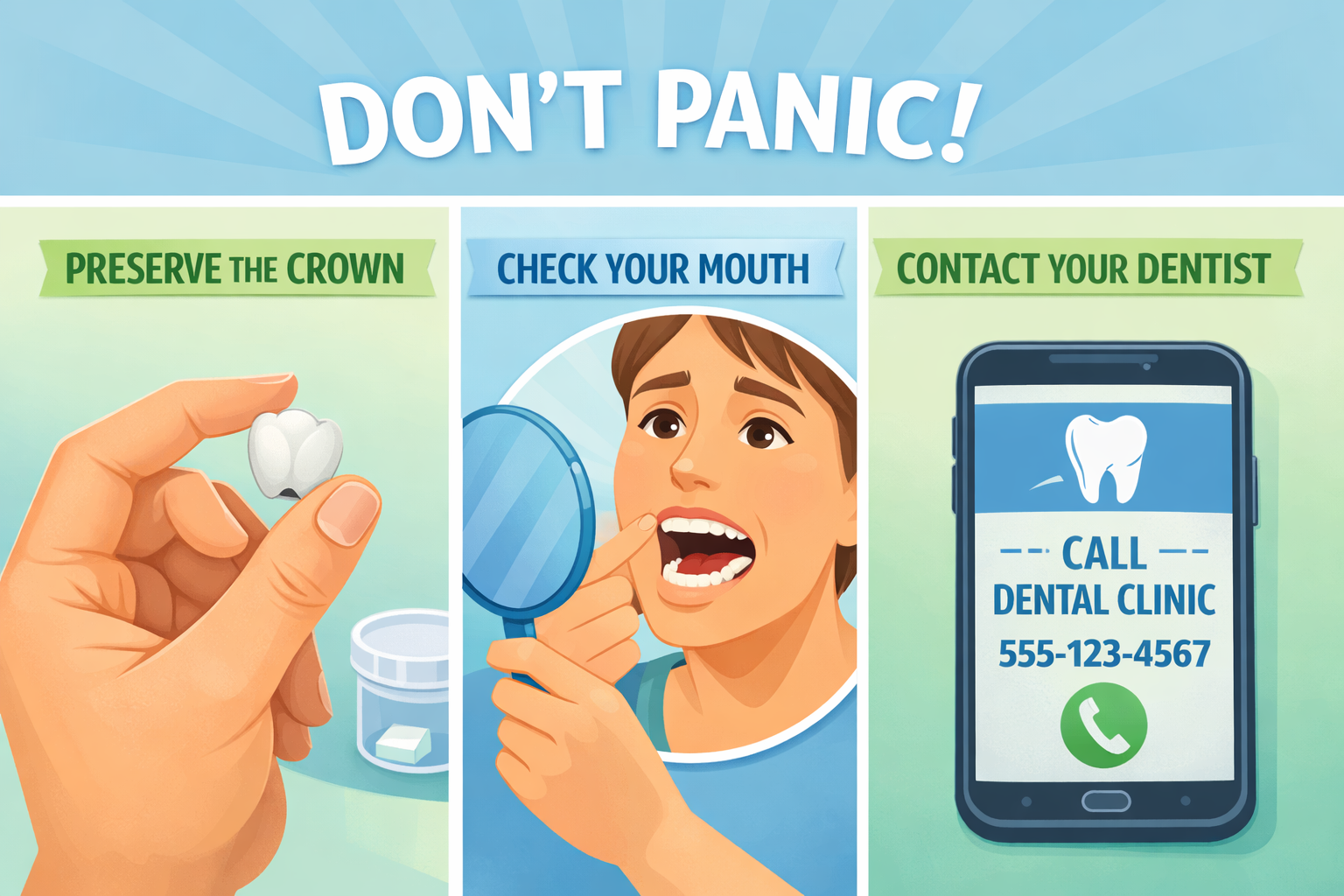
The moment your dental implant crown detaches can be alarming, but acting quickly and correctly is crucial for the best outcome. Here’s a precise, step-by-step guide on what to do immediately.
Step 1: Remain Calm and Assess the Situation
Finding yourself with a dislodged crown can certainly cause a momentary panic. However, it’s vital to stay calm. Most cases of a dental implant crown falling off are repairable, especially if you handle the situation correctly. Take a deep breath and gently assess what has happened.
- Check for Pain or Bleeding: Is there any pain around the implant site? Is there any bleeding from your gums? While usually painless, any discomfort should be noted for your dentist.
- Identify the Parts: Did just the crown come off, or did it bring the abutment (the connector piece) with it? Understanding which components have detached will be helpful information for your dentist.
Step 2: Carefully Retrieve and Preserve the Crown
Your dental implant crown is a valuable piece of restorative dentistry. It’s often custom-made to match your existing teeth and fit precisely onto your implant abutment.
Handle with Care: If the crown is in your mouth, gently remove it. Be careful not to swallow it. Use clean hands or a tissue.
Clean and Store Safely: Rinse the crown gently with lukewarm water, being careful not to scrub or damage any internal components. Do not use harsh chemicals or strong brushes. Place the clean crown in a small, sealed container or a zip-lock bag. You can put it in a small amount of water, saline solution, or even milk to keep it hydrated, especially if it’s an older crown that might be prone to drying out. Store it in a safe place where it won’t be lost or damaged. This could be a medicine cabinet or a drawer.
“Preserving the dislodged crown correctly is often the first step towards a successful reattachment. Treat it with the same care you would a precious jewel.”
Step 3: Inspect Your Mouth
After securing the crown, take a moment to look inside your mouth.
- Examine the Implant Site: Look at the exposed area where the crown used to be. You will likely see the metal abutment (the post that connects the crown to the implant) or, in some cases, the top of the dental implant itself if the abutment also came off.
- Look for Damage: Are there any sharp edges on the remaining abutment or implant? Is there any redness, swelling, or signs of infection around the gum tissue? Note any unusual findings.
Step 4: Avoid Attempting to Reattach the Crown Yourself
This is a critical warning. While it might be tempting to try and glue or force the crown back into place, do not do it.
- Risk of Damage: You could damage the crown, the abutment, or even the underlying implant. Improper reattachment can lead to an incorrect bite, further loosening, or even fractures.
- Infection Risk: Using non-dental adhesives can introduce harmful bacteria into your mouth, leading to infection.
- Temporary Solutions: If you absolutely must wear the crown for a very short period (e.g., for an important meeting), some pharmacies sell temporary dental cement. However, this should only be used as a last resort and with extreme caution, never as a permanent fix, and always inform your dentist. Your dentist is the only one who can properly assess and reattach or replace the crown.
Step 5: Contact Your Dentist Immediately
This is the most important step in our “Dental Implant Crown Fell Off – Step-by-step Guide.” As soon as possible, reach out to your dental professional.
- Explain the Situation: Clearly state that your dental implant crown has fallen off.
- Request an Urgent Appointment: Emphasize the urgency. Many dental offices reserve slots for emergency situations. If your regular dentist isn’t available, they might be able to refer you to a colleague or an emergency dental clinic.
- Provide Details: Inform them if you have the crown, if there’s any pain, or if any other components (like the abutment) also detached.
- Contact Information: If you are in the Dallas area, you can contact our office for expert assistance here.
Step 6: Manage Discomfort and Diet Until Your Appointment
While waiting for your dental visit, you might experience some sensitivity or find eating difficult.
- Pain Relief: If you experience mild pain, over-the-counter pain relievers like ibuprofen or acetaminophen can help.
- Soft Diet: Stick to soft foods that don’t require much chewing. Avoid hard, sticky, or crunchy foods that could further irritate the exposed abutment or implant site, or potentially get stuck. For ideas, check out our guide on 50 Soft Foods After Dental Implant Surgery.
- Oral Hygiene: Continue to brush and floss gently around the implant site, being careful not to disturb the area. You can also rinse with warm salt water to keep the area clean and reduce inflammation.
By following these immediate steps, you significantly increase the chances of a smooth and successful resolution to your dental implant crown issue.
Understanding Why Your Dental Implant Crown Fell Off and How it’s Repaired
A dental implant crown falling off is not an uncommon occurrence, and understanding the underlying reasons can help prevent future issues and inform your treatment plan. Here’s an in-depth look at common causes and typical repair procedures.
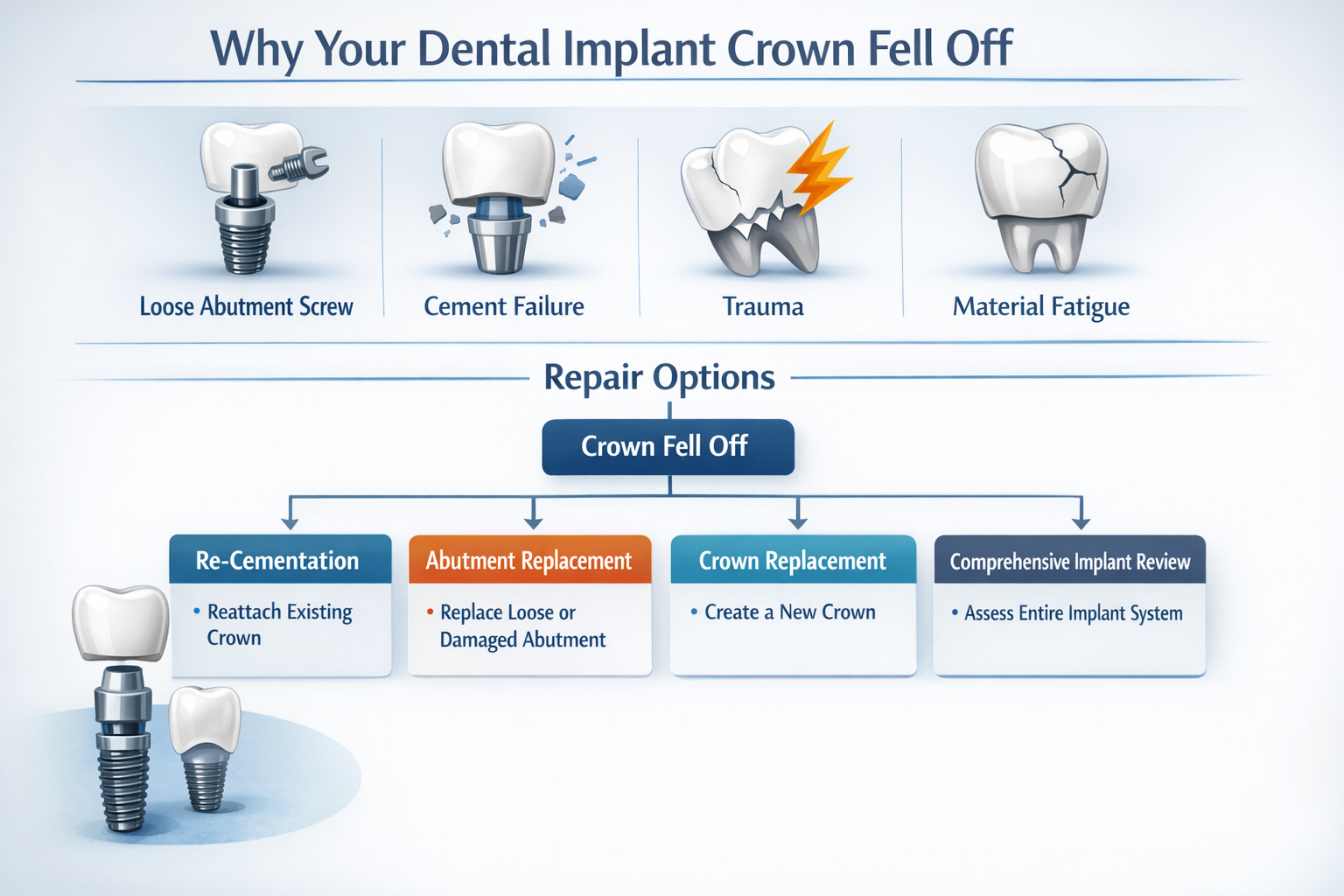
Common Reasons a Dental Implant Crown Fell Off
There are several primary reasons why a dental implant crown might become dislodged.
1. Cement Failure
- How it happens: Many implant crowns are cemented onto the abutment. Over time, or due to dietary habits, chewing forces, or even poor initial bonding, the dental cement can degrade or lose its adhesive strength.
- What it means: This is often the simplest issue to fix. The crown itself might be perfectly intact, requiring only a thorough cleaning and re-cementation.
- Prevention: Regular dental check-ups can help identify early signs of cement compromise.
2. Loose Abutment Screw
- How it happens: The abutment, which is the connector between the implant (the part in your bone) and the crown, is typically secured to the implant with a small screw. This screw can sometimes loosen over time due to chewing forces, grinding, or clenching. When the abutment is loose, the crown attached to it will also feel loose or eventually fall off.
- What it means: Your dentist will need to access the screw, tighten it, and then reattach the crown. Sometimes, if the screw is damaged, it may need to be replaced. You can learn more about the abutment placement process.
- Prevention: Wearing a nightguard if you clench or grind your teeth can help. Regular professional cleanings and examinations allow your dentist to check screw tightness.
3. Trauma or Injury
- How it happens: A direct blow to the mouth, biting down on something unexpectedly hard (like an olive pit), or an accident can exert excessive force on the crown, causing it to detach.
- What it means: The crown might be salvageable, or it could be damaged, requiring a new one. The underlying abutment and implant will also need to be checked for structural integrity.
- Prevention: Wearing a mouthguard during sports or avoiding exceptionally hard foods can help.
4. Material Fatigue or Damage to the Crown or Abutment
- How it happens: Like any material, the crown or abutment can wear down or become damaged over years of use. Cracks in the porcelain, metal fatigue in the abutment, or even a fracture of the crown itself can lead to detachment.
- What it means: If the crown or abutment is damaged, it will likely need to be replaced rather than simply reattached. This might involve taking new impressions for a custom abutment-supported porcelain ceramic crown.
- Prevention: Good oral hygiene, avoiding abrasive toothpastes, and regular dental check-ups can prolong the life of your crown.
5. Implant Complications (Less Common)
- How it happens: In rare cases, issues with the dental implant itself, such as peri-implantitis (an infection around the implant) or implant failure, can manifest as a loose or detached crown. However, in these scenarios, there are usually other symptoms like pain, swelling, mobility of the entire implant, or bone loss. If you suspect bone loss, it’s crucial to consult a specialist, especially if you’re dealing with 90 percent bone loss in teeth.
- What it means: This is a more complex issue requiring thorough diagnosis, potentially including X-rays and specialized treatment for the implant.
- Prevention: Excellent oral hygiene, regular dental visits, and avoiding smoking are key to implant longevity.
Repair Options for a Dislodged Dental Implant Crown
Once your dentist has thoroughly examined your situation, they will determine the best course of action.
1. Re-cementation
- When: If the crown itself is intact, and the primary issue was cement failure.
- Process: Your dentist will clean the inside of the crown and the abutment meticulously, removing all old cement. They will then apply new, strong dental cement and precisely re-seat the crown onto the abutment. They will check your bite to ensure proper occlusion.
- Outcome: This is usually a quick and straightforward procedure, restoring your smile immediately.
2. Abutment Screw Tightening or Replacement
- When: If a loose or fractured abutment screw is the culprit.
- Process: The dentist will access the screw through a small hole in the top of the crown (if it’s a screw-retained crown) or by removing the crown (if it’s cemented). They will tighten the screw to the manufacturer’s specified torque or replace it if it’s damaged. The crown is then reattached.
- Outcome: Resolves looseness, restoring stability to the crown.
3. Crown Replacement
- When: If the original crown is fractured, chipped beyond repair, ill-fitting, or if there’s significant damage that prevents re-cementation or reuse.
- Process: This involves taking new impressions of your mouth, possibly making a temporary crown, and sending the impressions to a dental lab to fabricate a new, custom permanent crown. Once the new crown is ready, it will be cemented or screwed into place.
- Outcome: A brand-new, perfectly fitting crown, often with improved aesthetics or strength. Learn more about the complete guide to dental implant crowns.
4. Abutment Replacement
- When: If the abutment itself is damaged, fractured, or if a different type of abutment is needed to achieve a better outcome (e.g., for aesthetic reasons or improved stability).
- Process: The old abutment is removed, and a new one is custom-selected or fabricated and attached to the implant. Then, the existing crown (if undamaged) or a new crown is placed over it.
- Outcome: A secure foundation for the crown, ensuring long-term stability.
5. Comprehensive Implant Review and Treatment
- When: In rare cases where the implant itself is compromised, perhaps due to infection or mobility. This would usually be accompanied by other symptoms like persistent pain or swelling.
- Process: This might involve deep cleaning, antibiotic treatment for peri-implantitis, or, in severe cases, removal and replacement of the implant.
- Outcome: Addresses the root cause of implant failure to preserve oral health. This is a more involved process and underscores the importance of prompt professional care when a “Dental Implant Crown Fell Off – Step-by-step Guide” situation arises.
Your dentist will conduct a thorough examination, including X-rays if necessary, to accurately diagnose why your dental implant crown fell off and recommend the most appropriate and effective treatment plan.
The Importance of Professional Dental Care in 2026
In 2026, the field of dental implantology continues to advance, offering increasingly sophisticated and reliable solutions for tooth replacement. However, even with the best technology and techniques, it’s crucial to understand that dental implants require professional oversight and care. When your “Dental Implant Crown Fell Off – Step-by-step Guide” becomes a reality, the role of your dentist is paramount.
Why You Need a Dentist, Not DIY Solutions
Attempting to fix a dislodged dental implant crown yourself, perhaps with household glues or by forcing it back into place, can lead to severe consequences:
- Further Damage to Components: You risk fracturing the crown, stripping the abutment screw, or even damaging the implant itself, leading to more complex and costly repairs.
- Infection: Non-sterile adhesives or improper handling can introduce bacteria, leading to peri-implantitis, an infection around the implant that can jeopardize its stability and your overall oral health.
- Improper Bite: Without professional guidance, you might reattach the crown in an incorrect position, leading to bite problems, jaw pain (TMJ issues), and uneven wear on other teeth.
- Voiding Warranties: Many dental implant manufacturers and practices offer warranties on their work. Attempting DIY repairs can void these warranties, leaving you responsible for the full cost of subsequent treatments.
Your dentist possesses the specialized tools, knowledge, and experience to safely and effectively diagnose and treat a dislodged crown. They understand the intricacies of implant components, materials, and occlusion (how your teeth fit together). For reliable and affordable dental implants in Dallas, TX, always seek professional help.
Preventing Future Occurrences
While some incidents are unavoidable (like trauma), many causes of a dental implant crown falling off can be mitigated with proactive care.
- Regular Dental Check-ups (Every 6 Months): These visits are vital. Your dentist can inspect the integrity of your crowns, check for signs of cement washout, assess abutment screw tightness, and look for any issues with the implant itself. Early detection can prevent a crown from falling off in the first place.
- Excellent Oral Hygiene: Meticulous brushing and flossing are essential for preventing peri-implantitis, which can indirectly contribute to crown issues. Use a soft-bristle brush and follow your dentist’s recommendations for implant-specific cleaning tools, such as a water flosser.
- Avoid Harmful Habits:
- Biting Hard Objects: Steer clear of chewing on ice, pens, or other non-food items.
- Crunchy/Sticky Foods: Be mindful of extremely hard nuts, candies, or very sticky foods that can exert undue force or pull on crowns.
- Teeth Grinding/Clenching (Bruxism): If you grind your teeth, especially at night, discuss a custom nightguard with your dentist. This protective appliance can significantly reduce the stress on your crowns and implants.
- Address Underlying Issues: If you have conditions like severe bone loss, it’s crucial to address them proactively to maintain the long-term stability of your implants. For information on complex cases, you might find our article on adult teeth falling out informative.
- Follow Post-Procedure Instructions: After any implant or crown placement, your dentist will provide specific aftercare instructions. Adhering to these, particularly regarding diet and oral hygiene, is critical for long-term success. You can find detailed dental implant aftercare instructions on our site.
By maintaining a diligent approach to oral health and promptly addressing any concerns with your dental professional, you can significantly prolong the life of your dental implant crowns and enjoy a healthy, confident smile for many years to come. In 2026, investing in professional dental care remains the smartest strategy for protecting your dental implant investment. For comprehensive care, explore services at Dental Implants Dallas TX.
Dental Implant Crown Issue Identifier 💡
Select the scenario that best describes your situation to get immediate advice.
Conclusion
Finding that your dental implant crown has fallen off can be a unsettling experience, but it’s crucial to remember that it is a common and often fixable issue. By following this “Dental Implant Crown Fell Off – Step-by-step Guide,” you can handle the situation effectively and minimize any potential complications. Your immediate actions, such as staying calm, carefully preserving the crown, and promptly contacting your dentist, are the most critical steps toward a successful resolution.
Remember, never attempt to reattach the crown yourself with household adhesives or force. This can cause further damage, lead to infection, and compromise the integrity of your implant. Your dental professional has the expertise and tools necessary to properly diagnose the cause – whether it’s cement failure, a loose abutment screw, trauma, or material fatigue – and to carry out the appropriate repair, be it re-cementation, screw tightening, or a full crown replacement.
In 2026, the longevity and success of your dental implants heavily rely on consistent, professional care and your commitment to good oral hygiene. Regular check-ups, avoiding harmful habits, and following your dentist’s aftercare instructions are paramount in preventing future incidents. If you’re in Dallas, TX, and need assistance, don’t hesitate to reach out to a trusted professional, you can learn more about us and our services here.
By understanding this guide and taking proactive steps, you can ensure your dental implant continues to provide you with a functional and aesthetic smile for years to come.
References
[1] Shrestha, B., Acharya, P., & Gautam, R. (2018). Causes of dental implant crown failure: A retrospective study. Journal of Nepal Dental Association, 18(2), 64-67.
[2] Goodacre, C. J., Kan, J. Y. K., Rungcharassaeng, K., & Kim, B. K. (2007). Clinical complications of dental implants. Journal of Prosthetic Dentistry, 98(2), 154-162.
Leave a Reply
Share your thoughts or ask a question about dental implants. Your email address will not be published.