

Embarking on the journey to replace missing teeth can feel overwhelming, but it doesn’t have to be. For many, dental implants represent a life-changing solution, offering unparalleled stability, aesthetics, and functionality. If you’re considering this advanced restorative option, your first step will be a dental implant consultation. This crucial initial meeting sets the stage for your entire treatment plan, clarifying expectations and answering your most pressing questions. In 2026, with advancements in dental technology and patient-centered care, knowing what to expect during this consultation will empower you to make informed decisions for your oral health and overall well-being.
Key Takeaways
- Comprehensive Assessment is Standard: Your consultation will involve a thorough evaluation of your oral health, including detailed scans and a review of your medical history, to determine your suitability for dental implants.
- Personalized Treatment Planning: Expect a tailored discussion about the best implant type and procedure for your specific needs, whether it’s a single implant, multiple implants, or full-arch solutions like All-on-4 dental implants.
- Transparent Cost and Financing Discussions: You’ll receive a clear breakdown of the costs involved and explore various financing options, ensuring financial aspects are understood from the outset.
- Opportunity for Questions: This is your dedicated time to ask any and all questions about the procedure, recovery, and long-term care. Don’t hesitate to voice concerns.
- Foundation for a Restored Future: The consultation is the essential first step towards achieving a durable, natural-looking smile that can significantly improve your quality of life.
The Importance of Your Initial Dental Implant Consultation
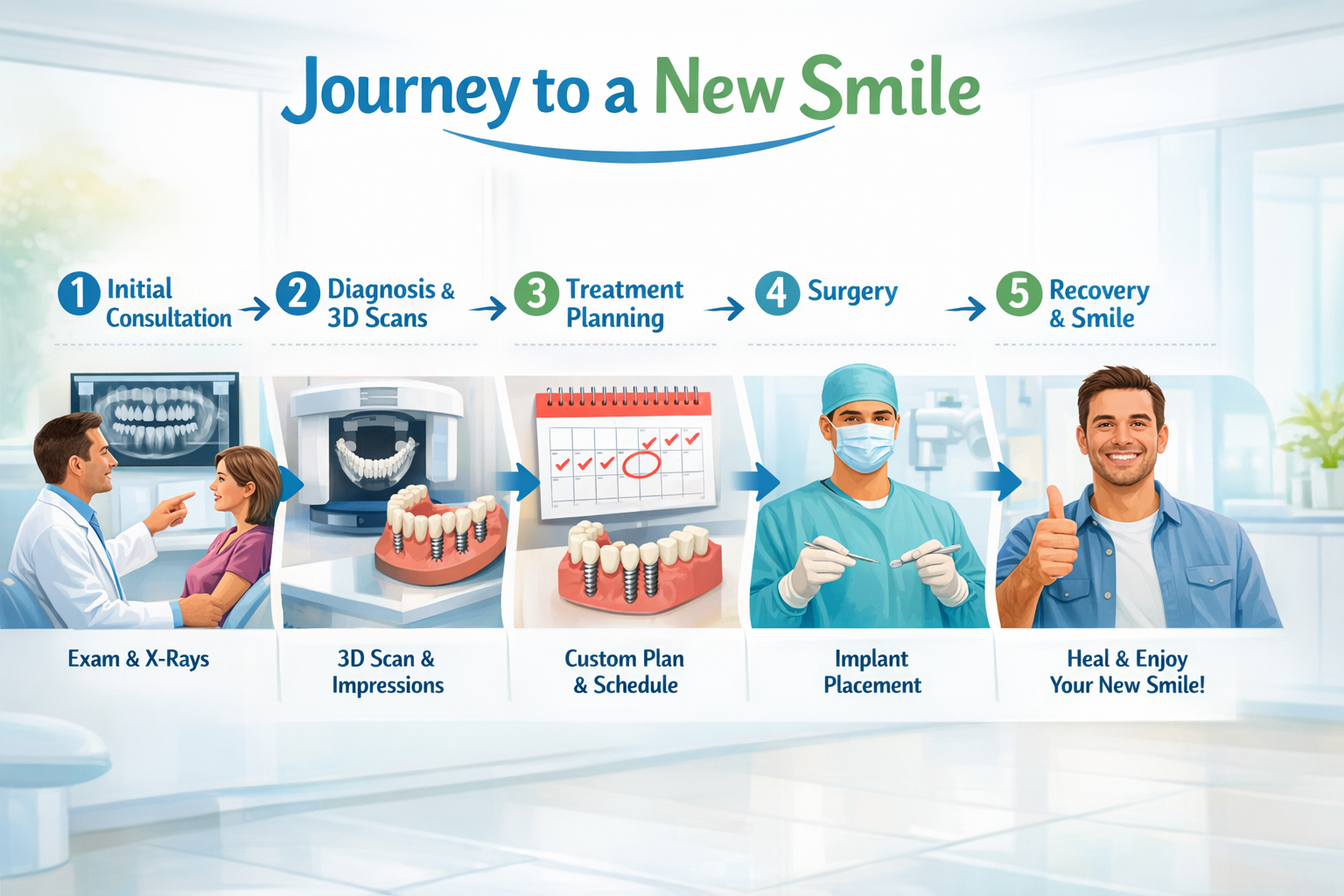
The initial dental implant consultation isn’t merely a formality; it’s the bedrock upon which your entire treatment journey will be built. Think of it as a detailed discovery phase where you and your dental specialist collaborate to understand your needs, assess your suitability, and outline the best path forward. This appointment is vital for several reasons:
- Personalized Assessment: Every patient is unique. Your consultation ensures that the treatment plan is specifically tailored to your individual oral anatomy, health conditions, and aesthetic goals.
- Information Gathering: It’s an opportunity for the dentist to gather comprehensive data through examinations, imaging, and discussions about your medical history. This information is critical for safe and effective treatment.
- Education and Empowerment: The consultation empowers you with knowledge. You’ll learn about the procedure, its benefits, potential risks, and what life with dental implants will entail. This understanding helps you feel more confident and less anxious.
- Setting Realistic Expectations: By discussing the process in detail, you gain a clear picture of the timeline, recovery, and expected outcomes, avoiding surprises down the line.
- Building Trust: This initial meeting is also about establishing a rapport with your dental team. Trust and comfort are essential when embarking on a significant dental procedure.
Without a thorough consultation, the risk of complications or dissatisfaction increases. It ensures that both you and your dental team are aligned on the goals and methods of your dental implant treatment.
What to Expect During the Examination and Diagnostic Phase
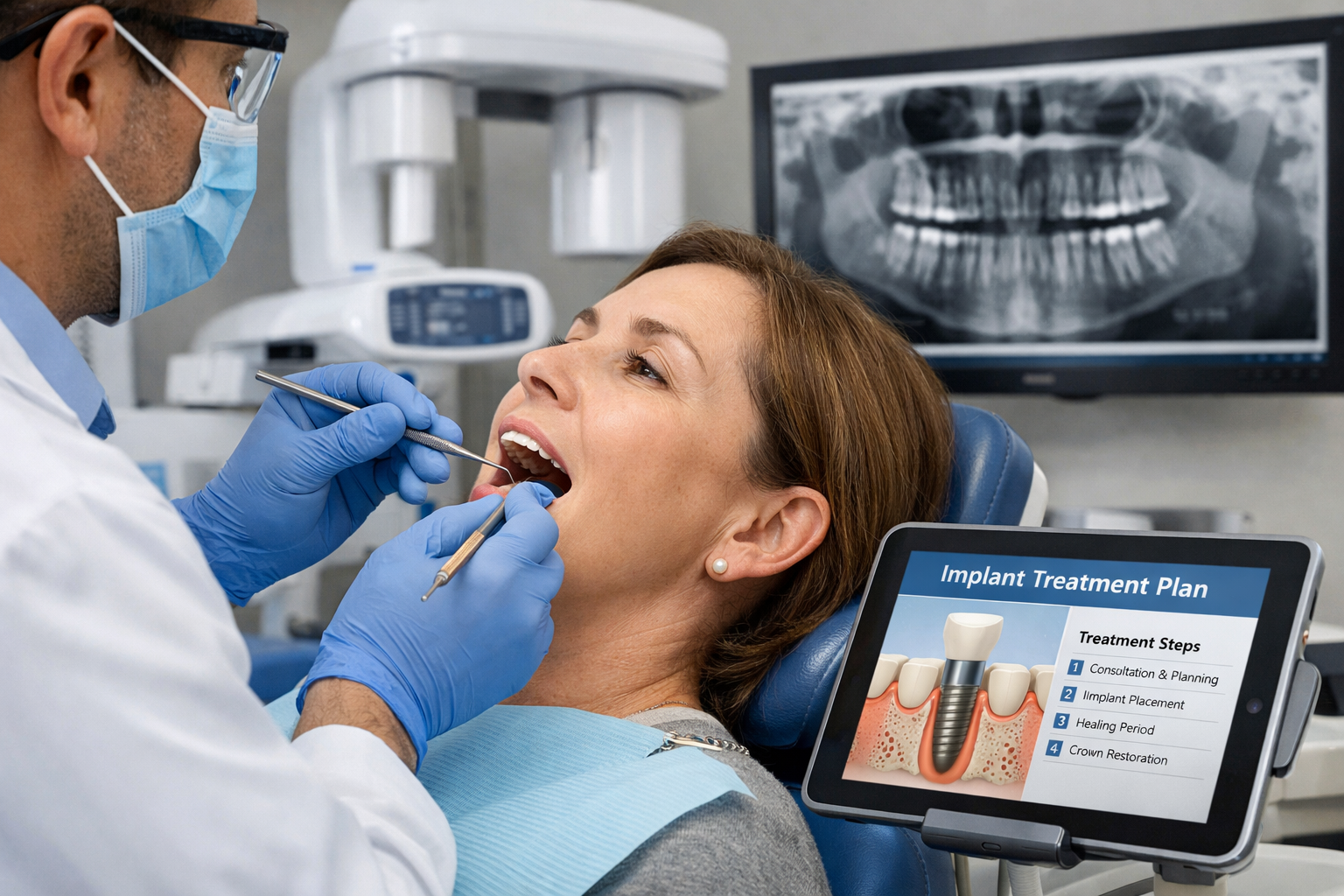
Your dental implant consultation will begin with a thorough examination, focusing on your oral health and overall suitability for implants. This isn’t just a quick look; it’s a detailed, multi-faceted assessment designed to gather all necessary information.
1. Comprehensive Oral Health Review
The dentist will first conduct a visual examination of your mouth, assessing the condition of your remaining teeth, gums, and existing restorations. They will look for signs of:
- Gum Disease: Healthy gums are crucial for implant success. If signs of periodontal disease are present, these will need to be addressed before implant placement.
- Tooth Decay: Any active cavities will need to be treated.
- Bone Structure: The quantity and quality of your jawbone are paramount, as implants require sufficient bone density for integration.
- Bite Alignment: How your upper and lower teeth meet can affect the long-term success of implants.
2. Detailed Medical and Dental History Discussion
You will be asked to provide a comprehensive medical and dental history. This includes information about:
- Current Medications: Certain medications, especially blood thinners or those affecting bone metabolism, can impact treatment.
- Allergies: To ensure no adverse reactions to materials or anesthesia.
- Existing Medical Conditions: Conditions like diabetes, osteoporosis, or autoimmune diseases can affect healing and implant success. For example, patients with 90 percent bone loss in teeth due to advanced gum disease or other conditions may require extensive bone grafting.
- Smoking Habits: Smoking significantly reduces implant success rates and will be discussed.
- Previous Dental Treatments: Information about past extractions, root canals, or orthodontic work helps create a complete picture.
“A thorough medical and dental history review is non-negotiable. It allows us to identify any potential contraindications or considerations that could influence the success and safety of your dental implant procedure. We want to ensure the best possible outcome for every patient.”
3. Advanced Imaging and Diagnostics
Modern dental implantology heavily relies on advanced imaging to ensure precise planning. Expect the following:
- Digital X-rays: These provide detailed images of your teeth, roots, and surrounding bone, helping to identify any hidden issues.
- 3D Cone Beam Computed Tomography (CBCT) Scan: This is perhaps the most critical diagnostic tool for dental implants. A CBCT scan provides a three-dimensional view of your oral cavity, including:
- Bone Quantity and Quality: Crucial for determining if you have enough healthy bone to support an implant.
- Location of Vital Structures: Identifying nerves, sinuses, and blood vessels to avoid complications during surgery.
- Optimal Implant Placement Sites: Allowing the dentist to digitally plan the precise angulation and depth for each implant.
- You can learn more about the role of CT scans in dental implants.
- Intraoral Scans/Impressions: Digital scans or traditional impressions will be taken to create highly accurate models of your teeth and bite. These are essential for designing custom restorations that fit perfectly.
Table 1: Diagnostic Tools Used in Dental Implant Consultations
| Diagnostic Tool | Purpose | Key Benefit |
|---|---|---|
| Visual Examination | Assess overall oral health, identify existing issues | Quick overview, detects visible problems |
| Medical/Dental History | Identify systemic conditions, medications, lifestyle factors | Risk assessment, guides treatment modifications |
| Digital X-rays | 2D view of teeth, roots, bone levels | Detects cavities, bone loss, root issues |
| 3D CBCT Scan | 3D view of bone, nerves, sinuses, blood vessels | Precise implant planning, avoids vital structures, assesses bone |
| Intraoral Scans/Impressions | Accurate models of teeth and bite | Custom restoration design, ensures proper fit and occlusion |
This thorough diagnostic phase ensures that your dental implant treatment is planned with the utmost precision and safety, setting you up for success.
Understanding Your Dental Implant Options and Treatment Plan
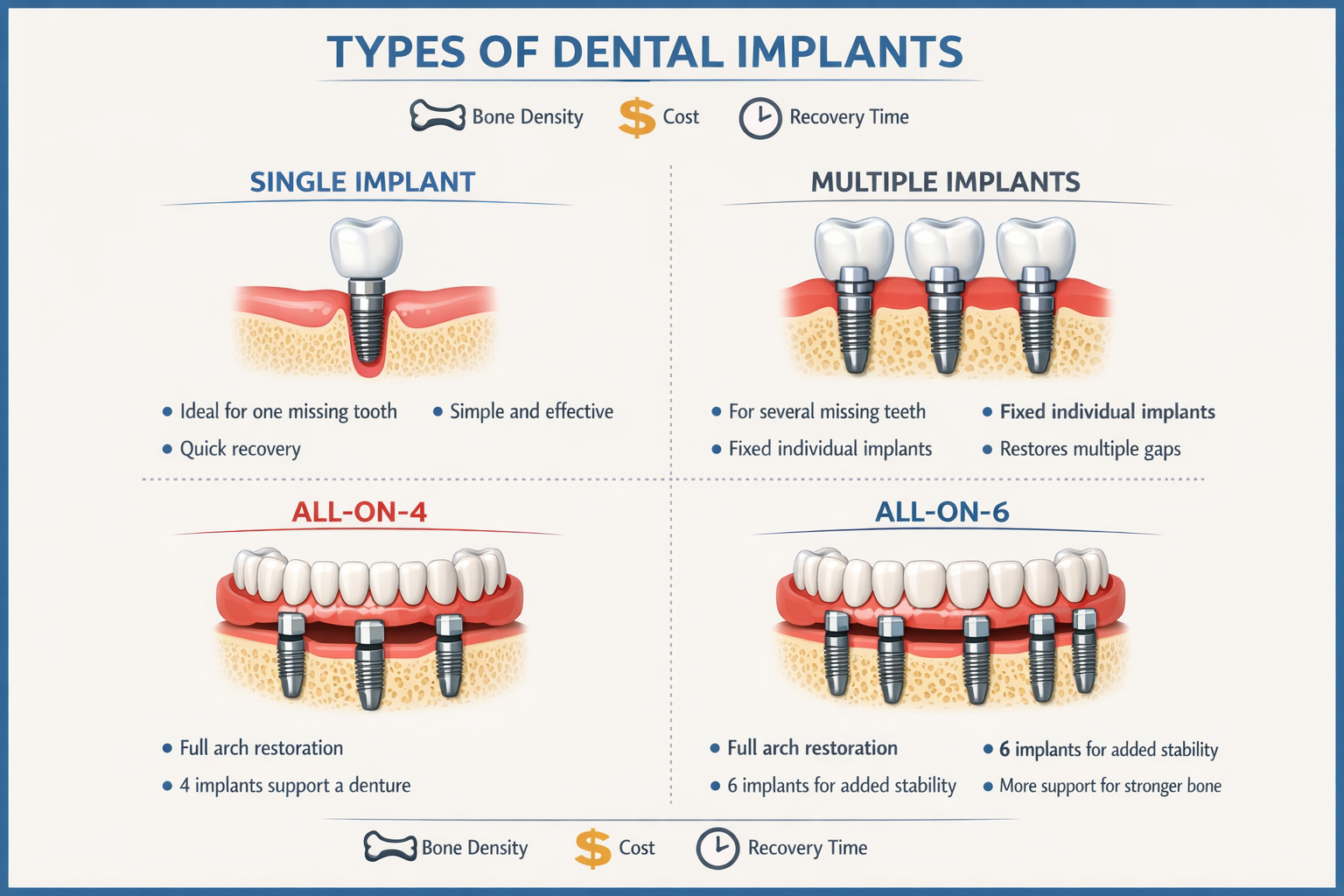
Once the diagnostic phase is complete, your dentist will sit down with you to discuss their findings and present the recommended dental implant options. This is a highly personalized discussion, taking into account your specific needs, bone health, and aesthetic desires.
Types of Dental Implants
You’ll learn about the different kinds of dental implants and how they might apply to your situation:
- Single Dental Implants: Used to replace one missing tooth. A single titanium post is surgically placed into the jawbone, and after healing, a custom crown is attached via an abutment. This restores the individual tooth without affecting adjacent teeth, unlike a bridge.
- Multiple Dental Implants: If you’re missing several teeth in a row, multiple implants can support a fixed bridge. For example, two implants might support a three- or four-unit bridge, providing a stable and aesthetic solution without needing an implant for every missing tooth.
- Full Arch Implants (e.g., All-on-4®, All-on-6®): For patients missing all or most teeth in an arch, or those with significant tooth decay or adult teeth falling out, these advanced techniques can replace an entire set of teeth using only four or six strategically placed implants. The All-on-4 dental implants system is particularly popular for its efficiency and immediate function in many cases.
- Implant-Supported Dentures: These offer a significant upgrade from traditional removable dentures, providing greater stability and preventing bone loss. Implants can be used to “snap” a denture into place, making it removable but much more secure.
The discussion will also touch upon the materials used for implants (typically titanium, but sometimes zirconia for ceramic implants) and the restorative components, such as porcelain ceramic crowns that attach to the implants.
Bone Grafting and Other Ancillary Procedures
Based on your CBCT scan, the dentist will determine if you have sufficient bone volume to support implants. If not, they will discuss bone grafting procedures. It’s common to require a bone graft, especially if teeth have been missing for some time, as bone naturally resorbs without tooth roots to stimulate it.
- Types of Bone Grafts: This could involve sinus lifts, ridge augmentation, or socket preservation grafts. Your dentist will explain which type is necessary and why. Understanding bone graft recovery for dental implants is also important.
- Timing: Grafting may be done simultaneously with implant placement or as a separate procedure, requiring a healing period before implants can be placed.
Developing Your Personalized Treatment Plan
Your treatment plan will be a detailed roadmap, outlining every step of the process. It typically includes:
- Preparation Phase: Any necessary extractions, gum disease treatment, or bone grafting.
- Implant Placement Surgery: The surgical insertion of the implant posts into your jawbone. Your dentist will explain the anesthesia options and what to expect during the procedure.
- Osseointegration Period: The critical healing phase where the implant fuses with your jawbone (typically 3-6 months).
- Abutment Placement: A small connector piece is attached to the implant, protruding through the gum line, to which the final restoration will be affixed. You can read more about the dental implant abutment procedure.
- Restoration Placement: Your custom-made crown, bridge, or denture is securely attached to the abutment.
Your dentist will provide a clear timeline, detailing the expected duration of each phase and how many appointments will be required. They will also discuss potential challenges or considerations unique to your case.
Cost, Financing, and Insurance for Dental Implants
Understanding the financial aspects of dental implants is a significant part of the dental implant consultation. This transparency is crucial for making an informed decision.
Breakdown of Dental Implant Costs
The cost of dental implants can vary widely depending on several factors:
- Number of Implants: A single implant will cost less than multiple implants or a full arch restoration.
- Type of Implant System: Different implant brands and technologies may have varying costs.
- Ancillary Procedures: If you need bone grafting, tooth extractions, or gum treatment, these will add to the overall cost.
- Type of Restoration: Crowns, bridges, or dentures have different material and fabrication costs.
- Geographic Location and Clinic Expertise: Costs can differ based on where you receive treatment and the specialist’s experience.
- Sedation Options: Anesthesia or sedation choices will also impact the price.
Your treatment plan will provide a detailed itemized estimate of all anticipated costs, ensuring full transparency. For example, some patients inquire about affordable dental implants in Dallas, TX and will receive a breakdown of what makes up the cost.
Navigating Dental Insurance for Implants
While dental implants are increasingly recognized as the gold standard for tooth replacement, insurance coverage can still be complex.
- Medical vs. Dental Coverage: Some portions of the treatment (like the initial consultation, extractions, or bone grafting) might be covered under medical insurance, especially if there’s a medical necessity. The implant itself and the crown are typically considered dental.
- Coverage Limits: Most dental insurance plans have annual maximums that may not fully cover the entire cost of implants, which can be a multi-stage process.
- Waiting Periods: Some plans have waiting periods before major restorative procedures like implants are covered.
- Pre-authorization: It’s often beneficial for your dental office to submit a pre-authorization to your insurance company. This provides a clear estimate of what your insurance will cover before treatment begins.
Your dental office’s administrative team is usually very experienced in dealing with insurance claims and can help you understand your specific benefits and maximize your coverage. They may even have resources on best dental insurance for implants.
Financing and Payment Options
Recognizing that dental implants are a significant investment in your health, most dental practices offer a range of financing solutions to make treatment more accessible:
- In-house Payment Plans: Many clinics offer flexible payment schedules directly through their office.
- Third-Party Financing: Companies like CareCredit or LendingClub offer specialized healthcare credit cards with low or no-interest payment plans for qualified applicants. Your dental office can often assist you with the application process.
- Health Savings Accounts (HSAs) and Flexible Spending Accounts (FSAs): If you have an HSA or FSA through your employer, you can use these tax-advantaged accounts to pay for dental implant costs.
- Cash/Credit Card Discounts: Some practices offer a discount for upfront payment in full.
It’s important to discuss all financial options during your dental implant consultation so you can plan accordingly without undue stress. The goal is to find a solution that fits your budget while allowing you to receive the high-quality care you deserve. For those specifically seeking information on affordable implants or financing with various credit situations, these discussions are paramount.
Questions to Ask During Your Dental Implant Consultation
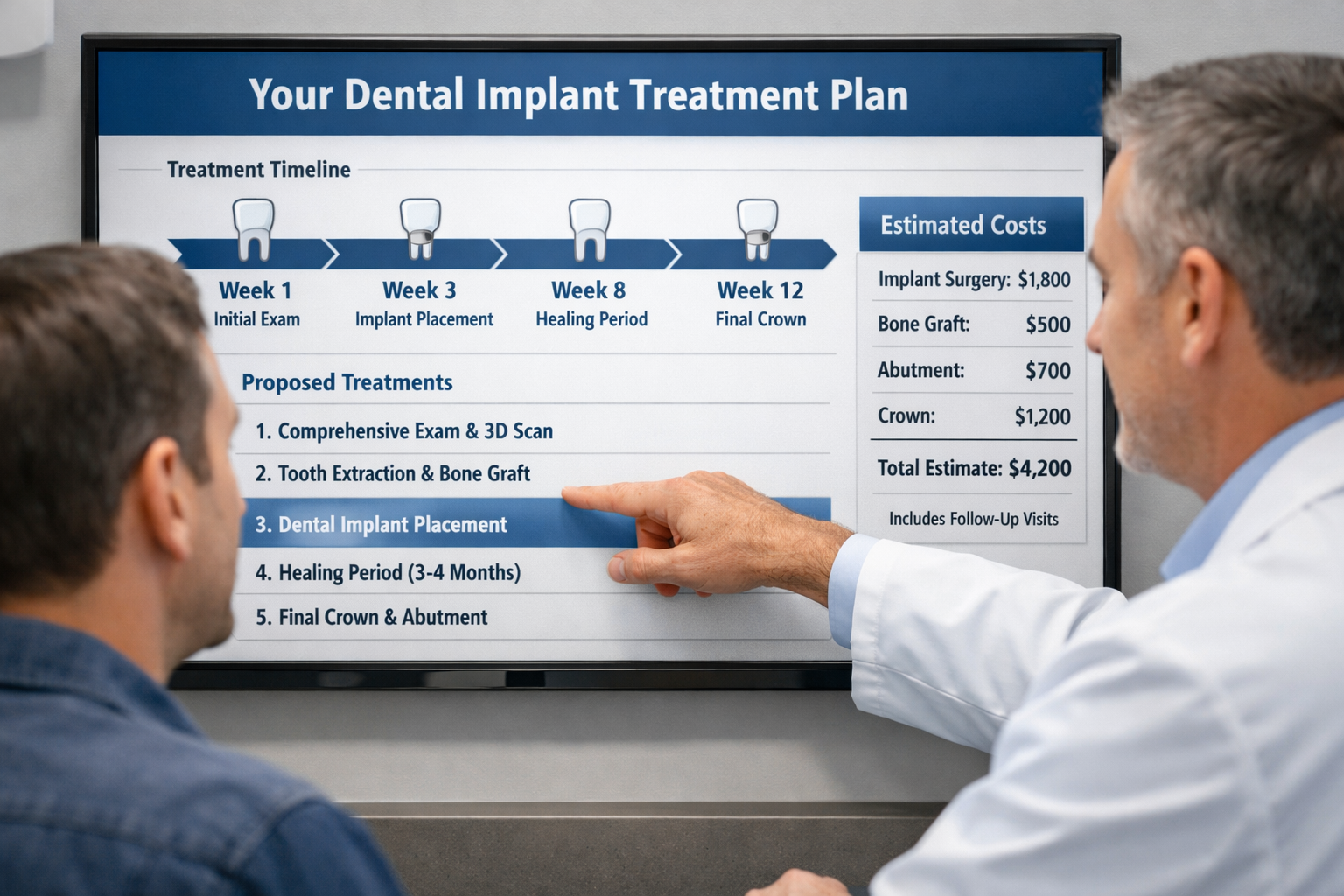
Your dental implant consultation is your dedicated time to gather all the information you need. Don’t be afraid to ask questions – the more informed you are, the more comfortable and confident you’ll feel about your treatment decision. I always encourage my patients to come with a list of questions!
Here’s a comprehensive list of questions you might consider asking:
About the Procedure and Your Eligibility:
- Am I a good candidate for dental implants? Why or why not?
- What specific type of dental implant do you recommend for me, and why?
- Will I need any preparatory procedures, such as bone grafting or tooth extractions?
- What are the potential risks and complications associated with dental implant surgery?
- What type of anesthesia will be used during the surgery?
- How long will the entire dental implant process take, from start to finish?
- What is the success rate of dental implants in your practice?
- What is your experience with cases similar to mine?
About the Practice and Team:
- Who will be performing my implant surgery (dentist, oral surgeon, periodontist)?
- What are the qualifications and certifications of the dental team involved?
- What kind of technology and equipment do you use for implant planning and placement?
- How often do you perform dental implant procedures?
About Post-Procedure Care and Long-Term Outlook:
- What should I expect immediately after the surgery? (Pain, swelling, dietary restrictions)
- What are the detailed dental implant aftercare instructions?
- How long is the healing period (osseointegration)?
- What kind of diet will I need to follow during recovery? (e.g., soft foods after dental implant)
- How often will I need follow-up appointments?
- What is the expected lifespan of dental implants, and how do I maintain them?
- What happens if an implant fails? What are the options?
- Will my implants look and feel natural?
About Costs and Payment:
- Can you provide a detailed, itemized breakdown of all costs associated with my treatment plan?
- What portion of the treatment, if any, is covered by my dental insurance?
- Do you offer in-house payment plans or third-party financing options?
- Are there any hidden fees I should be aware of?
- What is included in the quoted price (e.g., implant, abutment, crown, follow-up visits)?
Tip: Bring a notebook and pen, or use your phone, to jot down notes and answers during the consultation. It’s easy to forget details, especially when receiving a lot of new information. Don’t hesitate to ask for clarification if something isn’t clear. This is your health and your investment, so ensure you feel completely informed and comfortable with the proposed plan.
Conclusion: Your Next Steps After the Consultation

Your dental implant consultation is the cornerstone of a successful tooth replacement journey. By now, you should have a clear understanding of your current oral health, the recommended treatment options, the associated costs, and what the entire process entails. This comprehensive informational gathering empowers you to make a confident decision about restoring your smile.
After your consultation, take some time to:
- Review the Information: Go over the treatment plan, cost estimates, and any notes you took. Discuss it with a trusted family member or friend if you wish.
- Ask Follow-Up Questions: If new questions arise after you’ve processed the information, don’t hesitate to call the dental office. They are there to help clarify any doubts.
- Consider Your Options: If you’ve had consultations with multiple providers, compare their approaches, costs, and your comfort level with their teams. Remember, choosing a dental implant provider is a significant decision. You want to choose a team that inspires confidence and has proven expertise. Our team at dentalimplantsdallastx.com prides itself on transparent communication and patient-focused care.
- Make an Informed Decision: Once you feel fully informed and comfortable, you can decide whether to proceed with dental implants and schedule your next appointment.
Dental implants offer a durable, aesthetically pleasing, and highly functional solution for missing teeth, dramatically improving quality of life. By fully engaging in your dental implant consultation, you’re taking the most important step towards achieving a healthy, beautiful, and lasting smile in 2026 and beyond.
Remember, this is an investment in your long-term oral health and overall well-being. A thorough consultation ensures that investment is well-placed and brings you the results you desire.
References
[1] American Academy of Implant Dentistry. (2026). About Dental Implants. Retrieved from https://www.aaid.com/dental_implants/ (Note: URL is illustrative as AAID does not provide a direct reference to a 2026 specific page)
[2] National Institute of Dental and Craniofacial Research. (2026). Dental Implants. Retrieved from https://www.nidcr.nih.gov/health-info/dental-implants (Note: URL is illustrative as NIDCR does not provide a direct reference to a 2026 specific page)
Is a Dental Implant Right for You? Quick Self-Assessment Quiz
This short quiz is designed to give you a preliminary idea of whether you might be a good candidate for dental implants. Remember, this is *not* a substitute for a professional **dental implant consultation** with a qualified dental specialist.
Your Dental Implant Suitability Assessment
Based on your answers, here’s a general idea:
Important: This quiz provides a general indication. The best way to determine your suitability is through a personalized **dental implant consultation** with a qualified dental professional. They can conduct a thorough examination, including 3D scans, to give you a definitive assessment and discuss your specific options.
Leave a Reply
Share your thoughts or ask a question about dental implants. Your email address will not be published.