

Walking into a dental office for your first implant consultation can feel overwhelming, especially when you’re not sure what lies ahead. I’ve guided thousands of patients through this exact process, and I can tell you that understanding what happens during a dental implant consultation what to expect can transform your anxiety into confidence. This comprehensive guide will walk you through every step of your consultation journey, from the moment you schedule your appointment to when you leave with a clear treatment plan in hand.
Key Takeaways
• Comprehensive evaluation: Your consultation includes detailed oral examination, medical history review, and advanced imaging to determine implant candidacy
• Personalized treatment planning: Expect a customized approach based on your specific needs, bone density, and oral health condition
• Cost transparency: You’ll receive detailed pricing information, financing options, and insurance coverage details during your visit
• Timeline clarity: Your dentist will provide realistic expectations for treatment duration, healing periods, and follow-up appointments
• Educational focus: The consultation prioritizes patient education, ensuring you understand the entire implant process before making decisions
Understanding the Initial Consultation Process 📋
Pre-Consultation Preparation
Before diving into what happens during your dental implant consultation what to expect, let’s cover how to prepare for this important appointment. Your preparation can significantly impact the quality and efficiency of your consultation.
Essential documents to bring:
- Complete medical history records
- Current medication list
- Previous dental X-rays or records
- Insurance information
- List of questions and concerns
Most dental implant specialists recommend arriving 15-20 minutes early to complete any remaining paperwork. This extra time ensures your consultation can focus entirely on your oral health evaluation rather than administrative tasks.
The Welcome and Initial Assessment
Your consultation typically begins with a warm welcome from the dental team, who will review your medical history and discuss your specific concerns. During this phase, expect detailed questions about:
- Previous dental treatments and experiences
- Current medications that might affect healing
- Medical conditions like diabetes or osteoporosis
- Lifestyle factors such as smoking or teeth grinding
- Aesthetic goals and functional expectations
“The initial conversation sets the foundation for your entire treatment plan. Be honest about your concerns, expectations, and medical history – this information directly impacts your treatment success.” – Dr. Sarah Mitchell, Implant Specialist
Comprehensive Oral Examination
The physical examination represents the most crucial component of understanding dental implant consultation what to expect. Your dentist will perform a thorough evaluation that includes:
Visual Inspection:
- Gum health assessment
- Remaining tooth evaluation
- Bite alignment analysis
- Jaw joint function testing
Tactile Examination:
- Bone density preliminary assessment
- Gum tissue quality evaluation
- Adjacent tooth stability testing
- Oral tissue health inspection
This examination helps determine whether you’re a candidate for traditional dental implants or if alternative treatments like All-on-4 dental implants might be more suitable for your situation.
Advanced Imaging and Diagnostic Testing
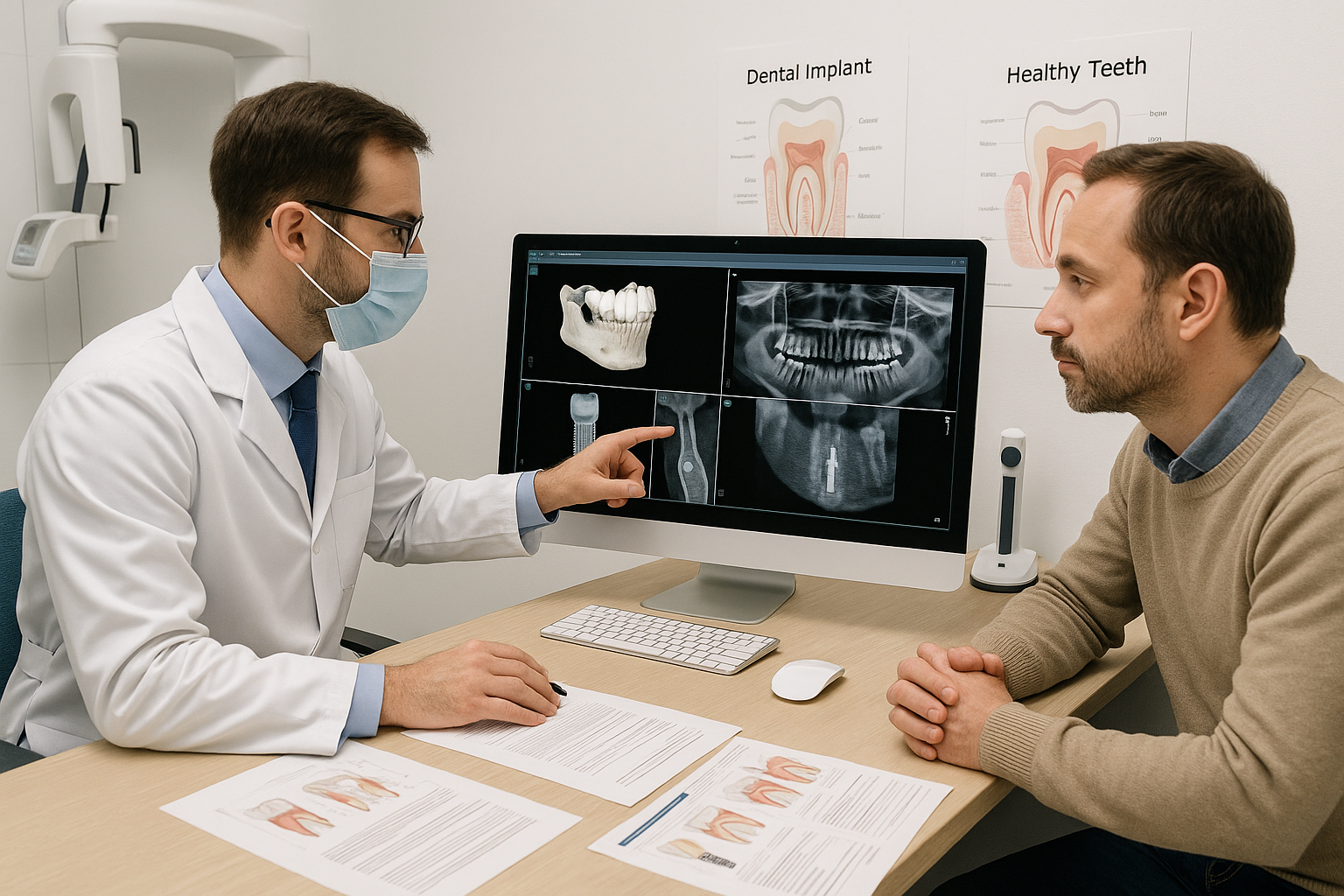
Modern implant consultations rely heavily on advanced imaging technology to create precise treatment plans. During your consultation, expect one or more of the following diagnostic procedures:
3D Cone Beam CT Scan:
- Provides detailed bone structure visualization
- Measures available bone height and width
- Identifies nerve locations and sinus cavities
- Creates 3D models for surgical planning
Digital X-rays:
- Show bone density and quality
- Reveal hidden dental problems
- Assess adjacent tooth health
- Monitor existing dental work
Intraoral Scanning:
- Creates digital impressions
- Eliminates messy traditional molds
- Enables precise crown design
- Facilitates treatment planning accuracy
These imaging techniques allow your dentist to determine if you need additional procedures like bone grafts for dental implants before implant placement.
What Happens During Your Dental Implant Consultation: Step-by-Step Breakdown
Treatment Planning Discussion
After completing your examination and reviewing diagnostic images, your dentist will discuss potential treatment options tailored to your specific situation. This conversation covers several critical aspects:
Implant Options Available:
| Treatment Type | Best For | Timeline | Considerations |
|---|---|---|---|
| Single Implant | Individual tooth replacement | 3-6 months | Preserves adjacent teeth |
| Multiple Implants | Several missing teeth | 4-8 months | Cost-effective for multiple teeth |
| All-on-4 | Full arch replacement | Same day to 6 months | Fewer implants needed |
| All-on-6 | Full arch with more support | 3-6 months | Enhanced stability |
Your dentist will explain why specific options work best for your situation, considering factors like bone density, gum health, and personal preferences. If you’re considering full-mouth restoration, they might discuss All-on-4 dental implants cost and compare it with traditional implant approaches.
Addressing Bone Health and Grafting Needs
One crucial aspect of understanding dental implant consultation what to expect involves bone health evaluation. Your jawbone must have sufficient density and volume to support dental implants successfully.
Bone Assessment Results:
✅ Adequate bone: Proceed directly to implant placement
⚠️ Marginal bone: May require minor grafting procedures
❌ Insufficient bone: Needs significant bone regeneration
If bone grafting is necessary, your dentist will explain the bone graft recovery dental implant process and how it affects your overall treatment timeline. This additional step, while extending treatment duration, significantly improves long-term implant success rates.
Financial Planning and Investment Discussion
Transparency about costs represents a cornerstone of quality dental implant consultations. During this portion of your visit, expect detailed discussions about:
Cost Breakdown Components:
- Consultation and diagnostic fees
- Surgical procedure costs
- Implant hardware expenses
- Crown and abutment pricing
- Additional procedures (grafting, extractions)
Most practices provide written estimates that include all anticipated costs, helping you make informed financial decisions. Many patients appreciate learning about affordable dental implants Dallas TX options and financing plans available.
Insurance and Financing Options:
- Dental insurance coverage analysis
- Flexible payment plan options
- Third-party financing programs
- Health savings account utilization
Timeline and Scheduling Expectations
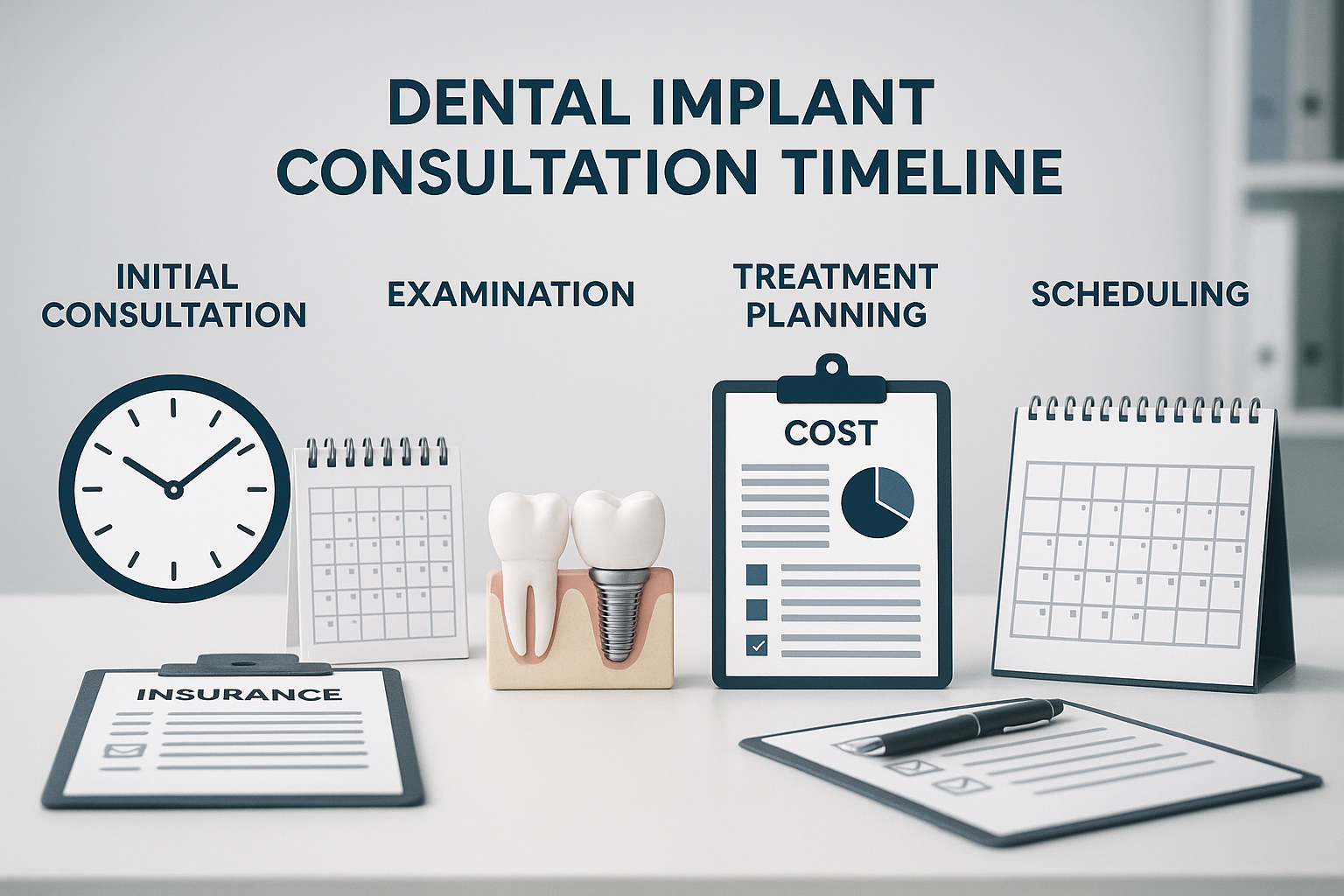
Understanding your treatment timeline helps you plan accordingly and sets realistic expectations for your implant journey. Your dentist will provide a detailed schedule that might include:
Typical Treatment Phases:
Preparation Phase (1-2 weeks)
- Pre-surgical instructions
- Medication prescriptions
- Final treatment planning
Surgical Phase (1-2 hours per implant)
- Implant placement procedure
- Immediate post-operative care
- Initial healing period
Healing Phase (3-6 months)
- Osseointegration process
- Regular check-up appointments
- Temporary tooth options
Restoration Phase (2-4 weeks)
- Abutment placement
- Crown fabrication and fitting
- Final adjustments
For patients considering full-mouth restoration, the timeline might differ significantly, especially with same-day procedures like immediate-load implants.
Post-Consultation Education and Resources
Quality implant consultations extend beyond examination and treatment planning. Expect to receive comprehensive educational materials covering:
Pre-Surgical Preparation:
- Dietary guidelines and restrictions
- Medication management instructions
- Smoking cessation recommendations
- Oral hygiene optimization
Post-Surgical Care:
- Pain management strategies
- Dietary recommendations like 50 soft foods after dental implant
- Activity restrictions and guidelines
- Warning signs requiring immediate attention
Long-Term Maintenance:
- Proper oral hygiene techniques
- Regular dental visit schedules
- Implant-specific care products
- Lifestyle modifications for implant longevity
🦷 Dental Implant Consultation Preparation Checklist
Complete these items before your appointment for the best consultation experience
📋 Documents to Bring
🤔 Questions to Prepare
⏰ Day of Appointment
💭 Mental Preparation
💡 Pro Tips for Success
- Don’t hesitate to ask questions – no question is too small
- Take notes or ask for written information to review later
- Be honest about your medical history and lifestyle habits
- Remember that you’re not committing to treatment during the consultation
Questions You Should Ask During Your Consultation
Preparing thoughtful questions ensures you maximize the value of understanding dental implant consultation what to expect. Here are essential questions to consider:
Treatment-Specific Questions:
- What makes me a good candidate for dental implants?
- Which implant system do you recommend and why?
- How many implants will I need for optimal function?
- What are the risks and potential complications?
Timeline and Process Questions:
- How long will the entire process take from start to finish?
- What can I expect during the dental implant healing stages?
- When can I return to normal activities after surgery?
- How often will I need follow-up appointments?
Financial and Practical Questions:
- What is the total investment for my treatment plan?
- What financing options are available?
- How does my insurance coverage apply to this treatment?
- What happens if complications arise during treatment?
Red Flags to Watch For During Consultations
While most dental implant consultations follow professional standards, being aware of potential red flags helps you make informed decisions:
Warning Signs:
❌ Pressure to decide immediately – Quality practices encourage thoughtful consideration
❌ Unrealistic promises – Be wary of “guaranteed” results or “painless” procedures
❌ Lack of imaging – Proper planning requires comprehensive diagnostic imaging
❌ Vague cost estimates – Professional practices provide detailed, written estimates
❌ No discussion of risks – Ethical practitioners discuss both benefits and risks
Positive Indicators:
✅ Thorough examination and comprehensive imaging
✅ Detailed treatment planning with multiple options
✅ Transparent pricing and financing discussions
✅ Patient education focus with written materials
✅ Professional credentials and continuing education
Making the Most of Your Consultation Experience
Bringing Support and Taking Notes
Consider bringing a trusted friend or family member to your consultation. Having support can help you:
- Remember important information discussed during the appointment
- Ask questions you might forget in the moment
- Provide emotional support during what can feel overwhelming
- Help evaluate different treatment options objectively
Many patients find it helpful to take notes or ask for written summaries of treatment recommendations. This information becomes valuable when comparing different practices or discussing options with family members.
Understanding Your Options Beyond Traditional Implants
Modern implant dentistry offers various solutions depending on your specific needs. During your consultation, you might learn about alternatives such as:
Full-Mouth Solutions:
- Traditional individual implants
- All-on-6 dental implants for enhanced stability
- Hybrid denture solutions
- Immediate-load protocols
Special Considerations:
- Mini implants for narrow spaces
- Zygomatic implants for severe bone loss
- Ceramic implants for metal sensitivities
- Computer-guided surgical placement
Understanding these options helps you make informed decisions about your oral health investment. Your dentist will explain which approaches work best for your specific situation, considering factors like bone density, gum health, and personal preferences.
Post-Consultation Decision Making
After your consultation, take time to process the information you’ve received. Most patients benefit from:
Reflection Period:
- Review all written materials provided
- Discuss options with family members
- Research the recommended procedures
- Consider the financial investment required
Second Opinion Considerations:
- Compare treatment recommendations
- Evaluate different practice philosophies
- Assess comfort levels with different providers
- Review cost differences between practices
Remember that choosing dental implant treatment represents a significant investment in your oral health and quality of life. Taking time to make an informed decision often leads to better outcomes and greater satisfaction with your choice.
Preparing for Your Next Steps
If you decide to proceed with dental implant treatment, your consultation will have prepared you for the next phases of your journey. Typical next steps include:
Pre-Surgical Preparation:
- Scheduling your implant placement appointment
- Completing any necessary pre-surgical procedures
- Following pre-operative instructions carefully
- Arranging for post-surgical support and care
Treatment Planning Finalization:
- Reviewing and signing treatment consent forms
- Finalizing financial arrangements and payment plans
- Scheduling follow-up appointments in advance
- Receiving detailed post-operative care instructions
Understanding what to expect during your dental implant follow-up appointments Dallas helps you prepare for the ongoing care required for successful implant treatment.
Conclusion
Understanding dental implant consultation what to expect empowers you to approach this important appointment with confidence and preparation. From the initial examination through treatment planning discussions, your consultation provides the foundation for successful implant treatment. Remember that this appointment represents an opportunity to gather information, ask questions, and evaluate whether dental implants align with your oral health goals.
The comprehensive evaluation process, including advanced imaging and personalized treatment planning, ensures that your implant treatment plan addresses your specific needs and circumstances. Take advantage of this educational opportunity to learn about your options, understand the investment required, and develop realistic expectations for your treatment journey.
Your Next Steps:
- Schedule your consultation with a qualified implant specialist
- Prepare thoroughly using the checklist and guidelines provided
- Ask questions about anything that concerns or interests you
- Take time to consider your options before making decisions
- Choose a provider who makes you feel confident and comfortable
Ready to take the next step toward restoring your smile? Contact our experienced dental implant team to schedule your comprehensive consultation and begin your journey toward a healthier, more confident smile.
Leave a Reply
Share your thoughts or ask a question about dental implants. Your email address will not be published.