


When I first got my dental implants, I thought the biggest expense was behind me. Boy, was I wrong! 😅 While researching dental implant cleaning cost for this article, I discovered that many patients are caught off guard by ongoing maintenance expenses. The truth is, proper implant care requires specialized cleaning that can cost significantly more than regular dental cleanings, but the investment is absolutely crucial for long-term success.
Key Takeaways
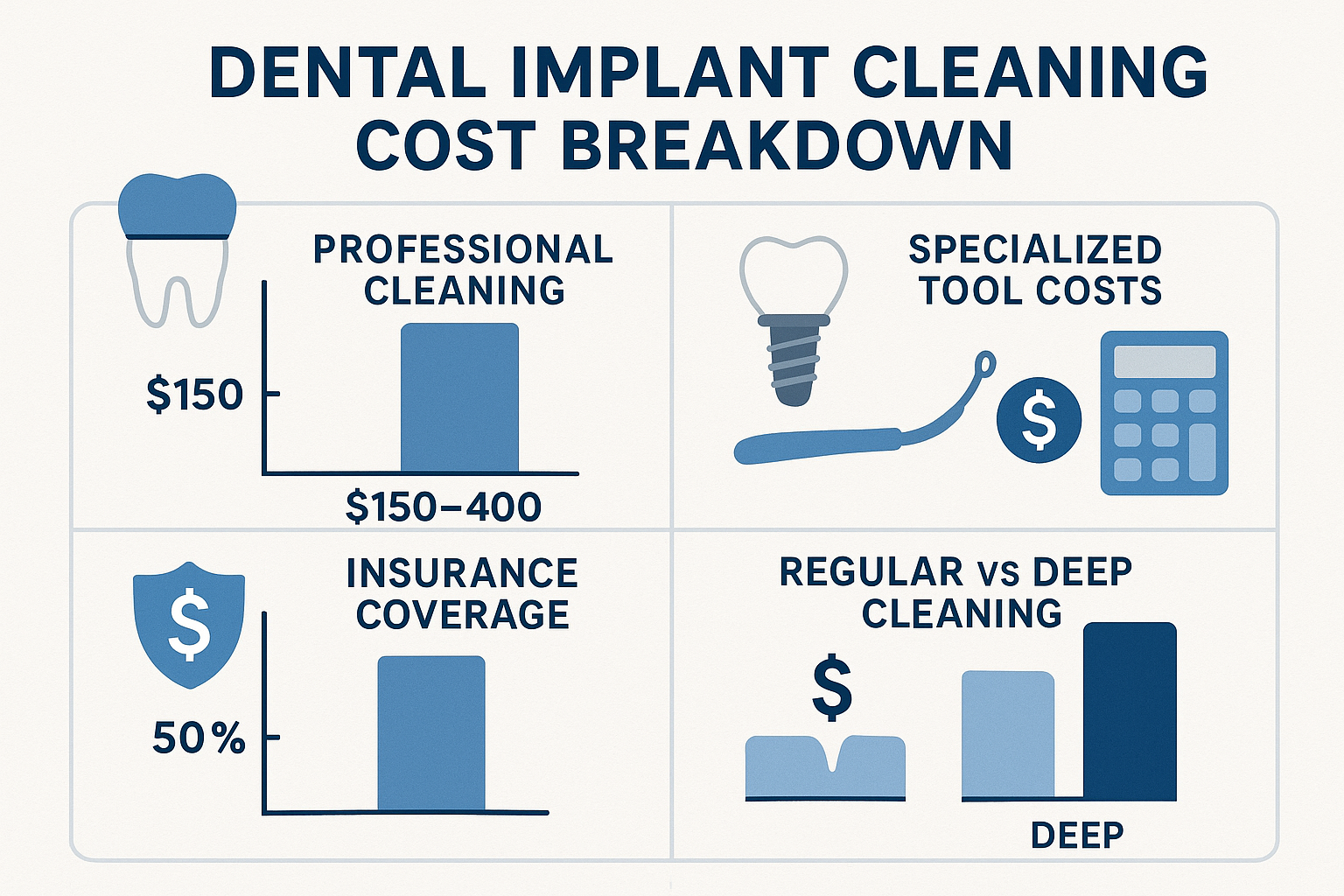
• Professional dental implant cleaning costs range from $150-$400 per session, depending on complexity and location
• Regular maintenance visits every 3-6 months are essential to prevent costly complications like peri-implantitis
• Insurance coverage varies significantly, with many plans covering only basic cleaning portions
• Specialized tools and techniques required for implant cleaning justify the higher costs compared to natural teeth
• Long-term savings from proper maintenance far outweigh the costs of treating implant complications
What Makes Dental Implant Cleaning Different and More Expensive?
Understanding why dental implant cleaning cost differs from regular dental cleanings starts with recognizing the unique challenges implants present. Unlike natural teeth, dental implants require specialized care techniques and tools that directly impact pricing.
The Science Behind Implant Maintenance
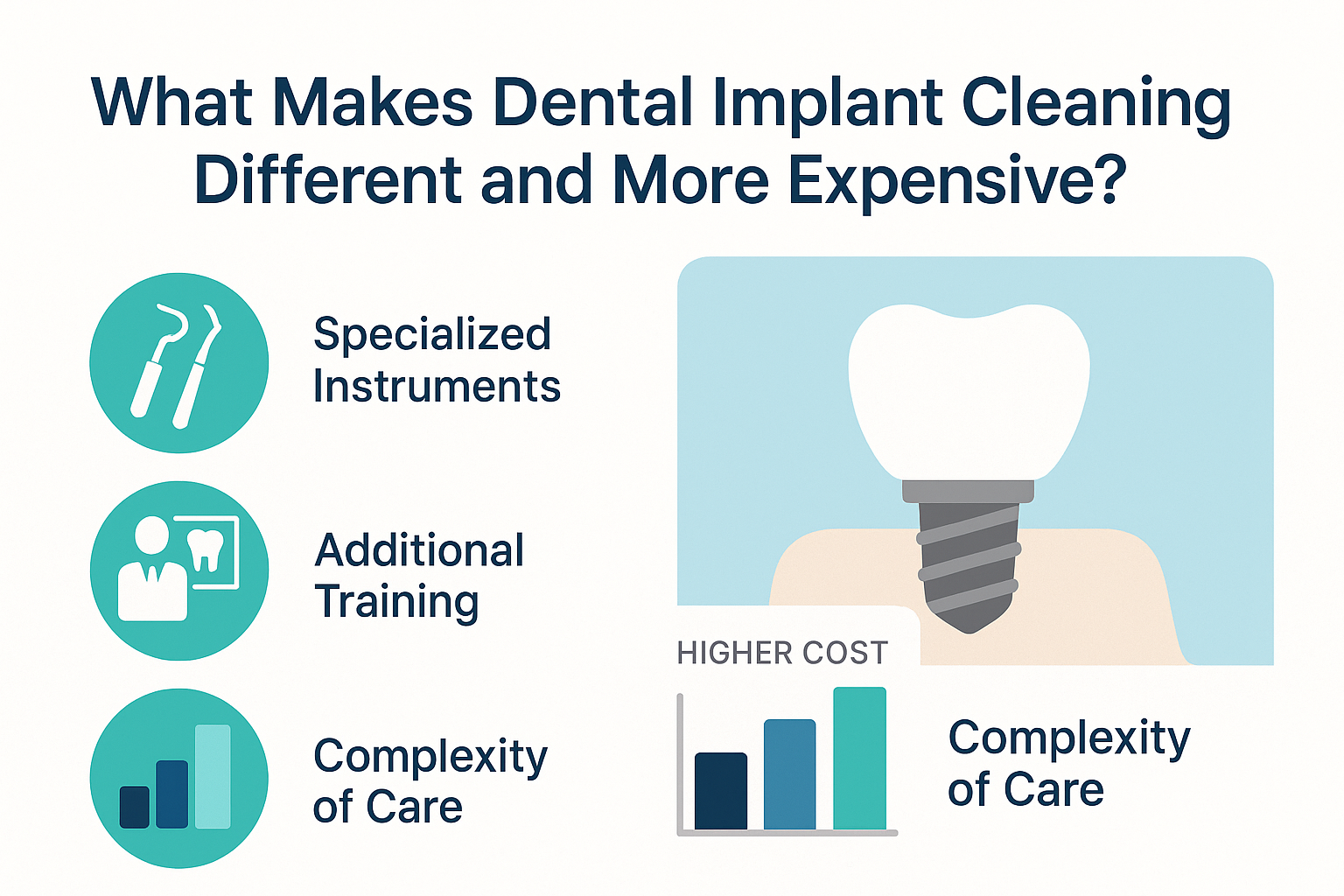
Dental implants don’t have the same biological protection as natural teeth. They lack the periodontal ligament that helps fight bacteria, making them more susceptible to peri-implantitis – a serious condition that can lead to implant failure. This vulnerability requires:
- Specialized instruments made from materials that won’t scratch titanium surfaces
- Advanced cleaning techniques to access areas around the implant crown and abutment
- Extended appointment times for thorough cleaning and assessment
- Specialized training for dental hygienists in implant maintenance protocols
Professional vs. At-Home Care Costs
While learning how to clean dental implants at home is essential, professional maintenance remains irreplaceable. Here’s what you’re paying for:
Professional Services Include:
- Ultrasonic cleaning with implant-safe tips
- Specialized hand instruments for biofilm removal
- Professional assessment of implant stability
- Radiographic evaluation when needed
- Customized home care recommendations
Breaking Down Dental Implant Cleaning Cost Factors
The dental implant cleaning cost isn’t arbitrary – several factors influence what you’ll pay for professional maintenance. Understanding these variables helps you budget effectively and make informed decisions about your oral health investment.
Geographic Location Impact
Location plays a significant role in cleaning costs:
| Region | Average Cost Range | Factors Affecting Price |
|---|---|---|
| Urban Areas | $200-$400 | Higher overhead, specialized practitioners |
| Suburban Areas | $150-$300 | Moderate competition, standard facilities |
| Rural Areas | $125-$250 | Lower overhead, limited specialist availability |
Practice Type and Specialization
Different types of dental practices offer varying cost structures:
🏥 Specialist Periodontist Offices
- Cost Range: $250-$400
- Benefits: Advanced expertise, specialized equipment
- Best for: Complex cases, multiple implants
🦷 General Dental Practices
- Cost Range: $150-$300
- Benefits: Convenient, familiar environment
- Best for: Routine maintenance, single implants
🏢 Dental Chains
- Cost Range: $125-$250
- Benefits: Standardized pricing, multiple locations
- Best for: Budget-conscious patients
Complexity and Number of Implants
The dental implant cleaning cost scales with complexity:
- Single implant: Base pricing
- Multiple implants: Often discounted per-unit pricing
- Full-mouth reconstruction: Comprehensive cleaning packages
- All-on-4 or All-on-6: Specialized protocols requiring more time
For patients with all-in-six dental implants, cleaning appointments typically take 60-90 minutes compared to 30-45 minutes for single implants.
💰 Dental Implant Cleaning Cost Calculator
Insurance Coverage and Payment Options for Dental Implant Cleaning Cost
Navigating insurance coverage for dental implant cleaning cost can be frustrating, but understanding your options helps maximize benefits and minimize out-of-pocket expenses.
What Insurance Typically Covers
Most dental insurance plans treat implant cleaning similarly to regular periodontal maintenance:
✅ Usually Covered:
- Basic cleaning and examination
- Routine X-rays (once per year)
- Standard prophylaxis procedures
❌ Often Not Covered:
- Specialized implant-specific instruments
- Extended appointment times
- Deep cleaning around failing implants
- Retreatment of peri-implantitis
Maximizing Your Insurance Benefits
To get the most value from your dental insurance:
- Verify coverage before scheduling appointments
- Use in-network providers when possible
- Schedule cleanings to maximize annual benefits
- Document medical necessity for specialized procedures
- Consider supplemental insurance for comprehensive coverage
For patients dealing with complications, understanding peri-implantitis treatment costs becomes crucial, as these procedures often require separate coverage considerations.
Alternative Payment Solutions
When insurance falls short, consider these payment options:
💳 Dental Financing Programs
- CareCredit: 0% interest promotional periods
- LendingClub: Fixed-rate personal loans
- Practice payment plans: Custom arrangements
🏦 Health Savings Accounts (HSAs)
- Tax-advantaged savings for medical expenses
- Covers qualified dental maintenance costs
- Can accumulate funds for future needs
Long-Term Financial Planning for Dental Implant Maintenance
Understanding the lifetime dental implant cleaning cost helps you budget effectively and avoid financial surprises. Proper planning ensures your implants receive the care they need without straining your finances.
Creating a Maintenance Budget
Smart financial planning for implant care involves:
📊 Annual Cost Estimation:
- Regular cleanings: $300-$800 annually
- Occasional deep cleaning: $200-$500
- Emergency treatments: $500-$2,000
- Replacement components: $300-$1,500
💰 Building an Implant Care Fund:
- Set aside $50-$100 monthly for maintenance
- Use automatic transfers to dedicated savings
- Consider high-yield savings accounts for growth
- Plan for major maintenance every 5-10 years
Cost-Benefit Analysis: Professional vs. Neglected Care
The numbers clearly favor regular professional maintenance:
| Scenario | Annual Cost | 10-Year Total | Potential Complications |
|---|---|---|---|
| Regular Professional Care | $400-$800 | $4,000-$8,000 | Minimal risk |
| Sporadic Care | $200-$400 | $2,000-$4,000 | Moderate risk |
| Neglected Care | $0-$200 | $0-$2,000 | High risk of failure |
Hidden Costs of Neglect:
- Implant failure requiring replacement: $3,000-$6,000
- Bone grafting for failed implants: $2,000-$5,000
- Emergency treatments: $1,000-$3,000
- Lost work time and discomfort: Priceless
When to Invest in Preventive Care
Certain situations justify increased investment in professional cleaning:
🚨 High-Risk Factors:
- History of gum disease
- Diabetes or autoimmune conditions
- Smoking or tobacco use
- Multiple implants or complex restorations
For patients with these risk factors, more frequent cleanings every 3-4 months often prove cost-effective compared to treating complications later.
Smart Shopping: How to Find Quality Care at Fair Prices
Finding the right balance between quality care and reasonable dental implant cleaning cost requires research and strategic thinking. Here’s how to make informed decisions without compromising your implant health.
Questions to Ask Potential Providers
Before committing to a cleaning schedule, ask these essential questions:
🔍 About Expertise:
- “How many implant patients do you treat monthly?”
- “What specialized training do your hygienists have?”
- “Do you use implant-specific instruments?”
💵 About Costs:
- “What’s included in your cleaning fee?”
- “Are there additional charges for X-rays or assessments?”
- “Do you offer package deals for multiple cleanings?”
📋 About Protocols:
- “How long are implant cleaning appointments?”
- “What’s your recommended cleaning frequency?”
- “How do you monitor implant health over time?”
Red Flags to Avoid
Be cautious of providers who:
- Offer cleaning prices significantly below market rates
- Don’t use specialized implant instruments
- Rush through appointments in 20 minutes or less
- Can’t explain their implant maintenance protocols
- Don’t take regular radiographs to monitor bone levels
Finding Value Without Sacrificing Quality
🎯 Strategic Approaches:
- Research multiple providers in your area
- Ask about new patient specials or cleaning packages
- Consider dental schools for supervised, discounted care
- Join dental membership plans for reduced fees
- Negotiate payment plans for regular maintenance
Many patients find excellent value by establishing long-term relationships with providers who offer loyalty discounts or annual care packages.
For those considering affordable implants initially, factor in long-term maintenance costs when making treatment decisions.
Building a Long-Term Relationship
The best dental implant cleaning cost value often comes from consistent care with the same provider. Benefits include:
- Familiarity with your case and specific needs
- Consistent monitoring of implant health over time
- Potential discounts for loyal patients
- Coordinated care with your implant surgeon when needed
Special Considerations for Different Implant Types
Not all dental implants require the same maintenance approach, and understanding these differences helps you budget appropriately for dental implant cleaning cost based on your specific situation.
Single Implants vs. Multiple Implants
Single Implant Maintenance:
- Standard cleaning protocols
- Easier access for home care
- Lower per-visit costs
- Simpler long-term planning
Multiple Implant Considerations:
- Volume discounts often available
- Longer appointment times required
- More complex home care routines
- Higher annual investment but better per-implant value
All-on-4 and Full-Mouth Reconstructions
Patients with full-mouth implant solutions face unique maintenance challenges:
🔧 Specialized Requirements:
- Removable prosthetics need separate cleaning
- Access to implant sites may be limited
- Professional removal and cleaning of prosthetics
- More frequent monitoring for complications
💰 Cost Implications:
- Higher per-visit costs ($300-$600)
- May require quarterly visits
- Prosthetic maintenance adds $200-$400 annually
- Long-term component replacement planning essential
Mini Implants and Specialized Cases
Mini dental implants often require modified cleaning approaches:
- Gentler cleaning techniques
- More frequent monitoring
- Potential for easier home maintenance
- Generally lower professional cleaning costs
Understanding how often dental implant checkups are needed for your specific implant type helps you plan both scheduling and budgeting effectively.
Home Care: Reducing Professional Cleaning Frequency and Costs
While professional maintenance remains essential, excellent home care can help optimize your dental implant cleaning cost by reducing the frequency of deep cleanings and preventing complications.
Essential Home Care Tools and Their Costs
🛠️ Must-Have Tools:
| Tool | Cost Range | Replacement Frequency | Annual Cost |
|---|---|---|---|
| Electric toothbrush | $50-$200 | 3-5 years | $15-$65 |
| Implant-specific brush heads | $20-$40 | Every 3 months | $80-$160 |
| Water flosser | $30-$150 | 2-3 years | $15-$75 |
| Interdental brushes | $10-$25 | Monthly | $120-$300 |
| Specialized toothpaste | $8-$15 | Monthly | $96-$180 |
💡 Pro Tip: Investing in quality home care tools can reduce professional cleaning frequency from every 3 months to every 4-6 months, potentially saving $200-$600 annually.
Effective Home Care Techniques
Proper technique maximizes the value of your home care investment:
Daily Routine (5-8 minutes):
- Brush twice daily with best toothpaste for implants
- Use interdental brushes around implant crowns
- Water floss to remove debris from hard-to-reach areas
- Rinse with antimicrobial mouthwash
Weekly Deep Cleaning:
- Extended water flossing session
- Gentle massage of gum tissues
- Assessment of any changes or concerns
Learning proper flossing techniques for dental implants can significantly impact your long-term maintenance costs.
When Home Care Isn’t Enough
Recognize signs that indicate need for professional intervention:
🚨 Warning Signs:
- Persistent bleeding around implants
- Unusual odor or taste
- Changes in implant stability
- Visible plaque buildup despite good home care
- Gum recession around implant crowns
Early professional intervention often costs less than treating advanced complications, making regular monitoring a smart financial strategy.
Conclusion: Making Smart Decisions About Dental Implant Cleaning Cost
Understanding dental implant cleaning cost empowers you to make informed decisions about your oral health investment. While the expenses may seem significant initially, proper maintenance protects your implant investment and prevents costly complications down the road.
Key Financial Strategies:
- Budget $400-$800 annually for routine professional maintenance
- Invest in quality home care to optimize cleaning intervals
- Build relationships with trusted providers for better value
- Use insurance benefits strategically to maximize coverage
- Plan for long-term costs including eventual component replacement
Remember, dental implant maintenance cost represents a fraction of your initial implant investment but plays a crucial role in ensuring decades of successful function.
Your Next Steps:
- Calculate your annual maintenance budget using the factors discussed
- Research qualified providers in your area who specialize in implant care
- Verify insurance coverage and explore payment options
- Invest in proper home care tools and learn effective techniques
- Schedule your first professional cleaning to establish a maintenance routine
The investment in proper implant maintenance pays dividends through improved oral health, implant longevity, and peace of mind. Don’t let cost concerns compromise the success of your dental implant investment – instead, plan strategically for the care your implants deserve.
For personalized guidance on implant maintenance costs and care, consider consulting with experienced dental implant specialists who can provide tailored recommendations based on your specific situation and budget.
Leave a Reply
Share your thoughts or ask a question about dental implants. Your email address will not be published.