

Quick Answer: A teeth filling, also known as a dental filling, is a common restorative dental treatment used to repair teeth damaged by decay, fractures, or cracks. The procedure involves removing the decayed or damaged portion of the tooth and then filling the resulting space with a durable material to restore the tooth’s function and shape, preventing further damage and discomfort.
Key Takeaways
- Purpose: Dental fillings treat cavities and minor tooth damage, restoring tooth structure and preventing further decay.
- Materials: Common materials include amalgam, composite resin, ceramic, and glass ionomer, each with distinct benefits and costs.
- Procedure: Involves decay removal, cleaning, and precise placement of the filling material, usually completed in one visit.
- Longevity: The lifespan of a dental filling varies by material and oral hygiene, typically ranging from 5 to 15 years.
- Cost Factors: Pricing depends on material, size of the cavity, and the dentist’s fees; insurance coverage varies.
- Maintenance: Good oral hygiene, including regular brushing, flossing, and dental check-ups, is crucial for filling longevity.
- Alternatives: For more extensive damage, alternatives like crowns, inlays/onlays, or even dental implants in Dallas may be considered.
- Symptoms Needing a Filling: Tooth sensitivity, pain when chewing, or visible holes in the tooth often indicate the need for a filling.
What is a Dental Filling and Why Might You Need One?
A dental filling is a restorative treatment designed to repair a tooth that has been compromised by decay or minor damage, such as a small crack or fracture. You might need a teeth filling if you experience persistent tooth sensitivity, pain when chewing, or if your dentist identifies a cavity during a routine examination.
Dental decay, often referred to as a cavity, occurs when bacteria in the mouth produce acids that erode the tooth enamel. If left untreated, this decay can progress, leading to deeper cavities, infection, and potentially tooth loss. A dental filling intervenes by removing the decayed portion and restoring the tooth’s integrity. Beyond decay, fillings can also be used to repair teeth that have been worn down from habits like teeth grinding or simply to restore chipped teeth, protecting the inner layers from sensitivity and further damage. This helps maintain long-term oral health and prevents the need for more complex and costly tooth replacement options later on.
Types of Dental Filling Materials and Their Benefits
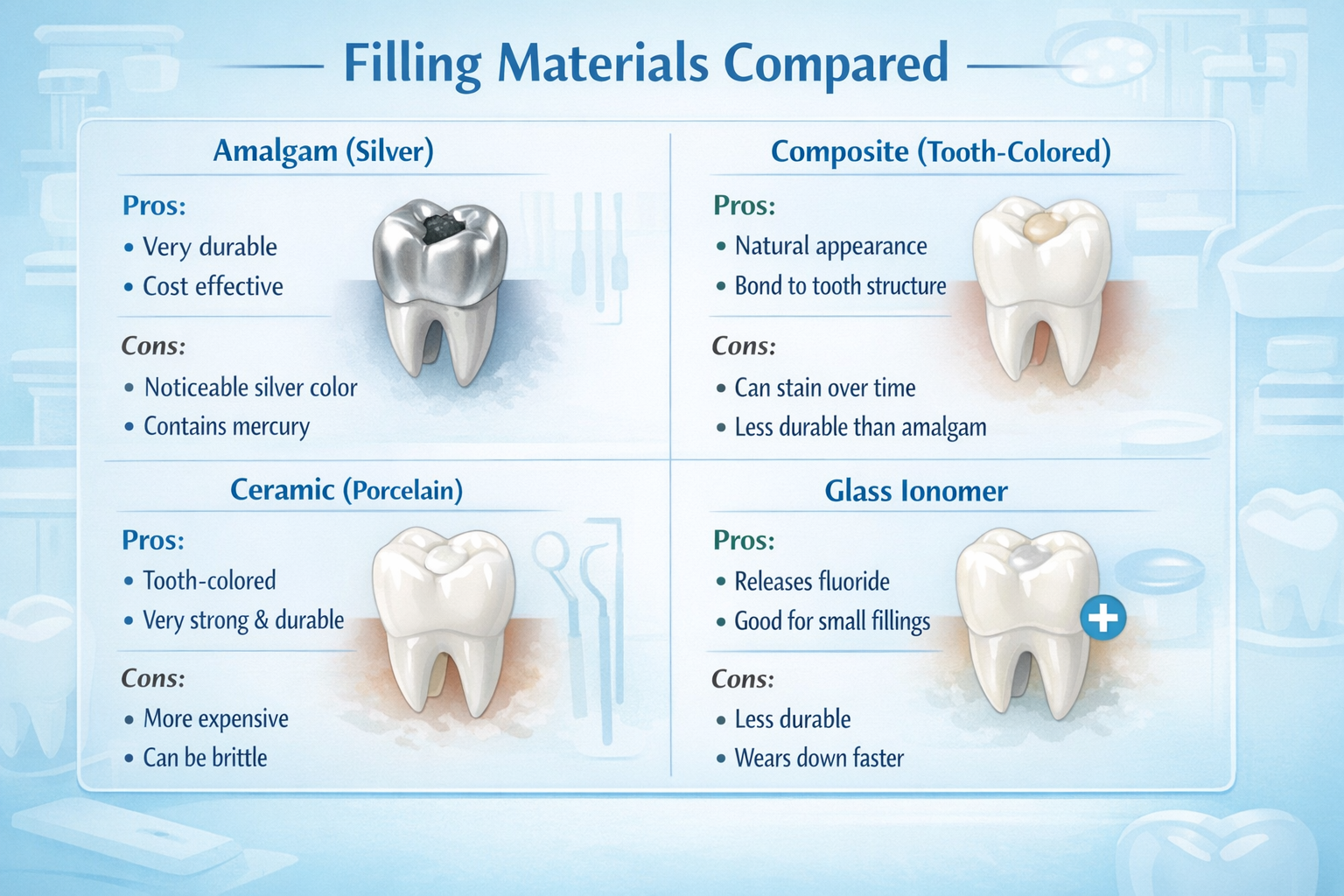
Various materials are available for dental fillings, each offering unique benefits in terms of aesthetics, durability, and cost. Your dentist will recommend the best option based on the location and size of the cavity, your aesthetic preferences, and your budget.
Here’s a breakdown of common dental filling materials:
- Amalgam (Silver) Fillings:
- Composition: A mix of mercury, silver, tin, and copper.
- Benefits: Highly durable, long-lasting (often 10-15 years or more), and cost-effective. They are strong enough to withstand chewing forces, making them suitable for molars.
- Considerations: Silver color is noticeable, making them less ideal for visible teeth. Concerns about mercury content have led to their decreased use, although dental organizations consider them safe for most patients.
- Composite Resin (Tooth-Colored) Fillings:
- Composition: A blend of plastic and finely ground glass particles.
- Benefits: Can be matched to the exact color of your natural teeth, offering an aesthetic solution for visible areas. They bond directly to the tooth structure, providing additional support.
- Considerations: Less durable than amalgam, typically lasting 5-7 years, and may be more expensive. They can stain over time, similar to natural teeth.
- Ceramic (Porcelain) Fillings:
- Composition: Made primarily of porcelain.
- Benefits: Highly aesthetic, mimicking the natural look and feel of tooth enamel. They are very durable and resistant to staining and abrasion.
- Considerations: More expensive than composite or amalgam fillings. They often require two dental visits to prepare and bond, as they are custom-made in a lab.
- Glass Ionomer Fillings:
- Composition: A blend of acrylic and a fluoroaluminosilicate glass.
- Benefits: Release fluoride, which can help prevent further decay around the filling. They bond well to tooth structure and are often used for fillings in children whose teeth are still developing, or for non-biting surfaces.
- Considerations: Weaker than other materials, less durable, and typically last only 5 years or less. Not recommended for chewing surfaces on permanent teeth.
Choosing the right material often involves balancing strength, appearance, and financial considerations. For instance, if you prioritize aesthetics for a front tooth, a composite or ceramic dental filling would be preferable. However, for a molar that undergoes significant chewing pressure, amalgam or a durable ceramic might be a better choice.

The Dental Filling Procedure: What to Expect
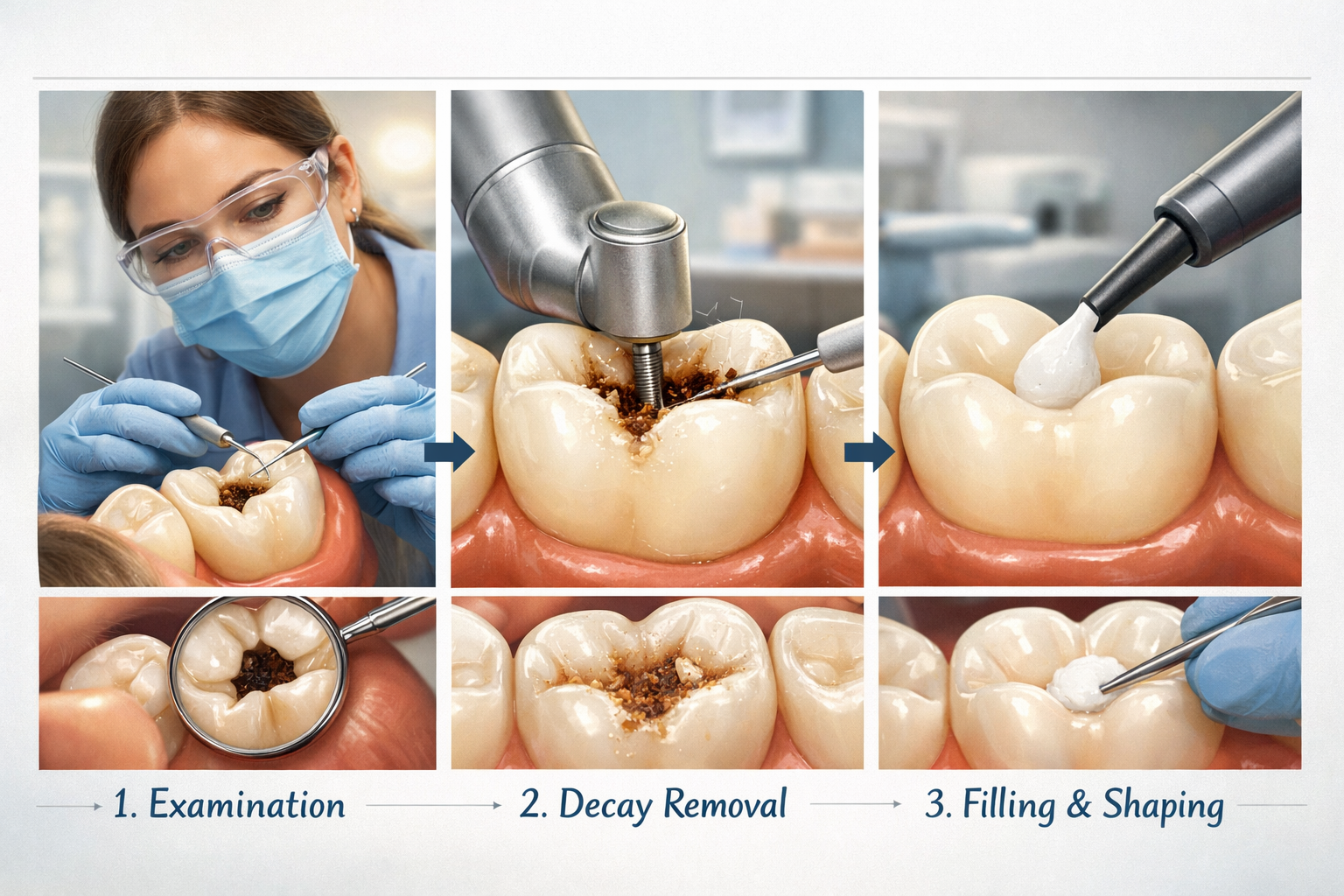
The process of getting a dental filling is generally straightforward and can often be completed in a single visit, depending on the material and complexity. Understanding what to expect can help ease any anxieties about the procedure.
The steps involved in a standard dental filling procedure typically include:
- Numbing the Area: Your dentist will first apply a local anesthetic to numb the tooth and surrounding gum tissue. This ensures you remain comfortable and pain-free throughout the procedure. For those with dental anxiety, discussing sedation options during your dental implant consultation in Dallas might be beneficial, even for minor procedures like fillings.
- Removing Decay: Once the area is numb, the dentist will use a dental drill or laser to carefully remove the decayed or damaged portion of the tooth. The goal is to eliminate all infected or compromised tooth structure while preserving as much healthy tooth as possible.
- Preparing the Tooth: After decay removal, the cavity is thoroughly cleaned to remove bacteria and debris. For some filling materials, such as composite resin, a special bonding agent may be applied to help the filling adhere securely to the tooth.
- Placing the Filling Material:
- Amalgam: The material is mixed and immediately packed into the cavity, then shaped and allowed to harden.
- Composite: The resin is applied in layers, with each layer cured (hardened) using a special light. This layering technique helps ensure a strong bond and accurate tooth shape.
- Ceramic: If a ceramic filling (inlay or onlay) is chosen, the dentist may take an impression during the first visit, send it to a lab for fabrication, and then bond the custom-made filling during a second visit.
- Finishing and Polishing: Once the filling material is in place and hardened, the dentist will shape and polish it to ensure it fits comfortably within your bite and looks natural. They will check your bite to make sure the filling isn’t too high, which could cause discomfort or damage.
The entire process usually takes between 30 minutes to an hour, though larger or more complex fillings may take longer. You may experience some sensitivity after the anesthetic wears off, but this typically subsides within a few days.

Cost, Longevity, and Aftercare of Dental Fillings
Understanding the financial aspects, expected lifespan, and necessary aftercare for your dental filling is crucial for maintaining your oral health. The cost of a dental filling can vary significantly, typically ranging from $50 to $250 for amalgam fillings and $90 to $450 for composite fillings, per tooth. Ceramic fillings, being custom-made, can cost significantly more, often between $250 and $1,500. These ranges are estimates and can be influenced by the size and location of the cavity, the specific material used, the dentist’s fees, and geographic location (e.g., costs in Dallas might differ from national averages, as explored in articles like “Dallas Dental Implant Cost vs National Averages 2026”).
Factors Influencing Cost and Longevity:
- Material Choice: As detailed above, different materials have different price points and durability.
- Size of the Filling: Larger cavities require more material and time, increasing the cost.
- Location of the Tooth: Fillings on molars can be more challenging to place due to access and require more robust materials, potentially affecting cost.
- Dental Insurance: Coverage for dental fillings varies widely. Many insurance plans cover a portion of the cost, especially for amalgam or basic composite fillings. It’s important to check with your provider about your specific benefits.
- Oral Hygiene: The longevity of any dental filling is significantly impacted by your daily oral hygiene practices. Good habits can extend its life.
Aftercare and Maintenance:
Proper aftercare is vital to ensure your dental filling lasts as long as possible and to prevent further dental issues.
- Avoid Chewing Immediately: For amalgam fillings, avoid chewing on the treated side for at least 24 hours to allow the filling to fully set. Composite fillings harden instantly, but it’s still wise to be cautious.
- Manage Sensitivity: It’s common to experience some sensitivity to hot, cold, or pressure for a few days after a filling. Over-the-counter pain relievers can help. If sensitivity persists or worsens, contact your dentist.
- Maintain Excellent Oral Hygiene: Brush twice a day with fluoride toothpaste, and floss daily. This prevents new decay from forming around the edges of the filling.
- Regular Dental Check-ups: Schedule routine dental examinations and cleanings. Your dentist can monitor the condition of your fillings, identify any signs of wear or damage early, and ensure your overall oral health. Early detection of issues can prevent the need for more complex procedures, such as a full dental implant procedure.
- Address Teeth Grinding: If you grind your teeth (bruxism), your dentist might recommend a nightguard to protect your fillings and natural teeth from excessive wear.
If a dental filling becomes loose, cracked, or falls out, it’s crucial to contact your dentist immediately. Leaving a cavity exposed can lead to rapid decay, infection, and potentially more extensive damage requiring a crown or even missing teeth solutions like dental implants.

Alternatives to Dental Fillings for Extensive Damage
While dental fillings are effective for repairing minor to moderate tooth decay, more extensive damage may require alternative restorative treatments. These options are typically considered when a significant portion of the tooth structure is compromised, making a standard dental filling insufficient to restore strength and function.
When Fillings Aren’t Enough:
- Dental Crowns: For teeth with large cavities, extensive fractures, or weakened structure (often after a root canal), a dental crown might be necessary. A crown is a tooth-shaped cap placed over the entire tooth surface, restoring its shape, size, strength, and appearance. Crowns can be made from porcelain, ceramic, metal, or a combination.
- Inlays and Onlays: These are indirect restorations, meaning they are custom-made in a dental lab and then bonded to the tooth.
- Inlays: Used when the damage is contained within the cusps (the chewing surfaces) of the tooth.
- Onlays: Used when the damage extends over one or more cusps, providing greater coverage than an inlay but less than a full crown.
Both are durable and offer a good compromise between a filling and a crown.
- Root Canal Treatment: If decay reaches the pulp (the innermost part of the tooth containing nerves and blood vessels), causing infection or inflammation, a root canal may be performed. This procedure removes the infected pulp, cleans and disinfects the inside of the tooth, and then seals it. A crown is typically placed over a root-canaled tooth for protection.
- Tooth Extraction and Replacement: In cases of severe decay, extensive infection, or irreparable damage, extraction of the tooth may be the only viable option. After extraction, the missing tooth can be replaced with a dental implant, a dental bridge, or a removable partial denture. For those considering tooth replacement in Dallas, dental implants offer a long-term, stable solution.
Choosing the right treatment involves a thorough assessment by your dentist, considering the extent of the damage, your overall oral health, and your treatment goals. It’s essential to have a detailed discussion about all available tooth replacement options to make an informed decision for your long-term oral health.
Frequently Asked Questions About Dental Fillings
How long does a dental filling last?
The lifespan of a dental filling varies by material and oral hygiene, typically ranging from 5 to 15 years. Amalgam fillings can last 10-15 years, while composite fillings usually last 5-7 years. Ceramic fillings can last 10-15 years or more.
Is getting a dental filling painful?
The procedure is generally not painful because the area is numbed with a local anesthetic. You may feel some pressure or vibration during the process, and some sensitivity after the anesthetic wears off, which usually subsides within a few days.
Can I eat immediately after getting a dental filling?
For amalgam fillings, it’s best to wait at least 24 hours before chewing on the treated side to allow the material to fully set. With composite fillings, which harden instantly, you can typically eat right away, though it’s still advisable to be cautious for a few hours.
How do I know if my dental filling needs to be replaced?
Signs that a filling may need replacement include persistent sensitivity, pain when biting, visible cracks or chips in the filling, a feeling of roughness, or if your dentist observes leakage or new decay around the filling’s edges during a check-up.
Are silver (amalgam) fillings safe?
Dental organizations, including the American Dental Association and the FDA, consider amalgam fillings safe for adults and children over six. The mercury in amalgam combines with other metals to form a stable, safe material.
Can dental fillings prevent cavities?
No, dental fillings treat existing cavities. They do not prevent new cavities from forming. Good oral hygiene practices like brushing, flossing, and regular dental check-ups are essential to prevent new decay.
What should I do if my filling falls out?
If a filling falls out, contact your dentist immediately. They will advise you on temporary measures and schedule an appointment to replace or repair the filling to prevent further damage or infection.
Does dental insurance cover teeth fillings?
Most dental insurance plans cover a portion of the cost for basic dental fillings, especially amalgam and some composite fillings. The extent of coverage varies by plan, so it’s important to review your specific benefits or contact your insurance provider.
What is the difference between an inlay, onlay, and a filling?
A traditional filling is placed directly into the cavity by the dentist. Inlays and onlays are indirect restorations, meaning they are custom-made in a dental lab from a mold of your tooth. An inlay repairs damage within the cusps, while an onlay covers one or more cusps of the tooth. They are more durable than traditional fillings but less extensive than full crowns.
Conclusion
Understanding teeth fillings, also known as dental fillings, is a fundamental aspect of maintaining optimal oral health. From treating minor decay to restoring damaged teeth, these common restorative procedures play a crucial role in preventing more serious dental issues. We’ve explored the various types of materials available, the steps involved in the procedure, and important considerations regarding cost, longevity, and aftercare.
While dental fillings effectively address many dental problems, it’s important to remember that sometimes more extensive damage may necessitate alternative treatments like crowns or even dental implants in Dallas for missing teeth. Regular dental check-ups are paramount for early detection of cavities and other oral health concerns, allowing for timely and less invasive interventions. If you have concerns about your dental health or suspect you may need a filling or another restorative treatment, we encourage you to schedule a consultation with a qualified dentist. They can provide personalized advice and guide you toward the best solutions for your long-term oral health.
Related Reading:
Leave a Reply
Share your thoughts or ask a question about dental implants. Your email address will not be published.