

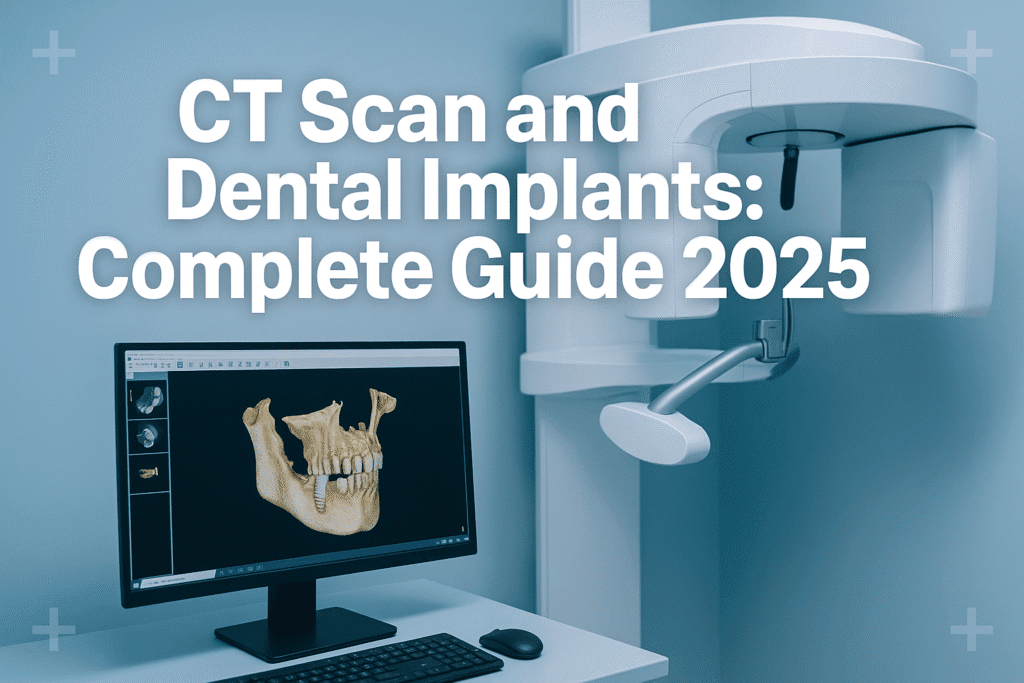
Imagine walking into your dentist’s office for a routine consultation about replacing a missing tooth, only to discover that modern technology can now map your entire jaw structure in three-dimensional detail before a single implant is placed. This isn’t science fiction—it’s the reality of how CT scan and dental implants work together to revolutionize oral healthcare in 2025. 🦷✨
The integration of computed tomography (CT) scanning with dental implant procedures has transformed what was once a somewhat unpredictable process into a precise, predictable science. Gone are the days when dentists had to rely solely on traditional X-rays and educated guesswork to determine the best placement for your dental implants.
Key Takeaways
• CT scans provide 3D imaging that allows dentists to see bone density, nerve locations, and anatomical structures before implant placement
• Success rates increase significantly when CT scans are used for implant planning, reducing complications by up to 40%
• Treatment time is often reduced because precise planning eliminates guesswork and reduces the need for revision procedures
• Bone grafting needs can be determined in advance, allowing for comprehensive treatment planning
• Cost-effectiveness improves despite initial imaging expenses due to fewer complications and faster healing times
Understanding CT Scans in Modern Dental Practice
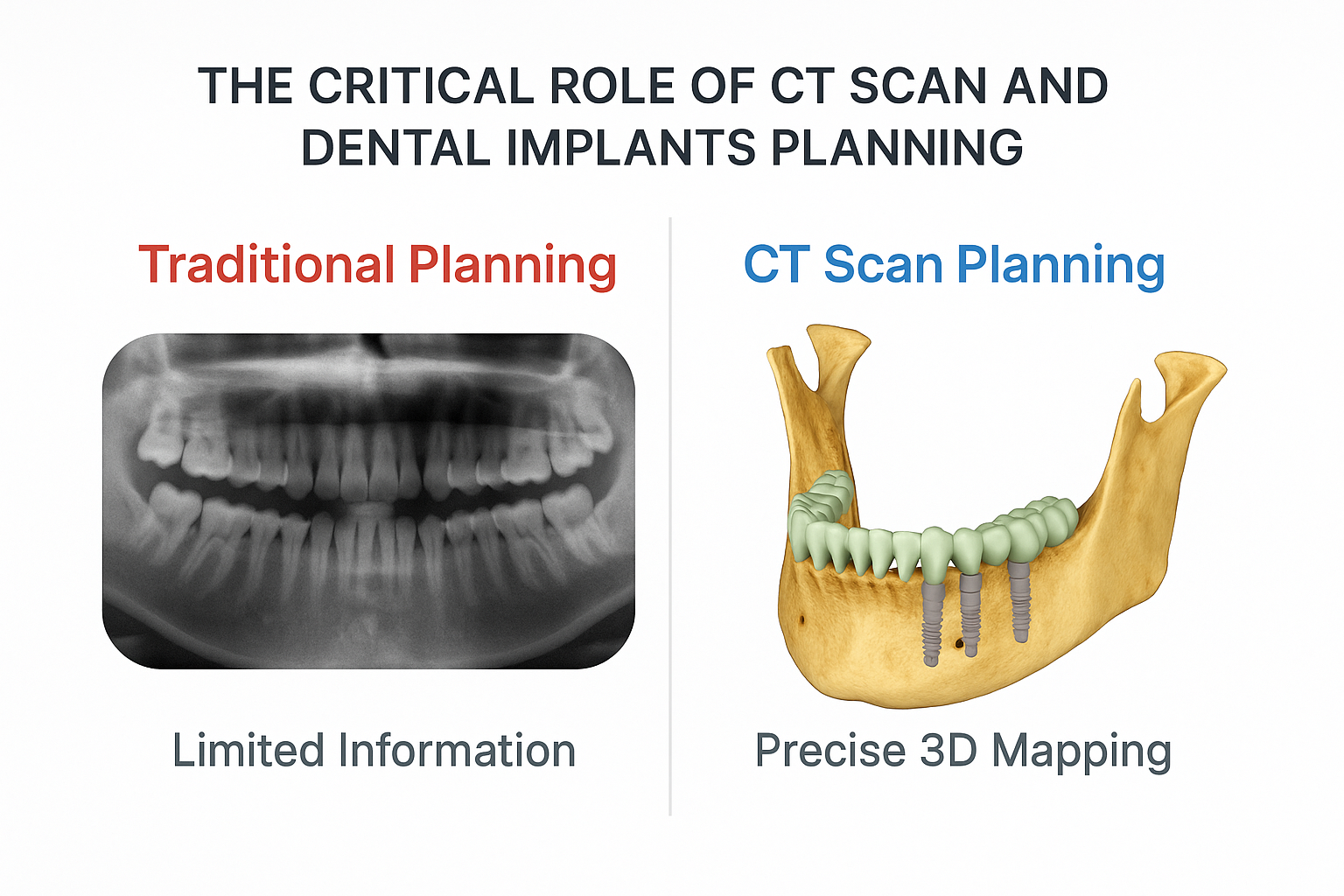
Computed tomography (CT) scans have become the gold standard for dental implant planning, and for good reason. Unlike traditional dental X-rays that provide only a flat, two-dimensional view, CT scans create detailed three-dimensional images of your jaw, teeth, and surrounding structures.
When I first learned about the capabilities of dental CT scanning, I was amazed by the level of detail these machines can capture. A single scan can reveal:
- Bone density and quality throughout your jaw
- Exact measurements of available bone height and width
- Location of nerves and blood vessels that must be avoided during surgery
- Sinus cavity positioning in the upper jaw
- Existing dental work and its relationship to proposed implant sites
How CT Scanning Works for Dental Implants
The process is surprisingly straightforward and comfortable for patients. You’ll sit or stand in the CT machine while it rotates around your head, capturing hundreds of images from different angles. The entire scan typically takes just 10-30 seconds, making it much faster than medical CT scans.
These images are then processed by sophisticated software that creates a detailed 3D model of your jaw. Your dentist can manipulate this model on a computer screen, viewing it from any angle and even “slicing” through different layers to examine internal structures.
The Critical Role of CT Scan and Dental Implants Planning
Precision is everything when it comes to dental implant success. The relationship between CT scan and dental implants planning cannot be overstated—it’s literally the difference between guesswork and scientific precision.
Pre-Surgical Benefits
Before CT scanning became standard practice, dentists had to make educated estimates about bone quality and implant placement. Now, we can:
- Measure exact bone dimensions to select the optimal implant size
- Identify potential complications before they occur
- Plan the surgical approach in detail
- Determine if bone grafting is necessary
- Create surgical guides for precise implant placement
Virtual Implant Placement
One of the most exciting developments in dental implant technology is virtual implant placement. Using CT scan data, your dentist can digitally place implants in the optimal positions before your surgery even begins. This process involves:
- Analyzing bone density maps to find the strongest areas
- Avoiding critical anatomical structures like nerves and sinuses
- Planning the final crown position for optimal aesthetics and function
- Creating a surgical guide for precise execution
When considering dental implant costs, this advanced planning often results in better value despite higher upfront imaging costs.
Types of CT Scans Used for Dental Implants
Not all CT scans are created equal. In dental implant planning, we primarily use Cone Beam Computed Tomography (CBCT), which is specifically designed for oral and maxillofacial imaging.
Cone Beam CT (CBCT) vs. Medical CT
| Feature | CBCT | Medical CT |
|---|---|---|
| Radiation Dose | Lower (similar to panoramic X-ray) | Higher |
| Image Quality | Excellent for hard tissues | Good overall resolution |
| Cost | More affordable | More expensive |
| Availability | Common in dental offices | Hospital/imaging centers |
| Scan Time | 10-30 seconds | Several minutes |
Advanced CBCT Features
Modern CBCT machines offer incredible capabilities:
- High-resolution imaging down to 0.1mm accuracy
- Reduced radiation exposure compared to medical CT scans
- Immediate results available for same-day treatment planning
- Multiple viewing modes including cross-sectional, panoramic, and 3D reconstruction
Benefits of Using CT Scan and Dental Implants Together
The synergy between CT scan and dental implants technology has created numerous advantages for both patients and dental professionals:
Enhanced Surgical Precision
Surgical guides created from CT scan data allow for incredibly precise implant placement. These guides fit over your existing teeth or gums and have pre-drilled holes that direct the implant drill to exactly the right location, angle, and depth.
Reduced Treatment Time
When everything is planned in advance using CT data, your actual surgery often takes less time. There’s no need for the surgeon to pause and reassess during the procedure—every step has been predetermined.
Improved Success Rates
Studies consistently show that implants placed with CT guidance have higher success rates. The ability to:
- Select optimal bone sites
- Avoid anatomical complications
- Ensure proper implant positioning
- Plan for adequate healing space
All contribute to better long-term outcomes.
Better Patient Communication
3D visualizations help patients understand their treatment in ways that traditional X-rays never could. You can see exactly where your implants will be placed and how your final restoration will look.
For those interested in specific procedures, understanding All-on-4 dental implants cost becomes much clearer when you can visualize the entire treatment plan.
CT Scan Process for Dental Implant Patients
What to Expect During Your CT Scan
The CT scanning process is designed to be comfortable and efficient:
Before Your Scan:
- Remove all metal objects (jewelry, glasses, dental appliances)
- Inform your dentist of any medical conditions or medications
- No special preparation is typically required
During the Scan:
- You’ll be positioned in the CT machine (sitting or standing)
- Bite on a positioning device to keep your head still
- The machine rotates around your head for 10-30 seconds
- You’ll need to remain very still during this time
After the Scan:
- Images are immediately available for review
- Your dentist will analyze the data and create your treatment plan
- You can often see the 3D images during the same appointment
Understanding Your CT Scan Results
Your dentist will review several key aspects of your CT scan:
Bone Quality Assessment
- Density measurements (Hounsfield units)
- Cortical vs. cancellous bone distribution
- Areas of bone loss or deficiency
Anatomical Structure Mapping
- Inferior alveolar nerve location
- Maxillary sinus boundaries
- Mental foramen position
- Blood vessel pathways
Implant Site Evaluation
- Available bone height and width
- Optimal implant size and type
- Angulation requirements
- Need for bone grafting
Cost Considerations: CT Scan and Dental Implants
Understanding the financial aspects of CT scanning for dental implants helps you make informed decisions about your treatment.
CT Scan Costs
CBCT scans for dental implants typically range from $300-$600, depending on:
- Geographic location
- Facility type (dental office vs. imaging center)
- Insurance coverage
- Extent of imaging required
Insurance Coverage
Many dental insurance plans now recognize the value of CT scanning for implant planning and provide partial coverage. Medical insurance may also contribute if the scan is deemed medically necessary.
Return on Investment
While CT scanning adds to upfront costs, it often saves money long-term by:
- Reducing surgical complications
- Minimizing revision procedures
- Shortening healing times
- Improving implant success rates
For comprehensive cost information, explore our dental implant cost guide to understand all aspects of implant treatment expenses.
Safety and Radiation Exposure
One of the most common concerns patients have about CT scanning relates to radiation exposure. Let me address these concerns with factual information:
Radiation Levels in Perspective
CBCT radiation exposure is significantly lower than medical CT scans and comparable to other dental imaging:
- CBCT scan: 5-74 microsieverts (μSv)
- Panoramic X-ray: 2.7-24 μSv
- Full mouth X-rays: 35-171 μSv
- Medical chest CT: 7,000 μSv
- Annual background radiation: 2,000-3,000 μSv
Safety Protocols
Modern CBCT machines incorporate numerous safety features:
- Automatic exposure control adjusts radiation based on patient size
- Collimation limits radiation to only the area being scanned
- Digital sensors require less radiation than traditional film
- Lead aprons provide additional protection
Who Should Avoid CT Scans
While CBCT scans are generally very safe, certain individuals should discuss alternatives with their dentist:
- Pregnant women (especially first trimester)
- Children (unless absolutely necessary)
- Patients with multiple recent CT scans
Alternatives to CT Scans for Implant Planning
While CT scanning has become the gold standard, other imaging options exist:
Traditional Panoramic X-rays
Pros:
- Lower cost
- Widely available
- Minimal radiation exposure
Cons:
- Two-dimensional imaging only
- Limited detail
- Higher risk of complications
Intraoral X-rays
Pros:
- Very low radiation
- Excellent detail for individual teeth
- Cost-effective
Cons:
- Limited field of view
- Cannot show 3D relationships
- Multiple images needed
When Alternatives Might Be Appropriate
In certain situations, traditional imaging might be sufficient:
- Single implant in ideal bone conditions
- Replacement of previously successful implant
- Budget constraints with low-risk cases
However, for complex cases like 4-in-1 dental implants, CT scanning is virtually essential.
Advanced Applications and Future Trends
The relationship between CT scan and dental implants continues to evolve with technological advances:
Artificial Intelligence Integration
AI-powered analysis of CT scans is beginning to:
- Automatically identify optimal implant positions
- Predict potential complications
- Suggest treatment modifications
- Improve diagnostic accuracy
Real-Time Surgical Navigation
Dynamic navigation systems use CT scan data to provide real-time guidance during surgery, similar to GPS for dental implants.
Integration with Digital Workflows
Modern dental practices are creating seamless digital workflows that connect:
- CT scanning
- Digital impressions
- CAD/CAM crown design
- 3D printing of surgical guides
- Same-day implant placement
Emerging Technologies
Photon-counting CT and other advanced imaging technologies promise even better image quality with lower radiation exposure.
CT Scan vs Traditional X-ray for Dental Implants
Choosing the Right Provider for CT Scan and Dental Implants
Selecting the right dental team for your implant treatment is crucial for success. Here’s what to look for:
Qualifications to Consider
Dental Surgeon Credentials:
- Board certification in oral surgery or periodontics
- Advanced training in implant dentistry
- Experience with CT-guided implant placement
- Continuing education in digital dentistry
Technology and Equipment:
- On-site CBCT scanning capability
- Digital treatment planning software
- Surgical guide fabrication
- Modern implant systems
Questions to Ask Your Provider
- How many implant cases do you complete annually?
- What is your success rate for implant procedures?
- Do you have on-site CT scanning or refer to imaging centers?
- What software do you use for treatment planning?
- Can you show me examples of similar cases?
- What is your protocol for complications?
For those in the Dallas area, our comprehensive dental implant services include state-of-the-art CT scanning and treatment planning.
Common Concerns and Misconceptions
Let me address some frequently asked questions about CT scan and dental implants:
“Is CT scanning really necessary for my implant?”
While not legally required, CT scanning has become the standard of care for implant dentistry. The American Academy of Oral and Maxillofacial Radiology recommends cross-sectional imaging for all implant cases.
“Will the radiation exposure harm me?”
The radiation exposure from dental CBCT is minimal—equivalent to a few days of natural background radiation. The diagnostic benefits far outweigh the minimal risks for most patients.
“Why is CT scanning more expensive than regular X-rays?”
CT machines cost significantly more than traditional X-ray equipment, and the imaging process is more complex. However, the improved treatment outcomes often justify the additional expense.
“Can I get my CT scan somewhere else to save money?”
While possible, having your CT scan performed at the same office where your implants will be placed ensures better communication and treatment planning continuity.
Preparing for Your CT Scan and Implant Consultation
To get the most value from your consultation:
Before Your Appointment
- Compile your medical history including medications and health conditions
- Bring previous dental records and X-rays
- List your questions about the procedure and costs
- Research your provider and read patient reviews
During Your Consultation
- Ask to see your CT images and have them explained
- Understand the treatment timeline from start to finish
- Get detailed cost estimates including all phases of treatment
- Discuss payment options and insurance coverage
After Your CT Scan
- Request copies of your images and treatment plan
- Understand post-operative care requirements
- Schedule follow-up appointments in advance
- Arrange for assistance on surgery day if needed
For detailed cost information, explore options for dental implants with insurance coverage to maximize your benefits.
The Future of CT Scan and Dental Implants
The integration of CT scanning with dental implant procedures continues to evolve rapidly:
Emerging Technologies
Artificial Intelligence is beginning to automate treatment planning, potentially:
- Reducing planning time
- Improving accuracy
- Standardizing treatment approaches
- Predicting outcomes more reliably
4D Imaging may soon allow us to see jaw movement and function during the planning process.
Reduced Radiation technologies continue to improve, making CT scanning even safer.
Integration with Other Technologies
The future will likely see seamless integration between:
- CT scanning
- Intraoral scanning
- 3D printing
- Robotic surgery
- Virtual reality treatment planning
Conclusion
The relationship between CT scan and dental implants represents one of the most significant advances in modern dentistry. This technology has transformed implant dentistry from an art based on experience to a science based on precise data and predictable outcomes.
As we’ve explored throughout this guide, CT scanning provides numerous benefits that far outweigh the additional costs and minimal radiation exposure. From improved success rates to reduced treatment times, the advantages are clear and compelling.
Your Next Steps
If you’re considering dental implants, here’s what I recommend:
- Schedule a consultation with a qualified implant dentist who uses CT scanning
- Ask questions about their experience and technology
- Understand all costs involved in your treatment
- Review your insurance coverage for both imaging and implant procedures
- Get a second opinion if you’re unsure about the recommended treatment
The investment in proper CT scanning for your dental implant treatment is an investment in your long-term oral health and quality of life. Don’t compromise on this critical aspect of your care.
For more information about dental implant costs and treatment options, visit our comprehensive cost comparison guide to make informed decisions about your oral health investment.
Remember, successful dental implant treatment begins with proper planning, and proper planning begins with quality CT imaging. Your smile—and your peace of mind—are worth the investment in doing it right the first time. 🦷✨
Leave a Reply
Share your thoughts or ask a question about dental implants. Your email address will not be published.