

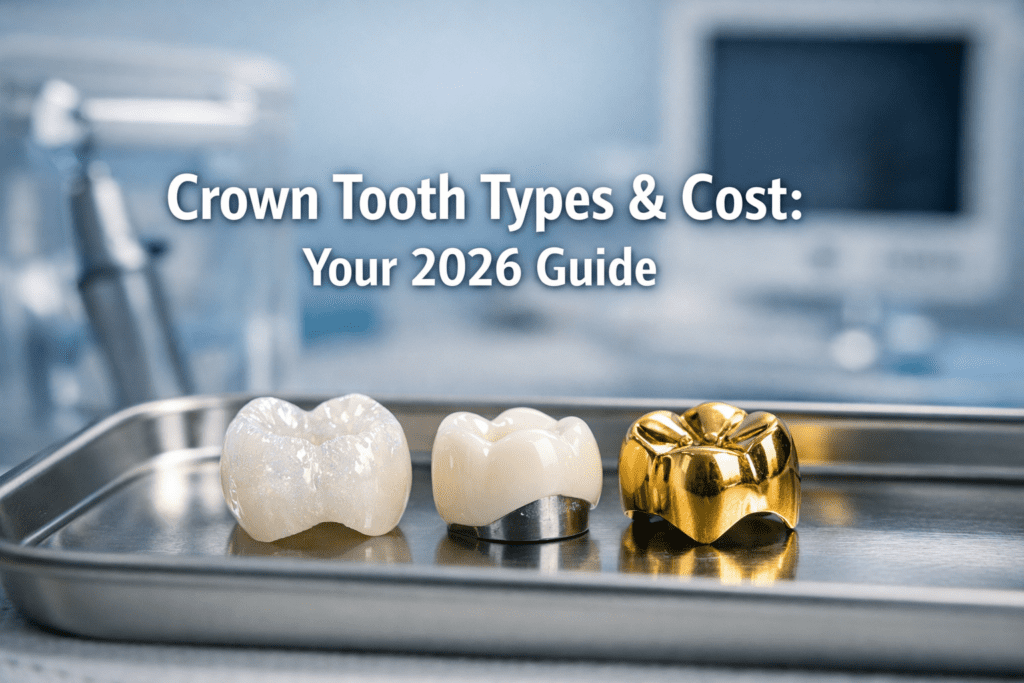
Dental crowns are a common and effective solution for restoring damaged teeth, providing both structural integrity and aesthetic improvement. Choosing the right crown involves understanding the various crown tooth types and cost implications, which can vary significantly based on material, location, and individual dental needs. This article will help you navigate these options, especially if you’re exploring dental health solutions in Dallas, Texas.
Key Takeaways
- Dental crowns restore damaged teeth: They cover a compromised tooth to protect and strengthen it.
- Multiple material types exist: Options include porcelain, zirconia, porcelain-fused-to-metal (PFM), Emax, and gold, each with distinct properties.
- Costs vary widely: In Dallas for 2026, a single crown can range from $800 to over $3,500, depending on the material and complexity.
- Zirconia and Emax offer excellent aesthetics: These are popular for visible front teeth due to their natural appearance.
- PFM and gold crowns provide durability: Often chosen for molars where biting forces are stronger.
- Factors influencing cost: Material, dentist’s fees, lab costs, complexity of the procedure, and geographic location (like Dallas) all play a role.
- Insurance coverage varies: Most dental insurance plans cover a portion of crown costs, typically 50%, but specifics depend on your plan.
- Consultation is crucial: A comprehensive dental examination and discussion with a local Dallas dentist are essential for personalized recommendations and accurate cost estimates.
What Are Dental Crowns and Why Are They Needed?
Dental crowns, often referred to as “caps,” are custom-made tooth-shaped covers placed over a damaged tooth to restore its shape, size, strength, and appearance. They are typically needed when a tooth has suffered significant decay, fracture, or wear, or after a root canal procedure to protect the weakened tooth structure. For patients in Dallas seeking to preserve natural teeth and restore oral function, a crown can be a vital component of long-term oral health.
Crowns essentially encompass the entire visible portion of a tooth above the gum line. A dentist will prepare the tooth by removing a small amount of enamel, then take an impression, which is sent to a dental lab to create the custom crown. Once fabricated, the crown is permanently bonded to the prepared tooth, providing a durable and functional restoration. Crowns are also the final restoration placed on a dental implant, completing the tooth replacement process for missing teeth solutions.
What Are the Main Crown Tooth Types and Their Characteristics?
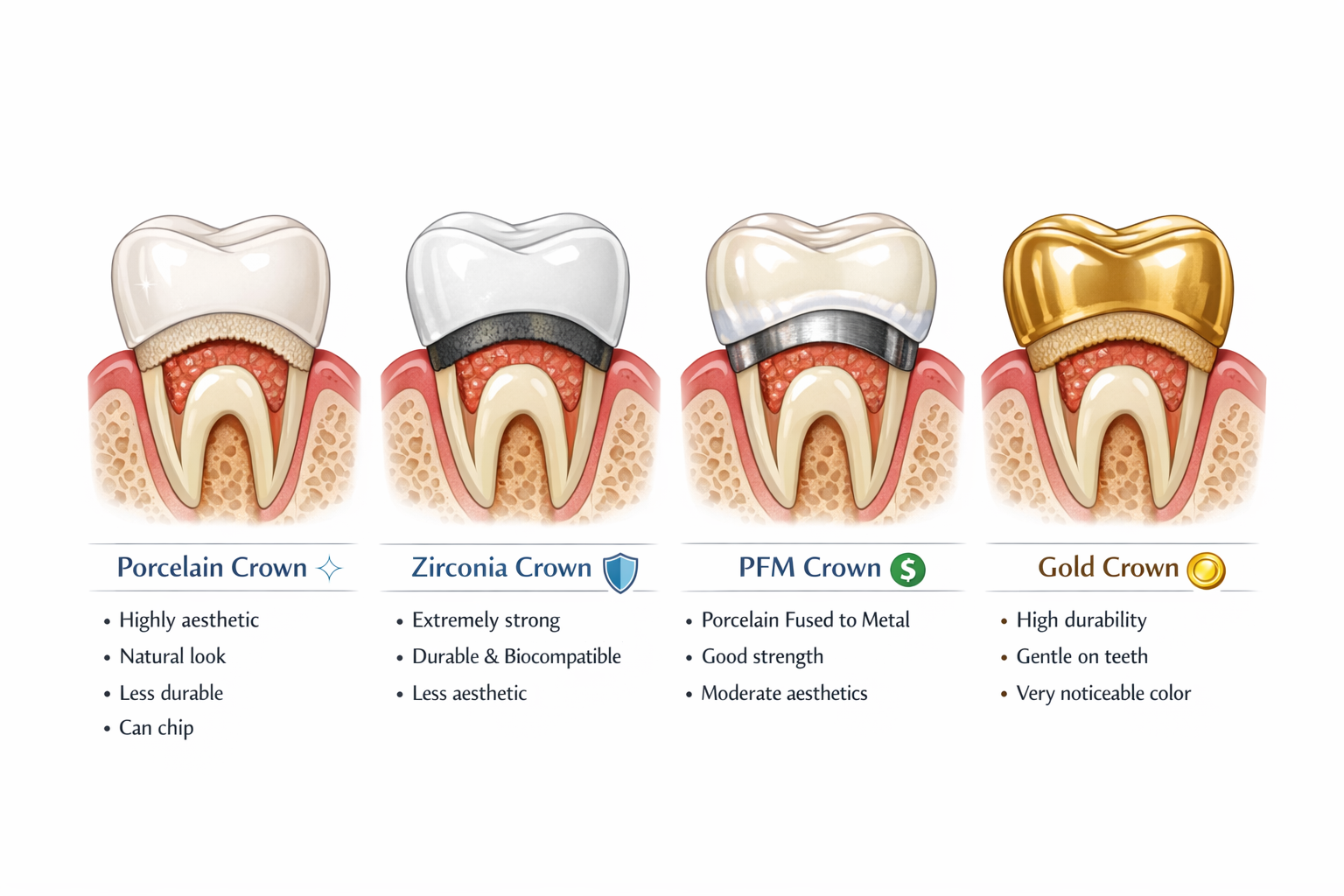
The main crown tooth types are distinguished by the materials used, each offering a unique balance of aesthetics, durability, and cost. Understanding these differences is crucial for making an informed decision about your oral health.
1. Porcelain (Ceramic) Crowns
Porcelain crowns are a popular choice due to their excellent aesthetic qualities, closely mimicking the natural translucency and color of real teeth.
- Pros: Highly aesthetic, biocompatible, metal-free, ideal for front teeth.
- Cons: Can be more brittle than other materials, potentially susceptible to chipping, may cause wear to opposing teeth if not properly polished.
- Best for: Visible teeth, patients with metal allergies.
2. Zirconia Crowns
Zirconia crowns are known for their exceptional strength and durability, combined with good aesthetics. They have become increasingly popular in recent years as a robust alternative to traditional metal and PFM crowns.
- Pros: Extremely strong and fracture-resistant, biocompatible, good aesthetics (especially “full contour” zirconia), suitable for both front and back teeth.
- Cons: Can be harder to adjust or polish once cemented, may require more tooth reduction than Emax, can be more opaque than porcelain if not designed correctly.
- Best for: Patients needing strong crowns for molars, those grinding their teeth, or individuals seeking a metal-free option. For more on this material, explore Why Zirconia Implants Cost More in Dallas.
3. Porcelain-Fused-to-Metal (PFM) Crowns
PFM crowns combine the strength of a metal substructure with the natural appearance of porcelain. They have been a standard in dentistry for decades.
- Pros: Strong and durable, good aesthetics, can be used for both front and back teeth, more affordable than all-ceramic options in some cases.
- Cons: The metal substructure can sometimes show through as a dark line at the gum line (especially as gums recede), may require more tooth reduction, metal allergies are a possibility.
- Best for: Patients needing a balance of strength and aesthetics, or those for whom cost is a significant factor.
4. Gold Crowns (Full Metal Crowns)
Gold crowns are made entirely of a gold alloy (often mixed with other metals like copper or nickel for strength). They are highly biocompatible and known for their longevity.
- Pros: Extremely durable and long-lasting, gentle on opposing teeth, highly biocompatible, very little tooth reduction required, excellent resistance to fracture.
- Cons: Poor aesthetics (gold color), higher initial material cost.
- Best for: Back molars where aesthetics are less of a concern but durability and minimal tooth preparation are priorities.
5. Emax Crowns (Lithium Disilicate)
Emax crowns are a type of all-ceramic crown known for their exceptional translucency and aesthetic appeal, often considered superior to traditional porcelain for anterior teeth.
- Pros: Outstanding aesthetics, highly translucent, strong for an all-ceramic option, minimal tooth reduction.
- Cons: Not as strong as zirconia or PFM for high-stress areas (like some molars), slightly more expensive than traditional porcelain.
- Best for: Front teeth, veneers, or inlays where superior aesthetics are paramount.
How Do Crown Tooth Types and Cost Compare in Dallas for 2026?
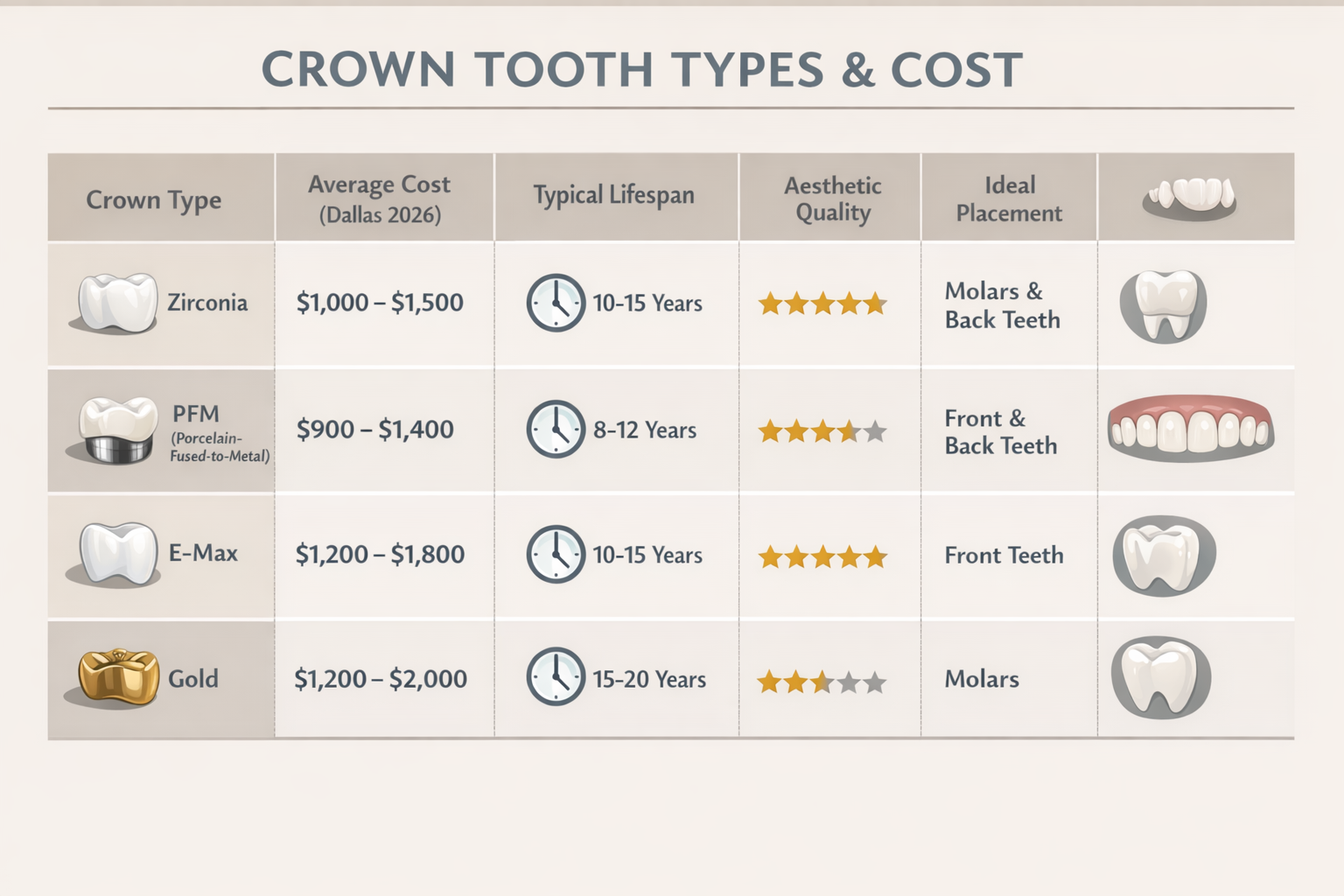
The cost of dental crowns in Dallas for 2026 can fluctuate significantly based on the chosen material, the complexity of the case, the dentist’s fees, and laboratory costs. On average, a single dental crown in Dallas can range from approximately $800 to $3,500 per tooth. This range excludes potential additional procedures like root canals or core buildups, which would add to the overall expense.
Below is a comparison of typical costs for different crown types in Dallas:
| Crown Type | Average Cost Range (Dallas, 2026) | Aesthetics | Durability | Ideal Placement |
|---|---|---|---|---|
| Porcelain (Ceramic) | $1,000 – $2,500 | Excellent | Good | Front teeth |
| Zirconia | $1,200 – $3,000 | Very Good | Excellent | Front & Back |
| PFM | $800 – $2,000 | Good | Very Good | Front & Back |
| Gold | $1,000 – $3,500 | Poor | Excellent | Back teeth |
| Emax | $1,200 – $2,800 | Outstanding | Good-Very Good | Front teeth |
These are estimated costs and actual prices may vary. A consultation with your Dallas dentist is essential for a precise quote.
Decision Rule: Choose a PFM crown if you need a cost-effective balance of strength and appearance, or if you prefer a well-established material. However, if a dark line at the gum line is a concern, or if you have metal allergies, all-ceramic options like Zirconia or Emax might be better, especially for visible teeth. For back teeth, the extreme durability of gold or zirconia can be very advantageous.
What Factors Influence the Overall Crown Cost?
Several factors contribute to the total cost of a dental crown, extending beyond just the material itself. Understanding these can help you anticipate your potential expenses in Dallas.
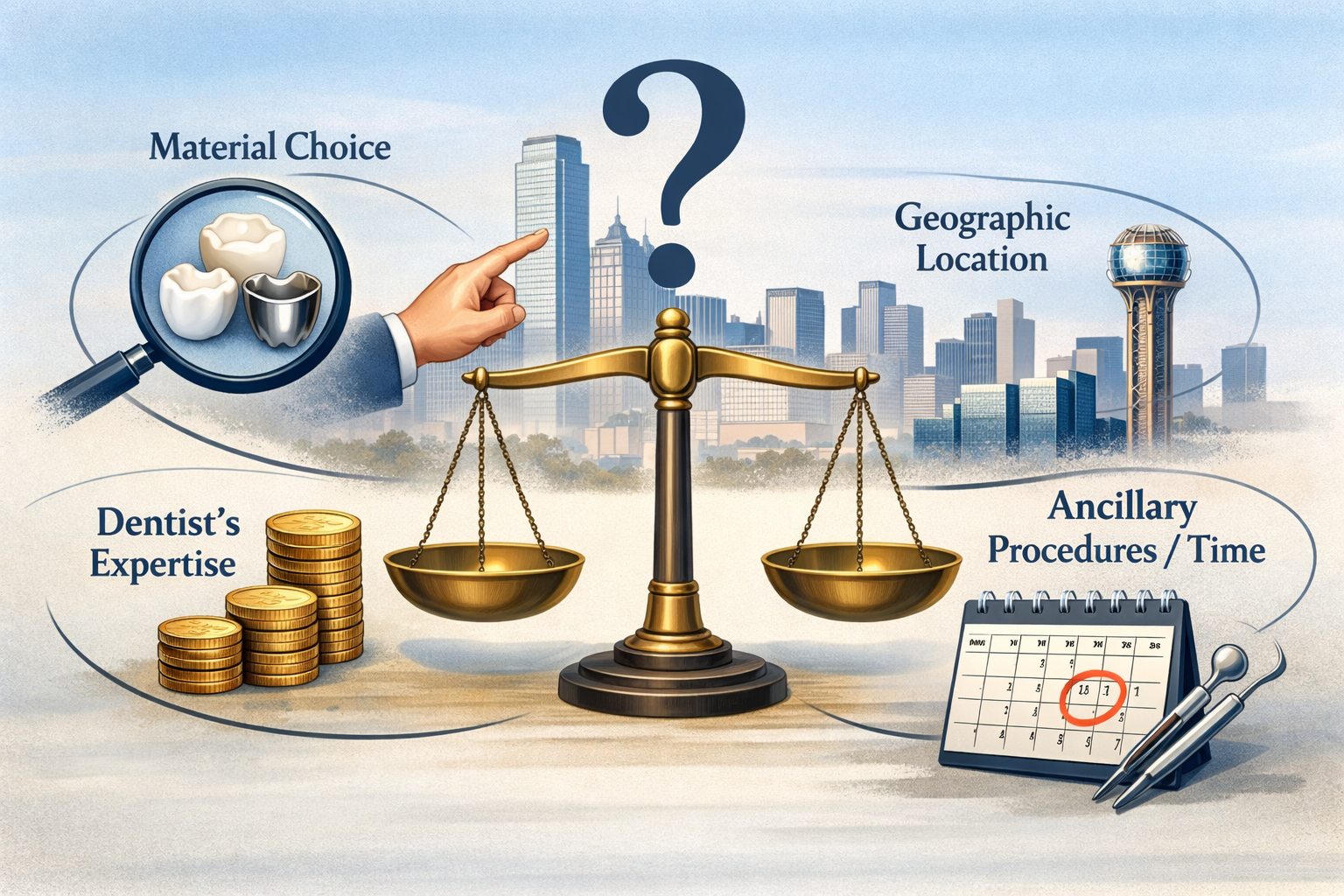
- Material Choice: As discussed, the chosen material (e.g., gold, porcelain, zirconia) is a primary cost driver due to variations in raw material expense and processing difficulty.
- Dentist’s Fees: The experience and specialization of your dentist, as well as the overhead of their practice, influence the overall fee. Highly experienced dentists in Dallas may charge more for their expertise.
- Dental Lab Fees: Crowns are custom-fabricated in dental laboratories. The quality and technology used by the lab directly impact their fees, which are then passed on to the patient.
- Location: Geographic location plays a role, with dental services in major metropolitan areas like Dallas, Texas, sometimes reflecting a higher cost of living and operational expenses compared to smaller towns. However, Dallas also benefits from competitive pricing due to a robust dental market. For comparisons, you might review Dallas TX Dental Implant Cost vs Houston/Austin 2026.
- Complexity of the Case: A crown on a simple, straightforward tooth will generally cost less than one on a severely damaged tooth requiring extensive preparation, gum contouring, or multiple adjustments.
- Additional Procedures: Often, a tooth requiring a crown may first need other treatments. These can include:
- Root Canal Treatment: If the tooth’s nerve is infected or severely damaged.
- Core Buildup: To provide sufficient structure for the crown to adhere to if significant tooth decay or fracture exists.
- Gum Surgery: To prepare the gum line for optimal crown placement.
- Temporary Crown: While the permanent crown is being fabricated.
- Anesthesia/Sedation: While local anesthesia is standard, some patients may opt for sedation options for comfort, which would incur additional costs. Learn more about Dental Implant Sedation Options Dallas.
- Warranties and Follow-up Care: Some practices offer warranties on their crowns, which might be factored into the initial cost. Post-operative check-ups and maintenance are also important for the longevity of your restoration.
Does Dental Insurance Cover Crown Tooth Types and Cost?
Most dental insurance plans in the United States do provide some level of coverage for dental crowns, as they are considered a restorative procedure for oral health. However, the extent of coverage can vary significantly from plan to plan.
Typically, dental insurance might cover 50% of the cost of a crown after you meet your deductible. It’s crucial to understand your specific policy details, including:
- Annual Maximums: Many plans have a cap on how much they will pay out in a year.
- Deductibles: The amount you must pay out-of-pocket before your insurance begins to cover costs.
- Waiting Periods: Some plans require a waiting period before covering major restorative procedures like crowns.
- In-network vs. Out-of-network: Your out-of-pocket expenses might be lower if you choose a dentist within your insurance network.
- Material Preferences: While most plans cover various crown materials, some may have limitations or only cover the cost of a “basic” crown, with you paying the difference for premium materials like zirconia or Emax.
It is always recommended to contact your insurance provider directly or have your Dallas dental office assist you in verifying your benefits before proceeding with treatment. This proactive step ensures you have a clear understanding of your financial responsibility for the crown tooth types and cost.
Alternatives to Dental Crowns
While dental crowns are an excellent solution for many situations, they are not the only option for tooth restoration. Depending on the extent of tooth damage, other alternatives might be considered.
- Fillings: For minor decay or small fractures, a simple dental filling (amalgam, composite, or glass ionomer) can restore the tooth structure. This is a less invasive and typically less expensive option.
- Inlays and Onlays: These are indirect fillings, meaning they are fabricated in a dental lab and then bonded to the tooth.
- Inlays: Cover the chewing surface between the cusps (points) of the teeth.
- Onlays: Cover one or more cusps in addition to the chewing surface.
Inlays and onlays are generally used when the damage is too extensive for a traditional filling but not severe enough to warrant a full crown. They require less tooth reduction than a crown.
- Dental Implants: If a tooth is too severely damaged to be saved with a crown, or if it is already missing, a dental implant with a crown is often the best long-term solution. A dental implant involves surgically placing a titanium post into the jawbone, which then supports a custom crown. This is considered a permanent tooth replacement option. For those exploring tooth replacement options, especially in Dallas, a consultation about dental implants is highly recommended.
- Veneers: For purely aesthetic concerns on front teeth (such as discoloration, minor chips, or gaps), veneers are thin shells of porcelain or composite resin bonded to the front surface of the tooth. They are primarily cosmetic and do not provide the structural reinforcement of a crown.
Choosing the right treatment involves a thorough assessment by a dental professional, who can recommend the most appropriate solution based on your individual needs, oral health, and budget.
Conclusion
Understanding the various crown tooth types and cost implications is an important step toward making informed decisions about your oral health. Whether you choose porcelain for its aesthetics, zirconia for its strength, or a PFM crown for a balance of both, each option serves a specific purpose in restoring your smile and chewing function. In Dallas, Texas, patients have access to a wide range of materials and experienced dental professionals ready to guide them.
Remember that while cost is a factor, prioritizing the long-term health and stability of your restoration is paramount. We encourage you to schedule a consultation with a dentist in Dallas to discuss your specific needs, receive a precise diagnosis, and obtain a personalized treatment plan and cost estimate for the crown tooth type that is right for you. Your journey to improved long-term oral health begins with clear information and professional guidance.
Related Reading
- Single Tooth Implant Cost Dallas 2026: What to Expect for a Molar
- The ‘Hidden’ Costs of Dental Implants in Dallas: What to Expect
- Dental Implants After Tooth Extraction Dallas: Timing, Costs
FAQ
What are the most common crown tooth types?
The most common crown tooth types are porcelain (ceramic), zirconia, porcelain-fused-to-metal (PFM), Emax, and gold. Each offers different benefits in terms of aesthetics, strength, and durability.
What is the average cost of a dental crown in Dallas in 2026?
In Dallas for 2026, the average cost of a single dental crown can range from $800 to $3,500, depending on the material chosen, the dentist’s fees, and any additional procedures required.
Which crown type is the most aesthetic?
Emax crowns are generally considered the most aesthetic due to their superior translucency, closely mimicking natural tooth enamel, making them ideal for front teeth. Porcelain (ceramic) crowns also offer excellent aesthetics.
Which crown type is the strongest?
Zirconia and gold crowns are generally considered the strongest and most durable crown types, making them excellent choices for molars and patients who grind their teeth.
Will my dental insurance cover the cost of a crown?
Most dental insurance plans cover a portion of the cost for dental crowns, typically around 50%, after you meet your deductible. Coverage specifics, annual maximums, and waiting periods vary by plan, so always verify with your provider.
What is the typical lifespan of a dental crown?
The typical lifespan of a dental crown ranges from 5 to 15 years, and sometimes longer. Longevity depends on the material, oral hygiene practices, biting habits, and regular dental check-ups.
Can a dental crown be placed on a dental implant?
Yes, a dental crown is the final prosthetic component placed on top of a dental implant, completing the restoration of a missing tooth. The implant acts as the tooth root, and the crown functions as the visible tooth.
Why do some crowns cost more than others?
Crown costs are influenced by the material (e.g., gold is expensive, zirconia requires specialized milling), the complexity of the case, the experience of the dental professional, laboratory fees, and the geographic location of the dental practice.
Is a temporary crown included in the cost?
Typically, the cost of a temporary crown, which protects the prepared tooth while the permanent crown is being fabricated, is included in the overall cost of the permanent crown procedure.
How long does it take to get a permanent dental crown?
The process usually involves two dental visits. The first visit is for tooth preparation and impression taking, after which a temporary crown is placed. The second visit, usually 1-2 weeks later, is for fitting and bonding the permanent crown.
Leave a Reply
Share your thoughts or ask a question about dental implants. Your email address will not be published.