

Imagine biting into your favorite apple again—without pain, worry, or embarrassment. For millions of Americans dealing with missing teeth, full dental implants represent more than just a dental procedure; they’re a pathway back to confidence and the joy of eating, speaking, and smiling freely. But here’s what stops most people in their tracks: the cost.
If you’re researching the estimated cost of full dental implants, you’re not alone. This life-changing treatment represents a significant investment, and understanding exactly what you’ll pay—and why—is crucial for making an informed decision about your oral health.
Key Takeaways
- Full dental implant costs range from $20,000 to $50,000+ per arch, depending on the treatment type and complexity
- All-on-4 implants typically cost less than individual implants for full mouth restoration
- Insurance coverage varies significantly, but many plans now offer partial coverage for implant procedures
- Financing options and payment plans make full dental implants more accessible than ever
- Long-term value often exceeds initial cost when compared to ongoing denture maintenance and replacements
Understanding Full Dental Implants: Your Foundation for Success
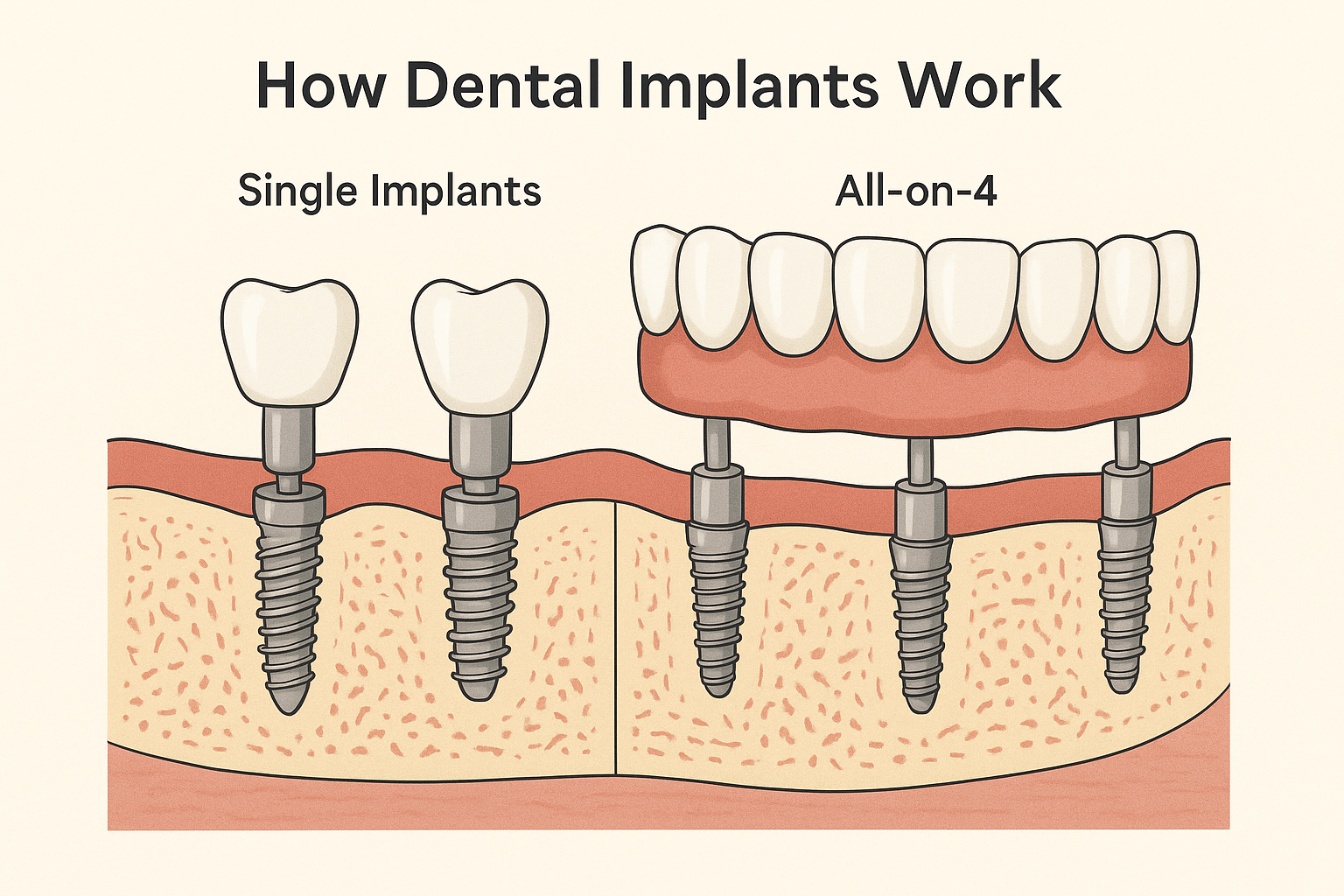
Before diving into costs, let’s clarify what we mean by “full dental implants.” This term typically refers to replacing all teeth in one or both arches (upper and/or lower jaw) using dental implants as the foundation.
Full dental implants can be achieved through several approaches:
- Individual implants for each tooth (28-32 implants total)
- All-on-4 or All-on-6 systems (4-6 implants per arch supporting a full bridge)
- Implant-supported overdentures (2-4 implants per arch supporting removable dentures)
- Hybrid approaches combining different techniques
Each option offers different benefits, recovery times, and—most importantly for your planning—different price points.
Breaking Down the Estimated Cost of Full Dental Implants

Individual Implant Approach
When replacing every tooth individually, you’re looking at the highest investment but also the most comprehensive solution. Here’s the realistic breakdown:
Cost per individual implant: $3,000 – $6,000 Full mouth (28 teeth): $84,000 – $168,000
This approach is rarely recommended for full mouth restoration due to cost and complexity, but it’s worth understanding as the premium option.
All-on-4 Dental Implants: The Popular Choice
The All-on-4 system has revolutionized full mouth restoration by using just four strategically placed implants per arch to support a complete set of teeth.
Estimated cost per arch: $20,000 – $30,000 Full mouth (both arches): $40,000 – $60,000
This represents significant savings compared to individual implants while still providing excellent stability and function.
All-on-6 Systems
For patients with more complex needs or those seeking maximum stability:
Estimated cost per arch: $25,000 – $35,000 Full mouth (both arches): $50,000 – $70,000
Implant-Supported Overdentures
The most budget-friendly full implant option:
Cost per arch: $15,000 – $25,000 Full mouth (both arches): $30,000 – $50,000
What Influences Your Final Investment?
Understanding the factors that affect your estimated cost of full dental implants helps you budget more accurately and avoid surprises.
Geographic Location Impact
Dallas and major metropolitan areas: Typically 10-20% higher than national averages Rural areas: Often 15-25% below urban pricing Coastal cities: Can be 25-40% above national averages
Complexity of Your Case
Your individual needs significantly impact pricing:
- Bone grafting requirements: Add $500 – $3,000 per site
- Sinus lifts: Additional $1,500 – $3,000 per side
- Extractions needed: $150 – $400 per tooth
- Gum disease treatment: $500 – $3,000 additional
Technology and Materials
Modern dental practices offer various technology levels:
Basic treatment: Standard implants and prosthetics Advanced treatment: 3D imaging, computer-guided surgery, premium materials Premium treatment: Same-day teeth, advanced materials, comprehensive care
The technology level you choose can affect costs by 20-50%.
💰 Full Dental Implants Cost Calculator
Insurance Coverage and Financial Planning
What Insurance Typically Covers
Most dental insurance plans now recognize implants as a necessary treatment rather than cosmetic. Here’s what you can generally expect:
Traditional dental insurance:
- Covers 0-50% of implant costs
- Annual maximums typically $1,000-$2,500
- May cover preliminary procedures (extractions, bone grafts)
Medical insurance:
- Sometimes covers implants after trauma or cancer treatment
- Rarely covers elective full mouth restoration
Dental savings plans:
- Offer 10-20% discounts on implant procedures
- No annual maximums or waiting periods
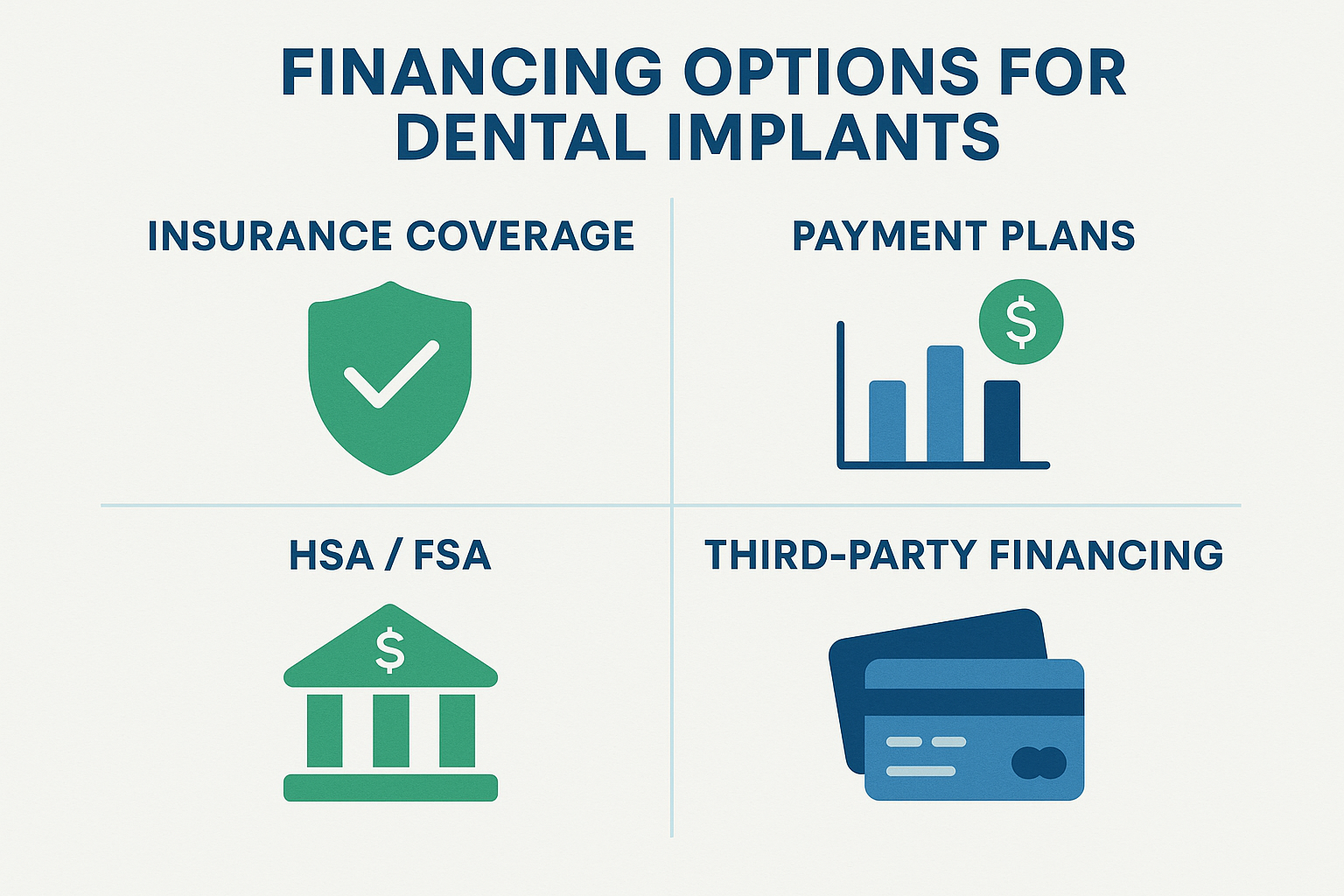
Financing Your Investment
The estimated cost of full dental implants doesn’t have to be paid upfront. Modern dental practices offer numerous financing options:
In-house payment plans:
- 0% interest for 12-24 months
- Extended payment terms up to 60 months
- No credit check options available
Third-party financing:
- CareCredit: 6-60 month terms
- LendingClub: Personal loans for dental work
- Prosper Healthcare Lending: Specialized medical financing
Health Savings Accounts (HSAs):
- Use pre-tax dollars for implant procedures
- Reduces effective cost by your tax rate
- Can be combined with other financing options
For detailed information about financing options, explore our comprehensive dental implants guide.
Comparing Treatment Options: Value Beyond Cost
When evaluating the estimated cost of full dental implants, it’s crucial to consider long-term value alongside upfront investment.
All-on-4 vs. Traditional Dentures: 10-Year Cost Analysis
All-on-4 Implants:
- Initial cost: $40,000-$60,000
- Maintenance: $500-$1,000 annually
- 10-year total: $45,000-$70,000
Traditional Dentures:
- Initial cost: $2,000-$8,000
- Relines/adjustments: $500-$1,500 every 2-3 years
- Replacements: $2,000-$8,000 every 5-7 years
- 10-year total: $8,000-$20,000
While dentures appear less expensive initially, implants often provide better long-term value when considering:
- Bone preservation (preventing facial collapse)
- Superior function (eat anything you want)
- Confidence and quality of life
- No ongoing adhesives or special cleaning
Individual Implants vs. All-on-4: Making the Right Choice
Individual implants are ideal when:
- You have sufficient bone density
- Budget allows for premium investment
- You want the most natural feel possible
- Long-term maintenance is a priority
All-on-4 systems work best when:
- Bone loss has occurred
- You need a more affordable full-mouth solution
- You want faster treatment completion
- You’re replacing failing teeth or ill-fitting dentures
Learn more about All-on-4 dental implants and their specific costs to make an informed decision.
Hidden Costs to Consider
When budgeting for your estimated cost of full dental implants, factor in these often-overlooked expenses:
Pre-Treatment Requirements
Comprehensive evaluation: $200-$500
- 3D CT scans
- Digital impressions
- Treatment planning consultations
Preparatory procedures: $500-$5,000+
- Tooth extractions
- Bone grafting
- Sinus lifts
- Gum disease treatment
Ongoing Maintenance
Annual check-ups: $150-$300 Professional cleanings: $100-$200 every 6 months Potential repairs: $500-$2,000 (rare but possible)
Temporary Solutions
If you need immediate function during healing: Temporary dentures: $500-$1,500 Provisional restorations: $1,000-$3,000
Maximizing Your Investment: Tips for Success
Choose the Right Provider
Your choice of dental professional significantly impacts both cost and outcomes. Look for:
- Board certification in oral surgery or prosthodontics
- Extensive implant experience (ask about case numbers)
- Modern technology (3D imaging, computer-guided surgery)
- Comprehensive care under one roof
- Transparent pricing with detailed treatment plans
Timing Your Treatment
Best times for implant treatment:
- Winter months: Many practices offer promotions
- Beginning of year: Fresh insurance benefits
- When you can take time off: Proper healing is crucial
Geographic Considerations
If you’re in Dallas, you have access to some of the nation’s top implant specialists. However, dental tourism to other states or countries can reduce costs by 30-50%. Consider:
Pros of local treatment:
- Easy follow-up care
- Established relationships
- Legal recourse if issues arise
- No travel expenses
Pros of dental tourism:
- Significant cost savings
- Vacation opportunity
- Access to international specialists
For Dallas residents, our local dental implant specialists offer competitive pricing with the convenience of hometown care.
What to Expect: Your Journey Timeline
Understanding the treatment timeline helps you plan both financially and personally for your full dental implant investment.
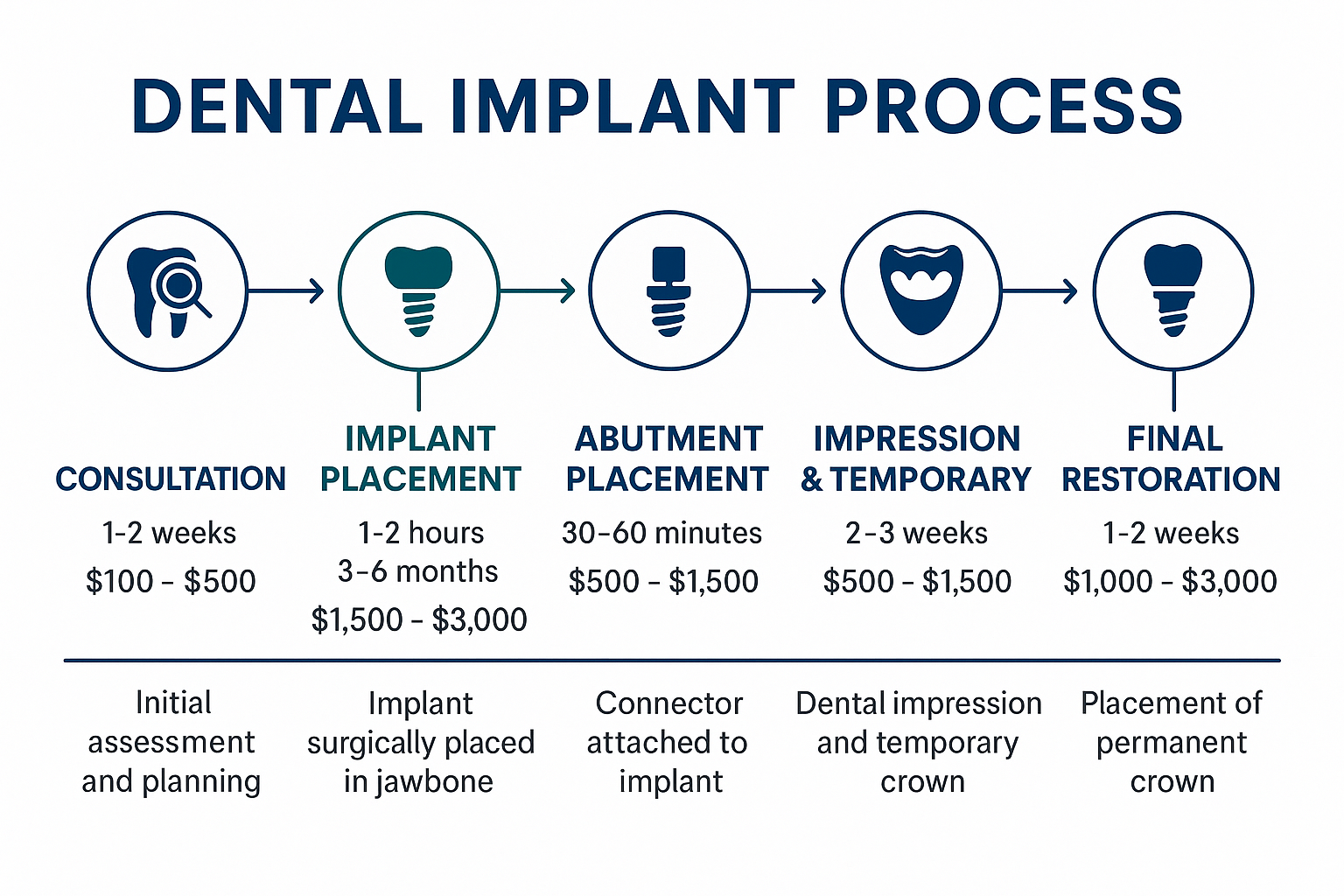
Phase 1: Consultation and Planning (1-2 weeks)
- Initial consultation: $100-$300
- Comprehensive imaging: $200-$500
- Treatment plan development: Usually included
Phase 2: Preparatory Work (2-12 weeks)
- Extractions: $150-$400 per tooth
- Bone grafting: $500-$3,000 per site
- Healing time: 3-6 months if grafting needed
Phase 3: Implant Placement (1-2 days)
- Surgical procedure: Included in total cost
- Temporary teeth: $500-$3,000 if needed
- Initial healing: 7-14 days
Phase 4: Integration Period (3-6 months)
- Osseointegration (bone fusion)
- Regular check-ups: $100-$200 each
- Temporary solutions as needed
Phase 5: Final Restoration (2-4 weeks)
- Final impressions and fitting
- Permanent prosthetic delivery
- Final adjustments: Usually included
For a detailed breakdown of what to expect during your implant journey, visit our lifelong smiles dental implants guide.
Special Considerations for Complex Cases
Some patients require additional considerations that affect the estimated cost of full dental implants:
Patients with Significant Bone Loss
Zygomatic implants: $8,000-$15,000 per implant
- Anchor into cheekbone rather than jaw
- Avoid need for extensive bone grafting
- Specialized procedure requiring expert surgeon
Full mouth bone reconstruction: $10,000-$30,000
- Major grafting procedures
- Extended healing times
- Multiple surgical phases
Medical Conditions Affecting Treatment
Diabetes patients:
- May require additional monitoring
- Healing time potentially extended
- Success rates slightly lower but still excellent
Smokers:
- Higher failure rates (up to 15% vs. 2-5% for non-smokers)
- Extended healing requirements
- May require smoking cessation program
Osteoporosis patients:
- Special implant types may be needed
- Additional healing time required
- Success rates remain high with proper planning
Regional Cost Variations: Dallas vs. National Averages
As a Dallas resident, you’ll find implant costs generally align with major metropolitan pricing:
Dallas average costs:
- All-on-4 single arch: $22,000-$32,000
- All-on-4 full mouth: $44,000-$64,000
- Individual implants: $3,500-$6,500 each
Cost comparison:
- 15% higher than rural Texas
- 10% lower than Los Angeles or New York
- 5% higher than Houston or Austin
- Competitive with other major metropolitan areas
The advantage of choosing Dallas for your implant treatment includes:
- Access to top specialists
- Latest technology and techniques
- Competitive pricing within the region
- Excellent follow-up care options
Explore Dallas-area dental implant options to find the right provider for your needs.
Making Your Decision: Next Steps
Now that you understand the estimated cost of full dental implants, here’s how to move forward confidently:
1. Get Multiple Consultations
- Schedule 2-3 consultations with qualified providers
- Compare treatment plans, not just prices
- Ask about financing options and guarantees
- Verify credentials and experience
2. Understand Your Total Investment
- Request detailed, written estimates
- Factor in all phases of treatment
- Include potential additional procedures
- Consider long-term maintenance costs
3. Explore Financing Options
- Check with your insurance provider
- Investigate HSA/FSA eligibility
- Compare financing terms from multiple sources
- Consider the tax benefits of medical expenses
4. Plan Your Timeline
- Consider work and personal schedules
- Plan for healing time between phases
- Arrange for temporary solutions if needed
- Schedule time off for major procedures
For those ready to take the next step, our dental implant consultation process can help you get accurate pricing for your specific situation.
Conclusion: Your Investment in a Lifetime of Smiles
The estimated cost of full dental implants represents more than a financial investment—it’s an investment in your health, confidence, and quality of life. While the upfront costs may seem significant, ranging from $30,000 to $70,000 for most full-mouth restorations, the long-term benefits often far exceed the initial expense.
Remember these key points as you make your decision:
✅ All-on-4 systems offer the best balance of cost and function for most patients ✅ Financing options make treatment accessible with manageable monthly payments
✅ Insurance coverage is improving, with many plans now covering portions of implant treatment ✅ Long-term value often exceeds that of traditional alternatives when considering maintenance and replacement costs ✅ Quality of life improvements are immeasurable—from eating your favorite foods to smiling with confidence
Your journey to a restored smile starts with understanding your options and finding the right provider. Don’t let cost concerns prevent you from exploring this life-changing treatment. Many patients find that the investment in full dental implants pays dividends in improved health, confidence, and overall well-being for decades to come.
Ready to take the next step? Schedule consultations with qualified implant specialists in your area, explore financing options, and begin your journey toward the smile you deserve. Your future self will thank you for making this investment in your oral health and quality of life.
For more information about dental implant bridges and other restoration options, continue exploring our comprehensive guides to make the most informed decision about your dental health.
Leave a Reply
Share your thoughts or ask a question about dental implants. Your email address will not be published.