

Imagine walking into an orthodontist’s office in Texas and receiving a quote for braces that leaves you speechless—not because it’s surprisingly affordable, but because the numbers seem overwhelming. You’re not alone. The cost of braces in Texas has become a significant concern for thousands of families across the Lone Star State, with prices varying dramatically based on location, treatment type, and provider experience.
Whether you’re in bustling Houston, historic San Antonio, or a small Texas town, understanding orthodontic costs is crucial for making informed decisions about your family’s dental health. The good news? With proper research and planning, quality orthodontic care is more accessible than you might think.
Key Takeaways
• Average orthodontic treatment costs in Texas range from $3,000 to $8,000, with traditional metal braces typically being the most affordable option
• Geographic location significantly impacts pricing, with major metropolitan areas like Dallas and Houston commanding higher fees than rural communities
• Insurance coverage and flexible payment plans can reduce out-of-pocket expenses by 25-50% in many cases
• Treatment duration and complexity directly influence total costs, with simple cases potentially saving thousands of dollars
• Alternative orthodontic options like clear aligners and ceramic braces offer different value propositions for various budgets and lifestyle needs
Understanding Orthodontic Treatment Costs in Texas
The cost of braces in Texas encompasses much more than the initial price quote you receive. Understanding the complete financial picture helps families budget effectively and avoid unexpected expenses throughout treatment.
What’s Included in Orthodontic Treatment Costs
Most orthodontic practices in Texas structure their pricing as comprehensive treatment fees that include:
- Initial consultation and diagnostic records (X-rays, impressions, photos)
- Braces or aligner placement
- Regular adjustment appointments (typically every 4-8 weeks)
- Emergency visits for broken brackets or wires
- Retention phase including retainers after active treatment
However, some practices charge separately for certain services, so it’s essential to clarify what’s included in your quoted price.
Factors Influencing Treatment Costs
Several key factors determine the final cost of orthodontic treatment:
Treatment Complexity: Simple spacing issues cost significantly less than complex bite corrections requiring jaw surgery or extensive tooth movement.
Treatment Duration: Longer treatment times generally mean higher costs due to more appointments and materials needed.
Appliance Type: Traditional metal braces typically cost less than ceramic braces, lingual braces, or clear aligners.
Geographic Location: Urban areas like Austin and Dallas typically charge 15-30% more than smaller Texas communities.
Orthodontist Experience: Board-certified specialists and those with extensive experience often command premium pricing.
Average Cost of Braces in Texas by Type
Understanding the price ranges for different orthodontic options helps you make informed decisions based on your budget and preferences.
Traditional Metal Braces
Price Range: $3,000 – $6,000
Metal braces remain the most cost-effective orthodontic solution in Texas. These time-tested appliances offer:
- ✅ Durability and effectiveness for all types of orthodontic issues
- ✅ Lower cost compared to aesthetic alternatives
- ✅ Faster treatment times in many cases
- ✅ Customization options with colored elastic bands
Ceramic Braces
Price Range: $4,000 – $7,000
Ceramic braces provide a more aesthetic option while maintaining the effectiveness of traditional braces:
- ✅ Tooth-colored brackets blend with natural teeth
- ✅ Similar effectiveness to metal braces
- ❌ Higher cost due to materials and manufacturing
- ❌ Potential staining of elastic ties
Clear Aligners (Invisalign and Alternatives)
Price Range: $4,500 – $8,000
Clear aligner therapy has gained popularity among Texas patients for its convenience and aesthetics:
- ✅ Nearly invisible appearance
- ✅ Removable for eating and cleaning
- ✅ Comfortable with no metal components
- ❌ Higher cost than traditional options
- ❌ Requires discipline for compliance
Lingual Braces
Price Range: $6,000 – $10,000
Lingual braces attach to the back of teeth, offering complete invisibility:
- ✅ Completely hidden from view
- ✅ Effective for complex cases
- ❌ Highest cost option
- ❌ Longer adjustment period for speech and comfort
Regional Cost Variations Across Texas
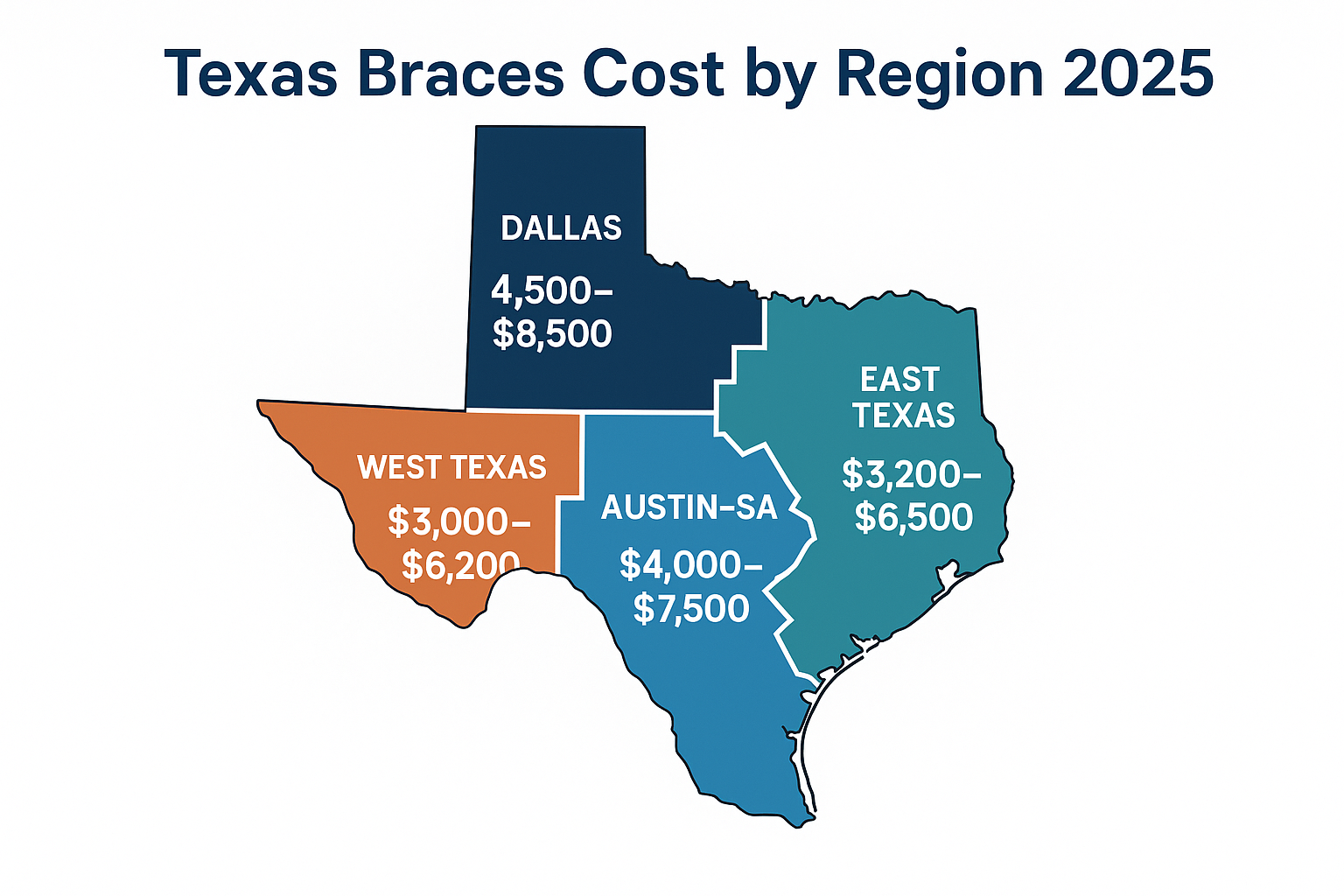
The cost of braces in Texas varies significantly depending on your location within the state. Understanding these regional differences helps set realistic budget expectations.
Major Metropolitan Areas
Dallas-Fort Worth Metroplex
- Average Range: $4,500 – $8,500
- Higher costs due to increased overhead and demand
- More specialist options and advanced technology
Houston Area
- Average Range: $4,200 – $8,000
- Competitive market with numerous providers
- Medical center proximity offers specialized options
Austin-San Antonio Corridor
- Average Range: $4,000 – $7,500
- Growing population increasing demand
- Mix of established and newer practices
Smaller Cities and Rural Areas
East Texas (Tyler, Longview, Marshall)
- Average Range: $3,200 – $6,500
- Lower overhead costs benefit patients
- Fewer specialists may mean longer wait times
West Texas (Lubbock, Midland, Abilene)
- Average Range: $3,000 – $6,200
- Most affordable region in the state
- Limited provider options in some areas
Coastal Areas (Corpus Christi, Beaumont)
- Average Range: $3,500 – $6,800
- Moderate pricing with good access to care
- Hurricane considerations may affect scheduling
Insurance Coverage and Payment Options
Navigating insurance coverage and payment options can significantly reduce the financial burden of orthodontic treatment in Texas.
Dental Insurance Coverage
Most dental insurance plans provide orthodontic benefits, though coverage varies widely:
Typical Coverage Patterns:
- 50% coverage up to a lifetime maximum (usually $1,000-$2,500)
- Age restrictions may apply (some plans only cover children)
- Waiting periods of 6-12 months before benefits activate
- Pre-authorization requirements for treatment approval
Maximizing Insurance Benefits:
- Verify coverage details before starting treatment
- Understand lifetime maximums and plan accordingly
- Submit pre-treatment estimates to avoid surprises
- Coordinate with medical insurance for jaw surgery cases
Flexible Spending Accounts (FSAs) and Health Savings Accounts (HSAs)
These tax-advantaged accounts can provide significant savings:
- FSA Benefits: Use pre-tax dollars, reducing effective treatment cost by your tax rate
- HSA Advantages: Triple tax benefit with potential for investment growth
- Annual Limits: Plan contributions based on treatment timeline
Payment Plans and Financing Options
Most Texas orthodontic practices offer flexible payment arrangements:
In-House Payment Plans:
- No interest financing for 12-24 months
- Low down payments (often $500-$1,500)
- Automatic payment discounts available
Third-Party Financing:
- CareCredit: Healthcare-specific credit with promotional rates
- LendingClub: Personal loans for medical expenses
- Orthodontic-specific lenders: Specialized terms for dental treatment
🦷 Texas Braces Cost Calculator
💡 Note: This calculator provides estimates based on 2025 Texas averages. Actual costs may vary based on specific treatment needs, orthodontist experience, and practice location. Always consult with a qualified orthodontist for accurate pricing.
Choosing the Right Orthodontist in Texas
Selecting the right orthodontist significantly impacts both treatment outcomes and costs. The cost of braces in Texas shouldn’t be your only consideration when making this important decision.
Credentials and Experience
Board Certification: Look for orthodontists certified by the American Board of Orthodontics, indicating advanced training and commitment to excellence.
Years of Practice: Experienced practitioners often provide more efficient treatment, potentially reducing overall costs through shorter treatment times.
Continuing Education: Orthodontists who stay current with latest techniques and technology often provide better value through improved treatment efficiency.
Technology and Treatment Options
Modern orthodontic practices offer advanced technologies that can improve treatment outcomes:
- Digital impressions eliminate messy traditional molds
- 3D treatment planning provides more predictable results
- Accelerated orthodontics options may reduce treatment time
- Remote monitoring systems reduce appointment frequency
Practice Culture and Communication
The best orthodontic experience combines clinical excellence with outstanding patient care:
Transparent Pricing: Reputable practices provide detailed treatment estimates upfront, including all potential additional costs.
Flexible Scheduling: Convenient appointment times reduce missed school or work.
Emergency Care: Clear policies for handling orthodontic emergencies outside regular hours.
Patient Education: Practices that invest time in educating patients typically achieve better treatment outcomes.
Ways to Reduce Orthodontic Costs in Texas
Smart planning and research can significantly reduce the cost of braces in Texas without compromising treatment quality.
Timing Strategies
Early Treatment: Interceptive orthodontics for children (ages 7-9) can prevent more complex and expensive treatment later.
Seasonal Promotions: Many practices offer discounts during slower periods, typically late fall and early winter.
Insurance Year Planning: Maximize benefits by starting treatment early in your insurance year.
Alternative Treatment Options
Orthodontic Schools: University of Texas Health Science Center and other dental schools offer supervised student treatment at reduced costs.
Community Health Centers: Some federally qualified health centers provide orthodontic services on sliding fee scales.
Group Practices: Larger orthodontic groups may offer more competitive pricing due to economies of scale.
Financial Planning Tips
Treatment Phasing: Some cases allow for phased treatment, spreading costs over longer periods.
Family Discounts: Many practices offer discounts for multiple family members receiving treatment simultaneously.
Referral Programs: Some orthodontists provide credits for successful patient referrals.
Tax Benefits: Orthodontic treatment often qualifies for medical tax deductions when expenses exceed 7.5% of adjusted gross income.
What to Expect During Treatment
Understanding the orthodontic process helps you budget for both time and financial commitments throughout treatment.
Initial Consultation Phase
Most orthodontic consultations in Texas include:
- Comprehensive examination of teeth, bite, and facial structure
- Digital X-rays to assess root positions and jaw development
- Treatment planning discussion with cost estimates
- Timeline expectations for your specific case
Active Treatment Phase
Regular appointments are essential for successful treatment:
Appointment Frequency: Most patients visit every 4-8 weeks for adjustments.
Duration Expectations: Treatment typically lasts 18-36 months, depending on complexity.
Compliance Requirements: Following orthodontist instructions significantly impacts treatment success and duration.
Retention Phase
Post-treatment retention is crucial for maintaining results:
Retainer Types: Fixed or removable retainers, each with different cost implications.
Wearing Schedule: Initial full-time wear transitioning to nighttime-only wear.
Replacement Costs: Budget for potential retainer replacements over time.
Special Considerations for Adult Orthodontics
Adult orthodontic treatment in Texas has unique considerations affecting both cost and treatment approach.
Adult Treatment Differences
Treatment Duration: Adult treatment often takes longer due to slower tooth movement and more complex cases.
Additional Procedures: Adults may require periodontal treatment or restorative work before orthodontics.
Aesthetic Concerns: Adults often prefer less visible treatment options, impacting cost considerations.
Insurance Considerations for Adults
Many dental insurance plans have age restrictions for orthodontic coverage:
- Age Limits: Some plans only cover orthodontics for patients under 19
- Medical Necessity: Adult treatment may qualify for coverage if deemed medically necessary
- Alternative Coverage: Some medical insurance plans cover orthodontics related to jaw surgery or sleep apnea
Financing Options for Adults
Adults often have more financing options available:
- Better Credit Access: Established credit history may qualify for better financing terms
- HSA/FSA Maximization: Higher contribution limits for adult accounts
- Employer Benefits: Some employers offer orthodontic benefits or flexible spending account contributions
Common Orthodontic Problems and Treatment Costs
Different orthodontic issues require varying levels of intervention, directly affecting the cost of braces in Texas.
Simple Cases ($3,000 – $5,500)
Minor Crowding: Slight overlapping of teeth requiring minimal movement.
Small Gaps: Spaces between teeth that close relatively easily.
Minor Bite Issues: Slight overbite or underbite requiring limited correction.
Moderate Cases ($4,500 – $6,500)
Moderate Crowding: Significant tooth overlap requiring extraction or expansion.
Crossbite Correction: Teeth that bite incorrectly requiring careful repositioning.
Canine Impaction: Guiding impacted canine teeth into proper position.
Complex Cases ($6,000 – $10,000+)
Severe Crowding: Extensive tooth overlap requiring multiple extractions.
Jaw Surgery Cases: Skeletal discrepancies requiring surgical intervention.
Multiple Missing Teeth: Complex space management and coordination with restorative treatment.
Maintaining Your Investment: Post-Treatment Care
Protecting your orthodontic investment requires ongoing commitment and occasional additional costs.
Retainer Care and Replacement
Initial Retainer Cost: Usually included in treatment fee, but replacements cost $200-$500 each.
Maintenance Schedule: Regular retainer check-ups ensure proper fit and function.
Lifetime Wear: Most orthodontists recommend lifelong nighttime retainer wear.
Long-Term Oral Health
Regular Dental Care: Continued professional cleanings and check-ups prevent complications.
Orthodontic Check-ups: Annual visits monitor tooth stability and retainer condition.
Emergency Care: Budget for potential orthodontic emergencies even after treatment completion.
Conclusion
Understanding the cost of braces in Texas empowers you to make informed decisions about orthodontic treatment for yourself or your family. While prices vary significantly across the state, ranging from $3,000 in rural areas to over $8,000 in major metropolitan centers, the investment in a healthy, beautiful smile pays dividends for a lifetime.
Remember that the cheapest option isn’t always the best value. Focus on finding a qualified orthodontist who offers transparent pricing, flexible payment options, and a track record of excellent results. Take advantage of insurance benefits, consider timing strategies, and explore all available financing options to make treatment more affordable.
Your Next Steps:
- Research orthodontists in your area and schedule consultations with 2-3 practices
- Verify insurance benefits and understand your coverage limitations
- Compare treatment plans and total costs, not just monthly payments
- Ask about payment options and any available discounts or promotions
- Consider timing to maximize insurance benefits and take advantage of seasonal promotions
The journey to a perfect smile is an investment in your confidence, oral health, and overall well-being. With proper planning and research, quality orthodontic care in Texas is more accessible than ever before. Don’t let cost concerns prevent you from exploring your options—many practices offer free consultations and flexible payment plans designed to fit various budgets.
Start your orthodontic journey today by contacting qualified providers in your area. Your future smile is worth the investment! 😊
Leave a Reply
Share your thoughts or ask a question about dental implants. Your email address will not be published.