

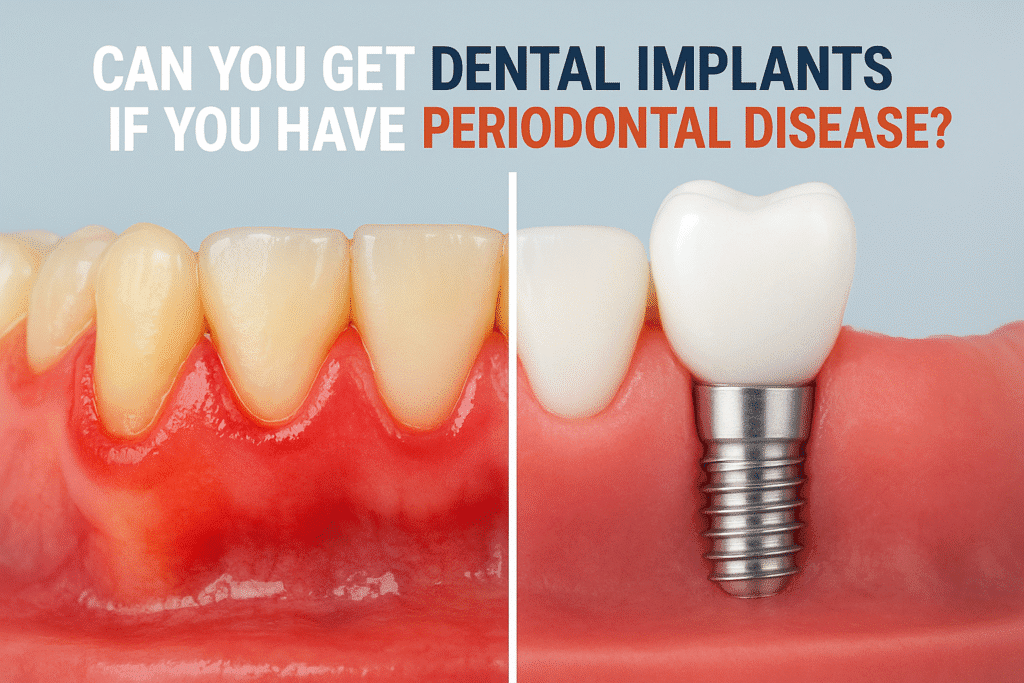
If you’re dealing with periodontal disease and missing teeth, you’re not alone. Many Dallas residents face this challenging combination, wondering if their gum disease disqualifies them from getting dental implants. The good news? You can often get dental implants even with periodontal disease—but timing and treatment are everything.
Key Takeaways
- Periodontal disease must be treated and controlled before dental implant placement to ensure successful outcomes
- Active gum disease significantly increases implant failure risk, but treated periodontal disease doesn’t automatically disqualify you
- Bone loss from periodontal disease may require additional procedures like bone grafting before implant placement
- Success rates remain high (85-95%) for implants placed after proper periodontal treatment
- Working with experienced professionals is crucial for coordinating periodontal therapy and implant placement
Understanding Periodontal Disease and Its Impact on Dental Implants
Periodontal disease, commonly known as gum disease, affects the tissues supporting your teeth. It starts as gingivitis (gum inflammation) and can progress to periodontitis, where bacteria destroy the gums, ligaments, and bone supporting your teeth.
When periodontal disease advances, it can cause:
- Gum recession and inflammation 🦷
- Bone loss in the jaw
- Tooth mobility and eventual tooth loss
- Bacterial infections that affect healing
This creates a complex situation for dental implants because successful implantation requires:
- Healthy gum tissues for proper healing
- Sufficient bone density for implant stability
- A bacteria-free environment for osseointegration (implant-bone fusion)
The Connection Between Gum Health and Implant Success
Think of dental implants like planting a tree. Just as a tree needs healthy soil to grow strong roots, your implant needs healthy gums and bone to integrate successfully. Periodontal disease creates an unstable foundation—like trying to plant in contaminated soil.
Can You Get Dental Implants If You Have Periodontal Disease?
The short answer is yes, but not immediately. Here’s what you need to know about the process:
Active vs. Treated Periodontal Disease
Active Periodontal Disease:
- Implants should not be placed during active infection
- High risk of implant failure and complications
- Requires immediate periodontal treatment
Treated/Controlled Periodontal Disease:
- Implants can often be placed successfully
- Regular maintenance is crucial
- Success rates approach those of patients without gum disease history
Factors That Determine Your Candidacy
Your dental team will evaluate several factors:
- Severity of periodontal disease
- Amount of bone loss
- Your oral hygiene habits
- Overall health status
- Smoking history (significantly impacts healing)
- Compliance with maintenance therapy
The Treatment Timeline: From Periodontal Disease to Dental Implants
Getting dental implants with a history of periodontal disease follows a specific sequence:
Phase 1: Periodontal Treatment (2-6 months)
- Deep cleaning (scaling and root planing)
- Antibiotic therapy if needed
- Surgical treatment for advanced cases
- Oral hygiene education and improvement
Phase 2: Healing and Evaluation (3-6 months)
- Tissue healing and inflammation reduction
- Bone assessment for implant placement
- Maintenance therapy to ensure stability
Phase 3: Pre-Implant Procedures (if needed)
- Bone grafting to rebuild lost bone structure
- Soft tissue grafting for adequate gum tissue
- Additional healing time (3-6 months for bone grafts)
Phase 4: Implant Placement and Integration
- Implant surgery in a healthy, stable environment
- Osseointegration period (3-6 months)
- Crown placement and final restoration
Dental Implant Timeline Calculator
Estimate your treatment timeline based on periodontal disease severity
Your Estimated Treatment Timeline
Treatment Options for Different Stages of Periodontal Disease

Mild to Moderate Periodontal Disease
For patients with controllable gum disease, the path to dental implants typically includes:
Non-Surgical Treatment:
- Professional deep cleaning (scaling and root planing)
- Antibiotic therapy to eliminate bacterial infection
- Improved oral hygiene routine and education
- Regular maintenance every 3-4 months
Success Rate: 90-95% when properly treated and maintained
Severe Periodontal Disease
Advanced cases may require more extensive intervention:
Surgical Treatment Options:
- Flap surgery to access deep bacteria and tartar
- Bone regeneration procedures to rebuild lost bone
- Soft tissue grafts to restore healthy gum tissue
- Guided tissue regeneration for optimal healing
Timeline Consideration: Treatment may take 6-12 months before implant placement
Bone Loss and Dental Implants: Solutions and Options
Periodontal disease often causes significant bone loss, but this doesn’t mean you can’t get implants. Modern dentistry offers several solutions:
Bone Grafting Procedures
Types of Bone Grafts:
- Autograft: Using your own bone (gold standard)
- Allograft: Processed donor bone
- Xenograft: Animal-derived bone material
- Synthetic: Laboratory-created bone substitutes
Advanced Techniques:
- Sinus lift procedures for upper jaw implants
- Ridge augmentation to rebuild jaw width and height
- Block grafts for extensive bone loss
- Guided bone regeneration for precise rebuilding
Alternative Implant Options
When traditional implants aren’t feasible, consider:
- All-in-six dental implants for full arch restoration
- Zygomatic implants that anchor in cheekbone
- Mini implants for areas with limited bone
- Implant-supported dentures for stability with less bone
Success Rates and Long-Term Outcomes
Research shows encouraging results for dental implants in patients with treated periodontal disease:
Statistical Success Rates
| Patient Category | 5-Year Success Rate | 10-Year Success Rate |
|---|---|---|
| No periodontal history | 95-98% | 90-95% |
| Treated periodontal disease | 85-95% | 80-90% |
| Active periodontal disease | Not recommended | Not recommended |
Factors Affecting Success
Positive Factors:
- ✅ Excellent oral hygiene maintenance
- ✅ Regular professional cleanings (every 3-4 months)
- ✅ Non-smoking status
- ✅ Compliance with maintenance therapy
- ✅ Good overall health
Risk Factors:
- ❌ Poor oral hygiene
- ❌ Smoking or tobacco use
- ❌ Uncontrolled diabetes
- ❌ Skipping maintenance appointments
- ❌ Stress and teeth grinding
Preventing Peri-Implantitis: Protecting Your Investment
Once you have dental implants, preventing peri-implantitis (gum disease around implants) becomes crucial:
Daily Care Requirements
Essential Daily Habits:
- Brush twice daily with a soft-bristled toothbrush
- Floss or use interdental brushes around implants
- Use antimicrobial mouth rinse as recommended
- Avoid abrasive toothpastes that can scratch implant surfaces
Professional Maintenance
Regular Checkups Include:
- Professional cleaning every 3-4 months
- Implant-specific instruments for gentle cleaning
- Radiographic monitoring to check bone levels
- Soft tissue evaluation for signs of inflammation
Cost Considerations and Financial Planning
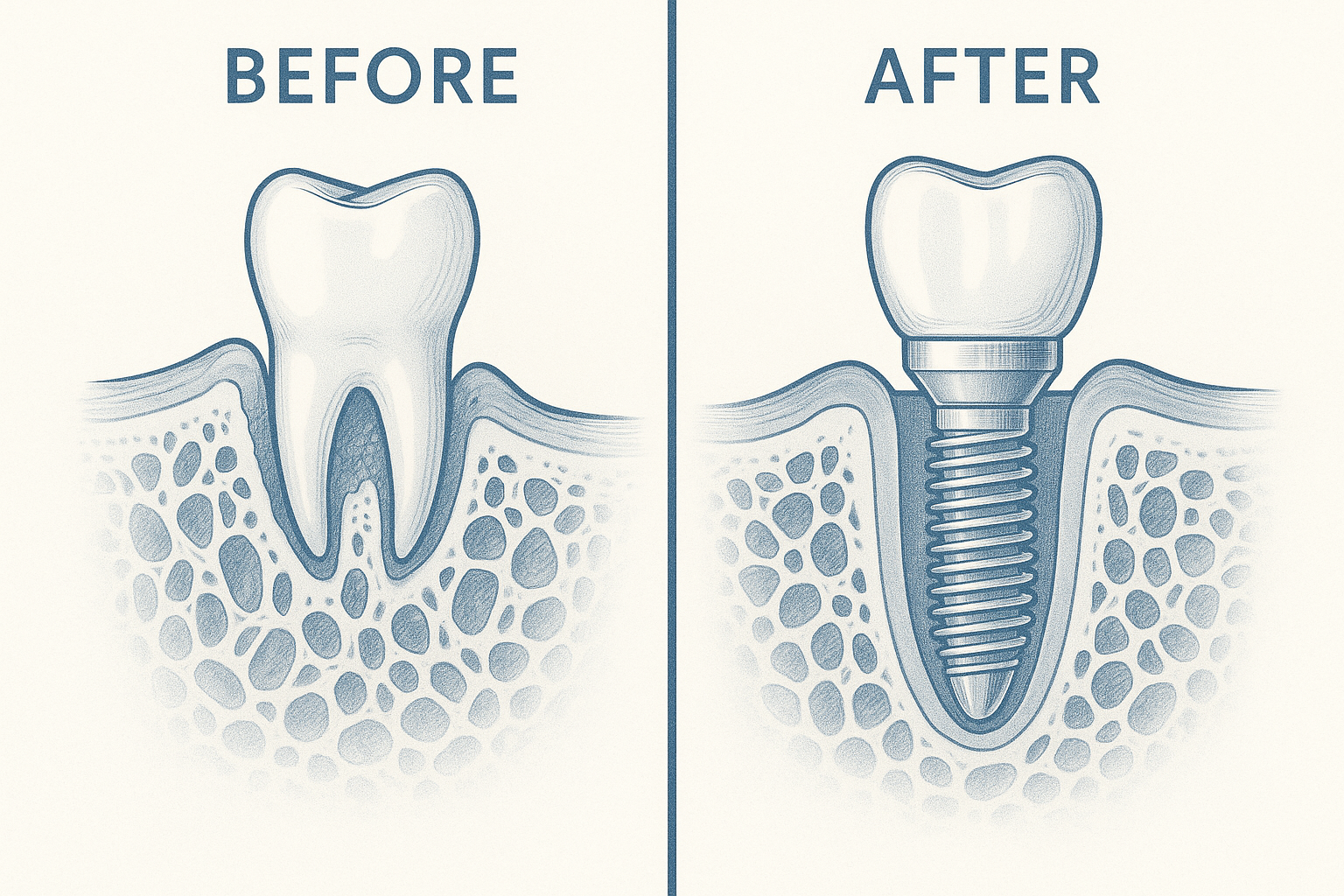
Getting dental implants with a history of periodontal disease often involves additional costs:
Typical Treatment Costs in Dallas
Periodontal Treatment:
- Deep cleaning: $200-$400 per quadrant
- Periodontal surgery: $1,500-$3,000 per area
- Maintenance therapy: $150-$300 per visit
Pre-Implant Procedures:
- Bone grafting: $500-$3,000 per site
- Soft tissue grafting: $600-$1,500 per area
- Sinus lift: $1,500-$5,000
Implant Treatment:
- Single implant and crown: $3,000-$5,000
- Multiple implants: $6,000-$15,000+
Making Treatment Affordable
Many Dallas practices offer:
- Payment plans with low or no interest
- Insurance coordination for maximum benefits
- Treatment phasing to spread costs over time
- Free dental implants programs for qualifying patients
Choosing the Right Dental Team
Success with dental implants and periodontal disease requires coordinated care:
Essential Team Members
Periodontist:
- Specializes in gum disease treatment
- Performs complex bone grafting procedures
- Manages long-term periodontal health
Oral Surgeon or Implantologist:
- Places dental implants
- Handles complex surgical procedures
- Coordinates with periodontal treatment
Restorative Dentist:
- Creates final crowns and prosthetics
- Manages overall treatment planning
- Provides ongoing maintenance
Questions to Ask Your Dental Team
- What’s my realistic timeline for getting implants?
- What additional procedures will I need?
- What are my success rates given my specific situation?
- How will you coordinate my periodontal and implant care?
- What’s included in my treatment plan and costs?
Special Considerations for Dallas Patients
Living in Dallas presents unique considerations for dental implant treatment:
Climate and Healing
Dallas’s hot, dry climate can affect healing:
- Stay well-hydrated during recovery periods
- Avoid excessive sun exposure after surgery
- Use air conditioning to maintain comfortable healing environments
Lifestyle Factors
Texas Lifestyle Considerations:
- BBQ and tough foods may need temporary avoidance
- Outdoor activities should be limited during initial healing
- Stress from heat can affect healing and oral health
Many Dallas residents also wonder about other dental concerns. For instance, if you’re dealing with adult teeth falling out, it’s important to understand the connection between tooth loss and gum disease. Additionally, conditions like osteoporosis can affect your teeth and may influence your implant treatment plan.
Your Journey to a Confident Smile Starts Here
The path from periodontal disease to dental implants may seem complex, but thousands of Dallas patients have successfully made this journey. With proper treatment, patience, and commitment to oral health, you can restore your smile and regain your confidence.
Remember these key points:
- Periodontal disease must be treated first, but it doesn’t disqualify you from implants
- Success rates remain high with proper treatment and maintenance
- Modern techniques can overcome most bone loss challenges
- Your commitment to oral hygiene is crucial for long-term success
If you’re ready to explore your options for dental implants in Dallas, don’t let periodontal disease discourage you. With the right team and treatment plan, your journey to a better smile can begin today.
Take the first step by scheduling a comprehensive evaluation with a qualified dental team. They’ll assess your specific situation, create a personalized treatment plan, and guide you through every step of the process. Your smile deserves expert care, and we’re here to make it stress-free and successful.
Leave a Reply
Share your thoughts or ask a question about dental implants. Your email address will not be published.