

Undergoing a Magnetic Resonance Imaging (MRI) scan can be a source of anxiety for many, especially if you have existing medical devices. For those with missing teeth solutions, a common and important question arises: Can you get an MRI scan safely with dental implants? The good news is that, in most cases, modern dental implants are highly compatible with MRI technology, allowing patients to undergo these crucial diagnostic procedures without significant risk.
Key Takeaways
- Modern dental implants, primarily made of titanium or zirconia, are non-ferromagnetic and generally safe for MRI scans [1, 2, 4].
- These materials do not heat up, move, or cause harm during an MRI [2].
- Dental implants may cause minor image distortions, known as artifacts, especially in head and neck MRI scans [1, 3].
- Radiologists and MRI technicians are trained to recognize and often compensate for these imaging artifacts [3].
- It is crucial to inform your MRI technician and dentist about your dental implants, including the material and date of placement, before your scan [2, 3].
- Older dental implants or certain dental restorations containing ferromagnetic materials may require specific precautions [2].
- Always consult with your dental implant specialist in Dallas and the MRI facility for personalized guidance.
Quick Answer
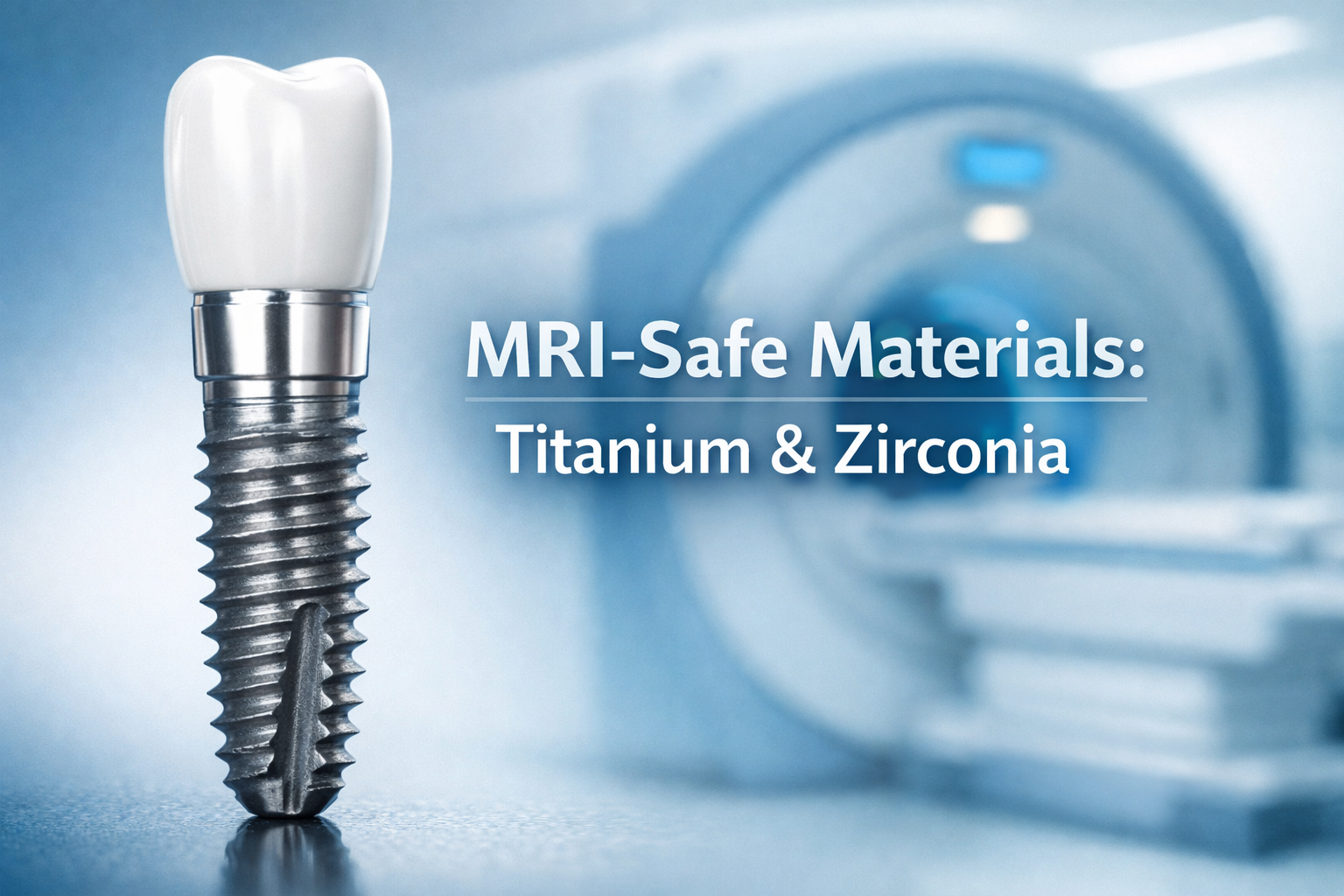
Yes, you can generally get an MRI scan safely with dental implants. The vast majority of modern dental implants are made from non-ferromagnetic materials like titanium and zirconia, which do not react to the powerful magnetic fields of an MRI machine [1, 2, 4]. While they may cause minor image distortions, especially if the scan is focused on the head or neck, these are usually manageable by trained professionals and do not pose a safety risk to the patient [1, 3].
What Materials Are Dental Implants Made Of, and Why Does It Matter for MRI Safety?
Modern dental implants are predominantly crafted from titanium or zirconia, which are crucial for ensuring MRI safety. These materials are chosen for their biocompatibility and their non-ferromagnetic properties, meaning they are not attracted to magnetic fields [1, 2, 4].
- Titanium: This is the most common material for dental implant posts. Titanium is non-magnetic, meaning it will not be pulled by the MRI scanner’s magnet, nor will it heat up significantly during the scan [2]. Its inert nature ensures that dental implants in Dallas made from titanium are considered safe for MRI procedures.
- Zirconia: For those seeking metal-free tooth replacement options, zirconia is another excellent choice. Similar to titanium, zirconia is a ceramic-based material that is non-ferromagnetic and does not interact with the magnetic field of an MRI machine, making zirconia implants MRI-compatible [4].
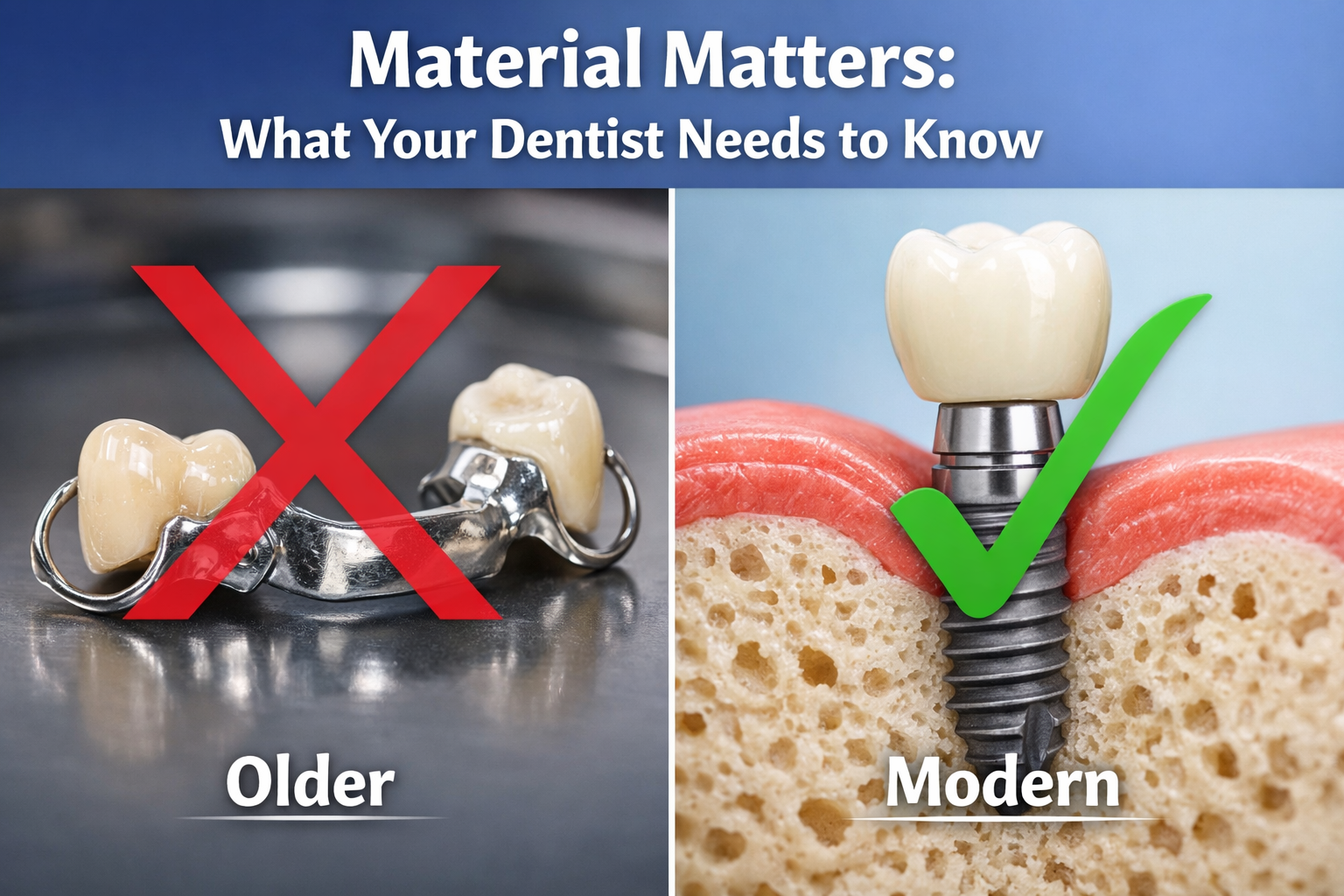
The material of your dental implants matters significantly because older or less common dental restorations might contain ferromagnetic metals (like certain types of stainless steel). These materials could interact with the strong magnetic fields, potentially leading to movement, heating, or significant image distortion [2]. Therefore, knowing the material composition of your implant is a key step in ensuring patient safety during an MRI.
Can Dental Implants Cause Problems During an MRI?
While modern dental implants are generally safe, they can potentially cause minor issues during an MRI, primarily related to image quality. The main concern is the creation of “artifacts,” which are distortions or streaks on the MRI images [1, 3].
- Image Artifacts: These distortions appear as dark spots, bright streaks, or signal voids near the implant site, especially if the MRI is focused on the head, neck, or jaw [1, 3]. These artifacts can sometimes obscure small areas of tissue, making it slightly harder for radiologists to interpret the images in that immediate vicinity.
- Minimal Impact on Safety: It’s important to differentiate between image quality issues and safety risks. While artifacts can be a diagnostic nuisance, titanium and zirconia implants themselves will not move, heat up to dangerous levels, or cause harm to the patient during the scan [2].
- Modern MRI Technology: Advances in MRI technology, including specialized sequences and software algorithms, are increasingly effective at minimizing these metallic artifacts, improving the diagnostic accuracy even with implants present [1]. Radiologists and MRI technicians are trained to identify and account for these distortions [3].
If you are undergoing an MRI for an area far from your dental implants, such as your spine or knee, the likelihood of any significant artifacts or concerns is very low [4]. However, for scans of the head and neck, discussing your dental implants beforehand is always recommended.
What Precautions Should You Take Before an MRI with Dental Implants?
Taking a few simple precautions can help ensure a smooth and safe MRI experience when you have dental implants. Communication is key to patient safety.
- Inform Your Dentist and Radiologist: Always tell your dentist and the MRI facility staff that you have dental implants. Provide them with as much detail as possible, including the type of material (e.g., titanium, zirconia), the manufacturer if known, and the date of your implant surgery process [2, 3]. This information helps the medical team assess any potential risks and adjust the scan parameters if necessary. If you’re unsure about your implant details, your dental implant specialist in Dallas can provide your medical records, including information from your initial consultation with a dentist.
- Provide Implant Details: The MRI technician will typically ask about any metallic objects or implants you have. Be proactive in sharing information about your dental implants, their location, and when they were placed [2, 3]. This allows them to make informed decisions about the scan.
- Remove Detachable Dental Appliances: While permanent dental implants do not need to be removed, any detachable metal braces, retainers, or removable partial dentures should be taken out before the MRI scan [5]. These items often contain ferromagnetic materials and can pose a safety risk or cause significant artifacts.
- Consult Your Dental Professional: If you have any concerns or specific questions about your dental implants and an upcoming MRI, consult with your implant dentist. They can offer reassurance and provide any necessary documentation. For follow-up care and ensuring long-term oral health, routine visits with your dental implant specialist follow-up in Dallas 2026 are crucial.
Can You Get an MRI Scan Safely with Dental Implants of All Types?
No, not all dental implants are universally “MRI Safe” without consideration, though the vast majority of modern implants are. The key factor lies in the materials used.
| Implant Material Type | MRI Safety Classification | Considerations for MRI |
|---|---|---|
| Titanium | MR Safe / MR Conditional | Generally safe; non-ferromagnetic; may cause minor artifacts, especially in head/neck scans [1, 2]. |
| Zirconia (Ceramic) | MR Safe | Fully non-metallic and non-magnetic; ideal for MRI, minimal artifacts [4]. |
| Older Alloys | MR Conditional / Not MR Safe | Could contain ferromagnetic materials (e.g., certain stainless steels). Requires careful assessment, potentially specific MRI protocols, or may be contraindicated [2]. |
| Removable Appliances | Not MR Safe | Metal retainers, partials, or dentures with magnetic components must be removed [5]. |
The classification of medical devices for MRI safety typically falls into three categories:
- MR Safe: The device poses no known hazards in all MRI environments. Zirconia implants typically fall into this category.
- MR Conditional: The device may be safely scanned under specific conditions (e.g., at certain field strengths, specific scan parameters). Most titanium dental implants fall here.
- MR Unsafe: The device poses a definite hazard in the MRI environment (e.g., older implants with ferromagnetic components that could move or heat up).
When considering Can you get an MRI scan safely with dental implants?, it’s crucial to remember that while the core implant screw is typically titanium, some older prosthetic components (like the abutment or crown framework) might have contained different metals. However, the vast majority of contemporary dental devices are classified as “MR Safe” or “MR Conditional” [6]. If you have very old implants, disclosing this to your dentist and the MRI facility is even more important for a thorough assessment.
How Do Dentists and Radiologists Manage MRI Scans with Dental Implants?
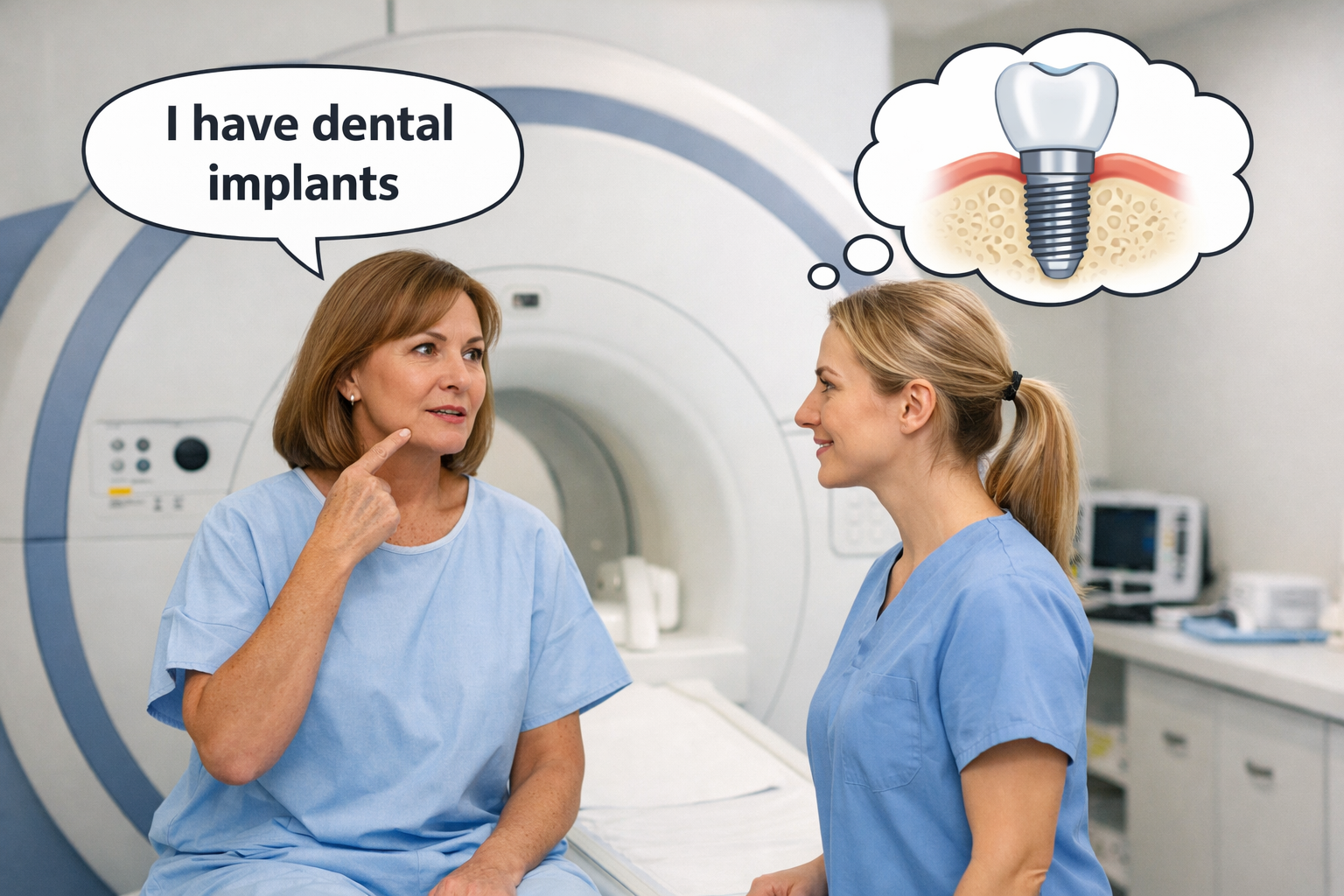
Effective management of MRI scans for patients with dental implants involves clear communication and specialized knowledge from both dental professionals and radiologists. Their coordinated efforts aim to ensure diagnostic accuracy and patient safety.
- Patient Disclosure: The process begins with the patient informing their dental implant specialist and the MRI facility about their dental implants [2, 3]. This disclosure includes the implant material, date of placement, and location.
- Information Sharing: Your dental implant specialist in Dallas can provide details about the specific type of implant used. This information is then relayed to the MRI technologist and radiologist.
- Risk Assessment: Based on the implant details and the area of the body being scanned, the radiologist assesses any potential for artifacts or, in rare cases, safety concerns. Implants located far from the scan area are usually not a concern [4].
- Protocol Adjustment: For head and neck MRIs where implants might cause artifacts, the radiologist may adjust the MRI protocol. This could involve using different pulse sequences, increasing slice thickness, or repositioning the patient slightly to minimize distortions [1, 3].
- Image Interpretation: During image interpretation, radiologists are trained to recognize and mentally filter out artifacts caused by dental implants [3]. They understand that these are usually due to the metallic presence and not indicative of underlying pathology. Their expertise allows them to accurately diagnose conditions despite minor distortions.
- Follow-up (if needed): In extremely rare cases where artifacts significantly obscure a critical area, alternative imaging methods (like CT scans) might be considered, though this is uncommon with modern implants.
The overarching goal is to ensure you receive the necessary diagnostic imaging safely and effectively, without compromising your long-term oral health or the integrity of your dental implants. If you’re curious about the optimal dental implant X-ray frequency for ongoing monitoring, discuss this with your dentist.
What About Other Dental Restorations and MRI Compatibility?
Beyond dental implants, many other dental restorations and devices might raise questions about MRI compatibility. Understanding these can further clarify Can you get an MRI scan safely with dental implants? and other dental work.
- Dental Fillings: Amalgam (silver) fillings typically contain mercury, silver, tin, and copper. While they contain metals, they are not usually ferromagnetic and generally do not pose a risk during an MRI. Composite (white) fillings are made of resin and ceramic and are completely safe.
- Crowns and Bridges: Most modern crowns and bridges are made of porcelain-fused-to-metal (PFM), zirconia, or all-ceramic materials. PFM crowns might have a metal substructure, but if it’s a high-noble alloy (gold, palladium), it’s generally MRI-compatible. Zirconia and all-ceramic crowns are entirely safe.
- Orthodontic Appliances:
- Fixed Braces (Brackets and Wires): Traditional braces often use stainless steel or nickel-titanium wires and brackets, which can be ferromagnetic. They can cause significant image artifacts, especially in head/neck MRIs, and in some cases, slight heating. Patients with braces should always inform the MRI staff. Sometimes, removal may be recommended for critical head scans.
- Removable Aligners/Retainers: These are typically plastic and should always be removed before an MRI.
- Dentures: Full or partial dentures can often be removed. If they contain any metal components, they should be removed before an MRI to prevent artifacts or potential movement.
- Temporary Restorations: These vary widely in material. Always inform the MRI technician about any temporary crowns, bridges, or fillings you have.
The general rule is that if a dental restoration or appliance contains any metal, it’s vital to disclose this to the MRI staff. They will determine if it’s safe to proceed or if any adjustments need to be made. For comprehensive information on your dental health, a consultation with a dentist is invaluable.
Conclusion

The question, “Can you get an MRI scan safely with dental implants?” is met with a reassuring “yes” in the vast majority of cases in 2026. Thanks to advancements in materials science, modern dental implants, made primarily from titanium and zirconia, are designed to be non-ferromagnetic and safe for MRI environments. While minor image distortions (artifacts) can occur, especially in scans of the head and neck, these are generally manageable by trained radiologists and technicians, who are adept at interpreting images despite these nuances.
Patient safety remains paramount. Therefore, it is always crucial to communicate openly with your dental implant specialist in Dallas and the MRI facility staff about your dental implants, including their material and date of placement, before undergoing any scan. This transparency allows the medical team to take appropriate precautions, adjust scanning protocols if necessary, and ensure both your safety and the diagnostic accuracy of the MRI. For anyone considering missing teeth solutions or managing existing dental implants, understanding their compatibility with medical imaging procedures is a key part of informed decision-making and long-term oral health.
Frequently Asked Questions
Can titanium dental implants heat up during an MRI?
No, titanium dental implants are non-magnetic and will not heat up significantly or move during an MRI scan [2].
Do zirconia dental implants affect MRI results?
Zirconia dental implants are ceramic-based and non-magnetic, so they do not typically interact with MRI machines and cause minimal to no image artifacts [4].
Will I feel anything in my dental implants during an MRI?
No, you should not feel any sensation in your dental implants during an MRI, as they are non-magnetic and inert to the magnetic field.
What should I tell the MRI technician about my dental implants?
Inform the technician about the type of dental implant material (e.g., titanium, zirconia), the location, and the date it was placed [2, 3].
Can older dental implants be a problem for an MRI?
Older dental implants, particularly those made from stainless steel or other ferromagnetic alloys, might require additional precautions or specific MRI protocols, as they could potentially interact with the magnetic field [2].
Can dental implants cause an MRI to be inaccurate?
Modern dental implants can cause minor image distortions (artifacts) near the implant site, especially in head or neck scans, but radiologists are trained to interpret images accurately despite these [1, 3].
Are full-mouth dental implants safe for MRI?
Yes, full-mouth dental implants, if made from modern titanium or zirconia, are generally safe for MRI scans, following the same considerations as single implants [1, 2, 4].
Should I remove my dentures before an MRI?
Yes, any removable dental appliances, including dentures, partials, or retainers that contain metal, should be removed before an MRI [5].
References
[1] Are Dental Implants Safe During An Mri – https://www.vegastoothdr.com/are-dental-implant-safe-during-an-mri
[2] Mri Safety And Dental Implants – https://www.bergenoralsurgery.com/blog/mri-safety-and-dental-implants/
[3] Dental Implants And Mri A Comprehensive Guide To Safe Imaging Procedures – https://dentalimplantmelbourne.com.au/dental-implant-and-mri-a-comprehensive-guide-to-safe-imaging-procedures/
[4] Can You Have An Mri With Dental Implants – https://drbarnar.com/blog/can-you-have-an-mri-with-dental-implants/
[5] Is It Safe To Get An Mri With An Implant – https://www.baptisthealth.com/blog/baptist-health/is-it-safe-to-get-an-mri-with-an-implant
[6] Dentalfacial Implants – https://mriquestions.com/dentalfacial-implants.html
Leave a Reply
Share your thoughts or ask a question about dental implants. Your email address will not be published.