

Picture this: you’re rushing to catch your flight, and as you approach the airport security checkpoint, that familiar worry creeps in. Will your titanium implant trigger the metal detector alarm and cause an embarrassing delay? If you have titanium dental implants, orthopedic implants, or any other titanium medical device, this concern is completely natural—and you’re not alone in wondering about it.
The good news? Titanium rarely sets off standard metal detectors, but the complete answer involves understanding how different types of security scanners work and what factors influence detection. Let me walk you through everything you need to know about traveling confidently with titanium implants.
Key Takeaways
- Pure titanium typically does not trigger standard walk-through metal detectors due to its non-ferrous properties and low magnetic signature
- Modern airport security systems use multiple scanning technologies that may detect titanium implants even when metal detectors don’t
- Medical implant cards and documentation can help streamline the security process if additional screening is needed
- TSA officers are trained to handle passengers with medical implants professionally and efficiently
- The size, location, and type of titanium implant affects the likelihood of detection during security screening
Understanding How Metal Detectors Work
To answer whether titanium can set off metal detectors, we first need to understand how these security systems operate. Standard metal detectors use electromagnetic fields to identify metallic objects. When you walk through a metal detector, it creates a magnetic field that interacts with conductive metals.
Ferrous metals like iron and steel have strong magnetic properties and easily trigger these alarms. However, titanium is a non-ferrous metal, meaning it has very low magnetic permeability. This characteristic is precisely why titanium is the preferred material for medical implants—it’s biocompatible and won’t interfere with MRI scans or cause magnetic reactions in your body.
Types of Security Screening Technology
Modern airports don’t rely solely on traditional metal detectors. Airport security employs several scanning methods:
- Walk-through metal detectors (magnetometers)
- Hand-held metal detectors for secondary screening
- Advanced imaging technology (body scanners)
- X-ray machines for carry-on items
Each technology has different sensitivity levels and detection capabilities for titanium metal.
Will Titanium Implants Set Off Airport Metal Detectors?
The straightforward answer is that pure titanium implants rarely trigger standard metal detectors. However, several factors influence whether your specific implant might cause an alarm:
Factors That Affect Detection
Size and Mass: Larger titanium implants, such as those used in knee replacement or hip replacement surgeries, have a higher chance of detection than smaller dental implants.
Titanium Alloy Composition: Many medical implants aren’t made from pure titanium but rather titanium alloys that may contain small amounts of other metals like aluminum or vanadium. These alloy compositions can slightly increase detectability.
Metal Detector Sensitivity: Some security checkpoints use more sensitive equipment that can detect smaller metal objects, including titanium.
Implant Location: Implants closer to the body’s surface may be more likely to trigger scanners than those deeper within tissue.
Common Titanium Implants and Detection Likelihood
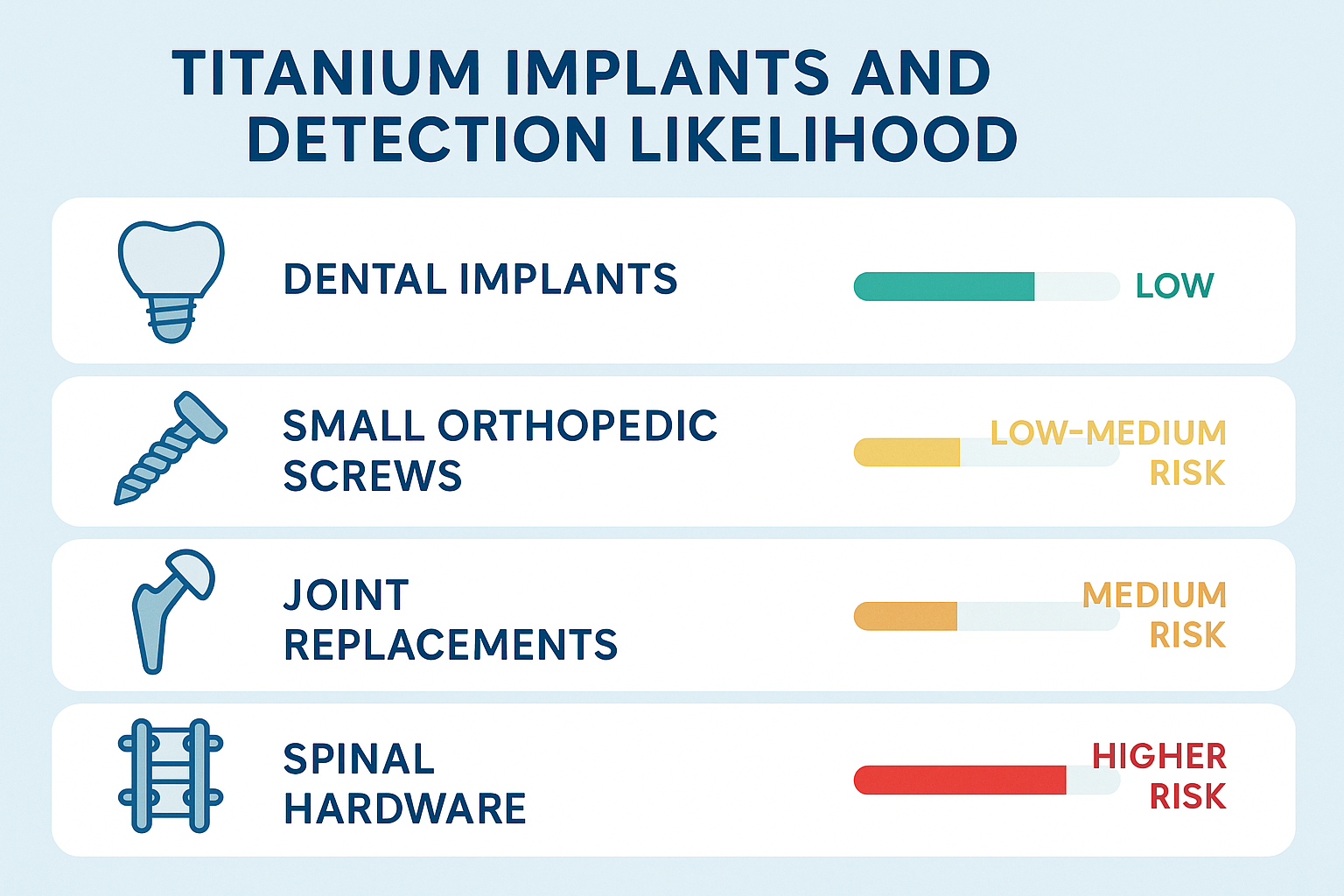
| Implant Type | Detection Probability | Typical Response |
|---|---|---|
| Titanium dental implants | Very Low | Rarely detected |
| Small orthopedic screws | Low | Occasionally detected |
| Joint replacements | Moderate | May trigger additional screening |
| Spinal rods | Moderate to High | Often detected by advanced scanners |
Airport Security Procedures for Passengers with Implants
When titanium implants are detected, airport security personnel follow established protocols to ensure both safety and efficiency. Here’s what you can expect:
Standard Security Process
- Initial Screening: You’ll walk through the standard metal detector or body scanner
- Alarm Response: If an alarm sounds, security staff will ask about any metal implants
- Additional Screening: This may include a pat-down or hand-held metal detector scan
- Documentation Review: Security personnel may request medical documentation
- Clearance: Once satisfied, you’ll be cleared to proceed
TSA Guidelines for Medical Implants
The Transportation Security Administration recognizes that many passengers travel with medical implants. TSA officers are trained to handle these situations professionally while maintaining security standards. You have the right to:
- Request private screening if needed
- Have a companion present during additional screening
- Receive assistance if you have mobility limitations due to your implant
Preparing for Air Travel with Titanium Implants
Smart preparation can make your travel experience smoother and reduce stress at security checkpoints.
Documentation to Carry
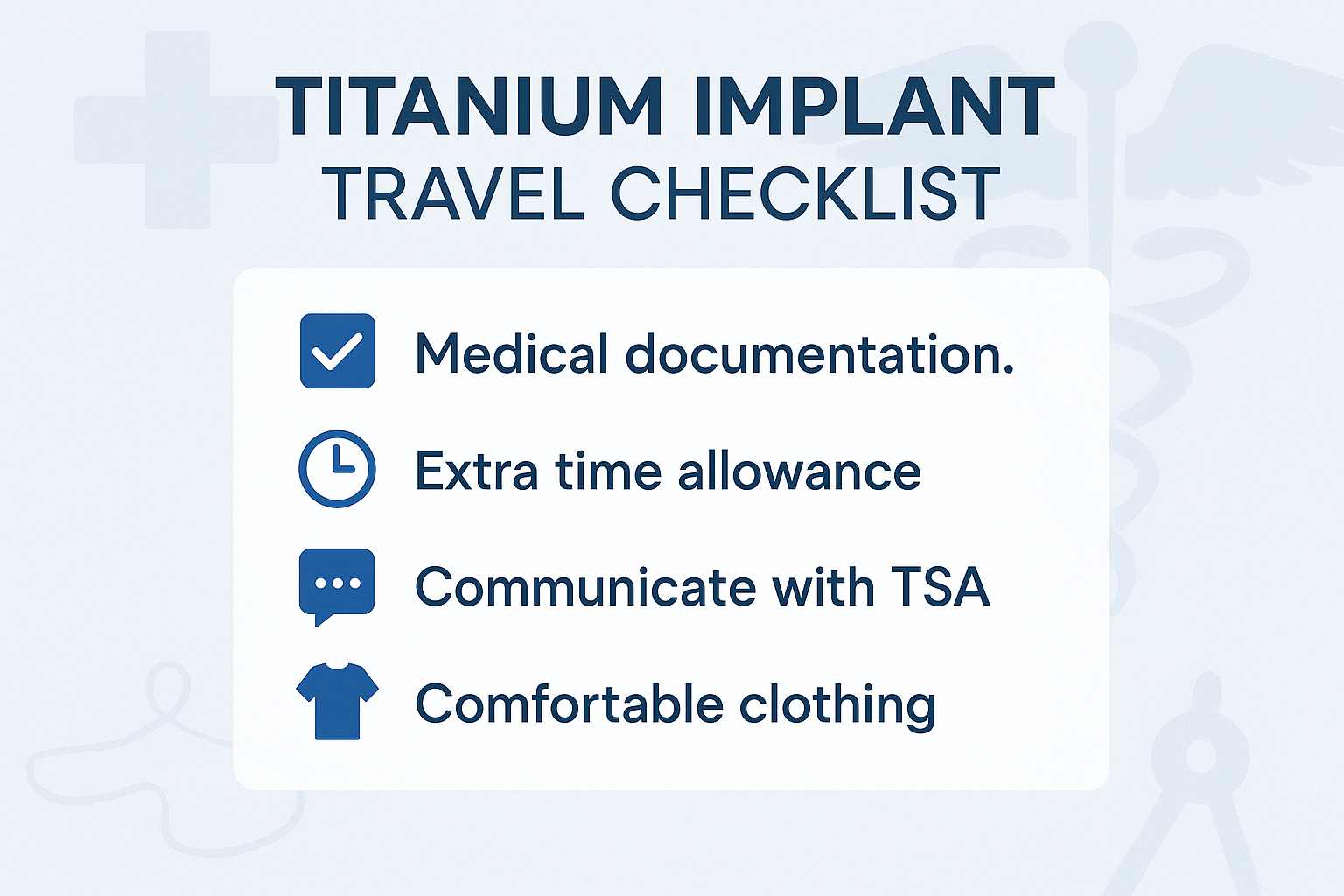
While not always required, having proper documentation can expedite the screening process:
- Medical implant card from your surgeon or manufacturer
- Letter from your healthcare provider describing your implant
- Medical information about the specific titanium device
For patients with dental implants, your oral surgeon can provide documentation specifying the titanium materials used in your treatment.
What to Expect During Screening
Before You Travel:
- Arrive at the airport with extra time for potential additional screening
- Wear easily removable shoes and minimal jewelry
- Keep medical documentation easily accessible
At the Security Checkpoint:
- Inform security personnel about your implant before screening begins
- Be prepared to explain the location and type of your implant
- Remain calm and cooperative during any additional screening procedures
Different Types of Titanium Used in Medical Implants
Understanding the specific type of titanium in your implant can help predict how it might interact with security systems.
Grade Classifications
Grade 1-4 Pure Titanium: These grades contain 99% titanium with minimal other elements. They’re least likely to set off metal detectors.
Titanium Alloys: Common medical alloys include:
- Ti-6Al-4V (titanium-aluminum-vanadium)
- Ti-6Al-7Nb (titanium-aluminum-niobium)
These alloys may have slightly higher detection rates due to their additional metal content.
Medical Applications
Different medical specialties use various titanium grades:
- Orthopedic implants: Often use stronger titanium alloys for load-bearing applications
- Dental implants: Typically use pure titanium or specific dental-grade alloys
- Cardiovascular devices: Use highly biocompatible titanium grades
Patients considering dental implant procedures should discuss the specific titanium grade with their oral surgeon.
Advanced Security Technology and Titanium Detection
Modern airports increasingly use advanced imaging technology that can detect titanium even when traditional metal detectors cannot.
Body Scanner Technology
Millimeter Wave Scanners: These devices can identify the outline of objects beneath clothing, including titanium implants, even though they don’t specifically detect metal.
Backscatter X-ray: Though less common now, these scanners could sometimes identify the density differences caused by titanium implants.
What This Means for Travelers
Advanced scanners may flag titanium implants not because they’re metal, but because they appear different from surrounding tissue. This doesn’t mean you’ve done anything wrong—it’s simply the technology doing its job.
🛡️ Titanium Implant Travel Assessment
Tips for Smooth Security Screening
Communication is Key
Be Proactive: Inform security personnel about your implant before screening begins. This transparency helps them understand any alarms and can speed up the process.
Stay Calm: Remember that additional screening is routine and doesn't reflect suspicion about you personally.
Practical Travel Strategies
- Allow Extra Time: Plan for an additional 15-30 minutes at security checkpoints
- Choose Appropriate Clothing: Avoid clothing with excessive metal details that might complicate screening
- Pack Smart: Keep medical documentation in an easily accessible location
For patients with multiple dental implants, having comprehensive documentation about your treatment can be particularly helpful.
Special Considerations for Different Implant Types
Dental Implants and Airport Security
Titanium dental implants are among the least likely to trigger metal detectors due to their small size and pure titanium composition. However, patients with extensive dental work, including multiple implants or full-mouth reconstructions, should be prepared for the possibility of detection.
If you're considering dental implant treatment, discuss travel implications with your oral surgeon. Many practices provide comprehensive implant services and can offer guidance on post-treatment travel considerations.
Orthopedic Implants
Orthopedic implants vary significantly in size and composition. A small titanium screw may never trigger an alarm, while a complete knee replacement might regularly require additional screening.
Cardiovascular Devices
Pacemakers and other cardiovascular devices often contain titanium components. These devices require special consideration during security screening, and patients should always inform security personnel about their presence.
International Travel Considerations
Different countries may have varying security protocols and equipment sensitivity levels. What doesn't trigger an alarm at one airport might cause detection at another.
Research Your Destinations
- Check airline policies regarding medical implants
- Understand international security standards for your destination countries
- Consider travel insurance that covers medical device-related travel delays
Documentation for International Travel
When traveling internationally with titanium implants:
- Carry documentation in both English and the local language if possible
- Research medical terminology translations for your specific implant type
- Keep contact information for your healthcare provider accessible
The Future of Airport Security and Medical Implants
Airport security technology continues to evolve, with new scanning methods that may affect how titanium implants are detected.
Emerging Technologies
Artificial Intelligence Integration: New security systems use AI to better distinguish between threatening objects and medical implants.
Improved Imaging: Advanced scanners provide clearer images, potentially reducing false alarms while maintaining security effectiveness.
What This Means for Patients
As technology improves, the screening process for passengers with medical implants should become more efficient and less intrusive.
When to Seek Medical Advice
While this guide provides general information about titanium implants and metal detectors, certain situations warrant professional medical advice:
- If you're unsure about your implant's composition
- If you experience any unusual symptoms after security screening
- If you need official medical documentation for travel
Your healthcare provider can offer personalized guidance based on your specific implant and medical history.
Conclusion
Can titanium set off metal detectors? The answer is nuanced: while pure titanium rarely triggers standard metal detectors, modern airport security uses various technologies that may detect titanium implants. The key to stress-free travel lies in preparation and understanding what to expect.
Remember that having a titanium implant doesn't prevent you from traveling—millions of people with medical implants fly safely every day. By carrying appropriate documentation, allowing extra time for security screening, and communicating openly with security personnel, you can navigate airport security with confidence.
Whether you have dental implants or other titanium medical devices, don't let security concerns keep you from traveling. With proper preparation and realistic expectations, your journey to rediscover the joy of travel can be smooth and worry-free.
Ready to take your next trip? Start by gathering your medical documentation and researching the security procedures at your departure airport. Your smile—and your travel plans—deserve expert care and thoughtful preparation.
Leave a Reply
Share your thoughts or ask a question about dental implants. Your email address will not be published.