

Are you considering dental implants in Dallas but wondering if they will ever truly feel like your natural teeth? It’s a common and important question. Many patients ask, “Can implants feel different forever?” The short answer is yes, dental implants often feel different from natural teeth, even long-term, primarily because they lack the complex nerve structures present in a natural tooth. However, this difference doesn’t typically equate to discomfort or a lack of function. Most patients adapt well, experiencing a highly functional and aesthetic tooth replacement.
Key Takeaways
- Implants often feel different: Dental implants lack the periodontal ligament and nerve endings of natural teeth, leading to a different sensation.
- Not necessarily uncomfortable: While different, this sensation is rarely painful and most patients adapt quickly.
- Sensory changes are rare but possible: Persistent sensory changes occur in a small percentage of cases, around 6.33% [1].
- Inferior alveolar nerve most affected: The nerve in the lower jaw (inferior alveolar nerve) is the most common site for sensory issues [1].
- Technology is advancing: Research into “smart dental implants” aims to restore natural sensation by rebuilding nerve endings [2].
- Proper healing is crucial: The osseointegration process, where the implant fuses with the bone, is key to long-term stability and comfort.
- Consultation is essential: Discuss any concerns about sensation or discomfort with your dentist in Dallas before and after the procedure.
- Good oral hygiene is vital: Maintaining excellent oral hygiene helps prevent complications that could impact implant feel and longevity.
Quick Answer
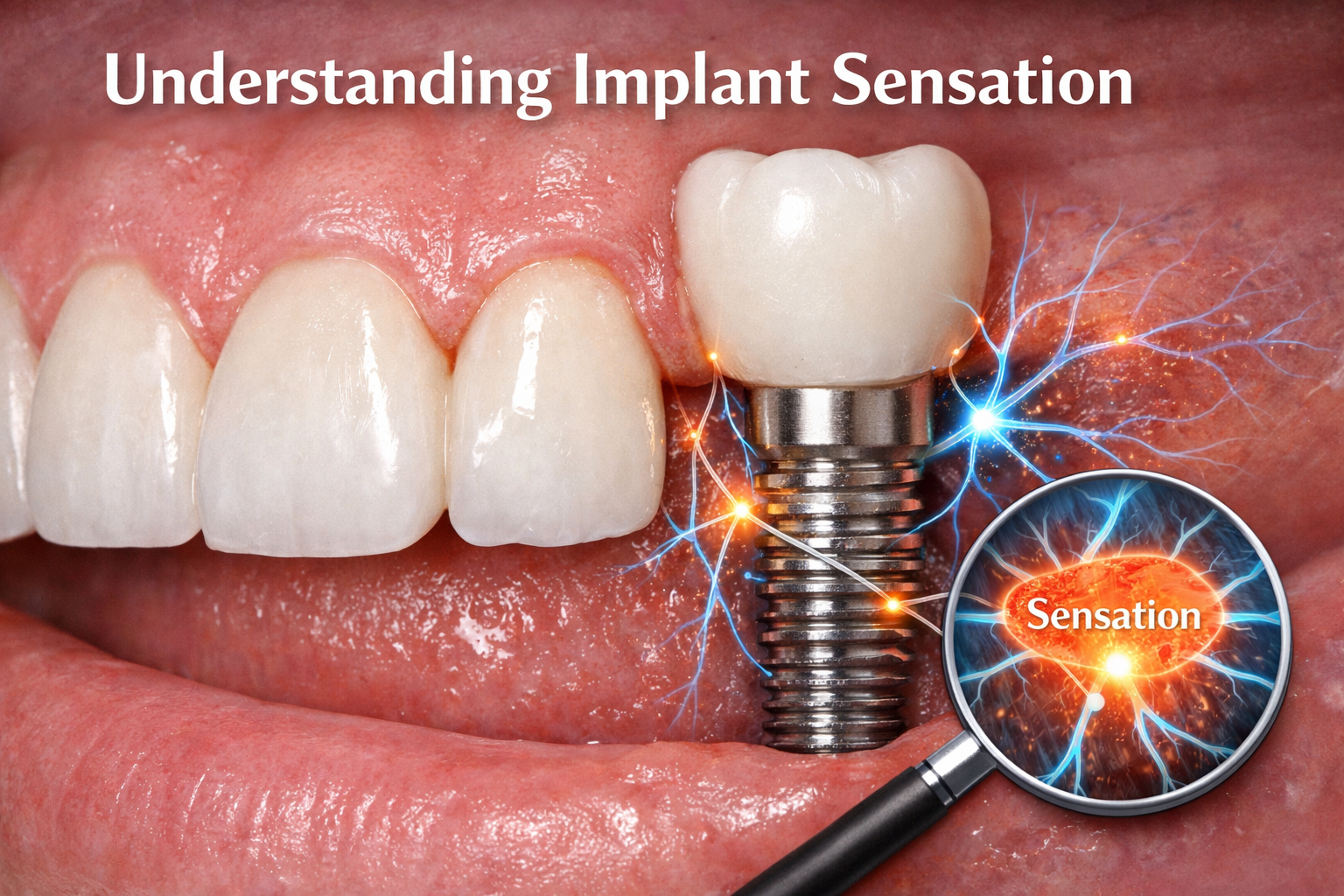
Yes, dental implants can feel different forever compared to natural teeth because they integrate directly with the bone rather than having a surrounding periodontal ligament with nerve endings. This distinction means an implant won’t have the same sensory feedback for pressure or subtle movements as a natural tooth. However, for the vast majority of individuals, this difference is minor and does not negatively impact chewing, speaking, or overall comfort, leading to a highly satisfactory tooth replacement option.
Why Do Dental Implants Feel Different from Natural Teeth?
Dental implants feel different from natural teeth primarily because of fundamental anatomical differences: implants fuse directly with the jawbone, whereas natural teeth are held in place by a periodontal ligament. This ligament contains thousands of nerve fibers that provide a crucial sense of touch and pressure, allowing you to discern even subtle variations in bite force or the texture of food.
A natural tooth is surrounded by a periodontal ligament (PDL), a specialized connective tissue that acts as a shock absorber and contains a rich network of sensory nerves. These nerves allow you to feel pressure, temperature, and even the slightest movement of your tooth. For instance, you can instinctively gauge how hard to bite down on something or feel a tiny seed in your food.
In contrast, a dental implant consists of a titanium post surgically placed into the jawbone, which then integrates directly with the bone through a process called osseointegration. There is no PDL surrounding the implant. As a result, the implant does not have the same direct nerve supply or shock-absorbing capability as a natural tooth. While the surrounding gum tissue and bone may have some sensation, the implant itself lacks the proprioceptive feedback that a natural tooth provides.
Understanding Osseointegration
Osseointegration is the direct structural and functional connection between living bone and the surface of a load-bearing implant [7]. This is a critical part of the dental implant procedure, ensuring the implant becomes a stable foundation for the replacement tooth. While successful osseointegration makes the implant incredibly strong and durable, it also means the implant is rigidly fixed, rather than subtly cushioned like a natural tooth. This lack of a “cushioning” effect can contribute to the different sensation experienced by patients.
How Does This Affect Daily Life?
For most patients receiving dental implants in Dallas, this difference in sensation is subtle and quickly adapted to. You might notice that you don’t feel the same direct “give” or subtle pressure changes when biting on the implant crown compared to your natural teeth. However, your brain and surrounding oral structures often compensate, allowing you to chew, speak, and smile with confidence. Many individuals report that their implants feel completely natural over time, despite the scientific differences. This adaptation is a testament to the body’s remarkable ability to integrate new structures into its existing sensory system.
Can Implants Feel Different Forever Due to Nerve Involvement?
Yes, in a small percentage of cases, dental implants can feel different forever due to direct or indirect nerve involvement, which may lead to persistent sensory changes. While most implant placements proceed without long-term nerve issues, complications can occur if nerves are irritated or damaged during the surgical process.
The most commonly affected nerve, especially during implant placement in the lower jaw, is the inferior alveolar nerve [1]. This nerve provides sensation to the lower teeth, lower lip, and chin. If this nerve is bruised, stretched, or, in rare cases, severed during the drilling process for implant placement, it can result in altered sensation.
Types of Sensory Changes
- Paresthesia: This is a sensation of tingling, prickling, numbness, or “pins and needles.” It’s often described as a partial loss of sensation.
- Dysesthesia: This refers to an abnormal and unpleasant sensation, which can include burning, aching, or a feeling of something crawling on the skin. It might also be an altered sensation to touch, where a light touch feels painful.
A 2022 scoping review of studies involving 5,612 patients found that the incidence of persistent sensory changes was approximately 6.33%, with transient changes occurring slightly less often at 5.63% [1]. This indicates that while the risk is relatively low, it is a recognized potential complication. The review also highlighted that the quality of studies on this topic varies, which may affect the precision of these estimates [1].
Factors Increasing Nerve Involvement Risk
Several factors can increase the risk of nerve involvement during implant surgery:
- Proximity to Nerves: Implants placed very close to major nerves, particularly in areas where bone volume is limited, carry a higher risk.
- Surgical Complexity: Cases requiring extensive bone grafting or multiple implants may have a slightly elevated risk due to longer surgical times and greater manipulation of tissues.
- Surgeon Experience: Choosing a highly experienced oral surgeon or periodontist who utilizes advanced imaging techniques, such as 3D guided implant surgery, can significantly minimize these risks. These technologies allow for precise planning and visualization of nerve pathways.
- Implant Size and Angulation: Improper implant size or angulation can inadvertently impinge on nerve structures.
If you experience persistent numbness, tingling, or unusual sensations after your dental implant procedure, it is crucial to contact your dentist immediately. Early intervention can sometimes mitigate long-term issues. A consultation with a dentist in Dallas specializing in implant dentistry can help assess your individual risk factors and ensure the safest possible implant surgery process. For more information on post-operative experiences, you can read our guide on “Dental Implant Feels Weird? Timeline to Natural Comfort“.
What Is the Timeline for Sensation After Dental Implant Placement?
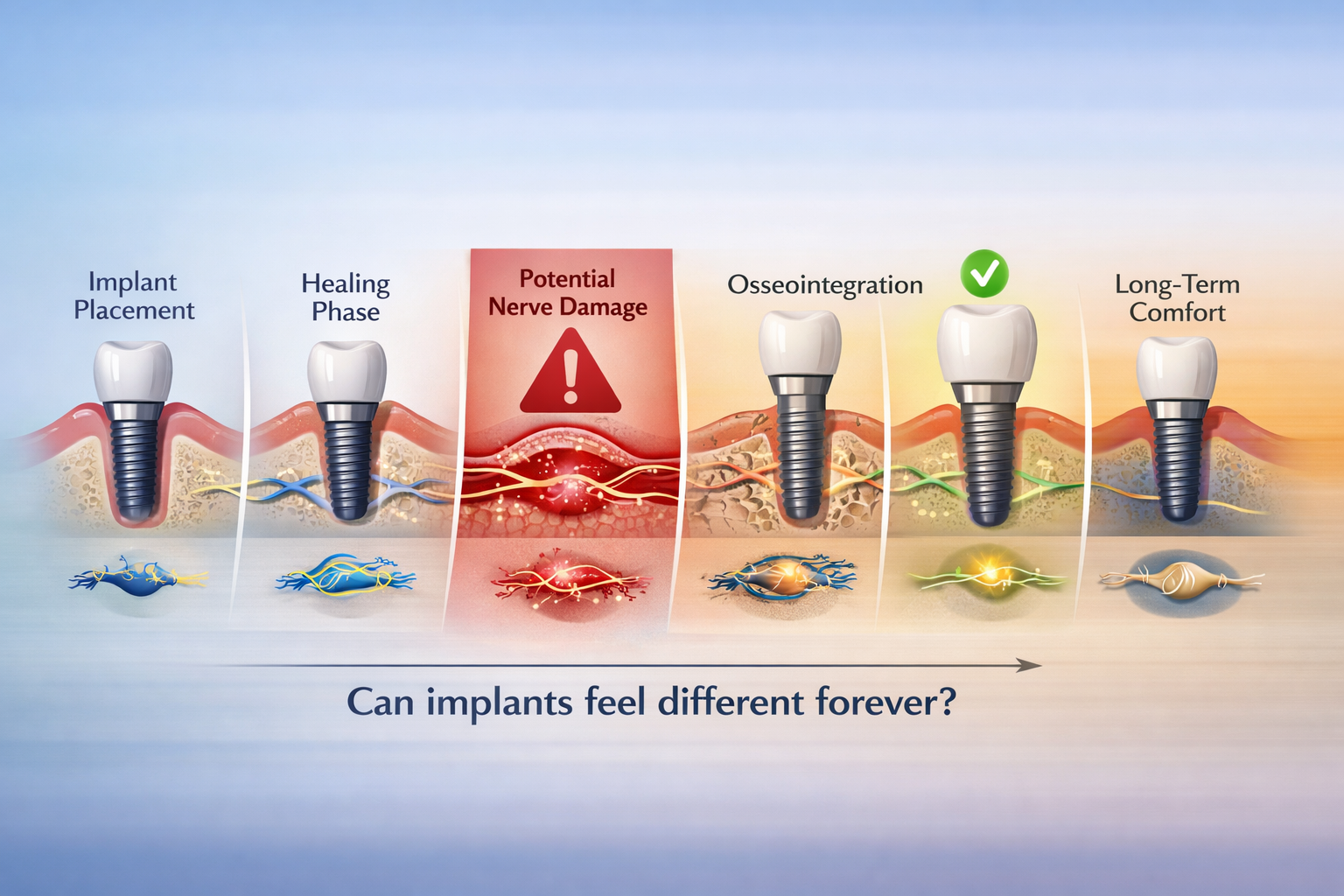
The timeline for sensation after dental implant placement typically involves an initial period of numbness due to local anesthesia, followed by a gradual return of normal sensation in the surrounding tissues as the healing process begins. While the implant itself will not gain the same direct sensation as a natural tooth, patients usually adapt to its presence within weeks to a few months.
Here’s a general timeline:
Immediately Post-Surgery (First 24-48 hours):
- Numbness: The area will be numb due to local anesthesia. This typically wears off within a few hours.
- Mild Discomfort/Swelling: Once anesthesia fades, you may experience mild pain, swelling, and tenderness around the surgical site. This is normal and manageable with prescribed pain medication.
- Altered Sensation: You might notice a temporary dullness or different feeling in the surrounding gum tissue or even your lip/chin if the implant was in the lower jaw, which is usually a temporary side effect of the surgery itself.
First Few Weeks (1-4 weeks):
- Healing: The soft tissues begin to heal, and initial discomfort subsides significantly.
- Osseointegration Begins: The titanium implant post starts to fuse with your jawbone. This process is crucial for stability but does not involve regaining direct nerve sensation in the implant itself.
- Adaptation: Most patients begin to adapt to the presence of the implant. The “foreign object” feeling often diminishes as your mouth adjusts.
- Monitoring for Persistent Issues: If any persistent numbness or unusual sensations (paresthesia, dysesthesia) continue beyond a few weeks, it’s important to inform your dental professional. While often temporary, prolonged symptoms warrant evaluation.
Months 2-6 (Osseointegration Completion):
- Stronger Integration: The implant becomes more fully integrated with the bone, providing a stable foundation.
- Crown Placement: Once osseointegration is complete, the abutment and final crown are placed.
- Full Function: With the crown in place, you can typically resume normal chewing and speaking.
- Long-Term Feel: By this stage, most people have fully accustomed themselves to the implant. They may still discern a difference compared to a natural tooth (lack of PDL sensation), but it generally feels functional and comfortable.
What if Sensation Doesn’t Return to Normal?
If you experience prolonged numbness, tingling, or unusual pain in the area of the implant or in your lip/chin beyond the typical healing period, it’s crucial to consult your implant dentist immediately. While rare, persistent sensory changes can occur, as noted with approximately 6.33% of patients experiencing such issues [1]. Early evaluation can help determine the cause and explore potential interventions.
For some, the different sensation might indeed persist indefinitely. However, it’s important to distinguish between a different feeling (due to the lack of PDL) and problematic altered sensation (due to nerve damage). The former is a normal outcome of implant biology, while the latter is a complication that needs attention. Your long-term oral health and comfort are paramount, so clear communication with your dental team is essential.
Are There Innovations to Help Implants Feel More Natural?
Yes, researchers are actively developing innovative technologies aimed at making dental implants feel more natural by addressing the lack of nerve sensation inherent in traditional implants. The goal is to restore a more natural sense of touch and pressure, closer to that of a natural tooth.
One promising area of research involves “smart dental implants.” Researchers at Tufts University, for instance, have developed innovative implants coated with a biodegradable foam [2]. This foam contains two key components:
- Stem Cells: These cells have the ability to differentiate into various cell types, including nerve cells.
- Nerve-Growth Proteins: These proteins actively encourage the regeneration and growth of nerve endings.
The idea behind this technology is that once the implant is placed, the biodegradable foam would slowly release these components, stimulating the natural regrowth of nerve endings around the implant. This regeneration could potentially re-establish a sensory connection, allowing the implant to mimic the proprioceptive feedback of a natural tooth [2].
Current Status and Future Outlook
While this “smart implant” technology offers exciting possibilities, it is currently in its early stages of development. The research has shown promising results in lab-testing phases using rodents [2]. However, human trials are still in the future, and it will take time for such innovations to become widely available in clinical practice for tooth replacement options.
Other Research Directions
Beyond nerve regeneration, other research areas contributing to a more natural feel include:
- Advanced Materials: Developing implant materials with enhanced biocompatibility and properties that promote healthier surrounding tissues.
- Improved Design: Refining implant and abutment designs to optimize bite force distribution and reduce stress on the jawbone, which indirectly contributes to a more comfortable feel.
- Digital Planning and Guided Surgery: While not directly affecting sensation, precision planning with 3D guided implant surgery minimizes surgical trauma and the risk of nerve damage, which prevents negative sensory experiences in the first place. Many dentists offering dental implants in Dallas utilize these advanced techniques.
While these innovations hold great promise for the future of implant dentistry, it’s important for patients considering implant surgery in 2026 to understand that current standard implants, while highly successful, will generally feel different from natural teeth due to the absence of a periodontal ligament. However, the ongoing advancements suggest a future where dental implants could offer an even more seamless, natural experience.
What Factors Influence How Different an Implant Might Feel?
Several factors can influence how different a dental implant might feel compared to a natural tooth, ranging from the quality of the surrounding bone to the patient’s individual perception and the skill of the surgical team. Understanding these influences can help manage expectations for the dental implant procedure.
1. Implant Location
- Upper vs. Lower Jaw: Implants in the lower jaw (mandible) may sometimes feel more distinct due to the presence of the inferior alveolar nerve, which is a major nerve pathway close to common implant sites. Implants in the upper jaw (maxilla) generally have fewer direct nerve interaction concerns.
- Front vs. Back Teeth: While front teeth are crucial for aesthetics, back molars experience significant chewing forces. The subtle differences in sensation might be more noticeable in areas where precise bite force and food texture discernment are more critical for the individual.
2. Bone Quality and Quantity
- Osseointegration Success: A strong, stable integration between the implant and the jawbone is fundamental. If osseointegration is compromised, the implant might feel loose or uncomfortable, leading to a very “different” and problematic sensation. Good bone quality promotes optimal healing and stability.
- Bone Grafting: In cases where insufficient bone is present, a bone graft procedure may be necessary. While successful, the healing from grafting adds another layer to the recovery, and the body’s adaptation to the new bone structure can influence initial perceptions. For insights on this, you might explore information on Bone Graft Costs for Dental Implants in Dallas.
3. Patient’s Individual Perception and Adaptation
- Neurological Adaptation: Every individual adapts differently. Some patients quickly integrate the implant into their oral sensory map and barely notice a difference, while others remain more attuned to the altered sensation.
- Pre-Existing Oral Health: Patients who have been missing a tooth for a long time might find the implant feels incredibly natural, as they’ve grown accustomed to a gap. Those with recent tooth loss might have a stronger memory of their natural tooth’s sensation.
4. Surgical Technique and Precision
- Experienced Surgeon: A highly skilled and experienced implant dentist or oral surgeon in Dallas is crucial. They can meticulously plan the implant placement to avoid vital structures, particularly nerves.
- 3D Guided Surgery: The use of advanced imaging and 3D guided implant surgery allows for extremely precise placement, minimizing the risk of complications that could lead to altered sensation. You can learn more about Dallas TX Dentists Using 3D Guided Implant Surgery 2026.
5. Type of Restoration
- Single Crown vs. Bridge vs. Full Arch: While a single implant crown replaces one tooth, implant-supported bridges or full-arch restorations (like All-on-4) involve multiple implants supporting a larger prosthesis. The overall feel can vary depending on the extent of the restoration and how it interacts with the remaining natural teeth or soft tissues. For example, the sensation of an Implant-Supported Denture will be different than a fixed All-on-4.
Ultimately, while the inherent biological difference means an implant will not exactly replicate a natural tooth’s sensation, these factors collectively determine how significant or noticeable that “difference” feels to each individual.
Managing Expectations: What to Discuss with Your Dentist in Dallas
Managing expectations about how dental implants will feel is a crucial step in the treatment process. It’s important to have an open and honest conversation with your dentist in Dallas about what you can realistically expect regarding sensation, comfort, and function after your implant procedure.
Key Discussion Points for Your Consultation
When discussing your concerns about “Can implants feel different forever” with your dentist, consider asking the following:
- Expected Sensation: “How will this implant feel different from my natural teeth, and what can I expect in terms of pressure or touch sensation?”
- Potential for Numbness/Tingling: “What are the specific risks of nerve involvement for my case, especially with my implant location, and what are the chances of experiencing persistent numbness or tingling?”
- Healing Process and Timeline: “Can you walk me through the dental implant procedure and the typical healing timeline, specifically focusing on when I might regain normal sensation in the surrounding areas?”
- Adaptation Period: “How long does it typically take for patients to adapt to the feel of their new implant, and what strategies can help with this adjustment?”
- Follow-up Care: “What are the signs of a potential issue with sensation that I should report immediately after surgery, and what is the protocol for follow-up if I experience altered sensation?”
- Technologies Used: “Do you use 3D guided implant surgery or other advanced techniques that help minimize risks and improve precision, especially regarding nerve proximity?”
- Long-Term Oral Health: “What are the long-term oral health considerations for maintaining my implant, and how might these impact the way it feels over time?”
Why a Thorough Consultation Matters
A comprehensive consultation with a qualified implant dentist in Dallas allows them to:
- Assess Your Unique Anatomy: Using X-rays and 3D scans, your dentist can evaluate your bone density, the precise location of nerves and sinuses, and the overall suitability for dental implants. This personalized assessment is key to anticipating any potential challenges related to sensation.
- Explain the Procedure in Detail: A clear understanding of the implant surgery process, including the steps involved and potential recovery, helps demystify the experience.
- Address Your Specific Concerns: Your dentist can alleviate fears and provide realistic expectations based on their experience and the latest research.
- Discuss Alternatives: If dental implants aren’t the best option for your specific situation, they can discuss other tooth replacement options. For instance, comparing Dental Implants vs Dentures Cost Comparison in Dallas TX could be beneficial.
By engaging in a thorough discussion, you empower yourself to make an informed decision about your oral health, ensuring that your journey to a restored smile is as comfortable and predictable as possible. Your dentist’s role is not just to perform the procedure but to serve as your guide through every step, emphasizing patient safety and long-term oral health.
Patient Experiences: Adapting to Dental Implants
Patient experiences with adapting to dental implants are overwhelmingly positive, with most individuals quickly integrating their new tooth replacements into their daily lives, despite the implants feeling physically “different” from natural teeth. The primary adjustment typically revolves around getting accustomed to the lack of the periodontal ligament’s sensory feedback.
Many patients report that after the initial healing period, their dental implants feel remarkably natural in terms of function and appearance. While they might intellectually know it’s an implant, the feeling often becomes so integrated that they don’t consciously notice the difference during normal activities like eating or speaking.
Common Patient Sentiments:
- “Feels like my own tooth, but without the ‘give'”: Many describe the implant as solid and stable, offering excellent biting force. The main distinction is the absence of the slight cushioning and direct nerve sensation that a natural tooth provides.
- Quick Adaptation: Most individuals adapt within weeks or a few months after the permanent crown is placed. The brain quickly learns to interpret the new sensory input from the surrounding gums and bone.
- Improved Quality of Life: Patients often express significant satisfaction, highlighting improvements in chewing ability, speech clarity, and self-confidence. This far outweighs any subtle differences in sensation.
- Initial “Foreign Object” Feeling: It’s common to feel like something is “different” or “foreign” in the mouth initially. However, this feeling almost always subsides as the body adjusts and the brain integrates the implant. For more on this, refer to our article, “Dental Implant Feels Weird? Timeline to Natural Comfort“.
- Rare Persistent Issues: A small percentage of patients (around 6.33% [1]) might experience persistent altered sensations like numbness or tingling. In these cases, it’s crucial to consult with the implant dentist for evaluation and management.
The Role of Long-Term Oral Health and Maintenance
The long-term success and comfort of dental implants are closely tied to excellent oral hygiene and regular dental check-ups. Just like natural teeth, implants require diligent brushing, flossing, and professional cleanings. Neglecting oral hygiene can lead to peri-implantitis, an inflammatory condition around the implant, which can cause discomfort and, if untreated, implant failure. This highlights the importance of patient safety and preventative care.
Choosing a reputable provider for your dental implants in Dallas who emphasizes comprehensive post-operative care and ongoing support can significantly contribute to a positive and comfortable long-term experience. While it’s true that implants can feel different forever in a biological sense, for most people, this difference is minor and is eclipsed by the significant benefits of a restored, healthy smile.
FAQ
What are “smart dental implants” and when will they be available?
“Smart dental implants” are an innovative technology designed to help restore natural sensation by being coated with biodegradable foam containing stem cells and nerve-growth proteins. This technology is currently in lab-testing phases with rodents, and human trials are still in the future, so they are not yet available for general use [2].
Can dental implants get cavities?
No, dental implants themselves (the titanium post and porcelain or zirconia crown) cannot get cavities because they are not made of natural tooth material. However, the surrounding gums and natural teeth are still susceptible to gum disease and decay, which can jeopardize the implant’s health.
How long does the healing process take for a dental implant?
The initial healing process for the soft tissues typically takes a few weeks, but complete osseointegration (where the implant fuses with the jawbone) can take anywhere from 3 to 6 months, or sometimes longer depending on individual healing factors and if bone grafting was needed.
Is it normal to feel numbness after dental implant surgery?
Yes, it is normal to experience numbness immediately after dental implant surgery due to local anesthesia. This typically wears off within a few hours. However, if numbness or altered sensation persists for several weeks, it’s important to contact your dentist for evaluation.
What happens if a nerve is damaged during implant placement?
If a nerve is damaged during implant placement, it can lead to persistent sensory changes like paresthesia (tingling, numbness) or dysesthesia (unpleasant sensations). The inferior alveolar nerve in the lower jaw is most commonly affected [1]. It’s crucial to report any persistent symptoms to your dentist immediately, as early intervention can sometimes help.
Are dental implants painful?
The dental implant procedure is typically performed under local anesthesia, so you should not feel pain during the surgery itself. Post-operative discomfort is manageable with prescribed or over-the-counter pain medication. Most patients describe it as less uncomfortable than a tooth extraction.
How do I know if my dental implant is healing correctly?
Signs of correct healing include decreasing pain and swelling over time, no excessive bleeding, and the absence of fever or unusual discharge. Your dentist will monitor the healing process with follow-up appointments and X-rays to ensure successful osseointegration.
What are the long-term success rates of dental implants?
Dental implants boast high long-term success rates, often exceeding 95% over 10 years, particularly with good oral hygiene and regular dental care. Their durability makes them an excellent long-term solution for missing teeth.
Does Medicare cover dental implants in Dallas, TX in 2026?
Generally, Medicare does not cover routine dental care, including most dental implant procedures. However, there might be exceptions for medically necessary procedures related to an underlying health condition. It’s best to check with your Medicare plan provider and your dentist in Dallas for specific 2026 coverage details. For more information, see our guide “Does Medicare Cover Dental Implants in Dallas TX? 2026 Cover“.
How does the cost of a dental implant in Dallas compare to other tooth replacement options?
The cost of dental implants in Dallas can vary depending on individual needs and the complexity of the case. While the initial investment might be higher than traditional bridges or dentures, dental implants often offer superior long-term value, comfort, and oral health benefits. You can explore a detailed comparison at “Dental Implants vs Dentures Cost Comparison in Dallas TX“.
Conclusion
While the question “Can implants feel different forever?” receives a nuanced ‘yes’ due to the biological absence of a periodontal ligament, it’s crucial to understand that this distinction rarely translates to discomfort or dissatisfaction. For the vast majority of patients in Dallas and beyond, dental implants integrate seamlessly into their daily lives, providing a stable, functional, and aesthetically pleasing solution for missing teeth. The subtle difference in sensation is usually easily adapted to, leading to significant improvements in chewing ability, speech, and overall quality of life.
However, recognizing the potential for rare, persistent sensory changes due to nerve involvement is important. This underscores the critical need to choose a highly experienced implant dentist who prioritizes patient safety and utilizes advanced planning techniques, such as 3D guided implant surgery. Open communication with your dental professional about your expectations and any post-operative sensations is paramount to ensuring optimal long-term oral health and a successful outcome.
As technology continues to advance, with promising research into “smart dental implants” and nerve regeneration, the future holds even greater potential for enhancing the natural feel of these innovative tooth replacement options. For now, patients considering dental implants in Dallas can proceed with confidence, knowing they are choosing a durable and highly effective solution that, for most, will feel incredibly natural over time.
Actionable Next Steps:
- Schedule a Consultation: If you’re considering dental implants, schedule a consultation with a qualified implant dentist in Dallas. Discuss your specific oral health needs, concerns about sensation, and expected outcomes.
- Ask About 3D Imaging: Inquire whether your dentist uses 3D imaging and guided surgery to ensure precise implant placement and minimize risks.
- Understand the Process: Educate yourself on the full dental implant procedure, including recovery and long-term care, to set realistic expectations.
- Prioritize Oral Hygiene: Commit to excellent oral hygiene habits before and after the procedure to support successful healing and the longevity of your implant.
References
[1] Ofph – https://www.jofph.com/articles/10.11607/ofph.3027
[2] Smart Dental Implants Restore Sensation – https://www.crownanddenturesolutions.com/post/smart-dental-implants-restore-sensation
Leave a Reply
Share your thoughts or ask a question about dental implants. Your email address will not be published.