

When considering tooth replacement options like dental implants, a common and important question that arises is: “Can implant change my bite?” The answer is yes, dental implants can significantly impact and often improve your bite, but this change is typically a carefully planned and beneficial one. Understanding how dental implants influence your oral mechanics is crucial for anyone considering this long-term oral health solution, especially here in Dallas, TX.
Key Takeaways
- Dental implants are designed to restore and often improve a patient’s bite function, providing stability and comfort.
- The initial bite force on new implants is less than natural teeth but increases significantly as the implant integrates with the bone.
- Precise placement and careful restoration design are critical to ensuring a balanced and healthy bite after implant surgery.
- Factors like implant location, patient gender, and bone integration time influence how bite force develops.
- Platform-switching implant designs can reduce stress on surrounding bone, contributing to long-term implant success and bite stability.
- Regular follow-up appointments with your dentist are essential to monitor bite alignment and make any necessary adjustments.
- An improperly aligned implant can lead to discomfort, excessive wear on other teeth, or even implant failure, underscoring the need for expert care.
Quick Answer
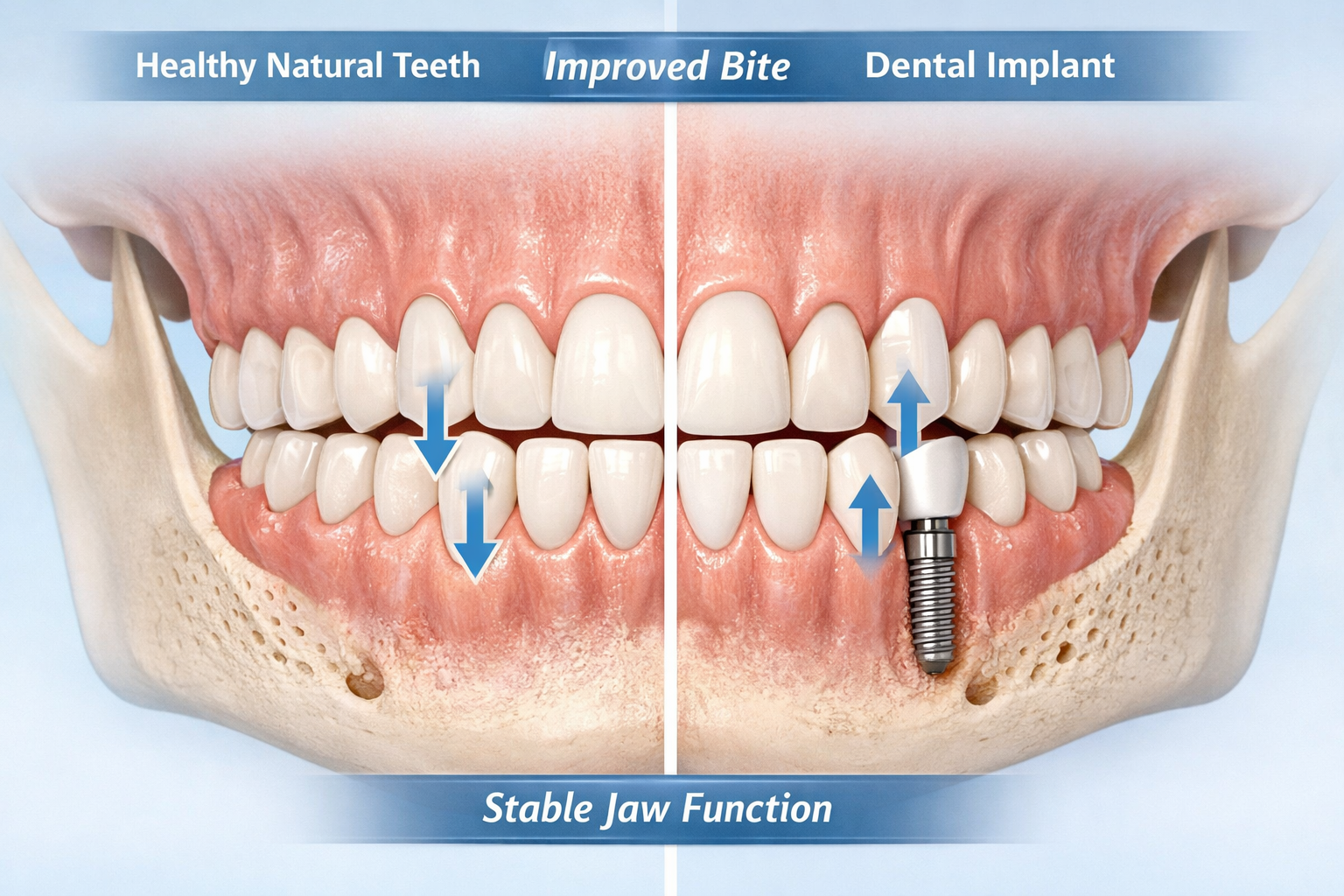
Yes, dental implants can change your bite, and in most cases, this change is a positive one, aimed at restoring optimal chewing function and jaw alignment. When properly placed and restored, dental implants integrate with your jawbone, providing a stable foundation that allows for a balanced and effective bite, often improving upon the previous compromised bite caused by missing teeth. This process involves careful planning and adjustment by your dental professional to ensure harmony with your existing dentition.
How Dental Implants Influence Your Bite
Dental implants are much more than just a replacement for a missing tooth; they are a comprehensive solution designed to restore the entire chewing unit, from root to crown. When you lose a tooth, the surrounding teeth can shift, and the opposing tooth may supra-erupt (grow longer) into the empty space. This can severely disrupt your natural bite, leading to discomfort, uneven wear on other teeth, and even temporomandibular joint (TMJ) issues.
A dental implant, consisting of a titanium post surgically placed into the jawbone, an abutment, and a custom-made crown, directly addresses these problems. The implant acts as a new tooth root, stimulating the jawbone and preventing bone loss, which is critical for maintaining facial structure and supporting adjacent teeth. Once the implant is placed and has successfully integrated with the bone, a custom crown is designed to precisely fit into your bite. This careful design ensures that your upper and lower teeth meet correctly, distributing chewing forces evenly across your arch.
The Dynamics of Bite Force with Dental Implants
The journey of bite force restoration with dental implants is a dynamic one. Initially, after the placement of the crown, patients may experience a lower bite force compared to their natural teeth [1]. This is a normal part of the adaptation process. However, research indicates that bite force significantly increases over time, particularly during the 6 to 18 months following implantation [1, 2].
Several factors contribute to this increase and overall bite function:
- Osseointegration: This is the biological process where the dental implant fuses directly with the jawbone. As osseointegration strengthens, the implant becomes incredibly stable, allowing for greater force during chewing [1].
- Patient Adaptation: Over time, patients naturally adjust to their new implant, learning to chew effectively and confidently [1, 2].
- Implant Location: Posterior implants (molars and premolars) generally demonstrate greater stability and higher bite force values compared to anterior implants (front teeth) because they are designed to withstand the heavier forces of chewing and grinding food [1, 2].
- Patient Gender: Studies have shown that males often exhibit significantly higher mean bite force, especially in posterior regions, after implant restoration [1, 2].
The goal of your dental implant procedure in Dallas, TX, is not just to replace a missing tooth but to re-establish a stable, comfortable, and efficient bite that supports your long-term oral health. This meticulous process ensures that the implant integrates seamlessly into your oral system.
Patients experiencing implant issues often ask about the overall cost of replacing or repairing implants. Our Nuvia dental implant cost guide explains typical full-arch pricing and financing options.
How Can Implant Change My Bite Positively?
A dental implant can positively change your bite by restoring proper alignment, distributing chewing forces evenly, and preventing further oral health complications. When a tooth is lost, the surrounding teeth can drift, and the opposing teeth may over-erupt, leading to an unbalanced bite. By replacing the missing tooth with a precisely positioned implant and crown, your dental professional can re-establish the correct occlusal plane and interdigitation, where your upper and lower teeth meet properly.
Benefits of a Restored Bite with Dental Implants
- Improved Chewing Efficiency: A balanced bite allows you to chew food more effectively, which aids in digestion and enhances your overall enjoyment of meals.
- Prevention of Tooth Shifting: The implant acts as a placeholder, preventing adjacent teeth from drifting into the empty space, which can cause further bite misalignment and spacing issues.
- Protection Against Enamel Wear: When your bite is unbalanced, certain teeth may bear excessive chewing forces, leading to accelerated wear and tear on their enamel. A properly aligned implant helps distribute these forces evenly.
- Enhanced Jaw Joint Health: An imbalanced bite can strain the temporomandibular joints (TMJ), leading to pain, clicking, or headaches. Dental implants can help restore harmony to your jaw, alleviating such symptoms.
- Better Oral Hygiene: A correctly aligned bite can make it easier to clean your teeth, reducing areas where food particles might get trapped, thus lowering your risk of cavities and gum disease.
- Preservation of Jawbone: The implant post stimulates the jawbone, preventing the bone loss that typically occurs after a tooth extraction. This preserves your facial structure and provides a stable foundation for a healthy bite.
Role of Expert Planning in Bite Restoration
The success of bite restoration hinges on thorough planning by an experienced dental implant specialist. Before any implant surgery, a comprehensive assessment, including X-rays and 3D imaging, is performed to map out the precise placement of the implant. This planning considers:
- Bone Density and Quantity: Ensuring there is adequate bone to support the implant. If not, bone grafting may be necessary.
- Nerve and Sinus Locations: To avoid complications during placement.
- Existing Bite Pattern: To design a crown that integrates harmoniously with your current occlusion.
- Aesthetics: To ensure the new crown looks natural and complements your smile.
For patients seeking dental implants in Dallas, it’s crucial to consult with a dentist who has extensive experience in implant dentistry. They will leverage advanced technology to ensure the implant is placed in the ideal position, contributing significantly to a successful and comfortable bite adjustment. Learn more about finding the right professional by exploring our guide on Top 10 Dental Implant Specialists Dallas TX.
What Happens if an Implant Changes My Bite Negatively?
While dental implants are designed to improve your bite, an improperly placed or restored implant can unfortunately change your bite negatively, leading to various issues. This typically occurs when the implant crown is either too high, too low, or misaligned with the opposing teeth or adjacent natural teeth.
Potential Negative Effects of an Unbalanced Implant Bite
- Discomfort and Pain: A crown that is too tall can hit prematurely when you bite down, causing localized pain in the implant site, soreness in surrounding teeth, or even muscle pain in the jaw and head.
- Excessive Force on the Implant: If the implant takes too much force during chewing, it can lead to complications such as:
- Loosening of the implant screw or crown: The constant, uneven pressure can cause components to become loose.
- Fracture of the implant or crown: Severe, sustained overload can lead to structural damage.
- Bone Loss around the implant: The bone supporting the implant can resorb due to excessive stress, potentially leading to dental implant failure symptoms.
- Wear and Tear on Natural Teeth: If the implant is positioned incorrectly, it can cause other natural teeth to bear undue stress, leading to chipping, cracking, or accelerated wear of their enamel.
- TMJ (Temporomandibular Joint) Disorders: A chronically unbalanced bite can put significant strain on the jaw joints, potentially leading to pain, clicking, popping sounds, limited jaw movement, or even headaches.
- Difficulties with Chewing: An unharmonious bite can make it challenging to chew food properly, impacting digestion and overall comfort.
- Aesthetic Concerns: An improperly aligned crown may not blend seamlessly with your natural teeth, affecting the appearance of your smile.
How to Mitigate Negative Bite Changes
The key to preventing negative bite changes lies in meticulous planning and execution by a skilled dental professional.
- Comprehensive Pre-Treatment Evaluation: Advanced imaging (such as CBCT scans) allows the dentist to precisely plan the implant’s position relative to your existing teeth, bone structure, and bite.
- Experienced Dental Implant Specialist: Choosing a highly qualified and experienced dentist or oral surgeon for your dental implants in Dallas is paramount. Their expertise ensures correct implant placement and accurate crown fabrication.
- Accurate Impressions and Custom Crown Fabrication: The dental lab uses precise impressions of your mouth to create a crown that fits perfectly and harmonizes with your bite.
- Careful Occlusal Adjustment: During the final stages, your dentist will meticulously check your bite and make tiny adjustments to the crown until it feels comfortable and stable. This is a critical step to ensure even force distribution.
- Follow-Up Appointments: Regular check-ups after the implant is placed allow your dentist to monitor your bite and make any necessary minor adjustments over time, ensuring long-term success and comfort. Our guide on Dallas Dental Implant Follow-Up highlights the importance of these visits.
If you experience persistent discomfort or feel that your bite is “off” after receiving a dental implant, it’s crucial to contact your dentist immediately. Early intervention can prevent minor issues from becoming more significant complications.
The Role of Technology and Design in Preventing Bite Issues
Modern dental implant technology and innovative design principles play a critical role in preventing bite issues and ensuring a successful, comfortable outcome. From advanced imaging to specialized implant components, these advancements allow for greater precision and predictability in the dental implant procedure.
Advanced Imaging and Planning Software
Before any implant surgery begins, dentists utilize sophisticated diagnostic tools:
- 3D Cone Beam Computed Tomography (CBCT): This imaging provides a detailed, three-dimensional view of your jawbone, nerves, blood vessels, and existing teeth. It allows the dental professional to assess bone density, identify vital structures, and plan the exact angle and depth for implant placement with millimeter precision. This precision minimizes risks and optimizes the implant’s position for ideal bite function.
- Digital Impression Scanners: Instead of traditional messy impressions, digital scanners create highly accurate 3D models of your mouth. These models are used to design custom abutments and crowns that integrate flawlessly with your bite.
- Surgical Guides: Based on the 3D imaging and planning, dentists can create custom surgical guides. These guides are like stencils that fit over your gums during surgery, ensuring the implant is placed in the pre-determined, optimal position. This eliminates guesswork and significantly reduces the chance of misaligned implants that could impact your bite.
Innovative Implant Designs
The design of the implant itself also contributes to its ability to support a stable bite without causing complications.
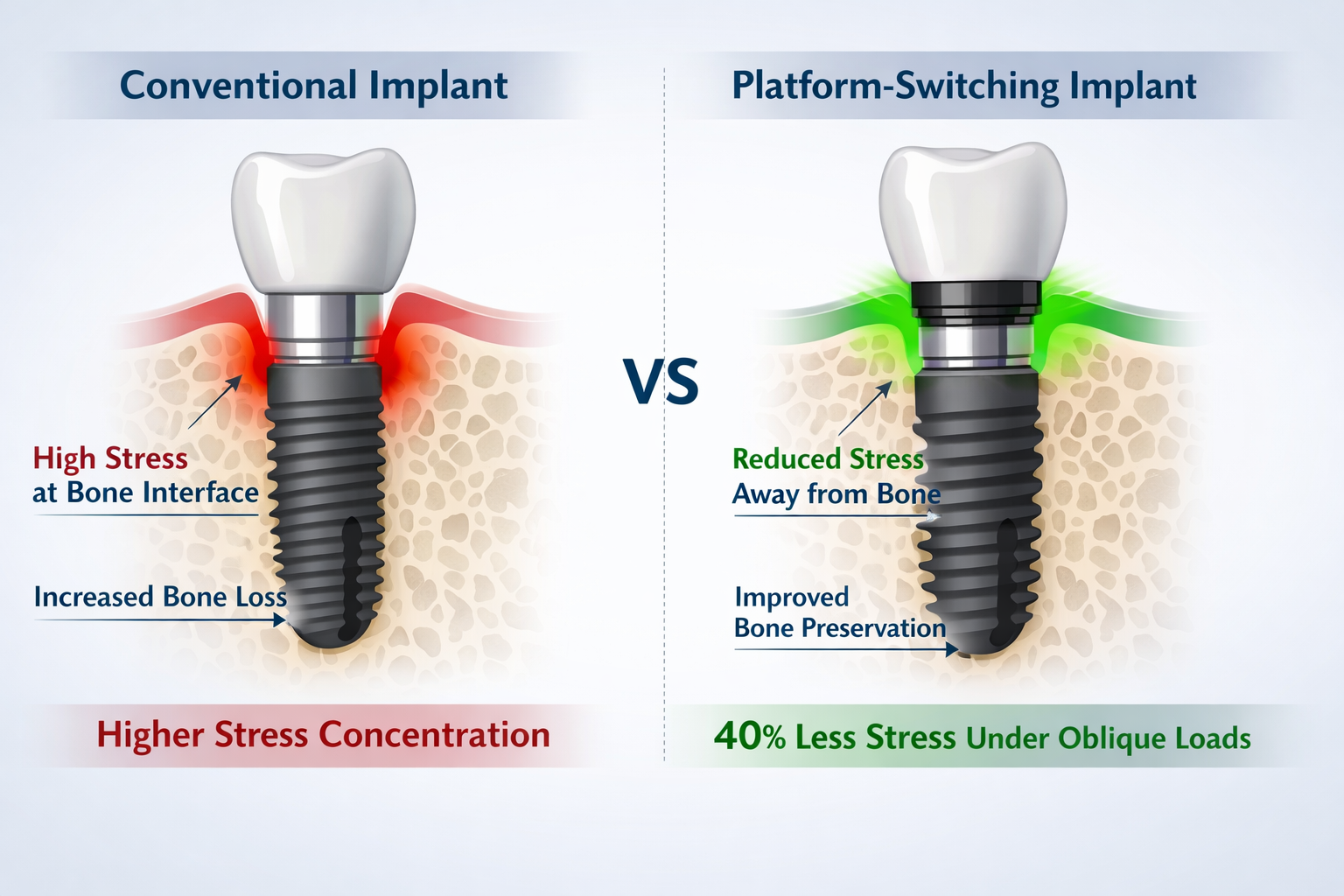
- Platform Switching: This design concept involves using an abutment with a smaller diameter than the implant fixture itself. This creates a horizontal offset between the implant and the abutment connection, moving the micro-gap away from the bone crest. Studies show that platform-switching implant designs can significantly reduce stress on the surrounding bone, by as much as 40% under oblique loads and 36% under axial stresses, compared to conventional designs [1, 2]. This reduced stress helps preserve bone, which is vital for long-term implant stability and a consistent bite.
- Surface Treatments: Modern implants feature specialized surface treatments that encourage faster and stronger osseointegration (fusion with the jawbone). A more robust bone-to-implant connection means greater stability and the ability to withstand chewing forces without compromising the bite.
- Material Science: Implants are typically made from biocompatible materials like titanium, which are incredibly strong and integrate well with human bone. The strength of these materials ensures the implant can endure the forces of chewing without fracturing, maintaining the integrity of your bite.
These technological advancements ensure that dental implants in Dallas are placed and restored with the utmost precision, greatly enhancing their success rate and minimizing the potential for bite-related complications. For more information on the dental implant procedure, you can explore resources like our guide on Dental Implants Process Pictures.
Adjusting to Your New Bite: What to Expect
Adjusting to a new dental implant and its effect on your bite is a gradual process that involves both physical healing and psychological adaptation. It’s important to have realistic expectations and to communicate openly with your dental team throughout this journey.
Immediate Post-Procedure Period
Right after your implant crown is placed, your bite might feel different. This is normal. You may notice:
- A “Foreign Object” Sensation: While the crown is designed to look and feel natural, your mouth is highly sensitive, and any new addition can feel unusual at first. This sensation typically diminishes as you get used to it.
- Slight Adjustments: Your dentist will meticulously check your bite during the crown placement appointment. They will use articulating paper to identify any high spots and make minor adjustments to the crown’s surface until your bite feels even and comfortable.
- Mild Discomfort: Some minor discomfort or sensitivity in the surrounding teeth or jaw is possible as your bite adjusts, but this should be temporary and manageable with over-the-counter pain relievers. If you experience significant or persistent pain, contact your dentist. Our guide on Dental Implant Pain Relief Guide can provide further insights.
Long-Term Adaptation and Bite Force Development
As weeks and months pass, your body and mouth will continue to adapt:
- Osseointegration Continues: The implant post is still fusing with your jawbone during this time, strengthening the foundation. This process can take several months.
- Increased Bite Force: As mentioned earlier, bite force on implant-retained crowns tends to increase significantly during the first 6 to 18 months post-insertion [1, 2]. This means you’ll gradually regain more confidence and strength in chewing.
- Neuromuscular Adaptation: Your brain and jaw muscles will learn to work in harmony with the new implant, optimizing chewing patterns. What once felt “different” will begin to feel like a natural part of your dentition.
- Speech Improvement: If the missing tooth previously affected your speech, you may notice an improvement in articulation as you adapt to the new crown.
Tips for a Smooth Adjustment
- Follow Post-Operative Instructions: Adhering to your dentist’s Post-Op Dental Implant Instructions is crucial for proper healing and integration.
- Start with Soft Foods: Initially, consume softer foods and gradually reintroduce firmer items as you become more comfortable.
- Practice Good Oral Hygiene: Maintain excellent brushing and flossing habits around your implant, just as you would with your natural teeth. This helps prevent complications that could affect your bite.
- Attend Follow-Up Appointments: These visits are essential for your dentist to monitor the implant, check your bite, and make any minor adjustments if necessary.
- Avoid Habits that Stress Your Bite: If you grind or clench your teeth (bruxism), discuss this with your dentist. They may recommend a dental implant night guard to protect your implant and natural teeth from excessive forces.
Patience is key during the adjustment period. Most patients in Dallas report that their dental implants eventually feel very natural and comfortable, significantly improving their quality of life.
What to Expect During Dental Implant Consultation and Planning in Dallas
For residents of Dallas considering dental implants, the initial consultation and planning phase are perhaps the most critical steps in ensuring a successful outcome, including a healthy and comfortable bite. This stage sets the foundation for the entire procedure, from addressing your concerns like “Can implant change my bite?” to developing a personalized treatment plan.
Initial Consultation: Your First Step
Your journey begins with a comprehensive consultation with a qualified dental professional, often a general dentist experienced in implants, a periodontist, or an oral surgeon in Dallas. During this visit, you can expect:
- Discussion of Your Goals and Concerns: This is your opportunity to express what you hope to achieve with dental implants and any worries you might have, such as how the implant might affect your bite or overall comfort.
- Review of Medical and Dental History: Your dentist will inquire about your general health, any medications you take, and your dental history. Conditions like diabetes can influence implant recovery, which is why we have resources like our guide on Diabetic Dental Implant Recovery.
- Thorough Oral Examination: This includes checking your remaining teeth, gums, and overall oral health.
- Diagnostic Imaging: X-rays are standard, but often a 3D Cone Beam Computed Tomography (CBCT) scan will be recommended. This advanced imaging provides detailed views of your jawbone, nerve pathways, and sinus cavities, which are crucial for precise implant placement.
Detailed Planning and Treatment Design
After the initial assessment, your dental team will move into the detailed planning phase. This involves:
- Bone Assessment: Analyzing the CBCT scan to determine the quantity and quality of your jawbone. If there isn’t enough bone, a bone graft procedure may be necessary before implant placement to ensure long-term stability.
- Implant Placement Simulation: Using specialized software, your dentist can simulate the ideal position and angle for each implant. This virtual planning is vital for optimizing the implant’s integration with your existing bite and preventing future occlusal issues.
- Restoration Design: The type of restoration (e.g., single crown, implant bridge, All-on-4) will be determined based on your needs and the number of missing teeth. For instance, if you are missing multiple teeth, an implant bridge might be a suitable option. You can learn more about its costs in our guide, Unveiling the True Cost of a Dental Implant Bridge in 2025.
- Bite Analysis: Your current bite will be thoroughly analyzed to ensure that the new implant and crown will integrate harmoniously, distributing chewing forces evenly and comfortably. This is where your concerns about your bite changing are actively addressed and planned for.
- Discussion of Costs and Financing: A detailed cost estimate for your specific treatment plan, including the implant cost in Dallas, will be provided. Options for Dental Implant Financing Dallas TX will also be discussed.
- Timeline Overview: You will receive a clear understanding of the entire process, from surgery to the final crown placement, including healing times.
This meticulous planning ensures that every aspect of your dental implant journey, from initial placement to the final bite, is carefully considered and optimized for your comfort and success. Don’t hesitate to ask your dentist Essential Questions to Ask Your Dentist About Implants in 2026.
The Long-Term Success of Dental Implants and Bite Stability
The long-term success of dental implants is remarkably high, often exceeding 97% at 10 years, with many implants functioning well even after 20 years [5]. A significant component of this lasting success is the stability of the bite that dental implants provide. By offering a durable, integrated foundation for tooth replacement, implants help maintain a balanced bite over many years, contributing to overall oral health and quality of life.
Factors Contributing to Long-Term Bite Stability
- Osseointegration: The direct fusion of the implant with the jawbone is the cornerstone of its stability. Once fully integrated, the implant behaves much like a natural tooth root, capable of withstanding chewing forces without shifting.
- Proper Initial Placement: As discussed, precise surgical placement is critical. An implant that is well-aligned from the start is less likely to cause bite problems or excessive stress on other teeth down the line.
- Quality of Prosthetic Restoration: The custom-made crown, bridge, or denture that attaches to the implant must be meticulously crafted to fit your bite perfectly. High-quality materials and accurate fabrication ensure proper occlusal contact and even force distribution.
- Patient Maintenance: Long-term success relies heavily on the patient’s commitment to oral hygiene. Regular brushing, flossing, and using any prescribed cleaning tools are essential to prevent peri-implantitis (gum disease around the implant), which can compromise stability.
- Regular Dental Check-ups: Routine visits to your Dallas dentist are vital. During these appointments, your dentist will assess the health of your implants, check your bite for any changes, and perform professional cleanings. Any minor adjustments to your bite can be made proactively to prevent larger issues.
- Avoidance of Harmful Habits: Habits like clenching or grinding teeth (bruxism) can exert excessive force on implants and natural teeth, potentially leading to complications. Using a night guard, especially for those with bruxism, is crucial for protecting your investment [24]. Smoking can also negatively impact implant success and overall oral health.
Addressing Potential Long-Term Bite Changes
While dental implants are designed for longevity, it is possible for your bite to experience subtle changes over time due to various factors:
- Wear on Natural Teeth: Over decades, your natural teeth may wear down or shift slightly, which can subtly alter your bite relationship with the implant crown.
- Gum Recession: Minor gum recession can occur around natural teeth or implants, potentially exposing the implant’s collar or affecting the bite.
- Dental Work on Other Teeth: If you undergo other dental procedures, such as fillings, crowns, or extractions on adjacent or opposing teeth, your bite may need re-evaluation and adjustment.
Your dentist will monitor these potential changes during your regular follow-up appointments. If any significant bite discrepancies arise, they can often be corrected with minor adjustments to the implant crown or other teeth to restore comfort and function. This proactive approach ensures your dental implants continue to support a stable and healthy bite for many years to come. For any concerns about unusual sensations or sounds, our guide on Dental Implant Clicking Noise offers helpful information.
Conclusion
The question, “Can implant change my bite?” is answered with a resounding yes, and typically for the better. Dental implants are a sophisticated and highly effective solution for missing teeth, meticulously designed to not only fill gaps but also to restore and optimize your entire chewing system. Through careful planning, advanced technology, and expert placement, these restorations aim to provide a stable, comfortable, and efficient bite that integrates seamlessly with your natural dentition. While initial adaptation is natural, the long-term benefits of a balanced bite, including improved chewing, prevention of tooth shifting, and enhanced jaw joint health, are significant.
For anyone in Dallas considering dental implants, the journey begins with an informed consultation. Choosing an experienced dental professional is paramount to ensure that your implant procedure is meticulously planned and executed, guaranteeing that your new bite is not just functional but also contributes positively to your overall oral health and quality of life for years to come. We encourage you to schedule a consultation with a trusted dental implant specialist in Dallas to discuss your specific needs and explore how this transformative treatment can benefit you.
FAQ
Q1: Will my bite feel different immediately after getting a dental implant?
A1: Yes, it is common for your bite to feel different initially after the dental implant crown is placed. This is a natural adjustment period, and your dentist will make precise adjustments to ensure it’s balanced and comfortable.
Q2: How long does it take for my bite to feel completely normal with a dental implant?
A2: While immediate adjustments are made, it can take several weeks to months for your mouth and jaw muscles to fully adapt to the new implant. Bite force tends to increase significantly during the first 6 to 18 months post-implantation [1, 2].
Q3: Can an implant cause my other teeth to shift?
A3: No, a properly placed dental implant acts as a stable anchor, preventing adjacent teeth from shifting into the empty space. In fact, it helps maintain the alignment of your natural teeth.
Q4: What if my implant feels too high or uneven after the procedure?
A4: If your implant crown feels too high or uneven, it’s crucial to contact your dentist promptly. They can make minor adjustments to the crown to ensure proper bite alignment and prevent discomfort or complications.
Q5: Can dental implants help with jaw pain caused by a bad bite?
A5: Yes, by restoring a balanced and proper bite, dental implants can alleviate strain on the temporomandibular joints (TMJ) and surrounding muscles, potentially reducing or resolving jaw pain caused by bite imbalances.
Q6: Are there specific implant designs that improve bite stability?
A6: Yes, designs like platform-switching implants are known to reduce stress on the surrounding bone, which contributes to better long-term stability and bite integrity compared to conventional designs [1, 2].
Q7: What role does my dentist play in ensuring a good bite with implants?
A7: Your dentist plays a crucial role through meticulous planning using 3D imaging, precise surgical placement, careful custom crown fabrication, and detailed occlusal adjustments to ensure your new implant integrates perfectly into your bite.
Q8: Can dental implants impact my speech?
A8: If a missing tooth affected your speech, replacing it with a dental implant and crown can often improve articulation and clarity by restoring the correct oral structures needed for speech.
Q9: Is it possible for my bite to change years after getting an implant?
A9: While the implant itself is stable, your overall bite can experience subtle changes over many years due to wear on natural teeth or other dental work. Regular dental check-ups allow your dentist to monitor and address these changes.
Q10: How much do dental implants cost in Dallas to ensure a proper bite?
A10: The cost of dental implants in Dallas varies based on factors like the number of implants, the need for bone grafting, and the type of restoration. While the focus is on a proper bite, you can find detailed information on pricing in our guide on 2026 Dallas Dental Implant Cost Update.
References
[1] Article – https://journals.plos.org/plosone/article?id=10.1371%2Fjournal.pone.0340355
[2] Pmc12818635 – https://pmc.ncbi.nlm.nih.gov/articles/PMC12818635/
[5] Dental Implant Failure Rates What The Research Actually Says And What It Means For You – https://biteclubchi.com/dental-implant-failure-rates-what-the-research-actually-says-and-what-it-means-for-you/
Leave a Reply
Share your thoughts or ask a question about dental implants. Your email address will not be published.