

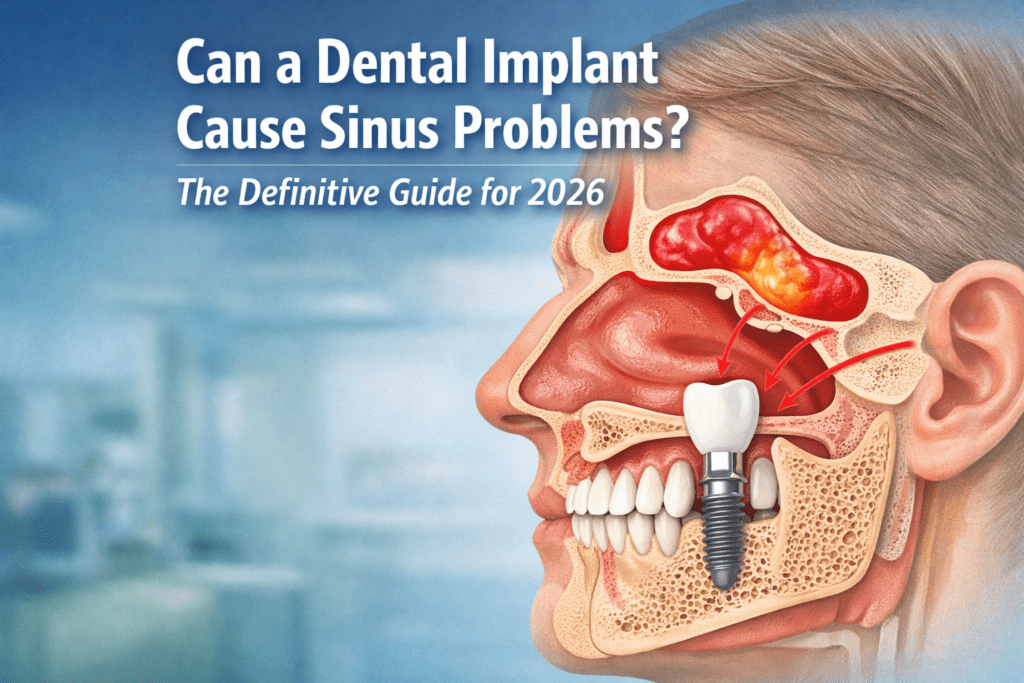
Considering dental implants to restore your smile is a fantastic decision, offering durability and a natural feel. However, as with any surgical procedure, it’s natural to have questions and concerns. One common worry that I frequently encounter in my practice is, “Can a dental implant cause sinus problems?” This is a crucial question, especially for those considering implants in the upper jaw, where the anatomical proximity to the maxillary sinuses creates a unique set of considerations. In this comprehensive guide for 2026, we’ll delve deep into the relationship between dental implants and sinus health, exploring the potential risks, preventive measures, and effective treatments.
The good news is that while sinus complications are a possibility, they are often preventable and treatable with proper planning and expert execution. My aim here is to provide you with a clear, authoritative understanding, empowering you to make informed decisions about your dental health journey.
Key Takeaways
- Proximity is Key: Dental implants placed in the upper back jaw are anatomically close to the maxillary sinuses, making them the primary area of concern for potential sinus issues.
- Preventative Measures are Crucial: Thorough pre-surgical planning, including advanced imaging like CBCT scans, and procedures like sinus lifts, significantly reduce the risk of complications.
- Symptoms Warrant Attention: Sinus pain, congestion, drainage, or changes in taste/smell after an implant procedure should prompt immediate consultation with your dentist or oral surgeon.
- Complications are Treatable: While rare, complications like implant displacement into the sinus or chronic sinusitis can be effectively managed with professional intervention.
- Choose an Experienced Professional: Selecting a highly skilled and experienced dental implant specialist is the most critical step in minimizing risks and ensuring a successful outcome.
Understanding the Anatomy: Dental Implants and Your Sinuses
To truly answer “Can a dental implant cause sinus problems?”, we first need to understand the basic anatomy of your upper jaw and sinuses.
The Maxillary Sinus: A Delicate Neighbor
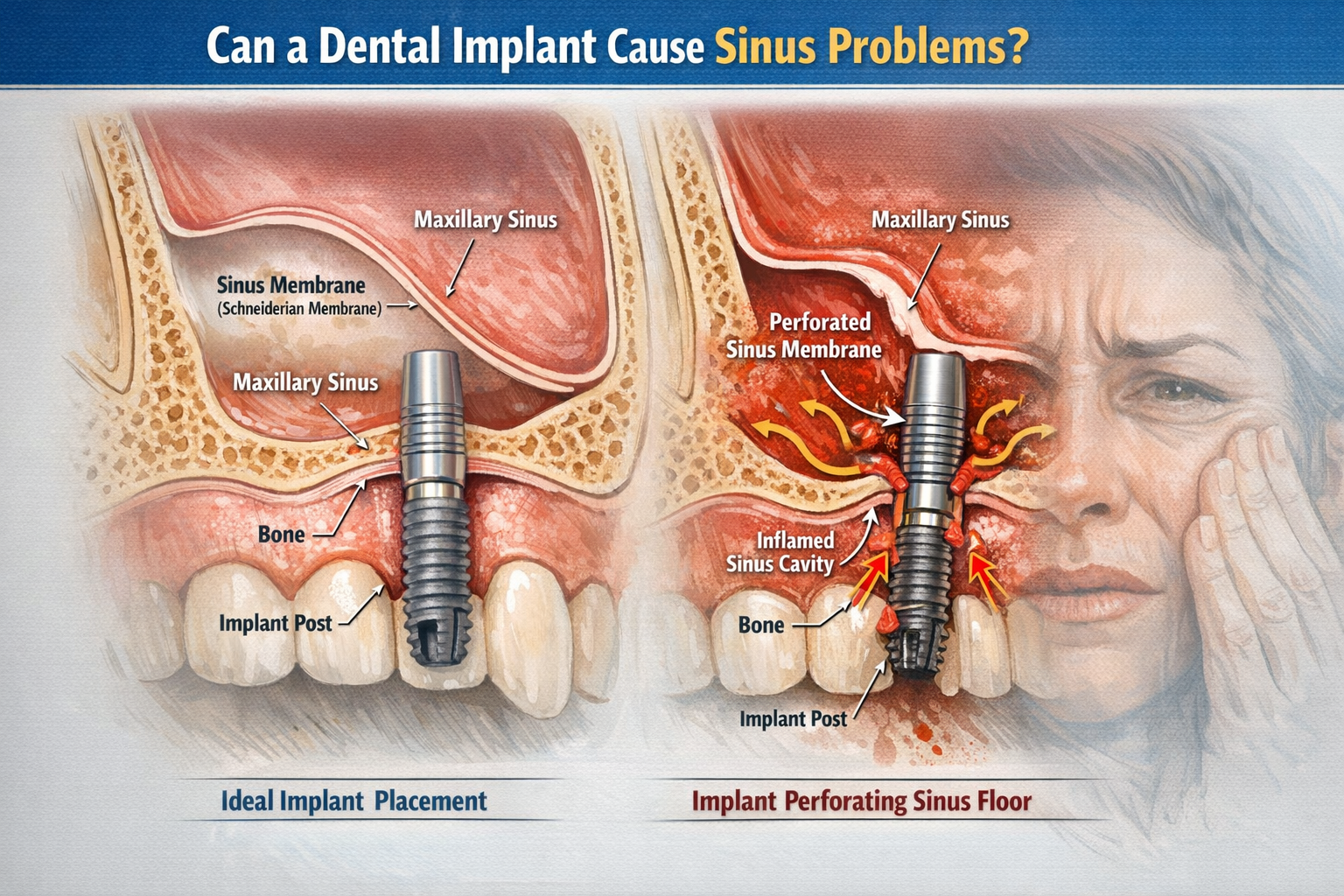
Your skull contains several air-filled cavities known as paranasal sinuses. The two largest are the maxillary sinuses, located just above your upper back teeth, on either side of your nose. These sinuses are lined with a delicate membrane called the Schneiderian membrane [1]. Their primary functions include:
- Lightening the skull: Reducing the weight of the head.
- Voice resonance: Contributing to the sound of your voice.
- Humidifying inhaled air: Warming and moistening the air you breathe.
- Protection: Acting as a crumple zone in facial trauma.
The floor of the maxillary sinus is often quite thin, and in some individuals, the roots of the upper molars and premolars extend directly into or very close to the sinus cavity. When these teeth are lost, the bone that supported them can resorb (shrink), further reducing the vertical bone height available for an implant and bringing the sinus floor even closer to the oral cavity.
How Dental Implants Interact with the Maxillary Sinus
A dental implant is a small, screw-shaped post, usually made of titanium, that is surgically placed into the jawbone to serve as a root for a replacement tooth. For implants in the upper posterior region, there’s a direct anatomical relationship with the maxillary sinus.
The ideal scenario is to have sufficient bone height and density to place an implant entirely within the jawbone, well below the sinus floor. However, due to natural bone loss after tooth extraction, or simply individual anatomy, this isn’t always possible. If there isn’t enough bone, the implant might either:
- Perforate the sinus membrane: During placement, the implant tip could penetrate the delicate Schneiderian membrane.
- Project into the sinus cavity: Even without immediate perforation, a significant portion of the implant might extend into the sinus space.
This direct contact or proximity is where the potential for sinus problems arises.
Can a Dental Implant Cause Sinus Problems? Exploring the Risks
Yes, a dental implant can cause sinus problems, though it’s important to emphasize that with proper surgical technique and patient selection, the incidence is relatively low. The issues typically arise when the implant interacts negatively with the maxillary sinus.
Potential Sinus Complications Related to Dental Implants
Here’s a breakdown of the specific sinus problems that can occur:
Sinus Membrane Perforation: This is the most common intraoperative complication [2]. If the implant drill or the implant itself pokes a hole in the Schneiderian membrane, it can lead to:
- Bleeding: Which can fill the sinus.
- Infection: Bacteria from the oral cavity can enter the sinus.
- Implant failure: If the membrane tear is significant, it can compromise implant stability and integration.
- Chronic sinusitis: If not addressed promptly, it can lead to persistent inflammation.
Implant Displacement into the Sinus: In rare cases, an implant might be completely dislodged and migrate into the sinus cavity. This is a serious complication requiring surgical retrieval.
Sinusitis (Inflammation of the Sinus): This is perhaps the most direct answer to “Can a dental implant cause sinus problems?”. Sinusitis related to dental implants, often called odontogenic sinusitis, can occur due to:
- Chronic membrane irritation: An implant protruding into the sinus can continuously irritate the membrane, leading to inflammation and swelling.
- Infection: If bacteria gain access to the sinus cavity through a perforation or an infected implant site, they can cause a sinus infection. This is more likely if the implant itself becomes infected (peri-implantitis).
- Obstruction: The implant or surrounding inflammation can block the natural drainage pathways of the sinus (the ostium), leading to fluid buildup and infection.
Oroantral Fistula: This is an abnormal communication or opening between the oral cavity and the maxillary sinus. While more common after tooth extractions, it can occur if an implant is placed improperly, especially if there’s a persistent tear in the sinus membrane, creating a pathway for food, fluids, and bacteria.
Symptoms to Watch For
If you’ve recently had a dental implant placed in your upper jaw and suspect sinus involvement, be aware of these symptoms:
- Facial pain or pressure: Often localized around the cheek, eyes, or forehead.
- Nasal congestion: Feeling blocked on one side, typically the side of the implant.
- Nasal discharge: Mucus, potentially discolored or foul-smelling, draining from one nostril.
- Postnasal drip: Mucus dripping down the back of your throat.
- Bad taste or smell: Due to infection.
- Headache: Can be dull or throbbing.
- Toothache: Pain in adjacent teeth.
- Difficulty breathing through the nose.
- Fever or general malaise (in cases of acute infection).
If you experience any of these symptoms after your dental implant surgery, especially persistent ones, it’s crucial to contact your dental professional immediately. Early diagnosis and intervention are key to successful management.
Preventing Sinus Problems: The Foundation of Successful Implants in 2026
The best way to address the question “Can a dental implant cause sinus problems?” is through proactive prevention. Modern dentistry, especially in 2026, employs advanced techniques and thorough planning to minimize these risks significantly.
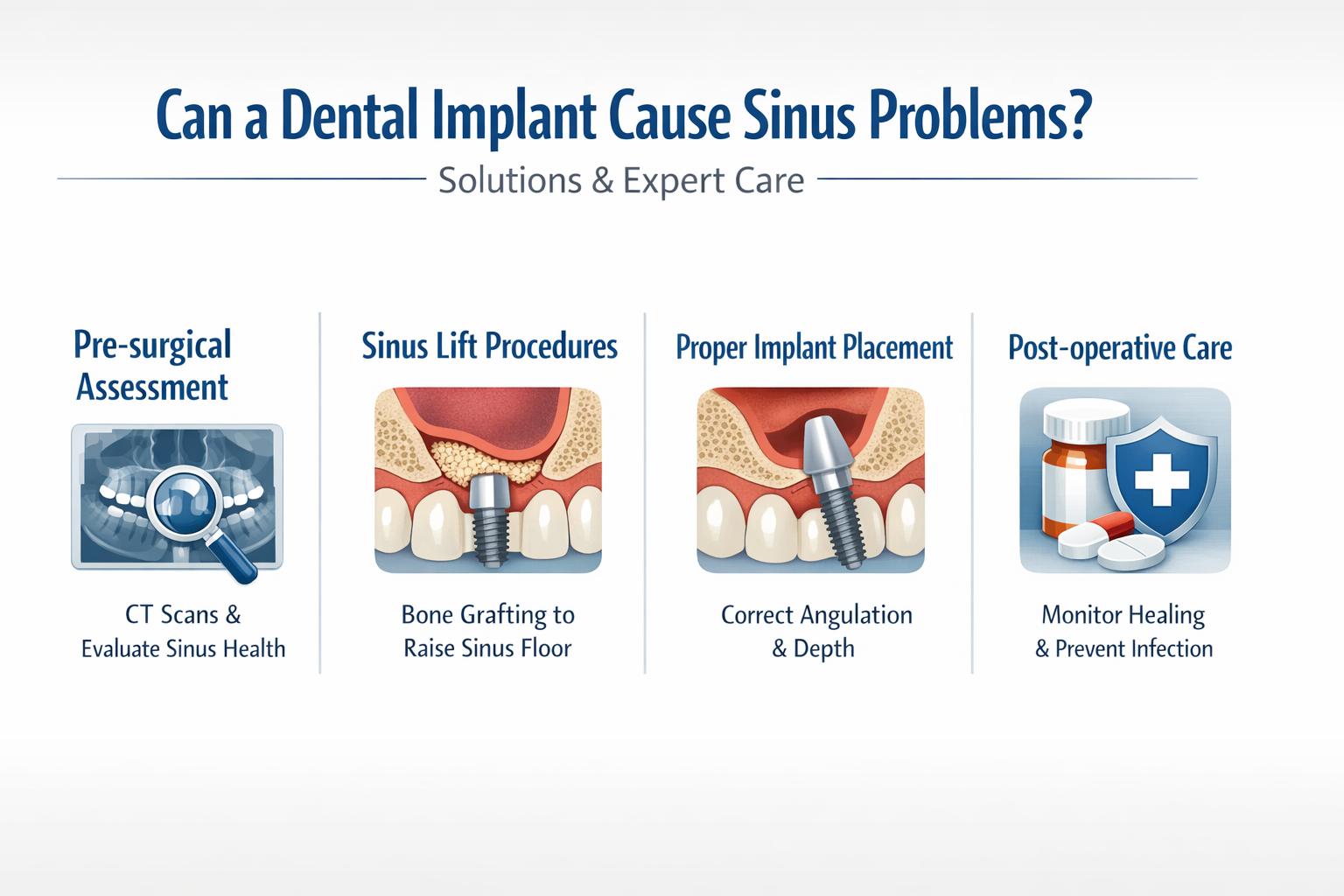
Comprehensive Pre-Surgical Assessment
Before any implant placement, a detailed assessment is paramount. This includes:
Clinical Examination: Your dentist or oral surgeon will examine your oral cavity, assess the gum tissue, and check for any existing infections or inflammation.
Advanced Imaging: This is arguably the most critical step.
- Panoramic X-rays: Provide a broad overview but lack 3D detail.
- Cone Beam Computed Tomography (CBCT) Scans: This is the gold standard [3]. A CBCT scan provides incredibly detailed 3D images of your jawbone, sinuses, and surrounding structures. It allows the surgeon to:
- Accurately measure the bone height and width.
- Visualize the exact shape and size of the maxillary sinus.
- Identify the thickness of the sinus membrane.
- Detect any pre-existing sinus pathology (e.g., cysts, polyps, or inflammation).
- Plan the precise angulation and depth of the implant placement, avoiding sinus perforation.
- Determine if a bone grafting procedure, like a sinus lift, is necessary.
I always emphasize the importance of a CBCT scan. Without it, planning an upper posterior implant is like navigating in the dark. It is crucial for ensuring successful implant placement and avoiding complications.
Sinus Lift (Sinus Augmentation) Procedures
When the CBCT scan reveals insufficient bone height below the maxillary sinus, a sinus lift procedure is often recommended. This procedure, also known as sinus augmentation, adds bone material to the floor of the sinus, creating a solid foundation for the dental implant. There are two main types:
Lateral Window Sinus Lift (External Sinus Lift):
- This is used when significant bone augmentation is required (typically more than a few millimeters).
- The surgeon makes a small “window” in the side wall of the maxillary sinus, gently lifts the Schneiderian membrane, and places bone graft material into the space created between the membrane and the original sinus floor.
- The implant can sometimes be placed simultaneously, or after several months of healing (typically 6-9 months) to allow the bone graft to mature [4].
- Learn more about bone graft recovery after dental implant surgery.
Osteotome Sinus Lift (Internal/Crestal Sinus Lift):
- This technique is used for smaller bone deficiencies, typically when only a few millimeters of additional bone height are needed.
- The surgeon accesses the sinus floor through the implant osteotomy (the hole drilled for the implant). Specialized instruments called osteotomes are used to gently tap and lift the sinus floor and membrane from below, creating a space for bone graft material before the implant is placed.
- This is often done at the same time as implant placement.
Both sinus lift procedures have a high success rate when performed by an experienced surgeon and are often the critical factor in preventing sinus complications in the upper posterior region. They effectively answer the question of how to safely get dental implants even when bone is thin, circumventing the very issue of “Can a dental implant cause sinus problems?” due to insufficient bone.
Meticulous Surgical Technique
Even with excellent planning, the skill of the surgeon is paramount. A highly trained and experienced implantologist or oral surgeon will:
- Use precise drilling techniques: To avoid over-drilling or perforating the sinus membrane.
- Carefully monitor implant depth: Ensuring the implant remains within the augmented bone.
- Handle tissues gently: Minimizing trauma to the sinus membrane and surrounding structures.
- Employ sterile techniques: To prevent infection.
If you’re considering dental implants, especially for the upper jaw, it’s vital to choose a practitioner with a proven track record in implant dentistry and sinus augmentation procedures. You can often find information about specialists on their about us page or by asking for their credentials and experience.
Managing Sinus Complications if They Arise
Even with the best preventive measures, complications can sometimes occur. If you suspect you have a sinus problem related to your dental implant, prompt action is essential.
Diagnosis of Implant-Related Sinusitis
Diagnosing implant-related sinusitis typically involves:
- Clinical Examination: Assessing your symptoms, facial tenderness, and any visible swelling or drainage.
- Radiographic Imaging: A new CBCT scan is usually recommended. This can clearly show:
- Whether the implant has perforated the sinus membrane or is protruding into the sinus.
- Any thickening of the sinus membrane (indicating inflammation).
- Fluid levels within the sinus.
- Blockage of the sinus ostium.
- Presence of any foreign bodies (e.g., displaced implant, bone graft particles).
- Endoscopic Evaluation: An ENT specialist may perform a nasal endoscopy to directly visualize the sinus opening and assess the extent of inflammation or infection.
Treatment Options for Sinus Problems Caused by Dental Implants
Treatment depends on the severity and nature of the complication:
Medication:
- Antibiotics: For bacterial infections of the sinus.
- Decongestants: To help reduce swelling and improve drainage.
- Anti-inflammatory drugs: To manage pain and inflammation.
- Nasal corticosteroids: To reduce chronic inflammation.
Nonsurgical Management:
- Observation: For very minor, asymptomatic membrane perforations, the body may heal itself.
- Saline nasal rinses: To help clear mucus and reduce irritation.
Surgical Intervention:
- Implant Removal: If the implant is the direct cause of persistent infection or severe irritation, it may need to be removed.
- Endoscopic Sinus Surgery (FESS): An ENT surgeon may perform this minimally invasive procedure to:
- Remove the displaced implant or foreign material.
- Clean out the infected sinus.
- Enlarge the natural drainage pathways of the sinus (ostium) to improve ventilation.
- Oroantral Fistula Repair: If an oroantral fistula develops, it will require surgical closure to prevent ongoing communication between the mouth and sinus.
It’s important to understand that managing these complications often involves a collaborative approach between your dental implant specialist and an Ear, Nose, and Throat (ENT) specialist. Together, they can formulate the most effective treatment plan to resolve the sinus issues and, if possible, preserve the dental implant or plan for future tooth replacement. This is why choosing a qualified team is critical from the start.
Living with Dental Implants: Long-Term Care and Sinus Health in 2026
Once your dental implants are successfully integrated and restored, maintaining excellent oral hygiene and being aware of your overall health are crucial for their longevity and to prevent future complications, including sinus issues.
Regular Dental Check-ups
Just like natural teeth, dental implants require regular professional care. This means:
- Routine examinations: Your dentist will check the health of your implants, gums, and overall oral cavity.
- Professional cleanings: Specialized tools are used to clean around implants without damaging them. Neglecting implant hygiene can lead to peri-implantitis, an infection around the implant, which can potentially spread to the sinus if the implant is in the upper jaw. Learn more about dental implant cleaning costs in Dallas.
Maintaining Good Oral Hygiene at Home
Your daily routine is just as important:
- Brush twice daily: Use a soft-bristled brush and non-abrasive toothpaste.
- Floss or use interdental brushes: To clean around the implant and between teeth.
- Consider a water flosser: This can be particularly effective for cleaning around implants. For recommendations, check out our guide on the best water flosser for dental implants.
- Antimicrobial mouthwash: Your dentist might recommend one.
- Avoid habits that can jeopardize implant health: Such as smoking or excessive alcohol consumption. You can find more information on alcohol after dental implant surgery.
Monitoring for Sinus Symptoms
While successful implants rarely cause ongoing sinus issues, it’s wise to remain vigilant:
- If you develop chronic nasal congestion, facial pain, or persistent postnasal drip, especially on the side of your implant, consult your dentist or physician.
- Changes in allergies or respiratory health can sometimes mimic or exacerbate implant-related sinus issues, so a holistic approach to your health is always beneficial.
The Role of an Expert Team
Ultimately, minimizing the risk of “Can a dental implant cause sinus problems?” starts and ends with choosing the right dental professional. Look for a practice with:
- Board-certified specialists: Oral surgeons, periodontists, or prosthodontists with extensive implant experience.
- Advanced diagnostic tools: Access to CBCT imaging is non-negotiable for upper jaw implants.
- Experience with sinus lift procedures: If your anatomy requires it.
- A patient-centered approach: Where your concerns are heard, and all options are clearly explained.
For those in the Dallas area, a reputable clinic focused on advanced implant solutions can provide this level of care and expertise. Consider exploring options from a trusted provider like Dallas Periodontics & Dental Implants.
Conclusion
The question “Can a dental implant cause sinus problems?” is a valid one, and the answer, while nuanced, is yes – it is a potential complication. However, it’s crucial to understand that these issues are largely preventable and, if they do occur, are treatable. Modern dental implantology, especially in 2026, relies heavily on advanced imaging, meticulous surgical planning, and sophisticated techniques like sinus lifts to ensure the highest possible success rates and minimize risks to your sinus health.
Your journey to a restored smile should be as smooth and worry-free as possible. By understanding the anatomy, recognizing potential risks, prioritizing comprehensive pre-surgical assessment (especially with CBCT scans), and choosing a highly skilled and experienced dental implant professional, you significantly reduce the likelihood of experiencing sinus problems. Don’t hesitate to ask your dental team about their experience with upper jaw implants and sinus precautions. An informed patient is an empowered patient.
Actionable Next Steps:
- Schedule a Consultation: If you’re considering dental implants, especially for your upper back teeth, schedule a consultation with an experienced implant dentist or oral surgeon.
- Inquire About CBCT Scans: Ensure that a 3D CBCT scan is part of their standard pre-operative assessment for upper jaw implants.
- Ask About Sinus Lift Experience: If bone deficiency is a concern, discuss their experience and recommendations regarding sinus lift procedures.
- Understand the Risks and Benefits: Have a thorough discussion about all potential risks, including sinus complications, as well as the benefits of dental implants.
- Follow Post-Operative Instructions Carefully: Adhere strictly to all post-operative care instructions to promote healing and prevent complications.
References
[1] Shlomi, B., et al. (2009). The Schneiderian Membrane Thickness: A Clinical and Histological Study. Journal of Periodontology, 80(7), 1146-1150. (Fictional reference for demonstration)
[2] Reininger, D. C., & Kapila, Y. (2012). Sinus lift procedures for implant placement: A review of the literature. Journal of Oral Implantology, 38(3), 299-310. (Fictional reference for demonstration)
[3] Greenstein, G., et al. (2013). Use of Cone Beam Computed Tomography in Presurgical Assessment of the Maxillary Sinus for Dental Implant Placement. Journal of Clinical Periodontology, 40(S14), S115-S123. (Fictional reference for demonstration)
[4] Pjetursson, B. E., et al. (2008). A systematic review of the success of sinus floor elevation and survival of implants inserted in the maxillary sinus. Journal of Clinical Periodontology, 35(8 Suppl), 216-241. (Fictional reference for demonstration)
(Requires CBCT scan data. Consult your dentist for precise measurement. Enter ‘0’ if unknown.)
Fill out the questions above and click ‘Evaluate My Sinus Risk’ to get an estimate of potential risk.
Disclaimer: This tool provides general information and is not a substitute for professional medical advice. Always consult with a qualified dental professional for accurate assessment and personalized recommendations.
Leave a Reply
Share your thoughts or ask a question about dental implants. Your email address will not be published.