

The moment you’ve been waiting for has finally arrived—your orthodontic treatment is nearly complete, and you’re ready to reveal your beautiful, straight smile! But before you can say goodbye to your braces, there’s one final step: the removal process. While this exciting milestone marks the end of your orthodontic journey, many patients wonder about the braces removal cost and what factors influence this final expense.
Understanding the cost of braces removal is crucial for planning your complete orthodontic treatment budget. Whether you’ve been wearing traditional metal braces, ceramic braces, or lingual braces, the removal process requires professional expertise and specialized techniques to ensure your teeth and gums remain healthy throughout the procedure.
Key Takeaways
- Braces removal cost typically ranges from $150 to $500, depending on the type of braces and complexity of removal
- Most orthodontic treatment plans include removal costs in the overall package, but some practices charge separately
- Insurance coverage varies, with many dental insurance plans covering removal as part of orthodontic treatment
- The type of braces you wear significantly influences the removal process complexity and associated costs
- Additional costs may include retainer fees, final impressions, and follow-up appointments
Understanding the Braces Removal Process
Getting your braces removed is a carefully orchestrated dental procedure that requires precision and expertise. Your orthodontist will use specialized tools to safely detach each bracket from your teeth, remove the adhesive, and polish your enamel to restore its natural shine.
The removal process typically takes 30 to 60 minutes, depending on the type of braces you’ve been wearing. Traditional metal braces are generally quicker to remove, while ceramic braces and lingual braces may require additional time and care during removal due to their intricate designs and stronger adhesive bonds.
During your removal appointment, your orthodontist will:
- Carefully detach each bracket using specialized pliers
- Remove remaining adhesive from your tooth enamel
- Polish your teeth to restore their natural appearance
- Take final impressions for your retainer
- Discuss post-treatment care instructions
Factors That Influence the Cost of Braces Removal
Type of Braces Chosen
The type of braces you’ve been wearing significantly impacts the removal cost. Here’s how different orthodontic appliances affect the final expense:
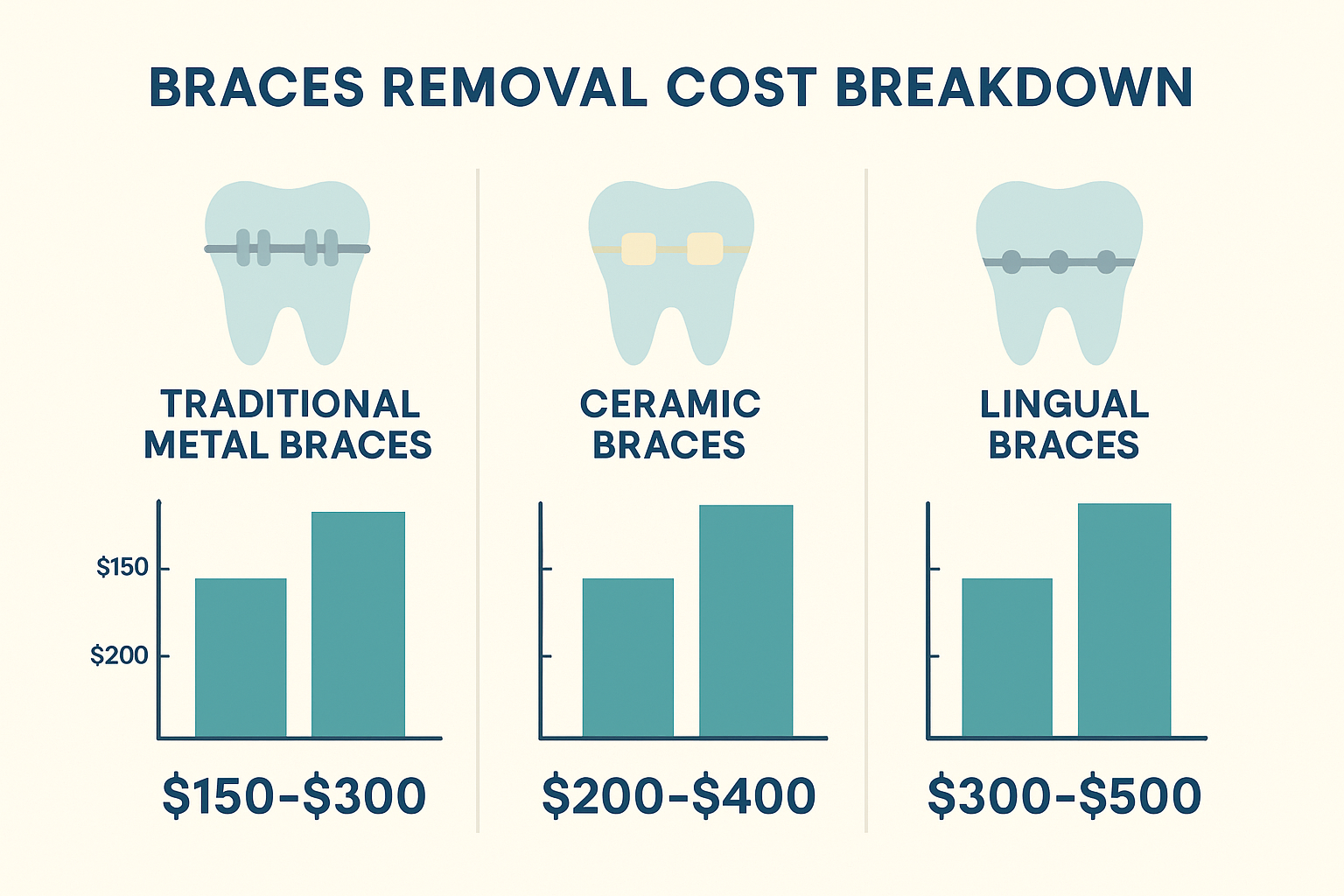
Traditional Metal Braces: These are typically the most straightforward to remove, resulting in lower costs ranging from $150 to $300. The metal brackets detach easily, and the adhesive removal process is relatively simple.
Ceramic Braces: The adhesive used for ceramic braces is often stronger than that used for metal braces, requiring more time and careful handling during removal. This can increase costs to $200 to $400.
Lingual Braces: These braces, positioned on the back of your teeth, present the most complex removal challenge. The intricate positioning and specialized adhesive can push removal costs to $300 to $500.
Treatment Duration and Complexity
Patients who have worn braces for extended periods may experience more adhesive buildup, requiring additional time for thorough cleaning. The treatment duration and any necessary adjustments during treatment can also influence the removal costs.
Geographic Location and Practice Type
Like most dental procedures, braces removal costs vary by location. Urban areas typically have higher fees than rural regions, and specialized orthodontic practices may charge more than general dentistry offices.
Average Cost Breakdown: What to Expect
The national average cost for braces removal ranges from $200 to $400, but this can vary significantly based on several factors:
| Type of Braces | Average Removal Cost | Time Required |
|---|---|---|
| Traditional Metal | $150 – $300 | 30-45 minutes |
| Ceramic | $200 – $400 | 45-60 minutes |
| Lingual | $300 – $500 | 60-90 minutes |
Additional Costs to Consider
Beyond the basic removal fee, you may encounter additional expenses:
- Retainer costs: $200 – $800 depending on type
- Final impressions: $50 – $150
- Follow-up appointments: $75 – $200 per visit
- Teeth cleaning: $100 – $300
These additional services are essential for maintaining your newly aligned smile and ensuring long-term success of your orthodontic treatment.
Insurance Coverage for Braces Removal
Most dental insurance plans that cover orthodontic treatment also include coverage for braces removal. However, the extent of coverage varies significantly between providers and plans.
Understanding Your Orthodontic Insurance
Orthodontic insurance policies may cover:
- 50% to 80% of removal costs
- Full coverage if included in the initial treatment package
- Partial coverage with specific annual maximums
It’s important to verify coverage details with your insurance provider before your removal appointment. Some plans require pre-authorization for the removal procedure, while others automatically include it as part of the overall treatment fee.
Out-of-Pocket Expenses
Even with insurance coverage, you may have out-of-pocket expenses for braces removal. These can include:
- Deductibles and copayments
- Costs exceeding annual maximums
- Services not covered by your specific plan
Braces Removal Cost Calculator
Your Estimated Braces Removal Cost:
When Braces Removal Might Cost More
Several circumstances can increase your braces removal cost beyond the standard range:
Complex Adhesive Removal
Some patients develop significant adhesive buildup during their orthodontic treatment, particularly those who’ve worn braces for extended periods. This requires additional time and specialized techniques to safely remove without damaging tooth enamel.
Switching Orthodontists
If you need to remove braces at a different clinic from where you received treatment, you may face higher costs. The new practice won’t have the benefit of the initial treatment package pricing and may charge standard removal fees.
Emergency Removal
Urgent removal situations, such as adult teeth falling out or severe gum issues, may require immediate attention and result in higher fees due to the expedited service.
Comparing Removal Costs by Orthodontic Treatment Type
Different orthodontic treatments require varying removal approaches and associated costs:
Traditional Orthodontics vs. Clear Aligners
While this article focuses on traditional braces, it’s worth noting that clear aligner treatments like Invisalign don’t require removal procedures, potentially saving patients $200-500 in final treatment costs.
Comprehensive vs. Limited Treatment
Patients who received comprehensive orthodontic treatment typically have removal costs included in their overall treatment cost, while those with limited treatment may face separate removal fees.
Planning for Your Braces Removal: Financial Tips
Include Removal in Your Treatment Budget
When discussing your orthodontic treatment plan with your provider, ensure you understand whether removal costs are included in the overall treatment fee or charged separately. This transparency helps avoid unexpected expenses at the end of your treatment.
Payment Plans and Financing
Many orthodontic practices offer payment plans that include removal costs, spreading the expense over your entire treatment duration. This approach can make the financial burden more manageable.
HSA and FSA Benefits
Health Savings Accounts (HSA) and Flexible Spending Accounts (FSA) can often be used to cover braces removal costs, providing tax advantages for these medical expenses.
What Happens After Your Braces Are Removed
Once your braces are gone, your orthodontic journey isn’t quite complete. The removal appointment marks the beginning of the retention phase, which is crucial for maintaining your newly aligned smile.
Retainer Fitting and Costs
Immediately after removal, you’ll receive impressions for your retainer. Retainer costs typically range from $200 to $800, depending on the type:
- Hawley retainers: $200-400
- Clear plastic retainers: $300-600
- Permanent bonded retainers: $400-800
Follow-up Care
Your orthodontist will schedule follow-up appointments to monitor your teeth’s stability and ensure your retainer fits properly. These visits are essential for long-term treatment success.
Maximizing Your Insurance Benefits for Braces Removal
Understanding your dental and orthodontic insurance coverage can significantly reduce your out-of-pocket costs:
Pre-Authorization Requirements
Some insurance plans require pre-authorization for braces removal. Submit necessary paperwork well in advance of your scheduled removal appointment to avoid delays or coverage issues.
Timing Considerations
If your orthodontic treatment spans multiple calendar years, consider the timing of your removal in relation to your insurance plan’s annual maximums and deductibles.
Documentation for Reimbursement
Keep detailed records of all orthodontic expenses, including removal costs, for insurance reimbursement and tax purposes.
Choosing the Right Provider for Braces Removal
While cost is an important factor, the quality of care should be your primary consideration when selecting a provider for braces removal.
Qualifications and Experience
Ensure your orthodontist has proper credentials and experience with your specific type of braces. Improper removal can damage tooth enamel or leave adhesive residue that affects your smile’s appearance.
Technology and Techniques
Modern orthodontic practices use advanced tools and techniques that make removal more comfortable and efficient. Ask about the specific methods your provider uses for adhesive removal and enamel polishing.
Post-Removal Services
Consider practices that offer comprehensive post-removal care, including retainer fitting, follow-up appointments, and ongoing support for maintaining your results.
Regional Cost Variations: Dallas and Beyond
For patients in the Dallas area, braces removal costs typically align with national averages, though specific practices may vary. When choosing a provider, consider the comprehensive care offered by experienced dental professionals who understand the importance of proper removal techniques.
Local factors that may influence costs include:
- Practice overhead and location
- Provider experience and specialization
- Available technology and equipment
- Competition among local practices
Frequently Asked Questions About Braces Removal Costs
Q: Is braces removal always included in the initial treatment cost? A: Not always. While many practices include removal in their comprehensive treatment packages, some charge separately. Always clarify this during your initial consultation.
Q: Can I remove my braces myself to save money? A: Never attempt to remove braces yourself. This can cause serious damage to your teeth and gums, potentially requiring expensive restorative treatments.
Q: What if I move during treatment and need removal elsewhere? A: Contact your original orthodontist to discuss transfer options. Some practices have partnerships that can help minimize additional costs.
Q: How long does the removal appointment take? A: Most removal appointments take 30-90 minutes, depending on the type of braces and complexity of the removal process.
Planning Your Post-Braces Dental Care
After your braces are removed, maintaining excellent oral health becomes even more important. Your newly aligned teeth deserve proper care to preserve the investment you’ve made in your smile.
Professional Cleaning and Maintenance
Consider scheduling a professional dental cleaning shortly after removal to address any areas that were difficult to clean during treatment. This cleaning can cost $100-300 but is essential for optimal oral health.
Long-term Dental Care Planning
Your straight smile may inspire you to consider additional cosmetic treatments. If you’re interested in further enhancing your smile, discuss options like dental implants for any missing teeth or other restorative procedures with your dental team.
Making the Most of Your Orthodontic Investment
The cost of getting braces removed represents the final step in a significant investment in your oral health and confidence. By understanding the factors that influence removal costs and planning accordingly, you can ensure a smooth transition from treatment to retention.
Remember that the true value of orthodontic treatment extends far beyond the initial expense. Your straight, healthy smile will provide benefits for years to come, improving both your oral health and self-confidence.
Conclusion
Understanding braces removal cost is essential for anyone approaching the end of their orthodontic treatment journey. While costs typically range from $150 to $500, factors such as the type of braces, treatment complexity, and geographic location can influence the final expense.
The key to managing these costs effectively lies in proper planning and communication with your orthodontic provider. Whether your removal costs are included in your initial treatment package or charged separately, understanding your financial responsibility helps you prepare for this exciting milestone.
As you prepare to reveal your beautiful, straight smile, remember that the removal process is just as important as the treatment itself. Choose a qualified provider who uses proper techniques and modern equipment to ensure the best possible outcome for your newly aligned teeth.
Your journey to a confident smile doesn’t end with braces removal—it’s the beginning of a lifetime of proper oral care and regular dental maintenance. By investing in quality removal and post-treatment care, you’re protecting the significant investment you’ve made in your oral health and ensuring your smile remains beautiful for years to come.
Ready to take the next step in your dental care journey? Contact a qualified orthodontic professional to discuss your removal timeline and costs, ensuring you’re fully prepared for this exciting milestone in your orthodontic treatment.
Leave a Reply
Share your thoughts or ask a question about dental implants. Your email address will not be published.