

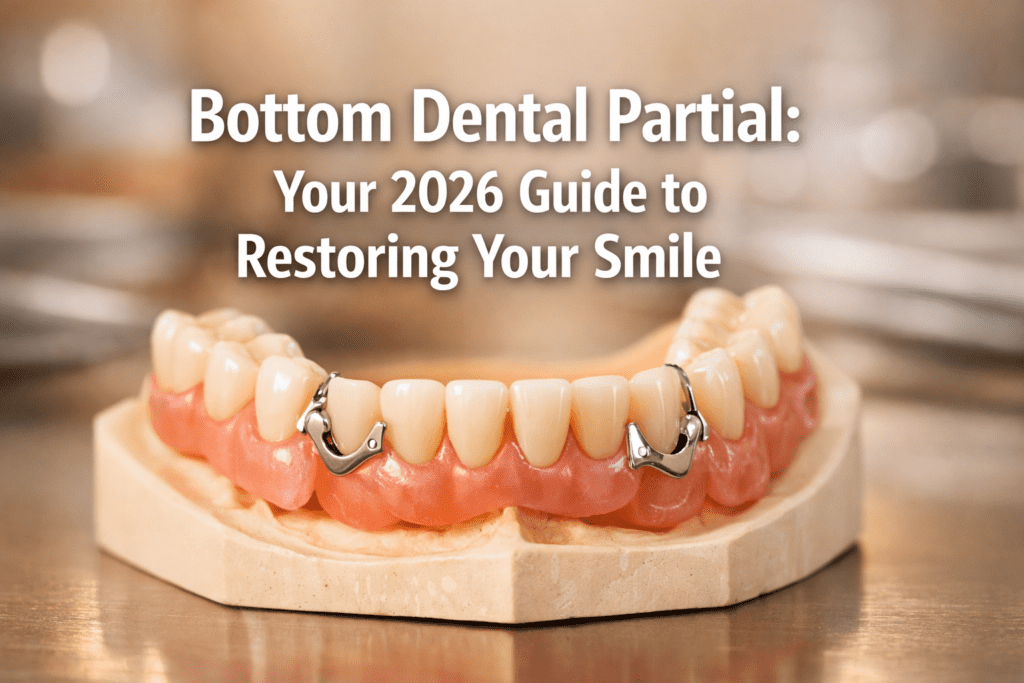
Losing a tooth or several teeth can significantly impact your daily life, affecting everything from your ability to chew and speak clearly to your overall confidence. For many, the thought of tooth replacement options can feel overwhelming, but modern dentistry offers a variety of effective solutions. One such solution, particularly for addressing gaps in your lower jaw, is a bottom dental partial. In 2026, advancements in dental technology have made these appliances more comfortable, natural-looking, and quicker to produce than ever before. If you’re exploring options for missing teeth solutions, understanding what a bottom dental partial entails is a crucial first step toward regaining your smile and improving your long-term oral health.
Here at Dental Implant Education – Dallas TX, we believe in empowering our patients with clear, factual information to help them make informed decisions about their dental care. While our primary focus is on dental implants in Dallas, we understand that a comprehensive understanding of all tooth replacement options is essential. This guide will delve into the world of bottom dental partials, explaining their benefits, types, and the modern innovations making them a viable choice for many.
Key Takeaways
- Advanced Technology: Modern bottom dental partials benefit from digital scanning, CAD modeling, and 3D printing, leading to quicker production times and a more precise, comfortable fit.
- Multiple Types Available: Patients can choose from acrylic, metal framework, and flexible partial dentures, each offering distinct advantages in terms of durability, aesthetics, and comfort.
- Preserves Oral Health: A bottom dental partial helps prevent remaining natural teeth from shifting, supports facial structure, and improves chewing efficiency and bite balance.
- Consultation is Key: Deciding on the best tooth replacement option requires a thorough consultation with a qualified dentist to assess individual needs and explore all available solutions.
- Complementary to Implants: While dental implants offer a permanent solution, a partial denture can serve as an excellent temporary or long-term solution depending on a patient’s specific circumstances.
Understanding the Bottom Dental Partial: What It Is and Why It Matters in 2026
A bottom dental partial, often referred to simply as a lower partial denture, is a removable dental appliance designed to replace one or more missing teeth in the lower arch of your mouth. Unlike a full denture, which replaces all teeth, a partial denture is used when some natural teeth remain. It consists of replacement teeth attached to a gum-colored base, which is often connected by a metal or flexible framework that clasps onto your existing natural teeth for support and stability [5].
The importance of replacing missing teeth, especially in the lower jaw, cannot be overstated. Gaps left by missing teeth can lead to a cascade of problems:
- Shifting of Remaining Teeth: Adjacent teeth can drift into the empty spaces, leading to misalignment and bite issues [5].
- Bone Loss: The jawbone beneath missing teeth can begin to resorb, changing the shape of your face and potentially affecting the stability of future tooth replacement options.
- Chewing and Speech Difficulties: Missing teeth can make it challenging to properly chew food and articulate certain words, impacting digestion and social confidence.
- Increased Risk of Decay and Gum Disease: Misaligned teeth are harder to clean, increasing the likelihood of plaque buildup, cavities, and periodontal disease.
In 2026, the technology behind bottom dental partials has seen significant innovation. Gone are the days of solely relying on uncomfortable, bulky appliances. Today’s partials are designed with patient comfort and aesthetics at the forefront, leveraging digital advancements for a superior fit and more natural appearance [1].
How Modern Technology is Revolutionizing Bottom Dental Partials
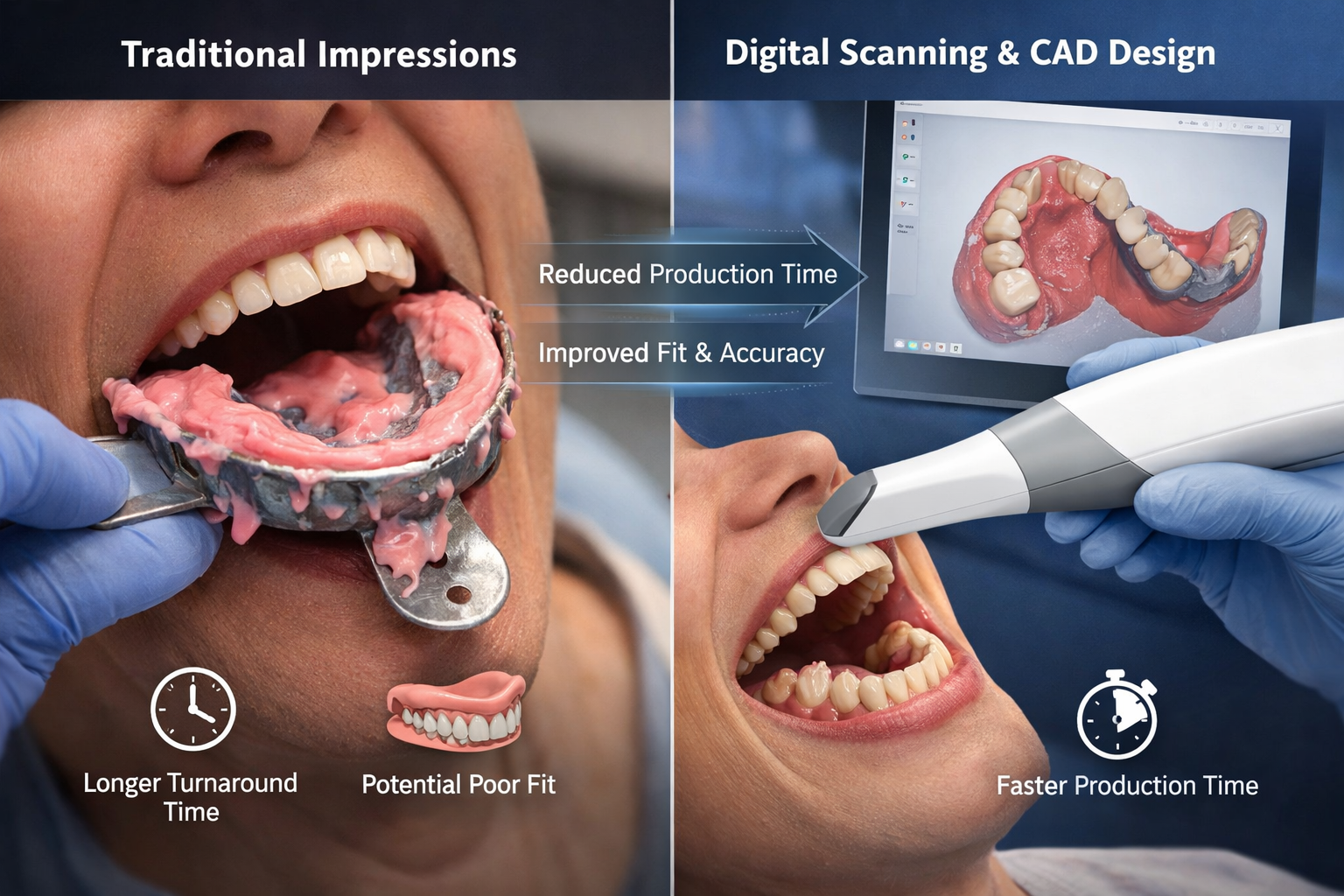
The dental industry is experiencing a technological renaissance, and partial dentures are no exception. The traditional process of creating partial dentures involved messy and often uncomfortable physical impressions. However, this has largely been replaced by digital scanning and CAD (Computer-Aided Design) modeling [1].
Here’s how modern technology enhances the process:
- Digital Impressions: Instead of biting into goopy material, a dentist can now use a small, handheld intraoral scanner to create a highly accurate 3D digital model of your mouth. This is far more comfortable for the patient and provides greater precision for the dental lab [1].
- CAD Modeling: This digital model is then used by technicians to design your bottom dental partial with incredible accuracy. AI tools can even segment bone from X-rays to create detailed 3D models of your skull, which can be overlaid on facial photos for precise planning, ensuring the partial integrates perfectly with your facial structure [3].
- 3D Printing: Once the design is finalized, the partial denture components can be fabricated using advanced 3D printers, such as the FDA-cleared NextDent 300, which can print multiple dentures simultaneously [2]. This digital workflow significantly reduces production times, often from approximately two weeks to as little as four days for the first finished partial [2]. Some labs are even delivering within nine days, and sometimes in four days or less [2].
- Advanced Materials: Modern partials utilize new materials that are more durable, biocompatible, and aesthetically pleasing. Metal alloys are commonly used for framework strength and stability [7], while advanced resins allow for monolithic dentures where realistic teeth and gums can be printed as a single, seamless part [2].
These technological strides not only mean a more comfortable and precise fit, reducing common issues like sore spots and adjustment appointments, but also contribute to improved bite balance and chewing efficiency [1]. This leads to a better overall experience and enhances the long-term oral health of individuals choosing a bottom dental partial.
Types of Bottom Dental Partials: Finding Your Best Fit
When considering a bottom dental partial, it’s important to understand that there isn’t a one-size-fits-all solution. Modern dentistry offers several types, each with unique characteristics and benefits. Your dentist will help you determine the most suitable option based on your specific needs, oral health, aesthetic preferences, and budget.
1. Cast Metal Partial Dentures (Framework Partials)
These are traditionally considered the most durable and stable type of partial denture. The framework is made from a lightweight, strong metal alloy, usually cobalt-chromium, which provides excellent retention and support [7]. The artificial teeth are then attached to this framework, which clasps onto your existing natural teeth.
Pros:
- Exceptional Durability: Highly resistant to breakage and wear.
- Superior Stability: The metal framework provides strong retention, making it less likely to shift or loosen.
- Thin and Less Bulky: The strength of the metal allows for a thinner design, which can feel less bulky in the mouth.
- Long-Lasting: With proper care, these partials can last for many years.
Cons:
- Visibility of Clasps: Metal clasps can sometimes be visible, especially on front teeth, which might be an aesthetic concern for some.
- Rigid Design: Less flexibility compared to other types.
- Higher Initial Cost: Generally more expensive than acrylic partials.
2. Flexible Partial Dentures
Flexible partials are made from a thermoplastic material, such as nylon, which is thin, lightweight, and very adaptable. They are designed to blend seamlessly with the natural tissues of your mouth.
Pros:
- Enhanced Comfort: The flexible material can adapt more comfortably to the contours of your mouth.
- Excellent Aesthetics: No visible metal clasps; the material is often gum-colored and translucent, blending naturally with your gums [5].
- Lightweight: Patients often find them less noticeable than traditional partials.
- Hypoallergenic: A good option for those with allergies to metals or acrylics.
Cons:
- Less Durable than Metal: Can be more prone to wear and tear over time.
- Can be Difficult to Repair: Repairs might be more challenging compared to rigid partials.
- May Absorb Stains: The material can be more susceptible to staining if not cleaned properly.
3. Acrylic Partial Dentures (Flippers)
Acrylic partials, often referred to as “flippers” due to their temporary nature, are made entirely of acrylic resin. They are typically bulkier than metal framework partials but are a more affordable and quick solution.
Pros:
- Cost-Effective: Generally the least expensive option.
- Quick to Produce: Can be fabricated relatively quickly.
- Easy to Add Teeth: If you lose another tooth, it’s often simpler to add to an acrylic partial.
- Good for Temporary Use: Often used as a temporary solution while awaiting a more permanent tooth replacement, such as a dental implant.
Cons:
- Less Stable and Durable: More prone to breaking and can feel less secure than other types.
- Bulkier Feel: The acrylic base is thicker, which some patients might find less comfortable.
- Less Aesthetic: Clasps are often made of wire and can be more visible.
- Can Cause Gum Irritation: Due to their bulk and potential for movement, they can sometimes irritate gum tissue [6].
Choosing the Right Bottom Dental Partial for You
The decision of which type of bottom dental partial is best for you should always be made in consultation with a qualified dental professional. Your dentist in Dallas will conduct a thorough examination, including X-rays and digital scans, to assess your oral health, the condition of your remaining teeth, and your jawbone density. They will also discuss your lifestyle, aesthetic goals, and budget to recommend the most appropriate tooth replacement option.
While a bottom dental partial can be an excellent solution for many, it’s also worth exploring other missing teeth solutions such as dental implants. For instance, a single dental implant can provide a permanent, stand-alone solution for a missing tooth, offering superior stability and preserving bone [1]. For multiple missing teeth, alternatives like a dental implant bridge or full-arch solutions like All-on-4 dental implants might be considered depending on the extent of tooth loss and bone health. We encourage you to learn more about the cost of 2 dental implants with bone grafting or compare options like dental implant versus bridge cost to understand the full spectrum of choices available.
Living with Your Bottom Dental Partial: Care and Maintenance
Once you receive your new bottom dental partial, proper care and maintenance are crucial for its longevity and for maintaining your overall oral health. Just like your natural teeth, partial dentures require daily cleaning and regular professional check-ups.
Daily Cleaning Routine
- Remove and Rinse: Always remove your partial denture after eating and rinse it thoroughly under running water to remove food particles.
- Brush Daily: Use a soft-bristled denture brush and a non-abrasive denture cleanser (never regular toothpaste, which can be too abrasive) to gently clean all surfaces of your partial. Pay special attention to areas that touch your gums and natural teeth.
- Soak Overnight: Most partial dentures need to stay moist to retain their shape. Place your partial in a denture cleansing solution or plain water overnight, as recommended by your dentist. Always rinse it thoroughly before placing it back in your mouth.
- Clean Your Mouth: Don’t forget to brush your natural teeth, gums, tongue, and the roof of your mouth every morning and night to remove plaque and stimulate circulation.
Important Considerations
- Handle with Care: Partial dentures can break if dropped. Always handle them over a soft towel or a basin of water.
- Diet: While a partial denture will improve your chewing ability, it’s wise to start with soft foods and gradually reintroduce harder items. Avoid extremely sticky or hard foods that could dislodge or damage your partial.
- Speaking: It may take a little time to adjust to speaking with your new partial. Practicing reading aloud can help you adapt faster.
- Sore Spots: It’s common to experience some minor sore spots or discomfort initially as your mouth adjusts. If discomfort persists or becomes severe, contact your dentist in Dallas immediately for adjustments. Digital denture design has been shown to reduce these sore spots and subsequent adjustment appointments significantly [1].
Regular Dental Check-ups
Even with a partial denture, regular visits to your dentist are essential. Your dentist will check the fit and condition of your partial, examine your remaining natural teeth for decay or gum disease, and screen for any oral health issues. Over time, your mouth naturally changes, and your partial denture may need relining or adjustments to maintain a proper fit.
The Bigger Picture: Your Long-Term Oral Health
While a bottom dental partial is an excellent solution for many, it’s also important to consider your long-term oral health goals. For some, a partial denture might be a stepping stone to more permanent solutions like dental implants. Dental implants offer a superior way to preserve bone density and provide a stable foundation for individual crowns or bridges, feeling much like natural teeth. If you’re weighing your options, exploring the dental implant procedure or understanding the cost of dental implants in 2025 can provide valuable insights into alternative missing teeth solutions.
At Dental Implant Education – Dallas TX, we are committed to providing comprehensive oral health education. We believe that an informed patient is an empowered patient. Whether you choose a bottom dental partial or explore options like dental implants, our goal is to help you achieve a healthy, confident smile that lasts.
Benefits and Drawbacks of Bottom Dental Partials

Making an informed decision about tooth replacement requires a balanced understanding of the advantages and disadvantages of each option. Here’s a look at the benefits and potential drawbacks of a bottom dental partial.
Benefits of Bottom Dental Partials
- Restored Functionality: A primary benefit is the improved ability to chew and speak. Replacing missing teeth allows you to enjoy a wider variety of foods and communicate more clearly [5].
- Enhanced Aesthetics: Modern partial dentures are designed to look natural, blending seamlessly with your existing teeth and gums. This can significantly boost self-confidence and improve your smile [5].
- Preservation of Remaining Teeth: A partial denture helps to prevent your existing natural teeth from shifting into the gaps left by missing teeth. This shifting can lead to misalignment and further dental problems [5].
- Maintains Facial Structure: Missing teeth, especially in the lower jaw, can cause the cheeks and lips to sink inwards, leading to a prematurely aged appearance. A partial denture helps support your facial muscles and maintain your natural facial contours.
- Cost-Effective: Compared to some other tooth replacement options, such as multiple dental implants, a bottom dental partial can be a more affordable initial investment, especially acrylic partials.
- Non-Invasive Procedure: Getting a partial denture does not typically involve surgery, making it a less invasive option for tooth replacement.
Potential Drawbacks of Bottom Dental Partials
- Removable Nature: Being removable means they must be taken out for cleaning and can occasionally feel less secure than fixed options. Some patients may find this aspect inconvenient.
- Adjustment Period: There is an initial adjustment period where you learn to eat and speak comfortably with your new partial. This can include minor discomfort or a feeling of bulkiness.
- Regular Maintenance: Daily cleaning and proper handling are essential, requiring a commitment to a specific care routine.
- Not a Permanent Solution: Unlike dental implants, which fuse with the jawbone, partial dentures are not a permanent fixture. They may require adjustments or replacement over time as your mouth changes.
- Potential for Gum Irritation: If not fitted properly or if food particles get trapped underneath, partial dentures can sometimes cause gum irritation or sore spots.
- Impact on Natural Teeth: The clasps on some partials rely on adjacent natural teeth for support. While designed to be gentle, there’s always a minimal risk of stress on these anchor teeth over many years, although modern designs minimize this.
Comparing with Other Tooth Replacement Options
It’s helpful to consider how bottom dental partials stack up against other popular missing teeth solutions.
- Dental Implants: Often considered the gold standard for tooth replacement, dental implants offer a permanent, stable, and highly natural-looking solution. They help prevent bone loss and do not rely on adjacent teeth for support. However, they involve a surgical procedure and generally have a higher upfront cost. We have extensive resources on dental implants in Dallas and understanding implant cost in Dallas that might be helpful.
- Dental Bridges: A dental bridge is a fixed appliance that replaces one or more missing teeth by crowning the adjacent natural teeth and using them as anchors for the artificial teeth. Bridges are not removable but require altering healthy adjacent teeth. You can read more about dental implant vs bridge vs denture to understand the differences better.
The choice between these options depends on various factors unique to each individual. A thorough consultation with a dental professional is paramount to determine the best path for your specific needs and long-term oral health goals.
The Future of Bottom Dental Partials and Oral Health Education
The field of dentistry is continuously evolving, and 2026 marks an exciting period for advancements in tooth replacement technologies. The trend towards digital dentistry will only continue to grow, leading to even faster production times, more precise fits, and materials that are increasingly aesthetic and durable. We anticipate further integration of AI for diagnostics and treatment planning, creating truly personalized dental solutions [3, 4].
For those considering a bottom dental partial or any other tooth replacement option, the focus remains on patient safety, long-term oral health, and informed decision-making. As an educational resource in Dallas, Texas, we are dedicated to keeping our community updated on the latest trends and best practices in dental care.
We also understand that cost is a significant factor for many patients. We provide resources to help you navigate financial considerations, including guides on dental implant insurance Dallas and Dallas dental implant financing options. Our goal is to ensure that quality dental care is accessible and understandable.
Ultimately, whether you choose a bottom dental partial or explore options like dental implants, the most important step is to engage in a comprehensive consultation with a dentist. They can provide a personalized assessment, discuss all available solutions, and help you embark on the journey to a restored, healthy smile.
Conclusion
A bottom dental partial offers a valuable and increasingly advanced solution for individuals in Dallas and beyond who are missing one or more teeth in their lower jaw. With the remarkable technological strides seen in 2026, including digital scanning, CAD modeling, and 3D printing, these appliances are more comfortable, aesthetically pleasing, and quicker to produce than ever before. From durable metal framework partials to flexible, natural-looking options, there’s a variety to suit diverse needs and preferences.
While a bottom dental partial provides significant benefits by restoring chewing function, improving speech, enhancing aesthetics, and preserving remaining natural teeth, it’s crucial to understand its removable nature and the commitment required for daily care. For those seeking more permanent solutions, especially for long-term oral health and bone preservation, exploring dental implants remains a highly recommended option.
We at Dental Implant Education – Dallas TX encourage you to prioritize your long-term oral health. The first and most important actionable step is to schedule a consultation with a trusted dental professional in your area. During this visit, you can discuss your specific situation, review all suitable tooth replacement options—be it a bottom dental partial, dental implants, or dental bridges—and receive a personalized treatment plan that aligns with your health goals and lifestyle. Taking this step is fundamental to regaining your confidence and enjoying a healthy, complete smile.
References
[1] New Advances In Dentures Milton Patients Are Choosing In 2026 – https://tremainedentalca.wordpress.com/2026/01/15/new-advances-in-dentures-milton-patients-are-choosing-in-2026/
[2] Dental Lab Halves Removable Partial Denture Production Times 3d Systems – https://www.voxelmatters.com/dental-lab-halves-removable-partial-denture-production-times-3d-systems/
[3] Watch – https://www.youtube.com/watch?v=4cpLG5M_R1U
[4] Dental Trends 2026 – https://www.brightsmiledesign.com/post/dental-trends-2026
[5] What Are The Most Natural Looking Dentures – https://nationsdentalstudio.com/blog/what-are-the-most-natural-looking-dentures/
[6] Bottom Partial Denture – https://vitrinclinic.com/bottom-partial-denture/
[7] High Tech Dentures Tips – https://www.avadent.com/high-tech-dentures-tips/
[8] The Future Of Dentures What New Technologies Are Making Them Better Than Ever – https://monahanfamilydentistry.com/the-future-of-dentures-what-new-technologies-are-making-them-better-than-ever/
[9] Watch – https://www.youtube.com/watch?v=VSg9uBxv6DE
Leave a Reply
Share your thoughts or ask a question about dental implants. Your email address will not be published.