

Getting braces is a significant investment in your oral health and confidence, but understanding the financial commitment can feel overwhelming. If you’re considering orthodontic treatment in the Lone Star State, you’re probably wondering: how much do braces cost in Texas, and what factors influence the price? The truth is, the average cost of braces in Texas ranges from $3,000 to $7,500, but your specific investment depends on several key factors that we’ll break down in this comprehensive guide.
Key Takeaways
- The average cost of braces in Texas ranges from $3,000 to $7,500, depending on the type of braces and complexity of your case
- Traditional metal braces are typically the most affordable option, while Invisalign clear aligners tend to be more expensive
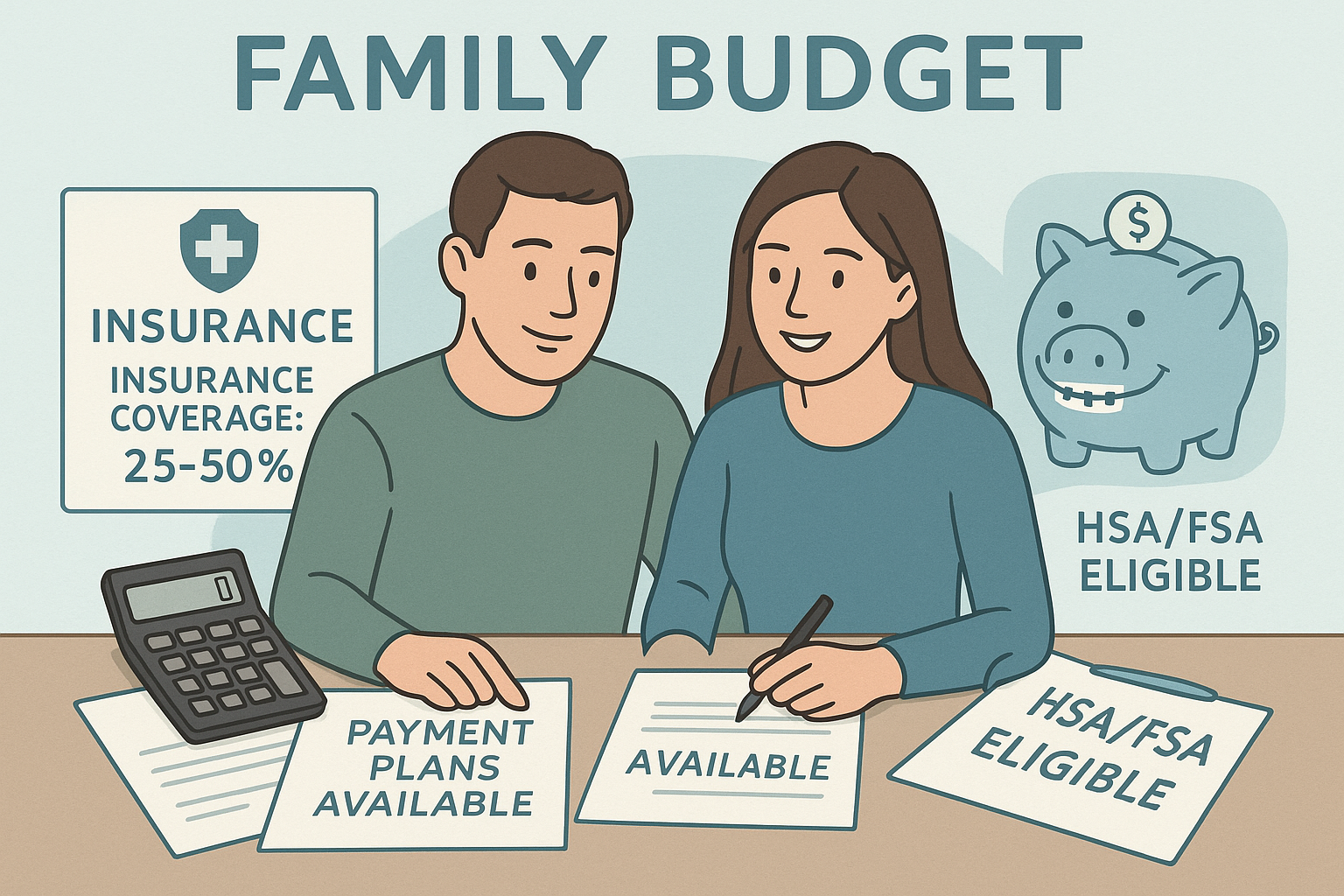
- Dental insurance can cover 25-50% of orthodontic treatment costs, significantly reducing your out-of-pocket expenses
- Flexible payment plans and financing options make braces more affordable for families without insurance
- Getting a free consultation helps you understand your specific treatment plan and total cost
Understanding Braces Cost in Texas: What Influences Your Investment
The cost of braces in Texas varies significantly based on several factors that directly impact your treatment plan and final investment. Let’s explore what determines how much you’ll pay for your journey to a confident smile.
Type of Braces: Your Choice Affects the Cost
Different orthodontic treatment options come with varying price points:
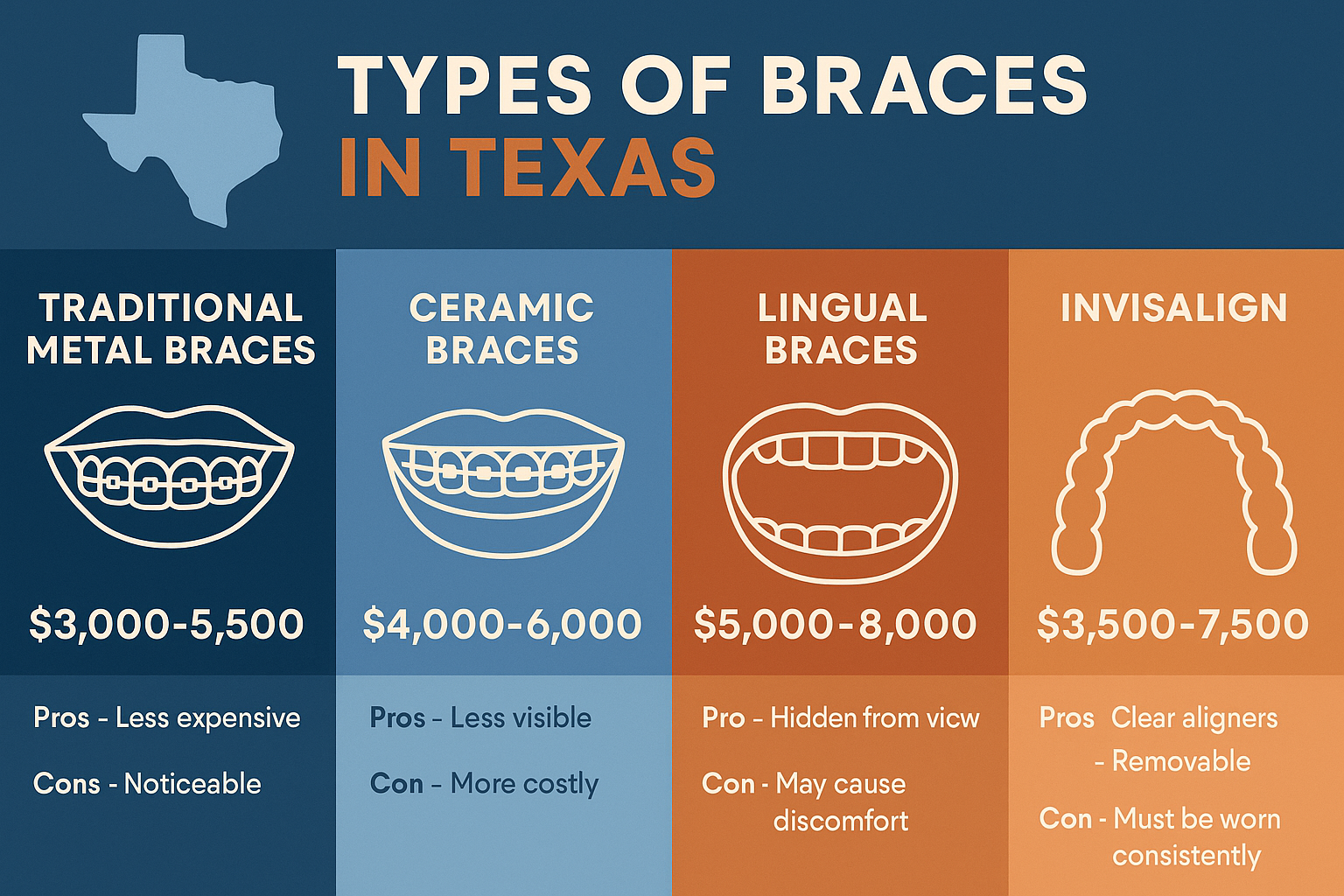
Traditional Metal Braces: $3,000 – $5,500
- Most cost-effective option
- Highly effective for complex dental issues
- Durable and reliable treatment method
Ceramic Braces: $4,000 – $6,000
- Less visible than metal braces
- Tooth-colored brackets blend naturally
- Slightly higher cost than traditional braces
Lingual Braces: $5,000 – $8,000
- Hidden behind teeth for complete invisibility
- Custom-made for each patient
- Premium pricing for specialized treatment
Invisalign Clear Aligners: $3,500 – $7,500
- Nearly invisible treatment option
- Removable for eating and cleaning
- Popular choice for adult braces
Treatment Complexity: How Your Case Affects Pricing
The complexity of your case significantly influences the total cost of orthodontic treatment. Simple alignment issues typically cost less than complex cases requiring extensive tooth movement or jaw correction.
Simple Cases: Minor crowding or spacing issues Moderate Cases: More significant alignment problems Complex Cases: Severe bite issues or jaw irregularities
Your orthodontist will evaluate your specific needs during a consultation to determine the appropriate treatment plan and associated costs.
Average Cost of Braces in Texas by Region
The cost of braces in Texas can vary by location, with urban areas like Dallas, Houston, and Austin typically having higher prices than smaller cities.
Major Metropolitan Areas
- Dallas-Fort Worth: $3,500 – $7,000
- Houston: $3,200 – $6,800
- Austin: $3,800 – $7,200
- San Antonio: $3,000 – $6,500
Smaller Cities and Rural Areas
- Cost range: $2,800 – $6,000
- Generally 10-20% lower than major metropolitan areas
- Fewer orthodontist options but often more personalized care
Insurance Coverage for Orthodontic Treatment
Understanding your dental insurance benefits is crucial for managing the cost of braces. Most dental insurance plans include some orthodontic coverage, but the specifics vary significantly.
How Dental Insurance Works for Braces
Typical Coverage Percentage: 25-50% of treatment costs Lifetime Maximum: Usually $1,000 – $2,000 per person Age Restrictions: Some plans only cover children and adolescents Waiting Periods: Many plans require 6-12 months before orthodontic coverage begins
Maximizing Your Insurance Benefits
To get the most from your dental insurance:
- Check your insurance plan details before starting treatment
- Understand your lifetime maximum for orthodontic coverage
- Verify age restrictions and eligibility requirements
- Time your treatment to maximize annual benefits
If you’re dealing with adult teeth falling out, orthodontic treatment might be part of a comprehensive dental care plan that could also include other procedures.
Braces Without Insurance: Making Treatment Affordable
Don’t let lack of insurance prevent you from achieving your confident smile. Many orthodontists offer solutions to make braces more affordable without insurance coverage.
Flexible Payment Plans
Most orthodontic practices offer:
- Monthly payment options with no interest
- Extended payment terms up to 24-36 months
- Down payment plans to reduce monthly costs
- Family discounts for multiple treatments
Alternative Financing Options
Health Savings Account (HSA): Use pre-tax dollars for orthodontic treatment Flexible Spending Account (FSA): Another tax-advantaged option CareCredit: Healthcare-specific financing with promotional periods Personal loans: Traditional financing through banks or credit unions
Cost-Saving Strategies
- Get multiple consultations to compare treatment plans and costs
- Consider timing to spread costs across tax years
- Look for seasonal promotions offered by orthodontic practices
- Ask about discounts for paying in full upfront
🦷 Texas Braces Cost Calculator
Comparing Treatment Options: Finding the Right Fit for Your Budget
When considering braces, it’s important to weigh the benefits and costs of each option. Your choice should balance effectiveness, aesthetics, and affordability.
Traditional Metal Braces: The Cost-Effective Choice
Traditional braces remain the most popular and affordable orthodontic treatment option:
Advantages:
- ✅ Most cost-effective option
- ✅ Highly effective for all types of dental issues
- ✅ Fastest treatment times for complex cases
- ✅ Most durable and reliable
Considerations:
- More visible than other options
- Dietary restrictions during treatment
- Regular adjustment appointments needed
Invisalign and Clear Aligners: Premium Aesthetics
For adults seeking a less visible option, Invisalign clear aligners offer significant advantages:
Benefits:
- Nearly invisible appearance
- Removable for eating and cleaning
- Fewer dietary restrictions
- Comfortable treatment experience
Investment Considerations:
- Higher upfront cost
- Requires discipline to wear 20-22 hours daily
- May not be suitable for complex cases
Adult Braces: Special Considerations and Costs
Adult orthodontic treatment has become increasingly popular, with unique considerations that affect both treatment planning and costs.
Why Adults Choose Orthodontic Treatment
- Professional confidence: A straight smile enhances career prospects
- Oral health benefits: Properly aligned teeth are easier to clean
- Long-term investment: Prevents future dental complications
- Personal satisfaction: Achieving the smile you’ve always wanted
Adult Braces Cost Factors
Adult treatment may cost slightly more due to:
- Longer treatment times
- More complex dental history
- Additional procedures that may be needed
- Premium aesthetic options preferred by adults
If you’re considering comprehensive dental care, you might also want to learn about dental implants as part of your overall oral health investment.
Financing Your Orthodontic Treatment: Making Braces Affordable
Understanding your financing options helps make orthodontic treatment accessible regardless of your current financial situation.
In-Office Payment Plans
Most orthodontic practices offer flexible payment plans:
No-Interest Plans:
- Spread costs over 12-24 months
- No credit check required
- Convenient monthly payments
Extended Payment Options:
- Up to 36-month terms available
- Low monthly payments
- Budget-friendly approach
Third-Party Financing
CareCredit Healthcare Financing:
- Promotional financing periods
- Low monthly payment options
- Quick approval process
Personal Loans:
- Fixed interest rates
- Predictable monthly payments
- Can shop for best rates
Tax-Advantaged Accounts
Health Savings Account (HSA):
- Use pre-tax dollars
- Reduce overall treatment cost
- Available for high-deductible health plans
Flexible Spending Account (FSA):
- Pre-tax payroll deductions
- Use-it-or-lose-it annual limits
- Immediate tax savings
Questions About Braces: Your Comprehensive FAQ
How long does orthodontic treatment typically take?
Treatment duration varies by case complexity:
- Simple cases: 12-18 months
- Average cases: 18-24 months
- Complex cases: 24-36 months
Your orthodontist will provide a personalized timeline during your free consultation.
What’s included in the total cost of treatment?
Most orthodontic fees include:
- Initial consultation and examination
- All necessary braces or aligners
- Regular adjustment appointments
- Retainers after treatment completion
- Emergency visits during treatment
Can I get braces if I have dental issues?
Orthodontic treatment often works alongside other dental care. If you have concerns about tooth decay or other oral health issues, your orthodontist will coordinate with your general dentist for comprehensive care.
Are there age limits for orthodontic treatment?
There’s no upper age limit for braces! While children and adolescents have some advantages due to jaw development, adults can achieve excellent results with modern orthodontic techniques.
Getting Started: Your Path to a Confident Smile
Taking the first step toward orthodontic treatment begins with understanding your options and finding the right provider for your needs.
Scheduling Your Free Consultation
Most orthodontists offer complimentary consultations that include:
- Comprehensive oral examination
- Discussion of treatment options
- Personalized cost estimate
- Payment plan information
- Timeline for your specific case
What to Expect During Your Consultation
Initial Assessment:
- Review of your dental and medical history
- Clinical examination of teeth and bite
- Digital X-rays or 3D imaging if needed
- Discussion of your goals and concerns
Treatment Planning:
- Explanation of recommended treatment approach
- Comparison of different orthodontic options
- Timeline and cost breakdown
- Insurance verification and financing options
Choosing the Right Orthodontist
Consider these factors when selecting your provider:
- Board certification and credentials
- Experience with your specific type of case
- Technology and treatment options available
- Office location and convenience
- Payment and financing options
- Patient reviews and testimonials
For comprehensive dental care that might complement your orthodontic treatment, consider exploring dental implant options if you have missing teeth.
Maximizing Your Orthodontic Investment
Getting the most value from your orthodontic treatment involves more than just choosing the lowest cost option.
Long-Term Value Considerations
Oral Health Benefits:
- Easier cleaning and maintenance
- Reduced risk of tooth decay and gum disease
- Better bite function and jaw health
- Prevention of excessive tooth wear
Lifetime Benefits:
- Increased confidence and self-esteem
- Professional and social advantages
- Reduced need for future dental work
- Investment in long-term oral health
Protecting Your Investment
During Treatment:
- Follow all orthodontist instructions
- Maintain excellent oral hygiene
- Attend all scheduled appointments
- Avoid foods that could damage braces
After Treatment:
- Wear retainers as prescribed
- Continue regular dental checkups
- Maintain good oral hygiene habits
- Address any concerns promptly
Conclusion: Your Journey to a Confident Smile Starts Here
Understanding the average cost of braces in Texas empowers you to make informed decisions about your orthodontic treatment. While the investment ranges from $3,000 to $7,500, remember that you’re investing in more than just straight teeth—you’re investing in your confidence, oral health, and quality of life.
The key to managing orthodontic costs effectively is exploring all your options: insurance coverage, flexible payment plans, and choosing the treatment type that best fits your needs and budget. Don’t let cost concerns prevent you from achieving the smile you deserve.
Ready to take the next step? Schedule a free consultation with a qualified orthodontist to discuss your specific needs, get an accurate cost estimate, and explore financing options that make treatment affordable. Your journey to a confident smile starts with that first appointment, and with the right planning, orthodontic treatment can fit into virtually any budget.
Remember, investing in orthodontic treatment is investing in yourself. The benefits extend far beyond aesthetics, contributing to better oral health, increased confidence, and improved quality of life for years to come.
Leave a Reply
Share your thoughts or ask a question about dental implants. Your email address will not be published.