

Picture this: you’ve just walked out of your dentist’s office after a root canal, and you’re wondering if you can light up that cigarette you’ve been craving. It’s a question that crosses many smokers’ minds during recovery, but the answer might surprise you. The short answer? You should avoid smoking after a root canal to protect your healing and ensure the best possible outcome for your treated tooth.
Understanding how smoking affects your recovery after root canals isn’t just about following rules—it’s about protecting your investment in your oral health and ensuring your journey to a better smile stays on track.
Key Takeaways
- Avoid smoking for at least 72 hours after your root canal procedure to minimize complications
- Smoking reduces blood flow to the treated area, significantly slowing the healing process
- Smokers are twice as likely to experience root canal failure compared to non-smokers
- Nicotine and chemicals in cigarettes increase your risk of infection and delay tissue healing
- Long-term smoking cessation dramatically improves your chances of successful root canal recovery
Understanding Root Canal Treatment and Recovery
Root canals are performed when the pulp inside your natural tooth becomes infected or severely damaged. During this dental procedure, your dentist removes the infected pulp, cleans the canal, and seals it to prevent future infection. The treated tooth then needs time to heal properly.
The healing process after root canal therapy involves several stages of recovery. Your body works to repair tissues around the treated tooth, reduce inflammation, and establish healthy blood flow to the area. This natural healing requires optimal conditions—something that smoking directly interferes with.
Why proper healing matters: A successful root canal can save your natural tooth for decades. However, complications during recovery can lead to root canal failure, potentially requiring additional dental treatment or even tooth extraction.
How Smoking Affects Root Canal Healing
When you smoke after a root canal, you’re essentially working against your body’s natural healing mechanisms. Here’s what happens when you light up during recovery:
Reduced Blood Flow and Oxygen Delivery
Smoking reduces blood flow to your gums and bones, limiting the oxygen and nutrients your healing tissues desperately need. The chemicals in cigarettes constrict blood vessels, creating a hostile environment for recovery. This reduced blood circulation means your treated tooth receives less of what it needs to heal properly.
Increased Risk of Infection
The risk of infection increases significantly when you smoke after your root canal. Tobacco smoke introduces harmful bacteria into your mouth while simultaneously weakening your immune system’s ability to fight off these invaders. This double-hit effect makes smokers more susceptible to post-treatment complications.
Delayed Tissue Healing
Nicotine and other toxic substances in cigarettes directly interfere with cellular repair processes. The healing of tissues around the treated tooth slows down considerably, extending your recovery time and increasing the likelihood of complications.
Timeline: When Can You Smoke After a Root Canal?
Understanding the stages of recovery helps you make informed decisions about when it might be safer to resume smoking:
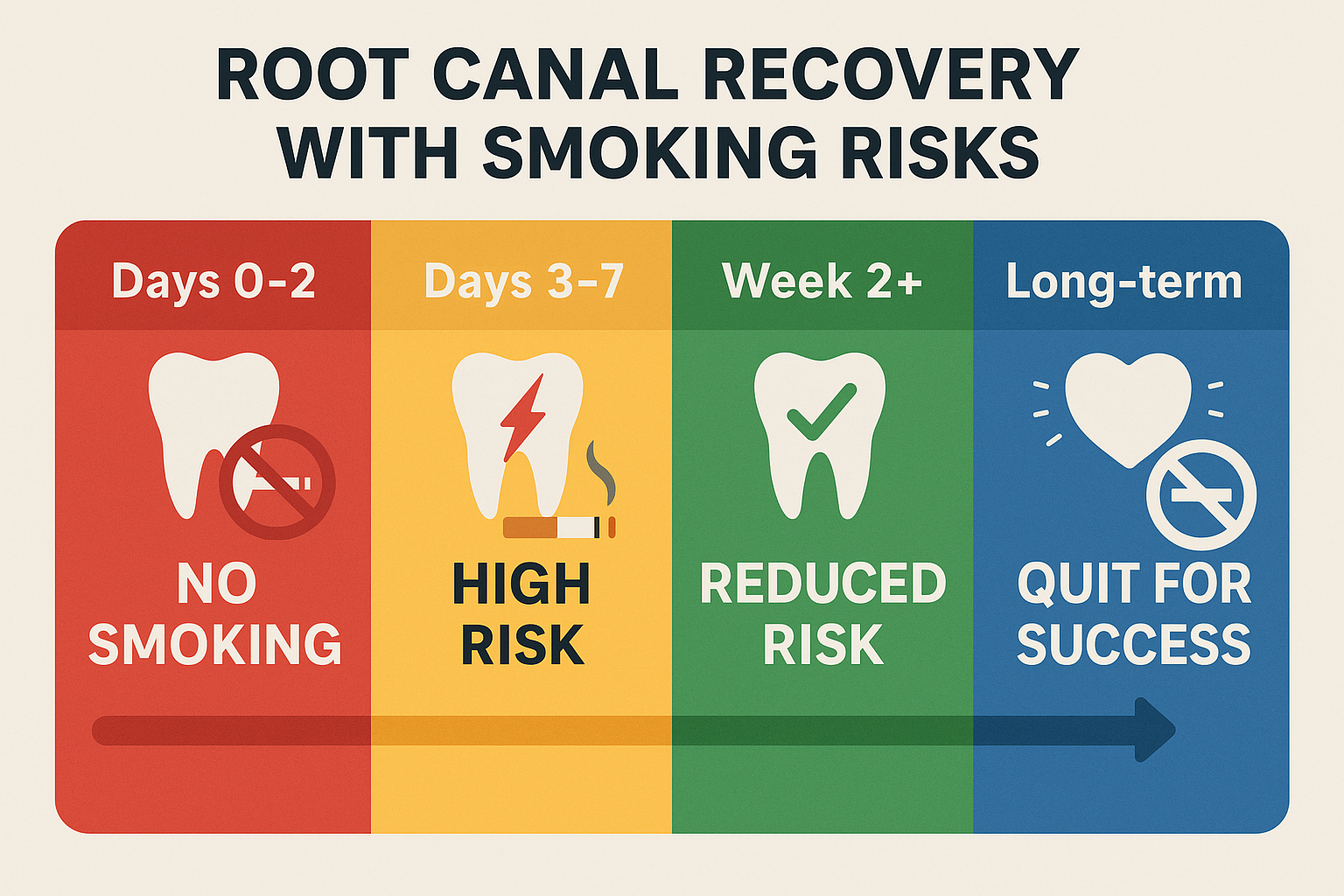
First 24-48 Hours: Critical Healing Period
This is when your body begins the initial healing response. Absolutely avoid smoking during this crucial window. Even a single cigarette can significantly impact your recovery.
Days 3-7: Active Tissue Repair
Your tissues are actively repairing themselves. While the immediate danger has passed, smoking for a few days after your procedure can still disrupt the healing process and lead to complications.
Week 2 and Beyond: Continued Recovery
Even after two weeks, your treated tooth continues healing internally. Long-term success depends on maintaining good oral health habits, which ideally includes quitting smoking altogether.
Risks of Smoking After Root Canal Treatment
Let’s be honest about what you’re risking when you smoke following a root canal:
Root Canal Failure
Smokers experience root canal failure at nearly twice the rate of non-smokers. This means you might need additional procedures, face tooth loss, or require more extensive dental treatment down the road.
Increased Complications
- Higher infection rates
- Prolonged pain and swelling
- Poor wound healing
- Increased need for follow-up treatments
Impact on Oral Health
Smoking affects not just your treated tooth but your entire mouth. You’re more likely to experience gum disease, tooth infections, and other dental problems that can compromise your overall treatment success.
🦷 Root Canal Recovery Timeline Calculator
Recovery Tips for Smokers After Root Canal
If you’re considering or recovering from a root canal and you smoke, here are essential recovery tips to protect your oral health:
Immediate Post-Treatment (First 48 Hours)
- Refrain from smoking completely during this critical window
- Use nicotine patches or gum if you need nicotine replacement therapy
- Focus on pain management with prescribed medications
- Apply ice to reduce swelling
- Stick to soft foods and avoid the treated area when chewing
Week 1-2: Supporting Your Healing
- Continue avoiding cigarettes if possible
- If you must smoke, wait at least 72 hours and reduce frequency significantly
- Rinse gently with warm salt water
- Maintain excellent oral hygiene around other teeth
- Attend your follow-up appointment as scheduled
Long-term Success Strategies
- Consider this recovery period as an opportunity to quit smoking permanently
- Discuss smoking cessation options with your dentist or doctor
- Focus on protecting your investment in your oral health
- Use proper oral hygiene tools designed for sensitive teeth
Alternative Options During Recovery
Nicotine Replacement Therapy
If you’re struggling with nicotine withdrawal during recovery, consider safer alternatives:
- Nicotine patches: Provide steady nicotine without harmful smoke
- Nicotine gum: Helps manage cravings (avoid chewing near the treated tooth)
- Prescription medications: Consult your doctor about smoking cessation aids
Stress Management
Many people smoke to manage stress, especially during dental recovery:
- Practice deep breathing exercises
- Try meditation or mindfulness apps
- Stay hydrated and get adequate rest
- Engage in light physical activity as tolerated
When to Contact Your Dentist
Certain warning signs require immediate dental attention, especially if you’ve been smoking after your root canal:
🚨 Call your dentist immediately if you experience:
- Severe pain that worsens after the first few days
- Swelling that increases rather than decreases
- Signs of infection (fever, pus, bad taste)
- The temporary filling falls out
- Unusual bleeding or discharge
📞 Schedule a follow-up if you notice:
- Persistent mild pain beyond one week
- Sensitivity that doesn’t improve
- Concerns about your healing progress
- Questions about when you can safely resume normal activities
Long-term Oral Health Considerations
Your root canal recovery is just the beginning of protecting your treated tooth for years to come. Here’s what you need to know about long-term success:
The Impact of Continued Smoking
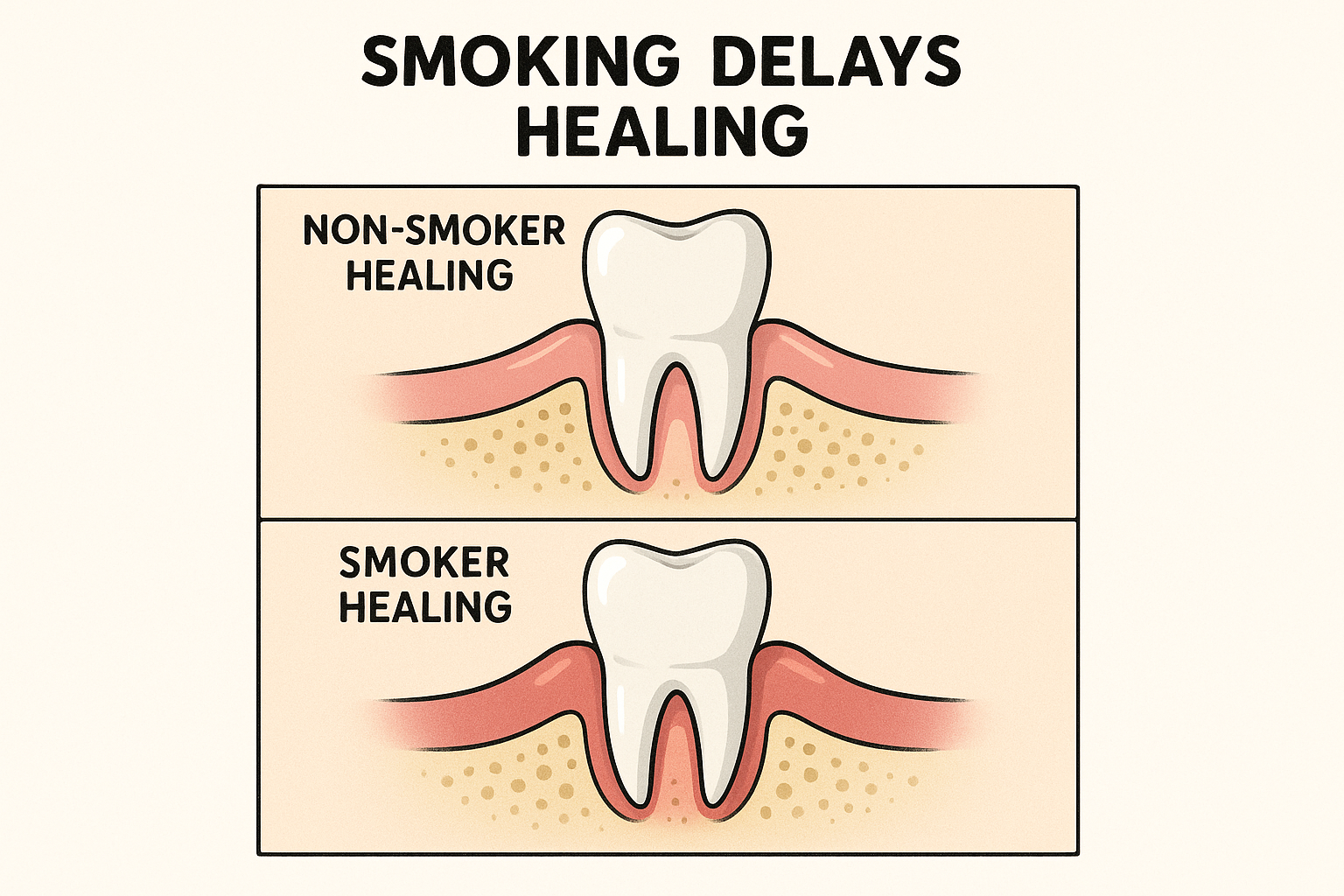
Smokers are more likely to experience tooth loss and gum disease over time. Even after successful root canal therapy, ongoing smoking can compromise your oral health and overall treatment outcomes. The chemicals in cigarettes continue to reduce blood flow, weaken your immune response, and create an environment where bacteria thrive.
Protecting Your Investment
Root canal treatment represents a significant investment in your oral health. To protect this investment:
- Maintain regular dental checkups and cleanings
- Practice excellent daily oral hygiene
- Consider smoking cessation for optimal long-term results
- Address any new dental concerns promptly
Future Dental Treatments
If you continue smoking and later need additional dental work—such as dental implants to replace missing teeth—smoking will continue to complicate your recovery and reduce success rates. Many dental procedures, including implant placement and crown procedures, have better outcomes in non-smokers.
The Connection Between Smoking and Dental Health
Understanding the broader relationship between smoking and dental health helps put your root canal recovery in perspective:
How Smoking Damages Your Mouth
- Reduces saliva production, leading to dry mouth and increased bacterial growth
- Stains teeth and creates bad breath
- Weakens the immune system’s ability to fight oral infections
- Increases risk of oral cancer and other serious conditions
- Slows down healing after any dental procedure
Benefits of Quitting
When you stop smoking, your oral health begins improving almost immediately:
- Blood flow increases within 20 minutes
- Risk of infection decreases within days
- Healing improves significantly within weeks
- Long-term success rates for all dental treatments increase dramatically
Special Considerations for Dallas Patients
Living in Dallas, you have access to excellent dental care and resources to support your recovery. Here’s how to make the most of local opportunities:
Climate and Recovery
Dallas’s climate can affect your recovery comfort. Stay hydrated, especially during hot summer months, and use air conditioning to maintain a comfortable environment that supports healing.
Local Support Resources
Dallas offers numerous smoking cessation programs through:
- Local hospitals and medical centers
- Community health organizations
- Support groups and counseling services
- Telehealth options for convenient access
If you’re looking for ongoing dental care after your root canal, consider finding a practice that understands the unique challenges smokers face during recovery and can provide comprehensive support for your oral health journey.
Making the Right Choice for Your Recovery
The decision to smoke after a root canal ultimately comes down to weighing short-term cravings against long-term oral health success. While we understand that quitting smoking isn’t easy, your root canal recovery presents a unique opportunity to prioritize your health.
Consider this perspective: You’ve already invested time, money, and effort into saving your natural tooth through root canal therapy. Why compromise that investment by smoking during the critical healing period?
Steps to Success
- Commit to at least 72 hours without smoking after your procedure
- Use this time to explore smoking cessation resources
- Focus on your recovery as motivation to make lasting changes
- Celebrate small victories in both healing and smoking reduction
- Plan for long-term success with ongoing dental care and health improvements
Conclusion
The question “after a root canal can you smoke” has a clear answer rooted in science and patient outcomes: avoiding smoking during your recovery dramatically improves your chances of successful healing and long-term oral health.
While the first 72 hours are absolutely critical for avoiding cigarettes, the benefits of extended smoking cessation—or better yet, quitting permanently—extend far beyond your immediate recovery. You’re not just protecting one treated tooth; you’re investing in your overall oral health and setting yourself up for success with any future dental treatments.
Your next steps:
- Commit to avoiding smoking for at least the first three days after your root canal
- Use this recovery period to explore smoking cessation resources
- Maintain excellent oral hygiene and follow all post-treatment instructions
- Schedule and attend your follow-up appointments
- Consider your root canal recovery as the first step toward better overall health
Remember, every dental practice in Dallas wants to see you succeed in your recovery. Don’t hesitate to reach out to your dentist with questions or concerns about your healing process. Your smile deserves expert care, and we’re here to make your recovery as stress-free as possible.
If you’re considering additional dental treatments or need ongoing care, explore comprehensive dental services that prioritize your comfort and long-term success. Your journey to optimal oral health is a partnership, and making informed decisions about smoking during recovery is a crucial part of that process.
Leave a Reply
Share your thoughts or ask a question about dental implants. Your email address will not be published.