

Imagine undergoing a transformative dental procedure, like getting a dental implant, feeling completely relaxed and at ease, with little to no memory of the actual treatment. For many, the thought of dental surgery can evoke significant anxiety, often leading to delayed or avoided necessary care. Fortunately, modern dentistry offers sophisticated solutions that prioritize patient comfort and well-being. One such remarkable advancement is the dental implant with sedation twilight sleep, a method designed to provide a stress-free experience while restoring your smile and oral health. If you’re considering dental implants but are apprehensive about the process, understanding the benefits of sedation twilight sleep could be the key to overcoming your fears and achieving the healthy, beautiful smile you deserve in 2026 and beyond.
Key Takeaways
- Twilight Sleep for Comfort: Sedation twilight sleep (also known as IV sedation or conscious sedation) significantly reduces anxiety and discomfort during dental implant procedures, making the experience much more manageable.
- Minimal Memory of Procedure: Patients often have little to no recollection of the dental implant surgery itself, thanks to the amnesic effects of the sedative medications.
- Enhanced Safety and Monitoring: During twilight sleep, you remain conscious and able to respond to commands, but you are deeply relaxed and carefully monitored by a trained dental team.
- Ideal for Anxious Patients: This sedation method is particularly beneficial for individuals with dental phobia, a strong gag reflex, or those undergoing lengthy or complex dental implant treatments.
- Personalized Treatment Plans: A thorough consultation is essential to determine if dental implant with sedation twilight sleep is the right option for your specific needs and health profile.
Understanding Dental Implants: A Foundation for Your Smile
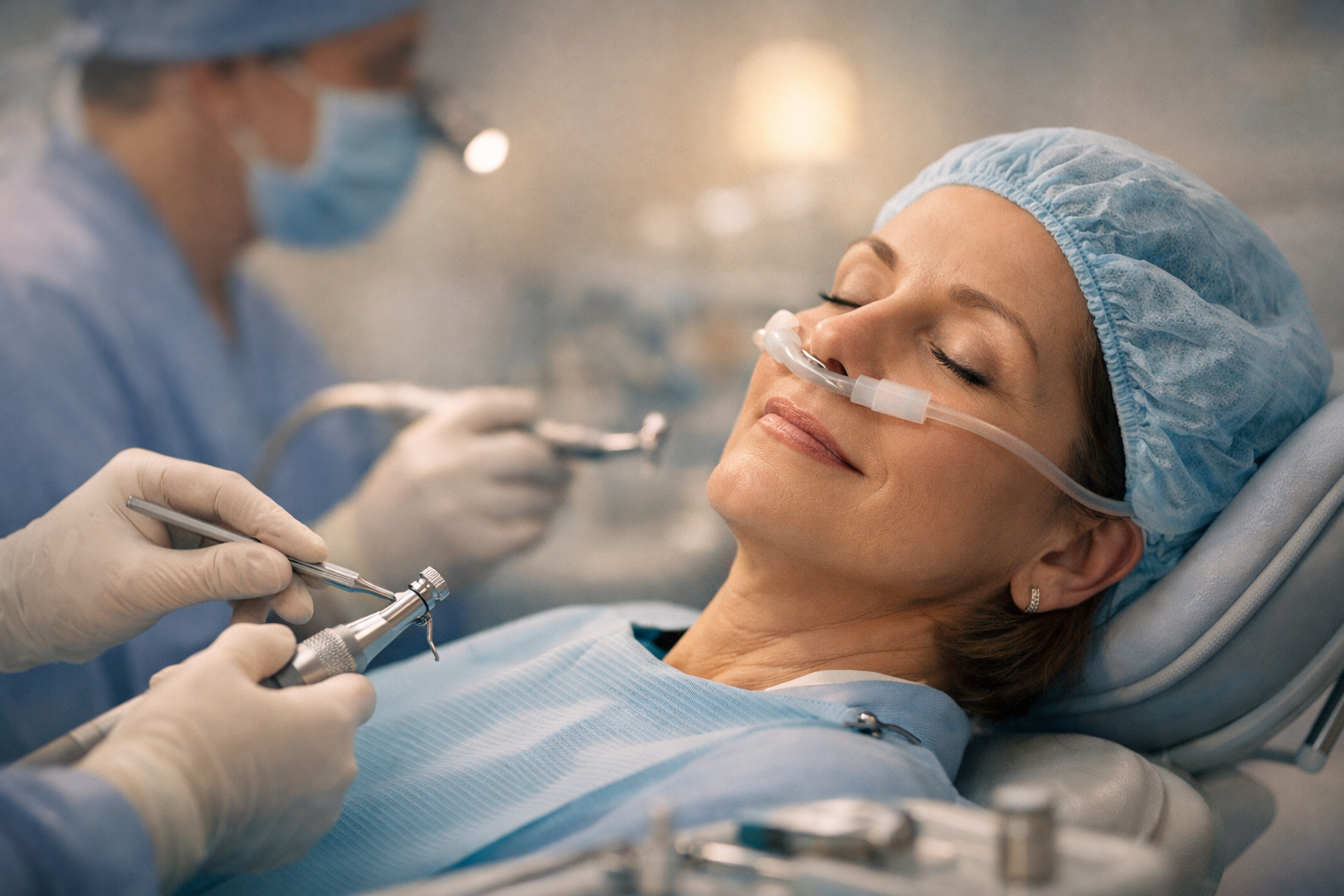
Dental implants are widely recognized as the gold standard for replacing missing teeth, offering a permanent solution that looks, feels, and functions like natural teeth [1]. Unlike traditional dentures or bridges, which only address the visible portion of the tooth, implants replace both the root and the crown. This comprehensive approach provides unparalleled stability, preserves jawbone health, and prevents the shifting of adjacent teeth.
A dental implant consists of three main components:
- The Implant Post: A small, biocompatible titanium screw that is surgically placed into the jawbone. This post acts as an artificial tooth root.
- The Abutment: A connector piece that attaches to the implant post and extends above the gum line. This is where the new tooth will be secured. You can learn more about the critical role of the abutment placement process.
- The Crown (or Prosthesis): The custom-made artificial tooth or set of teeth (e.g., a single crown, bridge, or full arch) that is securely attached to the abutment, completing your smile. For multi-tooth replacement, sometimes treatments like All-on-4 dental implants are recommended.
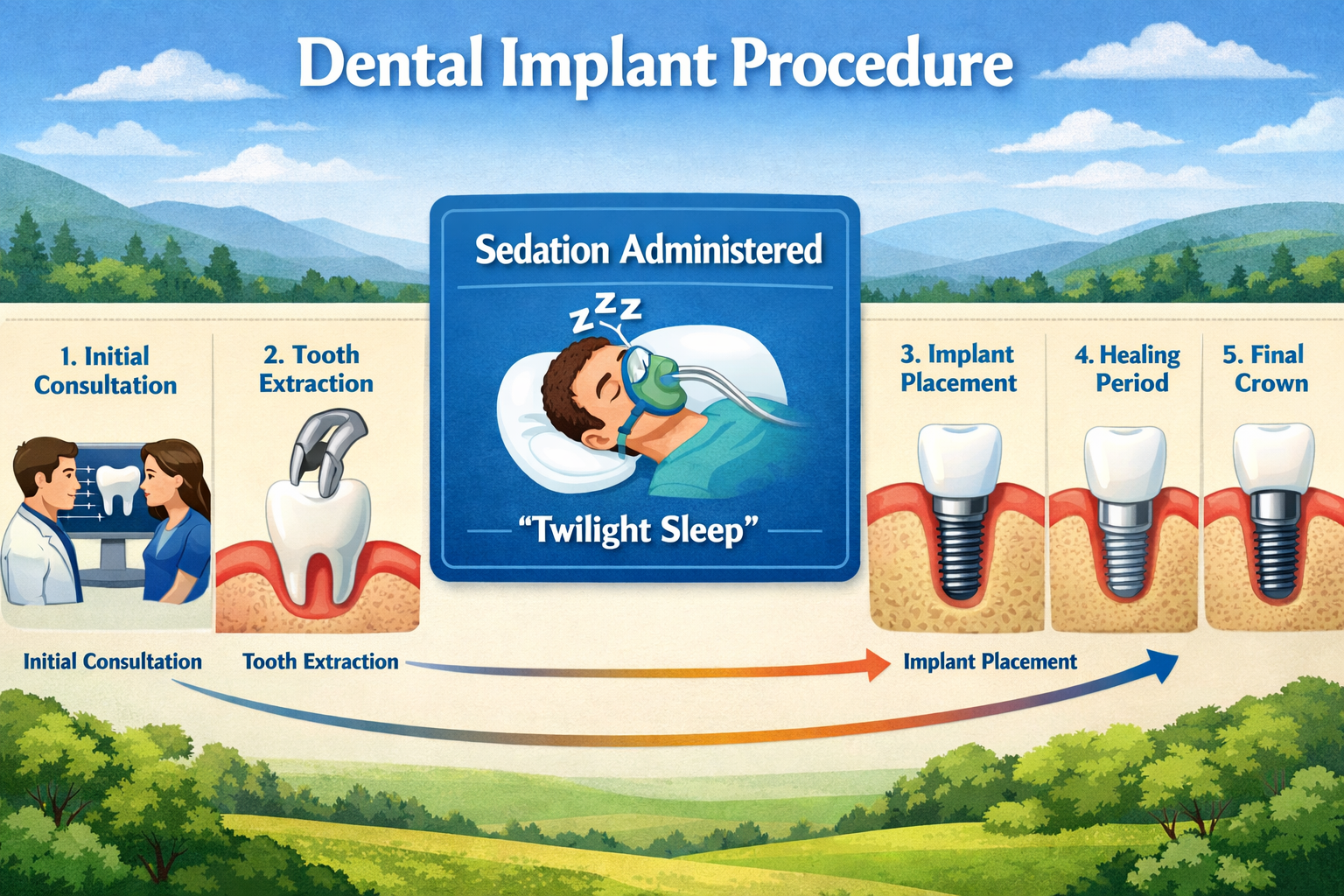
The process of receiving a dental implant typically involves several stages, including consultation, implant placement surgery, a healing period (osseointegration), abutment placement, and finally, the attachment of the custom crown. While the benefits of dental implants are immense, the surgical aspect can be a source of anxiety for many. This is where the option of dental implant with sedation twilight sleep becomes invaluable.
Why Choose Dental Implants?
- Durability and Longevity: With proper care, dental implants can last a lifetime, far surpassing the lifespan of other tooth replacement options.
- Improved Oral Health: Implants help preserve natural tooth structure, prevent bone loss in the jaw, and reduce the risk of gum disease.
- Enhanced Appearance and Speech: Implants look and feel like your natural teeth, restoring your facial aesthetics and allowing you to speak clearly and confidently.
- Comfort and Convenience: Unlike removable dentures, implants eliminate the discomfort and inconvenience of adhesives and slipping.
- Ability to Eat What You Love: Implants restore full chewing power, allowing you to enjoy all your favorite foods without restriction. For advice on post-surgery eating, check out our guide on 50 soft foods after dental implant.
The Serenity of Dental Implant with Sedation Twilight Sleep
The term “twilight sleep” conjures images of peace and deep relaxation, and for good reason. In dentistry, it refers to a form of conscious sedation, specifically Intravenous (IV) sedation, where medication is administered directly into your bloodstream. The goal is not to render you completely unconscious (like general anesthesia) but to put you into a deeply relaxed, semi-awake state. You will still be able to respond to verbal cues, but you’ll feel completely calm, often drowsy, and largely unaware of the procedure [2].
During a dental implant with sedation twilight sleep, a highly trained dental professional, often an oral surgeon or a dentist with specialized training in sedation dentistry, will administer the sedative drugs. The dosage is carefully controlled and monitored throughout the procedure to ensure your safety and comfort.
How Does Twilight Sleep Work?
The medications used for IV sedation typically include benzodiazepines, which have sedative, anxiety-reducing, and amnesic properties. These drugs work by:
- Reducing Anxiety: They calm the central nervous system, alleviating fear and nervousness.
- Inducing Relaxation: You will feel profoundly relaxed, almost as if you are drifting in and out of sleep.
- Creating Amnesia: One of the most significant benefits is that patients often have little to no memory of the procedure afterward. This can be particularly comforting for those with dental phobia.
- Elevating Pain Threshold: While local anesthetic is still used to numb the surgical area, the sedatives also help raise your pain threshold, further contributing to a comfortable experience.
Throughout the entire process, your vital signs – heart rate, blood pressure, oxygen levels – are meticulously monitored. This ensures that you are safe and stable at all times. The professional team dedicated to your care in 2026 is equipped with the latest monitoring technology and emergency protocols.
“Sedation twilight sleep transforms dental implant surgery from a source of dread into a calm, almost forgotten experience. It’s truly a game-changer for anxious patients.”
The Dental Implant Procedure with Sedation Twilight Sleep: A Step-by-Step Comfort Guide
Embarking on the journey to a new smile through dental implants can be a significant decision. When combined with sedation twilight sleep, the process becomes considerably less daunting. Let’s walk through the typical stages of a dental implant with sedation twilight sleep procedure.
Step 1: Initial Consultation and Planning
Before any procedure, a comprehensive consultation is crucial. During this appointment, I will conduct a thorough examination of your oral health, including X-rays and 3D imaging (like a CT scan for dental implants), to assess your bone density, gum health, and overall suitability for implants. We’ll discuss your medical history, any anxieties you may have, and determine if sedation twilight sleep is the most appropriate option for you. This is also where we review your customized treatment plan and answer any questions about are dental implants painful without sedation versus with it.
Step 2: Preparing for Sedation
On the day of your surgery, you will be given specific instructions regarding fasting and medication. It’s vital to follow these guidelines carefully. Upon arrival at the clinic, you’ll be made comfortable in the dental chair. An IV line will be gently inserted, typically into a vein in your arm or hand, through which the sedative medications will be administered.
Step 3: Sedation and Local Anesthesia
Once the IV is in place, the sedative drugs will begin to flow, and you will quickly start to feel the effects of the twilight sleep. You’ll become deeply relaxed and drowsy. Even though you are sedated, local anesthesia will still be administered to the surgical site. This ensures that you feel no pain during the procedure itself, even if you were to become briefly more aware.
Step 4: Implant Placement Surgery
With you in a state of deep relaxation and the area completely numb, the oral surgeon will proceed with the precise placement of the dental implant post into your jawbone. This involves making a small incision in the gum tissue, preparing a site in the bone, and then carefully inserting the titanium implant. Depending on your case, a bone graft for dental implants might also be performed at this stage if insufficient bone density is present. The entire surgical process, which might otherwise feel lengthy, will pass quickly and with minimal awareness for you.
Step 5: Recovery and Post-Procedure Care
Once the implant placement is complete, the IV sedative will be reduced, and you will slowly begin to awaken from the twilight sleep. You’ll likely feel groggy and will need someone to drive you home. We will provide detailed dental implant aftercare instructions to ensure a smooth recovery. This will include advice on pain management, diet, oral hygiene, and signs to watch for. The initial recovery period for osseointegration (where the implant fuses with the bone) typically takes a few months, after which the abutment and crown will be placed.
| Stage of Procedure | Patient Experience (with Twilight Sleep) | Key Benefits |
|---|---|---|
| Initial Assessment | Awake, alert, informative discussion | Clear understanding of treatment |
| Sedation Onset | Gradual feeling of relaxation, drowsiness | Anxiety reduction, comfort |
| Implant Placement | Deeply relaxed, minimal awareness, no pain | Stress-free surgery, reduced memory |
| Post-Op Recovery | Grogginess, gradual return to alertness | Calm awakening, manageable discomfort |
Types of Sedation for Dental Procedures
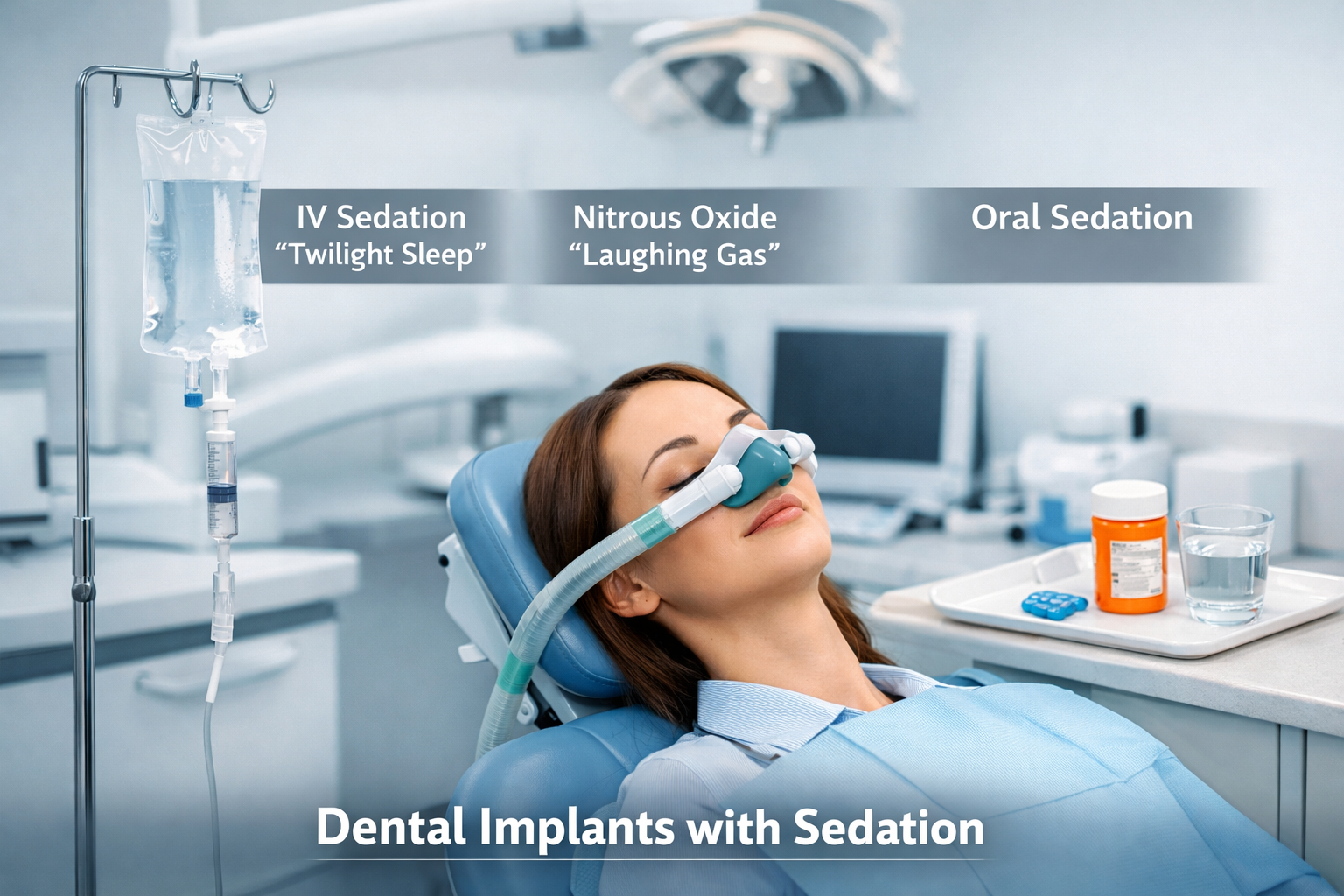
While dental implant with sedation twilight sleep specifically refers to IV sedation, it’s helpful to understand the broader spectrum of sedation options available in dentistry. The choice depends on the patient’s anxiety level, the complexity and length of the procedure, and their medical history.
1. Nitrous Oxide (Laughing Gas)
- Description: Administered through a mask placed over your nose, you simply breathe it in.
- Effects: Induces a state of mild relaxation, often described as a floating or euphoric sensation. The effects wear off quickly once the mask is removed.
- Suitability: Best for mild anxiety or shorter procedures. You can drive yourself home afterward.
2. Oral Sedation
- Description: Involves taking a prescribed pill (e.g., a benzodiazepine like Triazolam or Valium) an hour or so before your appointment.
- Effects: Causes moderate drowsiness and reduces anxiety significantly. You’ll be conscious but very relaxed.
- Suitability: Good for moderate dental anxiety. You will need a ride to and from the appointment.
3. IV Sedation (Twilight Sleep)
- Description: Medications delivered directly into your bloodstream via an IV line. This is the method we’ve been focusing on for dental implant with sedation twilight sleep.
- Effects: Produces a deeper state of relaxation than oral or nitrous oxide sedation. You’ll be conscious but will have little to no memory of the procedure.
- Suitability: Ideal for moderate to severe dental anxiety, lengthy procedures, complex surgeries like multiple implants, or patients with a strong gag reflex. Requires careful monitoring and a designated driver.
4. General Anesthesia
- Description: Administered by an anesthesiologist, rendering you completely unconscious.
- Effects: You are entirely asleep and unaware of the procedure.
- Suitability: Reserved for extremely complex surgeries, patients who cannot cooperate, or those with severe medical conditions requiring complete unconsciousness. Typically performed in a hospital setting or accredited surgical center.
The selection of the appropriate sedation method will always be made in consultation with your dental team, prioritizing your safety and comfort above all else. For dental implant procedures, especially those involving multiple implants or bone grafting, IV sedation often strikes the perfect balance between patient comfort and procedural efficiency.
Benefits and Considerations of Dental Implant with Sedation Twilight Sleep
Choosing to have your dental implant with sedation twilight sleep offers a multitude of benefits, particularly for individuals who might otherwise postpone or avoid necessary dental care due to fear or discomfort. However, like any medical procedure, there are also considerations to keep in mind.
The Unrivaled Benefits
- Eliminates Dental Anxiety: This is arguably the biggest advantage. For those with dental phobia, the thought of surgery can be paralyzing. Twilight sleep effectively calms nerves, allowing patients to receive vital treatment.
- Reduced Discomfort: While local anesthesia prevents pain, the psychological comfort provided by sedation minimizes any perception of pressure or vibration, leading to a much more pleasant experience.
- Amnesic Effects: Many patients report having no memory of the procedure itself, which is a huge relief for those who have had traumatic dental experiences in the past.
- Time Efficiency: For complex or lengthy procedures, sedation allows the dentist to work more efficiently without needing to pause for patient discomfort or anxiety. What feels like hours might pass in minutes from the patient’s perspective.
- Manages Gag Reflex: A strong gag reflex can make dental procedures incredibly challenging. Sedation helps to suppress this reflex, making treatment possible and more comfortable.
- Fewer Appointments: Sometimes, more extensive work can be completed in a single, longer appointment under sedation, reducing the total number of visits required.
- Enhanced Safety: Under IV sedation, your vital signs are continuously monitored, ensuring that you are stable throughout the procedure. The dental team is trained to respond to any changes promptly.
Important Considerations
- Cost: Sedation twilight sleep adds to the overall cost of the dental implant procedure, as it involves specialized equipment, medications, and the expertise of a trained sedation provider. It’s important to discuss affordable dental implants in Dallas, TX with our team, and whether sedation is included.
- Recovery Time: You will feel groggy and disoriented after the procedure. It’s crucial to have a responsible adult drive you home and stay with you for several hours post-surgery. You should avoid driving, operating machinery, or making important decisions for at least 24 hours.
- Medical History Review: Not everyone is a candidate for IV sedation. A thorough review of your medical history, current medications, and any underlying health conditions is essential to ensure your safety. Conditions such as severe respiratory issues, heart problems, or certain allergies may preclude you from receiving this type of sedation.
- Preparation Requirements: Fasting before the procedure is usually required, and you may need to adjust certain medications. Strict adherence to these instructions is paramount for your safety.
- Temporary Side Effects: Common side effects can include nausea, dizziness, headache, or prolonged drowsiness, though these are typically mild and short-lived.
By carefully weighing these benefits and considerations with your dental professional, you can make an informed decision about whether dental implant with sedation twilight sleep is the right choice for your oral health journey in 2026.
Post-Procedure Care and Long-Term Success
Once your dental implant with sedation twilight sleep procedure is complete and you’ve safely returned home, the journey towards a fully restored smile continues with diligent post-operative care and a commitment to long-term oral hygiene. Proper aftercare is crucial for the successful integration of your implant and to ensure its longevity.
Immediate Post-Operative Care (First 24-48 Hours)
- Rest: Get plenty of rest. Avoid strenuous activities that could dislodge the blood clot or increase bleeding.
- Pain Management: Take prescribed pain medication as directed. Over-the-counter anti-inflammatories like ibuprofen can also help manage discomfort and swelling.
- Swelling: Apply an ice pack to the outside of your face in 20-minute intervals during the first 24 hours to minimize swelling.
- Bleeding: Some light bleeding is normal. You may be given gauze to bite on; change it every 30-45 minutes until bleeding subsides.
- Diet: Stick to soft, cool foods and liquids. Avoid hot beverages, crunchy, or chewy foods that could irritate the surgical site. Check out our guide on 50 soft foods after dental implant for ideas.
- Oral Hygiene: Do not rinse your mouth vigorously for the first 24 hours. After that, gentle salt water rinses can help keep the area clean. Avoid brushing directly on the surgical site for a few days.
- Avoid Smoking and Alcohol: Both smoking and alcohol can significantly impair healing and increase the risk of complications. Avoid them completely during the healing phase. Read more about alcohol after dental implant surgery.
- Follow Antibiotic Prescriptions: If prescribed antibiotics, take them exactly as directed to prevent infection. Learn more about antibiotics after dental implant surgery.
The Healing Phase (Osseointegration)
The most critical part of dental implant success is osseointegration – the process where the titanium implant fuses with your jawbone [3]. This typically takes 3 to 6 months. During this time:
- Continue Gentle Oral Hygiene: Maintain excellent oral hygiene, being gentle around the implant site.
- Follow Dietary Restrictions: Continue to be mindful of what you eat, especially avoiding hard or sticky foods that could put pressure on the healing implant.
- Attend Follow-Up Appointments: Regular check-ups are essential to monitor the healing progress.
Long-Term Maintenance for Your Dental Implants
Once your dental implant is fully restored with an abutment and crown, it’s crucial to treat it like your natural teeth to ensure its longevity.
- Excellent Oral Hygiene: Brush twice daily, floss daily, and consider using an interdental brush or water flosser specifically designed for implants. The right best toothpaste for implants and best water flosser for dental implants are key.
- Regular Dental Check-ups: Continue with your routine dental examinations and professional cleanings, typically every six months. Your dentist will check the implant and surrounding tissues for any signs of issues.
- Avoid Harmful Habits: Refrain from chewing on ice, biting hard objects, or using your teeth as tools, which can damage natural teeth and implants alike.
- Address Issues Promptly: If you notice any discomfort, redness, swelling, or a dental implant clicking noise, contact your dentist immediately. Early intervention can prevent minor issues from becoming major problems.
By diligently following these guidelines, you can ensure that your dental implant with sedation twilight sleep provides you with a stable, comfortable, and beautiful smile for many years to come. For a more comprehensive understanding of the entire process, consider reading our complete dental implant recovery timeline.
Conclusion
The journey to a restored smile through dental implants can be a life-changing experience, significantly improving your oral health, confidence, and overall quality of life. For many, the prospect of dental surgery, even with such profound benefits, is a source of considerable anxiety. This is precisely where the option of a dental implant with sedation twilight sleep shines brightest. By providing a deeply relaxing, comfortable, and often amnesia-inducing experience, twilight sleep removes the fear factor, allowing patients to receive the advanced care they need without emotional distress.
In 2026, modern dentistry continues to prioritize patient comfort and safety, and IV sedation stands as a testament to this commitment. Whether you suffer from dental phobia, have a strong gag reflex, or simply prefer a more relaxed approach to complex procedures, dental implant with sedation twilight sleep offers an invaluable pathway to a healthier, more beautiful smile.
Actionable Next Steps:
- Consult a Qualified Professional: If you’re considering dental implants and are interested in sedation options, the first step is to schedule a consultation with a highly experienced dental implant specialist. Look for a team with extensive training in both implantology and sedation dentistry. You can learn more about our practice by visiting our About Us page.
- Discuss Your Concerns Openly: Be honest about your fears, anxieties, and medical history. This information is crucial for your dental team to create a personalized treatment plan that prioritizes your comfort and safety.
- Understand the Full Process: Ask detailed questions about the entire dental implant procedure, including the different stages, recovery expectations, and the specific type of sedation recommended for your case.
- Inquire About Costs and Financing: Discuss the overall cost of the implant and sedation, and explore available financing options to make the treatment accessible.
- Plan for Your Appointment: If you opt for twilight sleep, make sure to arrange for a responsible adult to drive you to and from your appointment and stay with you for a period afterward.
Don’t let dental anxiety stand between you and the smile you deserve. With the advancements in dental implant technology and the comforting option of sedation twilight sleep, a future with strong, beautiful, and functional teeth is more accessible than ever before. Reach out today to take the first step towards a confident and comfortable dental experience.
References
[1] Albrektsson, T., & Johansson, B. (2001). The long-term efficacy of dental implants: a review and consideration of aspects of definition. Journal of Oral Rehabilitation, 28(5), 481-488.
[2] Dionne, R. A., Phero, J. C., & Becker, D. E. (2013). Sedation, anesthesia, and pain control. Anesthesia for dental procedures: Principles and practice, 129-160.
[3] Branemark, P. I., Zarb, G. A., & Albrektsson, T. (1985). Tissue-Integrated Prostheses: Osseointegration in Clinical Dentistry. Quintessence Publishing Co. Inc.
Which Sedation Option is Right for Your Dental Implant?
Use this interactive tool to get a personalized recommendation for dental sedation based on your comfort level and the procedure complexity. Always discuss with your dentist!
Your Personalized Sedation Recommendation
Please select your answers above to receive a recommendation.
Leave a Reply
Share your thoughts or ask a question about dental implants. Your email address will not be published.