

Imagine finally being able to bite into your favorite apple again without worry or pain. For thousands of Dallas residents, this dream becomes reality through dental implants—but there’s a crucial step between the initial implant surgery and your beautiful new smile that many patients don’t fully understand: abutment placement.
This connector piece that links your implant to your crown is more important than you might think. Understanding the abutment placement process can help you feel confident and prepared as you move closer to restoring your smile and quality of life.
Key Takeaways
- Abutment placement is the procedure where a connector piece is attached to your dental implant to support your artificial tooth
- The timing varies—abutments can be placed immediately during implant surgery or 3-6 months later after healing
- Healing abutments are temporary connectors that help shape your gum tissue during the recovery period
- The procedure is typically quick and minimally invasive compared to the initial implant placement
- Proper aftercare following abutment placement is essential for long-term implant success
What Is an Implant Abutment?
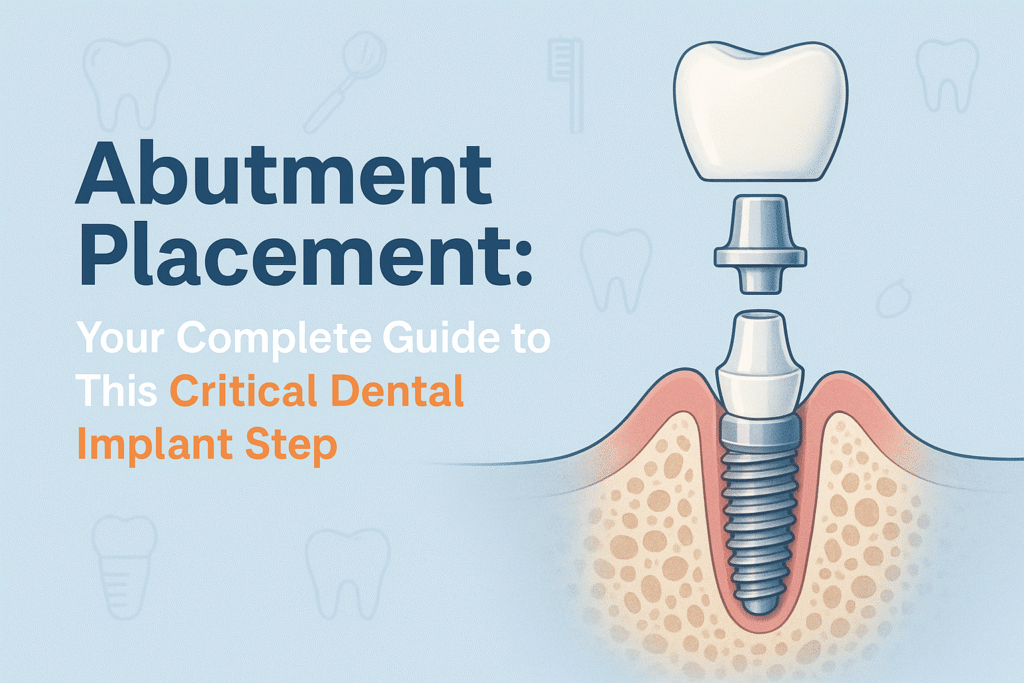
An implant abutment is the connector piece that links your dental implant post to your crown, denture, or bridge. Think of it as the foundation that your artificial tooth sits on—without this crucial component, your prosthesis wouldn’t have a secure way to attach to the implant.
The dental implant abutment serves several important functions:
- Provides a secure attachment point for your crown
- Helps shape the gum tissue around the implant site
- Transfers chewing forces from your artificial tooth to the jawbone
- Creates a seal to protect the implant from bacteria
Most abutments are made of titanium or zirconia, materials chosen for their biocompatibility and strength. The choice between materials often depends on the location of your tooth and aesthetic considerations.
Understanding the Dental Implant Process
Before diving into abutment placement specifically, it’s helpful to understand where this step fits in your overall dental implant process:
- Initial consultation and treatment planning
- Implant placement surgery (the implant post is placed in your jawbone)
- Healing period (3-6 months for osseointegration)
- Abutment placement (the focus of this article)
- Crown placement (your final artificial tooth)
During the healing period, your implant undergoes osseointegration—the process where your jawbone grows around and fuses with the titanium implant post. This creates the strong foundation needed to support your new tooth.
Types of Abutment Placement Procedures
Immediate Abutment Placement
In some cases, your dentist may place the abutment at the same time as your initial implant surgery. This approach offers several advantages:
- Fewer surgical procedures overall
- Reduced treatment time
- Less disruption to your daily routine
- Immediate gum tissue shaping
However, immediate placement isn’t suitable for everyone. Your dentist will consider factors like:
- Bone quality and quantity
- Location of the missing tooth
- Your overall oral health
- Bite forces in the implant area
Delayed Abutment Placement
More commonly, abutment placement occurs as a separate procedure after your implant has fully integrated with your jawbone. This traditional approach involves:
- Initial implant placement with a healing cap
- Healing period of 3-6 months
- Second surgery to expose the implant and place the abutment
- Additional healing time for gum tissue to adapt
- Final crown placement
🦷 Abutment Placement Timeline Calculator
Plan your dental implant journey with personalized timeline estimates
Your Personalized Abutment Placement Timeline
The Abutment Placement Procedure: What to Expect
Before Your Appointment
Your dentist will typically schedule your abutment placement procedure once X-rays confirm that your implant has fully integrated with your jawbone. This usually occurs 3 to 6 months after your initial implant placement.
Before the procedure, you may need to:
- Take prescribed antibiotics to prevent infection
- Arrange transportation if sedation is used
- Plan for a soft food diet for a few days
- Review your current medications with your dentist
During the Procedure
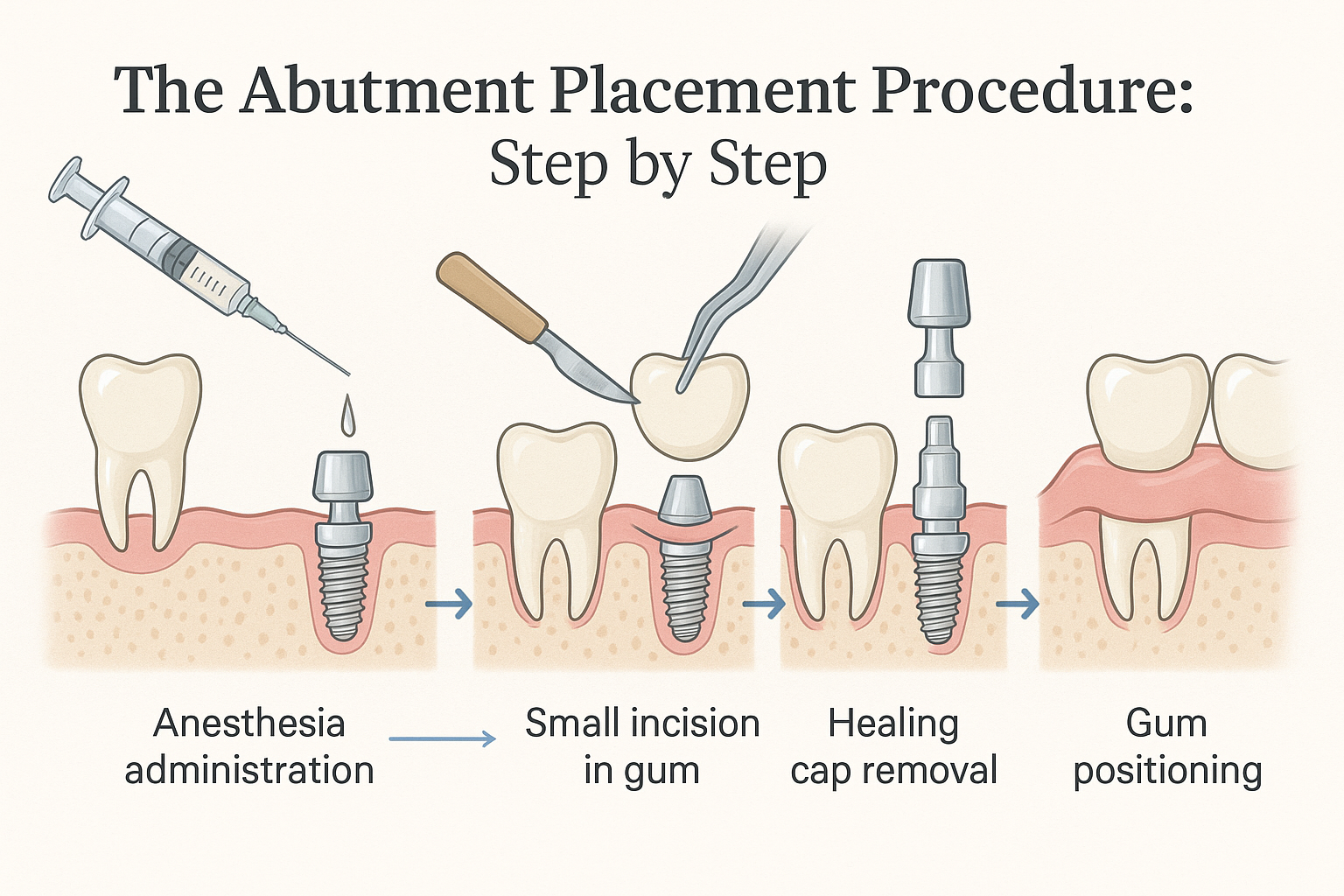
The abutment placement procedure is typically much simpler than your initial implant surgery. Here’s what happens:
- Local anesthesia is administered to numb the implant area
- A small incision is made in the gum tissue to expose the implant
- The healing cap is removed from the top of the implant post
- The abutment is placed and secured to the implant
- The gum tissue is positioned around the new abutment
- Sutures may be placed to help with healing
The entire procedure typically takes 30-60 minutes, depending on the number of implants being fitted with abutments.
Types of Abutments Used
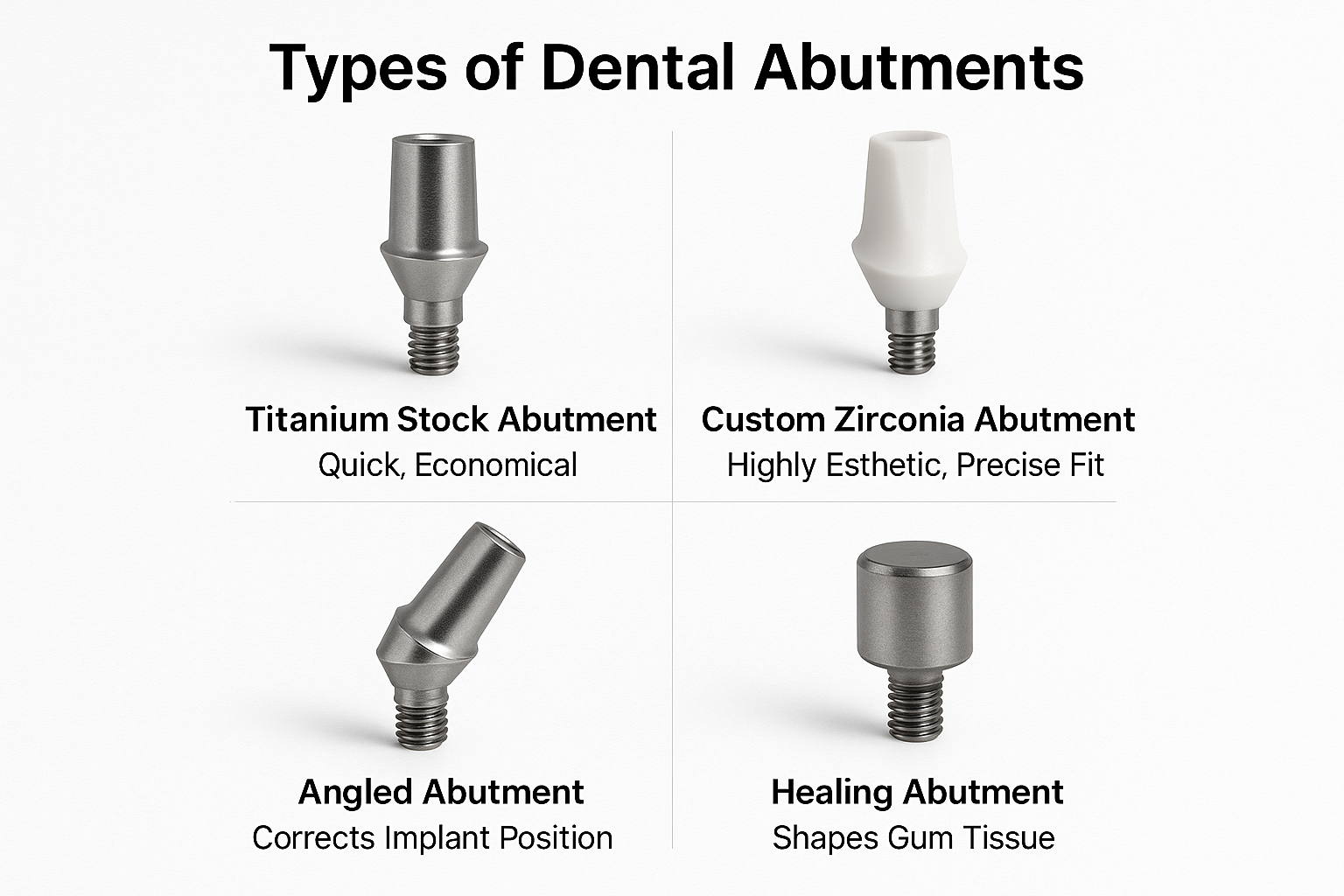
Your dentist will choose from several abutment types based on your specific needs:
Stock Abutments: Pre-manufactured abutments available in standard sizes and angles. These are cost-effective and work well for straightforward cases.
Custom Abutments: Individually designed and fabricated abutments that perfectly match your tooth anatomy and gum contours. These provide optimal aesthetics and function.
Angled Abutments: Designed to correct implant angulation issues, ensuring your crown emerges in the proper position.
Healing Abutments: Temporary abutments that help shape your gum tissue while your mouth heals. These are typically replaced with the final abutment before crown placement.
Materials Used in Abutment Construction
The materials used for abutments play a crucial role in both function and aesthetics:
Titanium Abutments
Titanium abutments are the gold standard for implant dentistry because they:
- Integrate well with gum tissue
- Resist corrosion and wear
- Provide excellent strength
- Are biocompatible with minimal allergic reactions
However, titanium’s gray color can sometimes show through thin gum tissue, creating aesthetic concerns in the front teeth.
Zirconia Abutments
Zirconia abutments offer several advantages:
- Tooth-colored appearance for better aesthetics
- Excellent biocompatibility
- Resistance to plaque accumulation
- No metal taste or allergic reactions
These are particularly popular for front teeth where aesthetics are paramount.
Post-Operative Care and Healing
Proper aftercare following abutment placement is essential for successful healing and long-term implant success. Your dentist will provide specific instructions, but general guidelines include:
Immediate Care (First 24-48 Hours)
- Apply ice packs to reduce swelling
- Take prescribed pain medication as directed
- Avoid hot foods and beverages
- Don’t smoke or use tobacco products
- Sleep with your head elevated
Ongoing Care (First 1-2 Weeks)
- Maintain gentle oral hygiene around the implant site
- Use prescribed mouthwash or saltwater rinses
- Eat soft foods to avoid pressure on the healing area
- Attend follow-up appointments as scheduled
- Watch for signs of infection like fever, excessive swelling, or persistent pain
Long-term Maintenance
Once healing is complete, maintaining your implant and abutment requires:
- Daily brushing with a soft-bristled toothbrush
- Using specialized toothpaste for implants
- Regular flossing or using interdental brushes for implants
- Regular dental checkups to monitor implant health
- Avoiding hard foods that could damage your crown
Potential Complications and How to Avoid Them
While abutment placement is generally successful, being aware of potential complications helps you seek prompt treatment if needed:
Infection
Signs of infection include:
- Persistent pain or throbbing
- Swelling that worsens after 48 hours
- Fever or feeling unwell
- Unusual discharge from the implant site
Prevent infection by following post-operative care instructions and maintaining excellent oral hygiene.
Abutment Loosening
An abutment becomes loose if the screw connection fails. Signs include:
- Clicking noises when chewing
- Movement of the crown
- Discomfort when biting
Peri-implantitis
Peri-implantitis is inflammation around the implant that can lead to bone loss. Prevent this serious condition by:
- Maintaining excellent oral hygiene
- Avoiding smoking
- Managing diabetes and other health conditions
- Regular professional cleanings
If you experience any concerning symptoms, contact your dentist immediately. Early intervention can often prevent minor issues from becoming major problems.
The Role of Healing Abutments
Healing abutments deserve special attention as they play a crucial role in your treatment success. These temporary components:
- Shape the gum tissue around your implant
- Protect the implant from bacteria and debris
- Maintain the opening in your gum during healing
- Allow for easier cleaning compared to buried implants
Your dentist may place a healing abutment immediately after implant placement or during a separate minor procedure. These are typically replaced with your final abutment once healing is complete.
Cost Considerations and Insurance
Understanding the financial aspects of abutment placement helps you plan for this important step in your implant journey. The cost typically includes:
- The abutment component itself
- The surgical procedure
- Follow-up appointments
- Any necessary medications
Factors affecting cost include:
- Type of abutment (stock vs. custom)
- Materials used (titanium vs. zirconia)
- Complexity of your case
- Geographic location
Many patients find that affordable implant options are available, and some dental insurance plans provide partial coverage for implant procedures. Discuss payment options and financing with your dental team.
When Problems Arise: Signs to Watch For
Even with proper care, issues can occasionally develop. Contact your dentist if you experience:
- Persistent pain beyond the expected healing period
- Signs that your implant may be loose
- Unusual swelling or discharge
- Changes in how your bite feels
- Difficulty cleaning around the implant
Early intervention often leads to better outcomes and can prevent more serious complications.
Supporting Your Healing with Nutrition
Your body needs proper nutrition to heal effectively after abutment placement. Consider:
- Protein-rich foods to support tissue repair
- Vitamin C for healthy gum tissue
- Calcium and vitamin D for bone health
- Appropriate vitamin supplements as recommended by your dentist
Stay hydrated and avoid alcohol and tobacco, which can interfere with healing.
Special Considerations for Different Patients
Patients with Multiple Implants
If you’re receiving multiple implants, your dentist may stage the abutment placement procedures to:
- Reduce overall treatment time
- Minimize discomfort
- Allow for better healing
- Coordinate with denture or bridge fabrication
Medical Considerations
Certain medical conditions may affect your abutment placement procedure:
- Diabetes: May require longer healing times
- Heart conditions: May need antibiotic prophylaxis
- Osteoporosis: May affect bone healing
- Autoimmune disorders: May impact healing response
Always inform your dentist about any medical conditions or medications you’re taking.
MRI Compatibility
If you need medical imaging, you’ll be pleased to know that dental implants and abutments are generally MRI-safe. However, always inform your medical team about your dental work before any imaging procedures.
Looking Ahead: Life After Abutment Placement
Once your abutment is successfully placed and healed, you’re well on your way to completing your implant journey. The final steps typically include:
- Crown fabrication based on impressions of your abutment
- Final crown placement and bite adjustment
- Instructions for long-term care and maintenance
- Regular maintenance appointments to ensure continued success
With proper care, your implant, abutment, and crown can last for decades, providing you with a natural-looking and functioning tooth that enhances both your oral health and quality of life.
Conclusion
Abutment placement represents a crucial milestone in your dental implant journey—the bridge between your healing implant and your beautiful new smile. While this procedure might seem complex, understanding what to expect can help you feel confident and prepared.
Remember that every patient’s experience is unique, and your dentist will tailor the treatment plan to your specific needs. The key to success lies in following post-operative care instructions, maintaining excellent oral hygiene, and attending all follow-up appointments.
Ready to take the next step in your smile restoration journey? Contact our experienced Dallas dental implant team to discuss your abutment placement procedure. We’re here to guide you through every step with the expert care and compassion you deserve.
Your journey to a confident, functional smile is almost complete—and we’re honored to be part of making that dream a reality.
Leave a Reply
Share your thoughts or ask a question about dental implants. Your email address will not be published.