

Picture this: you’re sitting at your favorite Dallas restaurant, confidently ordering that steak you’ve been craving for months. Two months after your all-on-4 dental implant surgery, you’re finally experiencing the life-changing results you dreamed about. But what exactly should you expect at this crucial milestone in your healing journey?
The two-month mark represents a significant turning point in your all-on-4 recovery process. Your implants have had time to begin integrating with your jawbone, your gums have healed substantially, and you’re likely feeling more comfortable with your new teeth than ever before. However, this period also comes with important considerations for ensuring your long-term success.
Key Takeaways
- Healing Progress: At 2 months, your implants are well into the osseointegration process, with most initial healing complete
- Dietary Freedom: You can gradually introduce more foods, though some restrictions still apply for optimal healing
- Oral Hygiene: Establishing proper care routines now is crucial for preventing gum disease and implant failure
- Follow-up Care: Regular dental checkups during this period help ensure your implants are healing properly
- Lifestyle Adjustments: Most patients feel significantly more confident and comfortable with their prosthetic teeth by this milestone
Understanding Your All-on-4 Dental Implant Recovery Timeline
The journey of recovering from all-on-4 surgery unfolds in distinct phases, and understanding where you are at two months helps set realistic expectations. Unlike traditional implants that may require individual healing periods, the all-on-4 procedure involves placing four implants strategically in your jawbone to support a full arch of teeth.
During the first few days after surgery, your focus was likely on managing discomfort, following post-surgical instructions, and sticking to soft foods. The initial weeks involved reducing pain and swelling while your surgical site began its healing process.
Now, at two months, you’re entering what many dental professionals consider the “adaptation phase.” Your implants have had sufficient time to begin their integration with the jawbone, a process called osseointegration that typically takes three to six months to complete fully.
What’s Happening Inside Your Mouth
At this stage, several important biological processes are occurring:
- Bone Integration: Your jawbone is actively growing around the implant posts, creating a stable foundation
- Tissue Healing: The gum tissue around the implant site has largely healed and adapted to your new teeth
- Muscle Memory: Your facial muscles and tongue are adjusting to the new shape and position of your prosthetic teeth
Physical Changes and Sensations at 2 Months After All-on-4 Implants
Most patients report significant improvements in comfort and function by the two-month mark. However, it’s normal to still experience some adjustments as your mouth continues adapting to the new implants.
Expected Physical Improvements
Reduced Discomfort: Any initial pain or sensitivity around the implants should be minimal or completely resolved. If you’re still experiencing significant discomfort, it’s important to contact your implant dentist for evaluation.
Better Stability: Your prosthetic teeth should feel much more stable and secure compared to the first few weeks. The pressure on the implants has been gradually distributed as healing progressed.
Improved Speech: Many patients notice their speech patterns have largely returned to normal, though some may still be fine-tuning pronunciation of certain sounds.
Ongoing Sensations
It’s completely normal to still notice:
- Slight awareness of the implants, especially when chewing
- Occasional minor sensitivity to very hot or cold foods
- The feeling that your bite is still “different” from your natural teeth
Remember, getting used to all-on-4 dental implants is a process that can take several months. Each person’s experience varies based on factors like overall health, bone density, and how well they follow their recovery guidelines.
Dietary Guidelines: What You Can Eat 2 Months After All-on-4 Surgery
One of the most exciting aspects of reaching the two-month milestone is the expanded food options available to you. However, protecting your investment in your oral health means continuing to make smart dietary choices.
Foods You Can Enjoy
By now, you should be able to comfortably eat:
- Tender proteins: Well-cooked chicken, fish, eggs, and ground meats
- Cooked vegetables: Steamed or roasted vegetables that aren’t overly fibrous
- Soft fruits: Bananas, berries, and peeled fruits
- Grains and pasta: Rice, quinoa, and well-cooked pasta
- Dairy products: Yogurt, cheese, and milk-based foods
Foods to Still Approach Carefully
While your healing has progressed significantly, certain hard foods should still be avoided or eaten with caution:
- Very hard foods: Nuts, hard candy, and ice
- Sticky foods: Caramel, taffy, and gummy candies
- Tough meats: Steak or other chewy proteins (save these for month 3-4)
- Crunchy snacks: Popcorn, chips, and crackers
The key is listening to your body and gradually testing new foods. If something causes discomfort around the implant site, it’s better to wait another few weeks before trying again.
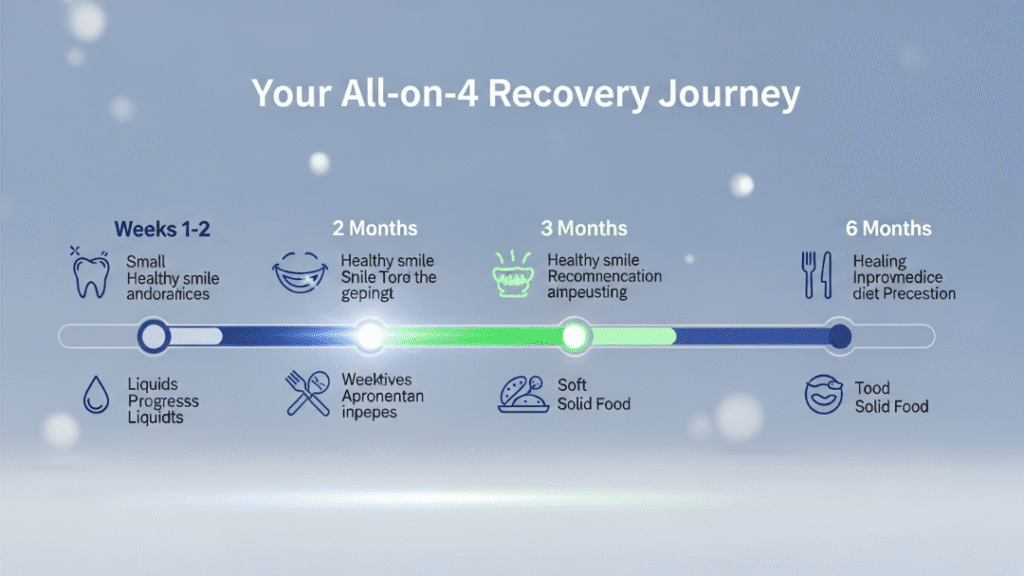
All-on-4 Recovery Timeline: Track Your Progress
- Temporary teeth placed immediately
- Soft foods only (soup, yogurt, mashed potatoes)
- Pain management with prescribed medication
- Ice packs to reduce swelling
- Avoid smoking and strenuous activities
- Swelling and discomfort significantly reduced
- Introduction of slightly firmer foods
- First follow-up appointment
- Gentle oral hygiene routine established
- Return to light daily activities
- Implants beginning strong integration with jawbone
- Most foods can be eaten with care
- Speech patterns largely normalized
- Regular dental hygiene routine in place
- Increased confidence in daily activities
- Osseointegration well underway
- Most dietary restrictions lifted
- Evaluation for final prosthetic teeth
- Full oral hygiene routine established
- Return to all normal activities
- Implants fully integrated with jawbone
- Final prosthetic teeth fitted
- No dietary restrictions
- Complete adaptation to new teeth
- Long-term maintenance routine established

Essential Oral Hygiene for All-on-4 Dental Implants at 2 Months
Establishing proper oral hygiene habits now is crucial for the long-term success of your all-on-4 implants. At two months, your gums have healed enough to tolerate more thorough cleaning, but you still need to be gentle around the implant sites.
Daily Cleaning Routine
Morning and Evening Brushing: Use a soft-bristled toothbrush and high-quality toothpaste designed for implants. Brush gently around the implants without irritating the surrounding gum tissue.
Interdental Cleaning: Interdental brushes for implants are essential for cleaning around the implant posts where regular floss might not reach effectively. These specialized tools help prevent plaque buildup that could lead to gum disease.
Antimicrobial Rinse: A gentle, alcohol-free mouthwash can help reduce bacteria around the implant site without causing irritation to healing tissues.
Professional Dental Care
At the two-month mark, you should have had at least one follow-up appointment with your dentist. These regular dental checkups are vital for:
- Monitoring the healing process
- Checking for signs of infection or complications
- Professional cleaning around the implants
- Adjusting your prosthetic teeth if needed
Your dental team will also provide guidance on the frequency of future visits and any adjustments to your oral hygiene routine.
Common Concerns and When to Contact Your Dentist
While most patients experience smooth recovery by two months, it’s important to recognize when something might need professional attention. Understanding the difference between normal healing sensations and potential problems helps ensure your long-term success.
Normal Experiences at 2 Months
- Slight pressure sensation when chewing certain foods
- Minor sensitivity to temperature extremes
- Occasional awareness of the implants
- Gradual improvement in speech and eating comfort
Signs That Warrant a Call to Your Dentist
Persistent Pain: While some sensitivity is normal, ongoing pain that doesn’t improve or worsens could indicate a problem with healing or implant integration.
Unusual Swelling: Any new swelling around the implant site, especially if accompanied by warmth or redness, should be evaluated promptly.
Mobility Issues: If your prosthetic teeth feel loose or unstable, this could indicate an issue that needs immediate attention to prevent dental implant complications.
Changes in Bite: Significant changes in how your teeth come together when biting could signal that adjustments are needed.
Lifestyle Adjustments and Long-term Success Strategies
Successfully adjusting to all-on-4 implants involves more than just following dietary restrictions and oral hygiene guidelines. The two-month mark is an excellent time to evaluate and optimize your overall approach to implant care.
Nutrition for Optimal Healing
Beyond avoiding hard foods, focusing on nutrition that supports bone health and healing can enhance your recovery:
Calcium and Vitamin D: Essential for bone integration and overall oral health Protein: Supports tissue healing and maintenance Vitamin C: Important for gum health and collagen formation
Consider discussing vitamin supplements with your healthcare provider to ensure you’re getting adequate nutrition for optimal healing.
Avoiding Risk Factors
Smoking Cessation: If you haven’t already quit smoking, now is crucial. Smoking significantly impairs healing and increases the risk of implant failure.
Stress Management: Chronic stress can affect your immune system and healing. Finding healthy ways to manage stress supports your overall recovery.
Avoiding Trauma: Be mindful of activities that could impact your mouth, such as contact sports. Consider using a mouthguard if recommended by your dentist.
The Psychology of Adjusting to New Teeth
The emotional and psychological aspects of getting used to all-on-4 dental implants are often overlooked but equally important. At two months, many patients experience a significant boost in confidence as they realize the life-changing potential of their new teeth.
Building Confidence
Practice Speaking: If you’re still adjusting to speech changes, practice reading aloud or having conversations. Most speech issues resolve completely with time and practice.
Social Situations: You may feel ready to return to social dining and activities you avoided with missing teeth or uncomfortable dentures.
Smile Confidence: Many patients report feeling more willing to smile and laugh freely, which can have profound effects on social interactions and self-esteem.
Managing Expectations
Remember that complete adaptation can take several more months. While two months represents significant progress, your implants will continue strengthening and your comfort level will keep improving through the six-month mark and beyond.
Financial Considerations and Ongoing Costs
Understanding the ongoing financial aspects of your all-on-4 implants helps you plan for long-term success. While the initial investment was significant, proper maintenance can help protect that investment for decades.
Ongoing Maintenance Costs
Regular Checkups: Factor in the cost of more frequent dental visits during the first year, then regular maintenance appointments.
Professional Cleanings: Dental implant maintenance costs in Dallas vary, but professional cleanings are essential for preventing complications.
Replacement Components: While implants themselves can last decades, prosthetic components may need replacement or adjustment over time.
Insurance and Financing
Many patients find that the long-term benefits of all-on-4 implants, including improved nutrition, health, and quality of life, justify the investment. If you’re concerned about ongoing costs, discuss payment plans or financing options with your dental team.
Looking Ahead: What to Expect in the Coming Months
As you celebrate reaching the two-month milestone, it’s helpful to understand what lies ahead in your all-on-4 journey.
Month 3-4: Continued Integration
- Further strengthening of the bond between implants and jawbone
- Possible evaluation for final prosthetic teeth
- Continued expansion of dietary options
- Increased comfort with daily activities
Month 6: Full Integration
- Complete osseointegration typically achieved
- Final prosthetic teeth may be fitted
- All dietary restrictions typically lifted
- Establishment of long-term maintenance routine
Beyond 6 Months: Long-term Success
With proper care, your all-on-4 implants can provide decades of reliable function. The habits you establish now in oral hygiene, nutrition, and regular dental care will determine your long-term success.
Conclusion
Reaching two months after your all-on-4 implant surgery represents a major milestone in your journey to a confident smile. Your implants are well on their way to full integration, your comfort level has likely improved dramatically, and you’re probably enjoying foods and activities that weren’t possible before your procedure.
The key to continued success lies in maintaining excellent oral hygiene, following your dentist’s recommendations, and staying patient as your mouth completes its adaptation process. Remember that every patient’s journey is unique, and comparing your experience to others isn’t always helpful.
Your next steps should include:
- Scheduling your next follow-up appointment if you haven’t already
- Continuing your gentle but thorough oral hygiene routine
- Gradually expanding your diet while remaining cautious with very hard foods
- Staying committed to avoiding smoking and other risk factors
- Celebrating your progress and looking forward to even greater improvements ahead
If you have any concerns or questions about your recovery, don’t hesitate to contact your dental team. At Dental Implants Dallas TX, we’re committed to supporting you through every step of your implant journey, ensuring you achieve the confident, functional smile you deserve.
Your investment in all-on-4 dental implants is an investment in your quality of life, health, and confidence. With proper care and patience, you’re well on your way to enjoying the full benefits of your new teeth for many years to come.
Leave a Reply
Share your thoughts or ask a question about dental implants. Your email address will not be published.